


Introduction
Weed infestation continues to challenge agricultural productivity worldwide. Farmers must constantly manage weed populations to protect crop yield, maintain farm profitability, and support sustainable production systems. Weeds compete for the resources needed by crops, including nutrients, water, light, and physical space. As a result, even moderate weed pressure can reduce crop growth and final yield. Estimates suggest that weeds account for nearly 20–40% of global crop losses each year, creating serious economic and food security concerns.1,2Recent reports estimate that global pesticide consumption exceeds 4 million tonnes annually with 50% herbicides out of total pesticide usage worldwide. Economic losses caused by uncontrolled weeds are estimated to exceed USD 100 billion annually in global agricultural production.Farmers have dependence on several conventional weed management practices. Chemical herbicides are most widely used due to fast and effective weed suppression. Extensive use of chemicals has accelerated the emergence of herbicide-resistant weed species and contributed to environmental contamination in soil and water systems.2,3More than 260 weed species have developed resistance to at least one herbicide mode of action. Mechanical tillage disturbs the soil as farmers physically remove or bury weeds before they compete with crops. But this repeated tillage impacts soil structure, reduces microbial activity, and causes soil erosion. In some cases, soil disturbance may even stimulate additional weed germination.4-6Thermal weed control methods such as flame weeding destroy weeds by exposing plant tissues to high temperatures. These methods eliminate weeds without chemical inputs. However, they require large energy inputs and often produce considerable CO2emissions, which limit their sustainability in large-scale agricultural systems.
Farmers also use mulching to suppress weed emergence. Mulch blocks sunlight and creates unfavorable conditions for weed growth. Still, certain mulching materials can alter soil pH, affect nutrient availability, and introduce allelopathic interactions that influence crop performance.7,8Although conventional weed management methods remain widely used, their long-term sustainability, environmental compatibility, and operational efficiency are increasingly being questioned. Modern agriculture therefore faces a critical challenge: developing precise, scalable, and environmentally sustainable weed control systems that can reduce chemical dependency while maintaining high weed suppression efficiency under diverse field conditions.These limitations have encouraged researchers to explore alternative weed control technologies. In recent years, advances in artificial intelligence (AI), machine vision, and agricultural robotics have begun transforming precision agriculture. Among the emerging solutions, laser weeding has attracted considerable attention. Laser weeding systems combine AI-based plant recognition with robotic platforms capable of delivering focused laser energy to individual weeds. Once the system detects a weed, the laser beam targets the plant’s meristematic tissue and disrupts its growth. The process is fast and highly precise. It also minimizes soil disturbance and reduces dependence on chemical herbicides, making it particularly attractive for sustainable and organic farming systems.9-12
Laser weeding technology still faces several practical challenges like high initial investment and specialized equipment, which can limit adoption among farmers. Field environments also introduces variability. Changing lighting condition, diverse weed morphologies, and different crop growth stages can influence detection accuracy and targeting performances.13,14Many existing studies focuses on specific components of laser weeding system rather than evaluating the technology as an integrated agricultural solution. Comparative analysis across different laser type, sensing methods, and AI-based detection model remains limited. Furthermore, existing review studies often focus separately on laser hardware, robotic system, or AI-based weed detection approaches, with limited integrated analysis of how these technologies interact within complete precision agriculture framework. A comprehensive synthesis comparing laser technologies, sensing systems, AI algorithms, and autonomous operational platforms are still lacking. Modern agriculture increasingly depend on intelligent, automated technologies to address challenges related to crop productivity, environmental sustainability, and global food demands. In this context, laser weeding represent a promising step toward precision weed management. By integrating sensing technologies, artificial intelligence, and targeted energy delivery, these system offers the potential to control weeds efficiently while reducing chemical inputs and soil disturbances. Unlike previous reviews that mainly examines isolated aspect of laser weed management, this study provide an integrated comparative evaluation of laser technologies, AI-assisted weed detection algorithms, sensing platforms, and autonomous robotic systems within the broader context of sustainable precision agriculture. This review examines recent developments in laser weeding technology and its role in precision agriculture.
To address these research gaps, this review aim to:
Provide a comprehensive study of recent laser weeding systems and their operational principles,
Compare different laser source, detection technique, and autonomous platform used for weed control,
Identify current research gaps and future direction for developing scalable, cost-effective, and sustainable weed management solution.
Literature Review
Evolution of Precision Weed Management
Weed management was traditionally rely on chemical and mechanical method to reduce crop–weed competition. Herbicides was dominate agriculture in the late twentieth century because they is fast, cheap, and easy for apply. Globally, herbicides account for a major shares of pesticide use, but long-term depending on them created many problem. Resistance among weeds become widespread, forcing farmer to rethinking their chemical strategy. Over 260 weed species now has develop resistance to at least one herbicide mode of action.3This growing resistant make alternative strategy more urgent. Mechanical weed control, such as tillage and inter-row cultivation, still remain a viable option. These method physically removes weed or disrupt it growth. In some case, tillage can reducing weed density by 40–70% in early crop stage.4Yet, repeated soil disturb have drawback. It damage soil structure, increase erosion risks, and can reduced soil microbial diversities.5,6
Thermal weed control like flame weeding offer another non-chemical approach. These methods use heat for destroying plant tissues. Weed mortality range from 70–90%, depending on the specie and the exposure time.15However, thermal method consumes lot of energy and can produces greenhouse gas emission, making them less practical on the large farm.16Because of this limitation, researcher turn to precision weed management. Instead of treat whole field, this approach target individual weed. Precision agriculture combine sensor, robotic, and AI to detect weed and apply localize treatment. Early works in agricultural robotic show that automatic weed detection was possible and lay the foundation for current precision weeding system.17
AI-Based Weed Detection Techniques
AI-Assisted Weed Detection and Machine Vision
Accurate weed detection is very important for laser weeding. Early system was using traditional machine learning algorithm like SVM, decision tree, and random forest to classify crop and weed. This method rely on shape, color, or spectral trait and usually reach only moderate accuracy (around 70–85%) in controlled condition. However, they are struggle a lot when the field condition is changing or not stable.18Deep learning, particularly CNNs, has change the game. CNNs automatically extracts hierarchical feature, capturing subtle difference in leaf shape, color and textures. The detection accuracy often exceed 95% on high resolution image.19Object detection framework like YOLO, Mask R-CNN and EfficientDet further improves real time detection and localization. It can process 30+ frames per second, allowing laser system to target individual weed efficiently.20 Researcher using multispectral imaging and sensor fusionsto tackle variable lighting and complex canopy. By combine visible and near infrared data, this system maintains detection accuracies above 90%, even in challenging field condition.21
AI-Based Weed Detection Algorithms
Accurate weed detection is very important for automated laser weeding system. The laser must hit the weed very precise and avoid the crop. Because of this, reliable detection algorithm is a key part of modern precision agriculture system. Early weed detection approach relied on machine learning algorithm as shown in Table 1, such as Support Vector Machine (SVM) and Random Forest classifier. These model use manually extracted feature from plant image, including color, shape and texture. Researcher train these model to distinguish weed from crop based on this visual pattern. In controlled environment, this method achieves moderate accuracy, usually between 70% and 85%. However, their performance is drop in real field condition. Change in lighting, crop growth stage, shadow, and overlapping leaf is often confuse the model.2
Deep learning have significantly improved weed detection in recent year. Convolutional Neural Networks (CNNs) can automatically learns visual feature from plant image instead of rely on manually designed feature. This allow the model to captured complex pattern such as leaf structures, plant morphologies, and canopies variation. As result, CNN-based system usually achieves remarkable classification accuracy, often above 90%, especially when it trained on large and well-label dataset.22
More advance deep learning model has also been develop for real-time detection. Popular architecture includes YOLO (You Only Look Once), Mask R-CNN, and EfficientDet. This model can detect weed directly in field image and locate their exact position. YOLO model is widely use because it are fast and suitable for real-time robotic application. Mask R-CNN provide more precise detection by segment each plant on the pixel level, which help improve laser targeting accuracy. EfficientDet balance accuracy and speed by optimizing network structure and scaling strategy.11,23Researcher s working on light-weight model that can run on edge device install in agricultural robot. This compact AI model reduce computation time and allow real-time weed detection while the robot move through the field. With this improvement, many AI-based systems now reports detection accuracy between 95% and 98% in experimental study.12
Table 1: AI-Based Weed Detection Techniques.
| Approach | Core Algorithm | Key Advantage | Detection Accuracy | Limitation |
| SVM | Feature-based classification | Simple and easy to implement | 70–80% | Sensitive to lighting conditions |
| Random Forest | Ensemble decision trees | Handles multiple features well | 75–85% | Requires manual feature extraction |
| CNN | Deep feature learning | High accuracy and strong pattern recognition | 90–95% | Needs large training datasets |
| YOLO | Real-time object detection | Fast detection suitable for robots | 92–97% | Requires GPU or strong processors |
| Mask R-CNN | Instance segmentation | Very precise localization of weeds | 94–98% | Slower inference compared to YOLO |
Laser-Based Weed Destruction Systems
Development of Laser-Based Weed Control
Laser technology is emerging as a chemical‑free solution for selective weed control. Laser systems delivers concentrated thermal energy to plant tissues, usually the meristem which drive growth. Destroying the meristem prevent regrowth and kill weeds without disturbing the surrounding soil. Early studies was confirming that laser irradiation can suppress weed growth under controlled condition. CO2 lasers, operating around 10.6 μm, was producing weed damage rate above 90% when the beam was target the stem or meristem.13,14 These finding has encouraged the integration of laser system with machine vision, enabling real time automated targeting. Later robotic prototype achieved 80–95% weed control, depending on species and growth stages.9,24
Researcher have also explore different laser type for agriculture. CO2lasers remain popular due to the strong plant tissue interaction, though they are large and energy‑intensive. Diode and fiber laser is more compact and easier to integrate with robot.2Blue diode lasers operating at shorter wavelength can damage plant tissue with lower energy. Trial has showed weed suppression of 85–92% with minimal crops injury.10,11
Laser Technologies for Precision Weed Control
CO₂ Laser Systems
CO2lasers is widely used in agricultural laser weeding because they has strong interaction with plant tissue at wavelength around 10.6 μm. This lasers deliver high thermal energy which can effective destroy the weed meristem and preventing regrowth. As show in Table 2, study by Kaierle et al. demonstrate weed damage rate exceed 90% when the beam was target on the stem or meristematic tissue. However, CO2system are relatively bulky and energy‑intensive, which make integration with light weight robotic platform is very challenging.
Diode and Fiber Laser Systems
Diode and fiber laser provide a more compact alternative for robotic weed controls. They are operating typically in the 808 nm to 1070 nm ranges;these systems require lower power consumption and areeasier to integrate into autonomous platform. As showed in Table 2, field experiment shows weed suppressions rate between 80 to 90% depending on crops type and weeds growth stages.
Blue Diode Laser Systems
Recent researches are focus on blue diode laser (445 nm) because they havehigher absorption by plant tissue. These systems can damage weed tissue using lower energy level, making it suitable for light weight robotic system and more energy efficiency operation in precision agriculture.
Table 2: Performance of Laser Technologies in Weed Control
| Laser Type | Wavelength | Power | Example Crops/Weeds | Weed Control Efficiency (%) | Environmental Impact / Limitations |
| CO2 Laser | 10.6 μm | 100–150 W | Wheat, wild oat | 93–99 | Minor CO2 emissions, low soil disturbance; high energy consumption13 |
| Diode Laser | 808–980 nm | 30–40 W | Soybean, rice, tomato | 80–85 | No soil disturbance; limited penetration depth9 |
| Fiber Laser | 1070 nm | ~70 W | Vineyards | ~88 | Reduced soil erosion; higher equipment cost2 |
| Blue Diode Laser | 445 nm | Low–Medium | Corn | ~85 | No crop damage, minimal soil disturbance; early-stage technology11,15 |
Energy efficiency is an important consideration in autonomous laser weeding system because continuous laser firing and AI computations can significantly increase power demands during field operations. As showed in Table 3, conventional CO2 laser system generally requires higher energy input due to their large size and thermal operating characteristics. Although these systems provide strong weed destruction capability, they high power consumptions may reduce operational durations in battery powered robotic platform.
Table 3: Comparative Analysis of Energy Consumption and Weed Suppression Performance of Laser Types
| Laser Type | Energy Demand | Weed Suppression | Portability |
| CO2Laser | High | Very High | Low |
| Fiber Laser | Moderate | High | Moderate |
| Diode Laser | Moderate | Moderate–High | High |
| Blue Diode Laser | Low–Moderate | High | Very High |
In contrast, compact diode and blue diode laser system offers more better energy efficiency and more easy integration with light‑weight autonomous robot. Blue diode lasers is showing higher absorption by plant tissue, allowing to destroy weed effective at more lower energy level. However, if reducing laser power too much it maybe decrease weed suppress efficiency, special for mature weed or very dense stems structure.
Therefore, future researches should focusing on balance laser energy consume, treatment precisions, and operation speed for optimize field‑scale robotic performance.
Integrated AI–Laser Weed Management Frameworks
Autonomous Laser Weeding Systems
Modern laser weeding system combine machine vision, artificial intelligent, robotic and precision laser technology. This system work together to detect weed and remove them automatic without damage the crop. A typical system are include several key component. High resolution camera captures image of the field. AI model analyzes this image to identify weed. A robotic targeting mechanism then direct a laser beam toward the weed. The laser focus on the plant meristem, which is the growth center of the weed. When the laser heat this area, the plant tissue is damage and the weed stop growing.22For detailed layout of AI assisted laser weeding can be seen from figure 1 where all the necessary element is contribute each other to perform weeding.
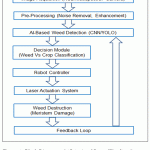 |
Figure 1: Block Diagram of AI-Assisted Laser Weeding System |
One of the most advanced commercial systems is the Carbon Robotics LaserWeeder™ as shown in figure 2. This platform uses multiple cameras and deep learning models to detect weeds in real time. The system can operate at normal farming speeds while scanning crop rows continuously. Once a weed is detected, the system fires a laser pulse that destroys the weed’s growth point. Field tests show detection accuracy greater than 99%, and the machine can eliminate more than 200,000 weeds per hour.12,25
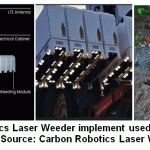 |
Figure 2: Carbon Robotics LaserWeeder implement used for AI-based laser weed control.25 [Source: Carbon Robotics Laser Weeder TM] |
In addition to large tractor-mounted machines, researchers are also developing smaller autonomous robots. These compact robots are useful for greenhouse crops, vegetable farms, and specialty crops. They typically use small diode lasers, embedded AI processors, and navigation systems to move through crop rows and remove weeds automatically. In Table 4, Experimental robotic systems have demonstrated weed control efficiencies between 85% and 90% in controlled environments.10Researchers are now exploring multi-robot systems that work together across large fields. These robotic fleets could increase coverage and improve efficiency while maintaining precise weed targeting.
Table 4: Comparison of Autonomous Laser Weeding Platforms
| System | Platform Type | Detection Technology | Performance | Limitation |
| Carbon Robotics LaserWeeder | Tractor-mounted | Deep learning + multi-camera system | ~200,000 weeds/hour | Very high capital cost |
| AVO Robot | Autonomous solar robot | RGB computer vision | Solar-powered operation | Limited crop compatibility |
| Experimental Robotic Platforms | Small autonomous robots | CNN-based detection | ~85–90% weed control | Limited field coverage |
When comparing different technologies, hybrid system that combines AI detection, robotic, and laser treatment is currently provide the most effective weed control. Traditional machine learning method generally achieved detection accuracy below 85%. In contrast, modern deep learning models such as CNNs and YOLO can achieving accuracy level above 95% in many experimental setup.11,22Advance in laser hardware also has improved system performances. Blue diode laser are becoming popular because plant absorbs blue light very strongly. This allow the laser to destroy weed tissues with lower energy compare to some older laser system. As a result, blue diode lasers can improves energy efficiency and integrate good with robotic platform.10,11Despite these advance, several challenge still limiting large-scale adoption. Laser weeding system remains expensive. Detection accuracy can also affected by dust, shadow, rain, and changing light condition. In addition, detect multiple weed species in complex crop environment remain difficult. Future research will likely focusing on improve edge-AI processing, combine multiple sensor, and developing more affordable robotic platform.
Real-Time Operational Constraints
Real-time operation is one of the most critical requirement in AI-assisted laser weed management system. During field operation, the robotic platform continuously move through crop rows while capturing image, detecting weed, and activating laser pulse within millisecond. Delay in AI inference or robotic synchronization may reduce targeting precision and increase the risk of crop injure. Deep learning architecture such as YOLO are increasingly prefer for real-time application because it provide fast inference speed while maintain high detection accuracy. However, computationally intensive model such as Mask R-CNN often requires high-performance GPU, which limiting their deployment on light-weight edge deviceas shown in table 5. Embedded systems including NVIDIA Jetson Nano, Jetson Xavier, and Raspberry Pi-based AI platforms offer improved portability but still face constraints related to memory capacity, processing speed, and power consumption.23,26
Table 5: Comparison of AI Models for Object Detection and Real-Time Performance
| AI Model | Detection Accuracy | Real-Time Capability | Hardware Requirement | Main Limitation |
| CNN | High | Moderate | GPU preferred | Slower inference |
| YOLO | Very High | Excellent | Edge AI compatible | Reduced segmentation precision |
| Mask R-CNN | Very High | Moderate–Low | High-performance GPU | High computational cost |
| EfficientDet | High | Good | Moderate GPU | Complex optimization |
Synchronization between weed detection, robotic positioning, and laser actuation also remain a major technical challenge. Environmental factor such as vehicle vibration, motion blur, uneven terrain, and changing illumination condition may affects system response time and targeting accuracies. Future system should therefore prioritized lightweight AI architecture, optimize edge computing framework, and low-latency control system for reliable real-time field deployments.
Commercial Systems vs Research Prototypes
Combining lasers with autonomous robots represent a major advancement. Robots equipped with cameras, navigation sensor, and AI can detects weeds and apply laser treatment without human interventions. These system reduce labor and allow continuous field monitoring.27Commercial systems shows the feasibility of large-scale operation. The Carbon Robotics LaserWeeder use multiple high-resolution camera and deep learning model to detect weed and fire laser in real time. Field trial reported detection accuracies above 99% and processing more than 200,000 weed per hour.12,24
Smaller robot is also used in greenhouse and specialty crop. They combines compact laser module with embedded AI, achieving weed control efficiency above 85% in controlled environment.9,10These system shows that laser weeding can adapts across diverse agricultural context.
AI-assisted laser weeding system can generally be classify into commercial field-ready platform and experimental research prototype as shown in Table 6. Commercial system mainly focuses on large-scale operations, high-speed weed remove, and continuous field performances, while research prototype is design to test new AI algorithm, robotic system, sensor, and laser technology under controlled condition.
One of the most advance commercial platform is the Carbon Robotics LaserWeeder. The system combine high-resolution camera, deep learning-based weed detections, and multiple laser module for real-time weed destroy. It can reportedly eliminated more than 200,000 weed per hour with detection accuracy above 99%. Commercial systems are suitable for large farm and continuous operations, but it requires very high investment due to expensive sensor, laser, and robotic hardware.11,24
Research prototype are usually smaller autonomous robot equipped with compact diode laser, RGB camera, and embedded AI processor. Several system developed for greenhouse crop and specialty farming has reported weed control efficiencies between 85% and 90%. Some experimental robot, such as the AVO robot, also uses solar-power operation to improve energy efficiency. Although this systems is flexible and useful for technology developments, they often have lower operation speed and limited scalable compare with commercial platform.
Overall, commercial system emphasize scalability, robustness, and high throughputs, whereas research prototypes focus on improve detection accuracy, reducing energy consumption, and testing advance AI-based targeting method. Despite their limitation, research prototype remain important because many emerging technology such as edge AI, multisensory fusions, and lightweight blue diode laser may contributes to future cost-effective commercial laser weeding system.
Table 6: Comparison of Commercial Systems and Research Prototypes
| Feature | Commercial Systems | Research Prototypes |
| Primary Objective | Large-scale field deployment | Experimental validation and technology development |
| Example Platforms | Carbon Robotics LaserWeeder | AVO Robot, autonomous research robots |
| Detection Technology | Deep learning + multi-camera systems | CNN, YOLO, embedded AI systems |
| Weed Control Efficiency | ~90–99% | ~85–90% |
| Operational Speed | Very high (>200,000 weeds/hour) | Moderate |
| Scalability | Suitable for large farms | Limited field coverage |
| Cost | Very high capital investment | Lower experimental cost |
| Flexibility | Commercially optimized | Highly customizable for research |
| Main Limitation | High equipment cost | Limited robustness and scalability |
Methodology
This review adopt a structured survey methodology to examine the development of laser-based weed management technologies and their role in precision and sustainable agriculture. The objectives are to systematically analyze existing studies, compare technological frameworks, and identify research gaps that influence the design and deployment of laser-enabled weed control systems in modern farming environment.
To build a comprehensive knowledge base, a detailed literature search was consider across databases including Scopus, Web of Science, IEEE Xplore, ScienceDirect, SpringerLink, and Google Scholar. The search focus on studies published between 2010 and 2025 in order to capture both early experimental work on laser–plant interactions and the latest advancements in artificial intelligence driven weed detection system. Keywords such as laser weeding, precision agriculture laser, AI-based weed detection, autonomous weed control, CO2 laser weed management, fiber laser agriculture, and diode laser weed suppression was used in different combination during the search process. These keywords was apply to titles, abstracts, and full texts to identify relevant publication addressing technological development, agronomic effectiveness, and operational performance of laser weeding system.9,24
A screening process was then carried out using predefined inclusion and exclusion criteria. Only studies that directly investigate laser-based weed management technologies, robotic weed control platforms, or AI-assisted crop–weed classification methods was consider. Experimental studies reporting laboratory validation, greenhouse trials, or field experiments was prioritize. Research lacking experimental verification or methodological transparency was exclude. Similarly, articles that discussed weed management in general without any direct link to laser technology or precision agriculture framework was not include in the final analysis.28
For each selected publication, important technical information was carefully extract. The analysis focus on parameters such as laser type, wavelength, power output, beam delivery mechanisms, and energy application strategies. These characteristics play a critical role in determine weed destruction efficiency and plant tissue damage dynamic. Earlier experimental studies have demonstrate that laser irradiation direct toward the apical meristem can disrupt plant growth by damaging essential cellular structure responsible for regeneration.13,14The review therefore consider how different laser configurations including CO2lasers, diode lasers, and fiber lasers affect treatment precision, operational speed, and energy consumption.10,11
Alongside hardware consideration, the review also evaluate machine vision and artificial intelligence techniques used for crop–weed discrimination. Earlier image processing and machine learning algorithms such as Support Vector Machines and Random Forest classifiers was used for such system. These approaches offer moderate accuracy but was often sensitive to variations in illumination, soil background, and crop growth stage.19More recent studies demonstrates the increasing adoption of deep learning models. Convolutional Neural Networks, object detection frameworks such as YOLO and Mask R-CNN, and efficient real-time architectures have significantly improve weed detection performance under complex field condition.20Additional to that, few feature like short processing time and high detection accuracy is essential for real-time laser targeting.
The technological integration of sensing platform was also analyzed as part of the methodology. Modern laser weeding systems rely heavy on high-resolution imaging sensors and environmental sensing technologies. RGB cameras remain widely use because of their cost effectiveness and compatibility with deep learning models. However, several studies also explores multispectral imaging and LiDAR sensors to enhance plant discrimination and depth estimation capability.21Advantages such as sensor fusion techniques, better robustness, and reduced false detection becomes particularly important when operating in outdoor environments where lighting conditions and crop canopy structures continuously changing.
Another important component examine in this review is the integration of robotic platforms and autonomous navigation systems. Laser weeding units is increasingly mounted on autonomous agricultural robots or tractor-based platforms capable of performing targeted weed control operation without human intervention. Navigation technologies such as GPS guidance, machine vision navigation, and obstacle detection systems enables precise movement through crop rows while maintaining alignment with weed detection modules.27Once a weed is detected, the control system direct the laser beam toward the growth point of the plant. Rapid targeting. Minimum crop damage. Efficient weed suppression.
The collected studies were then organize and analyzed using a thematic synthesis approach. In addition to qualitative synthesis, comparative evaluation metrics including weed detection accuracy, weed suppression efficiency, inference capability, energy consumption characteristics, operational scalability, and robotic integration was analyzed across the selected studies. Statistical trends in AI model adoption, laser technologies, and reported weed control performance was also examined to identify technological evolution pattern and remaining research gaps. Today, the research direction increasingly combine artificial intelligence, robotics, and energy-efficient laser systems to create fully autonomous weed management framework.28
The methodology also consider emerging technological trends that may shaping the next generation of laser weeding systems. These includes energy-efficient blue diode lasers, edge-based artificial intelligence processor, and distributed robotic fleets design for large agricultural fields. Such innovations aim to reduce operational cost while improving system scalability and sustainability.10,12However, several challenges remain, like equipment costs, energy consumption, and environmental changes. Addressing these limitation is essential for achieve widespread adoption of laser-based weed control technologies.
Through this structured methodological approach, the review synthesizes current research findings, compare different technological solutions, and identify critical area requiring further investigation. The resulting analysis provides a comprehensive understanding of how laser-based weed management systems is evolving within the broader context of precision agriculture and sustainable farming practice.
Comparative Analysis of Existing Techniques
A comparative analysis of existing weed management technique provide a more clear understand of their operation effectiveness, environment impact and technology limitation. As show in figure 3, traditional weed control approach such as chemical herbicide, mechanical tillage and thermal weeding has been widely use in agriculture since many decade.
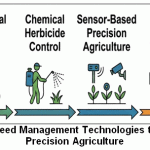 |
Figure 3: Evolution of Weed Management Technologies toward AI-Enabled Laser Precision Agriculture |
However, the increasing demand for sustainable farming practice has encourage the development of precision-based technology such as AI-assisted robotic system and laser-based weed management framework. Each technique offer unique advantage but also present certain operational and environmental trade-off.
Table 7 summarize the major characteristic, performance outcome, and limitation of conventional and emerging weed control approach, including chemical, mechanical, thermal, AI-driven robotic, and laser-based weed management system.
Table 7: Comparative Analysis of Existing Weed Management Techniques
| Approach | Core Technology | Key Enhancement | Weed Control Efficiency (%) | Key Limitation |
| Chemical Herbicides | Chemical spraying systems | Selective herbicide formulations | 90–95 | Herbicide resistance, environmental contamination |
| Mechanical Tillage | Mechanical soil disturbance | Inter-row cultivation tools | 70–85 | Soil degradation, increased erosion |
| Thermal / Flame Weeding | Heat-based plant tissue destruction | Propane burners / thermal units | 70–90 | High energy consumption, CO2 emissions |
| AI-Based Robotic Weeding | Machine vision + robotics | CNN/YOLO-based weed detection | 85–95 | High computational requirements |
| Laser-Based Weed Control | Targeted laser irradiation | AI-guided laser targeting | 90–99 | High initial system cost |
The comparative evaluation highlight significant difference among conventional and emerging weed control method. Chemical herbicide remains the most widely adopt solutions due to its rapid action and high weeds suppression rate. However, excessive relying on herbicides have negatively promoted development of herbicide-resistant weeds population and increase environmental contaminate of soil and water resource. This concern has encourage the search for more sustainable alternative. Mechanical tillage offer a effective non-chemical methods by physical removing weeds through soil disturb. While this technique can significantly reduce weeds density during early crop growth stage, repeat tillage can negative affect soil structures, reduce microbe diversity, and increase erosion risk. Thermal weed control method, including flame weeding, provides another chemicals-free alternative by exposing plant tissue to high temperature. Although this system can achieve moderate to high weeds mortality rate, their energy-intense nature and associate greenhouse gas emission limit it scalability for large agriculture operation.
Table 8: Economic Comparison of Weed Management Approaches.
| Approach | Initial Cost | Operating Cost | Labor Requirement | Environmental Cost | Suitability for Developing Countries |
| Herbicides | Low | Moderate | Low | High | High |
| Mechanical Tillage | Medium | Medium | Moderate | Moderate | Moderate |
| Thermal Weeding | Medium | High | Moderate | High energy demand | Limited |
| AI Robotic Weeding | High | Moderate | Low | Low | Limited |
| Laser Weeding | Very High | Moderate–High | Low | Low | Currently limited |
As shown in Table 8 above, economic feasibility still remains a major factor that influencing the adoption of laser-based weed management systems, especially in developing countries. Although laser weeding can reduce long-term herbicide dependency and labor requirement, the high initial investment cost associate with lasers, sensors, robotic platforms and AI hardware currently limit the accessibility for small and medium scale farmers.29Lower-cost diode laser system, shared robotic service model and government-supported precision agriculture program may help to improve affordability and adoption in resource-constrained agricultural region. Recent advancement in artificial intelligence and agricultural robotics have increase the capabilities of AI-based autonomous weeding system. These platform use machine vision algorithm such as convolutional neural networks (CNNs) and real-time object detection model like YOLO to differentiate crop from weed and apply target control action. AI-based robotic system show improved precision and reduced chemical dependency, but often require powerful computational element and high-quality training dataset to keep reliable performance under diverse field condition. Among the emerging solution, laser-based weed control system represent the most promising technology for precision agriculture. These system combine high-resolution imaging sensor, AI-based plant recognition algorithm and focused laser beam to selectively destroy weed meristems without disturb the surrounding soil or crop. Experimental and commercial system have report weed control efficiency exceeding 90–99% under optimized condition. In spite of these advantage, laser weeding technologies still facing challenge related to high capital investment, operation scalability, and the need for robust detection algorithm that can handle environmental variability. Compared with herbicide-based, mechanical and thermal weed management approach, AI-assisted laser system provide more superior targeting precision, lower chemical dependency and reduce soil disturbance, although challenge related to cost, energy demand and scalability still limiting the widespread adoption. Overall, the comparative analysis show that while traditional weed management technique remain widely use, precision technologies like AI-assisted laser weeding offering a more ecofriendly and sustainable alternative. Continuous advancement in artificial intelligence, robotics and energy-efficient laser system is expected to further enhance the practicality and adoption of laser-based weed management framework in modern precision agriculture.
Challenges and Research Gaps
Despite rapid progress in AI-assisted laser weeding system, several technological and operational challenge still limit their large-scale adoption. This challenge mainly arise from limitation in computer vision accurate, high hardware cost, energy requirement, and environment variability in agriculture field.
Previous studies indicate that although laser-based weed control demonstrates high precision and promising weed suppression rates, practical deployment in large-scale agricultural systems requires further technological improvements and cost optimization.24,28
In addition, factors such as field scalability, robotic reliability, and safety concerns must be addressed to ensure sustainable and efficient operation.26Research suggest that improve machine vision algorithm, develop energy-efficient laser hardware, and implement adaptive robotic system is essential for enable the wide spread use of AI-based laser weed management technology. Table 9 summarizes the key challenge, impact, and research gap identify in the literature.
Table 9: Challenges and Research Gaps in AI-Assisted Laser Weeding Systems
| Challenge | Impact / Description | Research Gap / Mitigation Strategy |
| Weed–crop discrimination | Accurate identification is difficult when weeds and crops appear visually similar, especially during early growth stages. | Development of robust deep learning models capable of detecting weeds under varying lighting, occlusion, and growth conditions. |
| High capital cost | Expensive laser emitters, sensors, and robotic platforms limit adoption, particularly for small and medium farms. | Development of cost-effective laser modules, shared-use platforms, and potential government subsidy programs. |
| Energy consumption | Continuous laser firing and AI computation require high power, reducing operational duration in field conditions. | Development of energy-efficient laser systems and optimized AI inference models. |
| Multi-species detection | Detecting multiple weed species simultaneously increases computational complexity and reduces processing speed. | Integration of multispectral imaging and advanced computer vision algorithms. |
| Field variability | Soil texture, crop density, lighting variation, and environmental factors affect detection accuracy and targeting precision. | Development of adaptive algorithms capable of operating reliably across diverse agricultural environments. |
| Real-time processing constraints | Autonomous operation requires weed detection and laser targeting within milliseconds. | Lightweight AI architectures optimized for real-time edge computing. |
| Environmental interference | Dust, rain, and debris can affect optical components and reduce system accuracy. | Weatherproof enclosures, sensor calibration, and robust hardware design. |
| Field scalability | Current systems often have limited working width, reducing efficiency in large fields. | Multi-laser arrays and coordinated autonomous robotic fleets. |
| Robotics reliability | Mechanical faults and system downtime affect operational efficiency. | Predictive maintenance systems and improved robotic durability. |
| Safety concerns | High-power lasers may pose risks to crops, operators, animals, and surrounding ecosystems. | Automated shutdown systems, safety sensors, and regulatory guidelines. |
| Regulatory and ecological concerns | Potential impacts on soil health, biodiversity, and lack of regulatory standards. | Long-term environmental studies and development of safety regulations. |
As mentioned in Table 9, addressing these challenge becomes mandatory for the practical deployment of AI-powered laser weeding technologies in modern farming system. Research indicate that while experimental and commercial prototype has demonstrated high weed control efficiency, issue related to system cost, environmental adaptability, and detection accuracy still requires further investigations. Continued advance in machine vision algorithm, robotic navigation system, and energy-efficient laser hardware will therefore be crucial for enable scalable precision weed management solution. Safety and regulatory compliance represent important consideration for large-scale deployment of laser-based weed management system. High-power agricultural laser may create risk for operator, nearby worker, livestock, and surrounding crop if targeting system malfunctions or environmental condition interferes with beam delivery. Exposure to direct or reflected laser radiations may also posing potential eye and skin hazard during field operations. To improved operational safety, modern system increasingly incorporates automated shutdown mechanism, obstacle detection sensor, emergency stop control, and protected laser enclosure. In addition, future deployment will requires compliance with agricultural machinery safety standard, laser classifications regulation, and autonomous robotic operation guideline. Long-term environmental assessments and regulatory framework will therefore plays an important role in support safe commercialization of AI-assisted laser weed management technology.26
Future Directions
Recent development highlight several very promising research direction for advancing AI-assist laser weed management in modern precision agriculture. Continue progress in artificial intelligences, robotic, and sensing technology is expected to significant improve the efficiency, accuracy and scalability of laser-based weed control system.
Edge AI for Real-Time Weed Detection – With lightweight and deployable AI model directly on robotic platform can enable real time weed identify and laser targeting in the field, reducing latency and also minimizing dependence on cloud computing system. Edge-based processing framework already demonstrate improve response time for autonomous agricultural robot operating under dynamic field condition.
Multi-Sensor Weed Detection Systems – Integrating RGB camera with advance sensor such as hyperspectral imaging, thermal camera, or LiDAR technology can enhancing weed detection accurate under various environmental condition. Sensor fusion technique has been show to improve crop–weed discrimination in heterogeneous agriculture environment.21
Autonomous Swarm Robotics – Future weed management system maybe involve multiple small collaborate robot capable to working simultaneously across large agricultural field. Such robotic fleet could significant increase field coverage and operation efficiency compare with single-platform system.24,27
Explainable AI in Agricultural Robotics – The developing of interpretable artificial intelligence model can help farmer and agronomist understand how weed detection decision are make. Improve transparency and reliable in AI model will be critically for building trust and encouraging the adoption of automate weed management technology in agriculture practice.19
Integration with Sustainable Farming Practices – Laser-base weed control can be integrate with broader sustainable agriculture strategy, including integrated weed management system, crop rotations, and reduce herbicide use. Such integration will contribute to environmental sustainable farming while still maintain effective weed suppress.6
The advancement of these research direction will play a critical roles in transform laser-based weed control from an emerging technology into a modern agriculture practice. Future study should focusing on improve system affordability, improve detection accuracy and developing energy-efficient autonomous platform capable to operate reliable in diverse farming environment. By address these challenge, AI-assist laser weeding system have the potential for significantly contribute for sustainable crop production and the advance of smart farming technology.
Discussion
Recent studies show that laser-based weed management are becoming a promising solution for precision agriculture. The combination of artificial intelligence, machine vision, and robotic platforms has improve the ability to detect and destroy weeds accurate. Many experimental and commercial system report weed control efficiency between 90% and 99% under controlled or optimized field condition. Deep learning models such as CNN, YOLO, and Mask R-CNN has significantly improved crop–weed classification accuracy. This models help systems recognizes weeds quickly and guide the laser beam toward the weed meristem, which stop plant growth. Because of this precise targeting, laser system can remove weeds while minimizing crop damage and avoiding soil disturb. This make laser weeding an attractive alternative to chemical herbicides, especially for sustainable and organic farming system. Even with this advantages, several challenge still limit the practical use of laser weeding technologies. One major issues is high system cost. Commercial laser weeding machine often require multiple cameras, powerful laser, and advance computing hardware. This component increases the overall investment require for farmer. Real-time operation also require fast image processing. The system must detect weeds, classify them, and fires the laser in a very short time. Field environment makes this process more difficult. Light conditions change through the day. Soil background vary across field. Crop leaf sometimes overlap with weeds. This factors can reduce the accuracy of detection model and affect targeting performances. New technological development may help address these problems. Energy-efficient laser source, especially blue diode lasers, requires lower power while still damaging weed tissue effective. This can reduces energy consumption and make robotic system lighter and more portable. Another important improve is the use of edge computing and embedded AI processor. Instead of rely on large external computer, detection algorithm can runs directly on robotic platform. This allowsfaster decisions in real-time field condition. Researcher is also exploring multi-sensor system that combine RGB camera with multispectral imaging or LiDAR sensor. This sensing methods helps distinguish crops and weeds more accurate when visual difference is small.
Despite these improvement, several research gap still exist. Field scalability remain a major challenge. Most currently available laser weeding system has been validated under controlled environment or limited field-scale condition. Scaling this technology to large agricultural farm introduce additional challenges related to operation speed, robotic navigation, battery endurances, and multi-row field coverages. Diverse environmental condition including rainfall, dust accumulate, variable illumination, crop occlusion, and heterogeneous weed population may further reducing detection consistency and targeting precision. Multi-crop farming system also present difficulty because crop morphology, canopy structures, and weed density varies significantly across agricultural environment. AI model trained for one crop system may not generalize effective to other crop type without additional re-training and dataset expansions. Future research should therefore focuses on adaptive AI framework and coordinated multi-robot system capable of support scalable field deployment across diverse agricultural condition.
Many robotic platform has limited working width, which restrict the area they can cover in large farm. Increasing the number of laser module or using coordinated robotic fleet may improving operational efficiency. Another issues is the generalization of AI model. Many detection system is trained using dataset collected in controlled environment. When this models are applied to real field, detection accuracy may drops by 5–15% because of environment variability. Larger and more diverse agricultural dataset needs to improve model reliable. Long-term effect of repeated laser expose on soil health, microorganism, and crop physiologies are also not yet fully understood and require farther studies.
Laser weeding maybe also work best when it is use as part of Integrated Weed Management (IWM) and not as a single standalone technology. As it is show in Table 10, combining laser system with other practice like crop rotation, mechanical cultivation or cover cropping can improving overall weed control.10These strategy reduce weed seed bank and also decrease the work load on the robotic system. In this way, laser technology become one component of a more broad precision agriculture frame work that is design to increase productivity while also reducing environment impact.
Table 10: Laser Weeding within Integrated Weed Management (IWM) Frameworks
| IWM Component | Role in Integration | Benefits |
| Mechanical inter-row cultivation | Suppresses dense weeds between laser passes | Reduces workload on laser systems15 |
| Cover cropping | Competes with weeds for resources | Reduces weed seed bank and weed pressure2 |
| Crop rotation | Disrupts weed life cycles | Limits weed adaptation and improves long-term control30 |
| Targeted herbicide use | Applied selectively for resistant weeds | Minimizes overall chemical input2 |
Integration of laser weeding with other IWM strategies strengthen sustainable weed management systems and improve resilience against herbicide resistance and environmental pressure. Overall, laser-based weed management representsa important step toward chemical-free precision agriculture. AI-guided detection, advanced sensor, and targeted laser irradiation provides effective weed control with a minimal soil disturbance. However, the widespread adoption will depends on reduce system costs, improving detection reliable in real field environment, and increase operational scalability. A continued collaborations between agricultural researcher, robotic engineer, and AI specialist are essential for develop practical and affordable laser weeding system for modern farming.
Conclusion
Laser-based weed management has emerge as a promising technology for achieve sustainable and precision-oriented agriculture. This review demonstrate that the integration of artificial intelligence, machine vision, and laser irradiation enable highly accurate weed detection and selective destruction while minimizing crop injure, soil disturb, and dependence on chemical herbicide. The combination of deep learning algorithm with autonomous robotic system represent a major advancement toward environmentally responsible and data-driven weed management practice.
The reviewed study indicate that modern laser weeding system can achieve weed control efficiency ranging from 90% to 99% under optimize operating condition. Significant progress in deep learning architecture, including CNN, YOLO and Mask R-CNN based model, has substantially improve real-time crop–weed discrimination and laser targeting accurate. Furthermore, the transition from conventional CO2 laser to compact diode and blue diode laser system has enhance energy efficiency, reduce system complexity, and improve compatibility with autonomous field robot.
Despite these advances, several technical and operational limitation continue to restrict large-scale adopt. High equipment cost, computational demand for real-time processing, and variable field condition such as changing illumination, crop occlusions, soil heterogeneous, and weed morphological diversity remains major challenge affecting system robust and reliability. This limitations highlight the need for more adaptive and economic viable solution suitable for practical agriculture deployment.
Future research should therefore prioritized the development of low-cost, lightweight, and scalable laser weeding platform integrated with edge AI, multi-sensor fusions, and energy-efficiency laser technology. Greater emphasis should also be place on field-level validations, autonomous navigations, and integration with broader Integrated Weed Management (IWM) framework to improve operation efficiency and long term sustainability.
In conclusion, AI-assisted laser weed management have strong potential to transforming next-generation weed control by offering a precise, chemical-free, and environmental sustainable alternatives to conventional herbicide-based practice. Continue interdisciplinary collaborations among agricultural scientist, robotic engineer, laser technology, and AI researcher will be critical for translate current experimental system into reliable, commercial viable, and field-ready solution capable of support the future of sustainable agriculture.
Acknowledgement
The author would like to thank all coordinators for constant updates and support.
Funding Sources
The author(s) received no financial support for the research, authorship, and/or publication of this article.
Conflict of Interest
The authors do not have any conflict of interest.
Data Availability Statement
This statement does not apply to this article
Ethics Statement
This research did not involve human participants, animal subjects, or any material that requires ethical approval.
Informed Consent Statement
This study did not involve human participants, and therefore, informed consent was not required.
Permission to reproduce material from other sources
Not Applicable
Author Contributions
- Vikas Madhavrao Somvanshi: Conceptualization, methodology, draftsupervision, correspondence.
- Ashvini Sunil Kolate: Literature review, data collection, preparation and visualization.
- Jayesh Nana Patil: Data analysis, validation, comparative analysis.
- Prayag Satish Patil: Methodology support, technical validation, manuscript editing.
References
- Friedrich, T., &Kassam, A. (2011). Plant Production and Protection Division, Food and Agriculture Organization (FAO) of the United Nations, Rome, Italy. Low-Input Intensification of Developing Countries ‘Agriculture–Opportunities and Barriers, 115.
- Wang, C., Song, C., Xu, T., & Jiang, R. (2025). Precision Weeding in Agriculture: A Comprehensive Review of Intelligent Laser Robots Leveraging Deep Learning Techniques. Agriculture, 15(11), 1213.
CrossRef - Duke, S. O., & Heap, I. (2017). Evolution of weed resistance to herbicides: What have we learned after 70 years? In Biology, physiology and molecular biology of weeds (pp. 63-86). CRC Press.
CrossRef - Cloutier, D. C., & Leblanc, M. L. (2001). Mechanical weed control in agriculture. In Physical control methods in plant protection (pp. 191-204). Berlin, Heidelberg: Springer Berlin Heidelberg.
CrossRef - Askarzadeh, Y., Jones, E., Sahraei, M., Abdalla, A., &Nafchi, A. M. (2024). Sustainable Weed Management through Precision Cover Cropping System. In 2024 ASABE Annual International Meeting (p. 1). American Society of Agricultural and Biological Engineers.
CrossRef - Tyler, H. L., & Locke, M. A. (2018). Effects of weed management on soil ecosystems. In Weed control (pp. 32-61). CRC Press.
CrossRef - Pramanik, P., Bandyopadhyay, K. K., Bhaduri, D., Bhattacharyya, R., & Aggarwal, P. (2015). Effect of mulch on soil thermal regimes-a review. International Journal of Agriculture, Environment and Biotechnology, 8(3), 645-658.
CrossRef - Khan, B. A., Nijabat, A., Khan, M. I., Khan, I., Hashim, S., Nadeem, M. A., &Ikram, M. (2022). Implications of Mulching on weed management in crops and vegetable. In Mulching in agroecosystems: plants, soil & Environment (pp. 199-213). Singapore: Springer Nature Singapore.
CrossRef - Czymmek, V., Völckner, J., Zilske, F., & Hussmann, S. (2026). Field Validation of a Laser-Based Robotic System for Autonomous Weed Control in Organic Farming. AgriEngineering, 8(4), 133.
CrossRef - De Meester, M., de Theije, T., Cool, S., Nuyttens, D., Delanote, L., &Cauwer, B. D. (2026). Bio-Efficiency of Blue Diode Laser Treatment on Weed Seedlings and Seeds Under Controlled Conditions. Agriculture, 16(4), 474.
CrossRef - Zhu, H., Zhang, Y., Mu, D., Bai, L., Zhuang, H., & Li, H. (2022). YOLOX-based blue laser weeding robot in corn field. Frontiers in Plant Science, 13, 1017803.
CrossRef - Sosnoskie, L. M., Bill, K., Butler‐Jones, A., Bouchelle, W. M., &Besançon, T. E. (2025). Deep learning‐based laser weed control compared to conventional herbicide application across three vegetable production systems. Pest management science, 81(8), 4922-4936.
CrossRef - Yaseen, M. U., & Long, J. M. (2024). Laser weeding technology in cropping systems: A comprehensive review. Agronomy, 14(10), 2253.
CrossRef - Kaierle, S., Marx, C., Rath, T., &Hustedt, M. (2013). Find and Irradiate—Lasers Used for Weed Control: Chemical free elimination of unwanted plants. Laser Technik Journal, 10(3), 44-47.
CrossRef - Kumar, S. P., Tewari, V. K., Mehta, C. R., Chethan, C. R., Chandel, A., Pareek, C. M., &Nare, B. (2022). Mechanical weed management technology to manage inter-and intra-row weeds in agroecosystems: A review. Indian Journal of Weed Science, 54(3), 220-232.
CrossRef - Bauer, M. V., Marx, C., Bauer, F. V., Flury, D. M., Ripken, T., &Streit, B. (2020). Thermal weed control technologies for conservation agriculture—a review. Weed Research, 60(4), 241-250.
CrossRef - Slaughter, D. C., Giles, D. K., & Downey, D. (2008). Autonomous robotic weed control systems: A review. Computers and electronics in agriculture, 61(1), 63-78.
CrossRef - Feyaerts, F., & Van Gool, L. (2001). Multi-spectral vision system for weed detection. Pattern Recognition Letters, 22(6-7), 667-674.
CrossRef - Zhao, H., & Wang, Y. (2025). Deep learning–based approaches for weed detection in crops. Frontiers in Plant Science, 16, 1746406.
CrossRef - Mwitta, C., Rains, G. C., &Prostko, E. P. (2024). Autonomous diode laser weeding mobile robot in cotton field using deep learning, visual servoing and finite state machine. Frontiers in agronomy, 6, 1388452.
CrossRef - Ghatrehsamani, S., Jha, G., Dutta, W., Molaei, F., Nazrul, F., Fortin, M., …&Neupane, J. (2023). Artificial intelligence tools and techniques to combat herbicide resistant weeds—a review. Sustainability, 15(3), 1843.
CrossRef - Zou, K., Wang, H., Yuan, T., & Zhang, C. (2023). Multi-species weed density assessment based on semantic segmentation neural network. Precision Agriculture, 24(2), 458-481.
CrossRef - Islam, M. D., Liu, W., Izere, P., Singh, P., Yu, C., Riggan, B., …& Shi, Y. (2025). Towards real-time weed detection and segmentation with lightweight CNN models on edge devices. Computers and Electronics in Agriculture, 237, 110600.
CrossRef - Andreasen, C., Scholle, K., &Saberi, M. (2022). Laser weeding with small autonomous vehicles: Friends or foes?.Frontiers in Agronomy, 4, 841086.
CrossRef - Carbon Robotics. LaserWeeder implement. Available at: https://carbonrobotics.com/laserweeder.
- Wang, C., Song, C., Xu, T., & Jiang, R. (2025). Precision Weeding in Agriculture: A Comprehensive Review of Intelligent Laser Robots Leveraging Deep Learning Techniques. Agriculture, 15(11), 1213.
CrossRef - Bechar, A., &Vigneault, C. (2016). Agricultural robots for field operations: Concepts and components. Biosystems engineering, 149, 94-111.
CrossRef - Besançon, T. E., Colquhoun, J., &Sosnoskie, L. M. (2025). Laser Weeding Technology: A Precision Approach for Sustainable Weed Management in Vegetable Crops. Outlooks on Pest Management, 36(5), 186-191.
CrossRef - Andreasen, C., Vlassi, E., &Salehan, N. (2024). Laser weeding: Opportunities and challenges for couch grass (Elymusrepens (L.) Gould) control. Scientific reports, 14(1), 11173.
CrossRef - Kumar, S., Kumari, S., Rana, S. S., Rana, R. S., Anwar, T., Qureshi, H., …&Aghayeva, S. (2024). Weed management challenges in modern agriculture: The role of environmental factors and fertilization strategies. Crop protection, 185, 106903.
CrossRef