


 PDF Downloads:
538
PDF Downloads:
538


Introduction
Bananas (Musa paradisiaca L.) are a highly favoured fruit worldwide, ranking second in global fruit consumption after apples.1,2 This fruit is a vital source of nutrition, offering significant amounts of carbohydrates, vitamins (B6 and B12), and essential minerals such as potassium, magnesium, and phosphorus.3,4 The high vitamin B6 content in bananas is helpful in preventing infections and is essential for the synthesis of haemoglobin. Bananas are abundant in easily digestible fiber and are free from fat and cholesterol. The starch present in bananas can be transformed into banana flour, which serves as an alternative food source. It has various industrial uses, including applications in the medical sector. They are cultivated in over 150 countries, thriving in a range of agroclimatic environments, especially in Africa, Asia, Europe, Latin America, Oceania, and the Caribbean.5 Bananas are a major staple food for about 400 million people in producing nations and play a crucial role in food security.6-8 Additionally, the banana industry is vital to the economy, generating employment, earning foreign exchange, and contributing to GDP, thus supporting millions of jobs in agriculture, processing, and logistics.9,10 Banana is the leading fruit in terms of production, contributing to 31% of the overall output. India ranks first globally in banana production, cultivating the fruit over an area of 0.92 million hectares, resulting in a total yield of 33.06 million metric tons. The banana crop represents 2.8% of the agricultural GDP in India.5 The country’s varied climate across different regions facilitates extensive banana cultivation, ensuring a year-round supply of the fruit.11 Banana provides substantial income to farmers and are vital for the growing population and changing consumption patterns.12,13 Identifying the correlation between expenses and income from banana cultivation helps in understanding the profitability of banana farming. Cost and income vary based on location, farm size, and crop type. These costs are affected by things like the quality of the roads and buildings, help from the government, and how well farmers use their resources based on their individual needs.9 Studying these factors can help identify economic challenges in production10,14 Modern infrastructures, the correct size of farms focusing in specific crops, and the efficient production of these crops are important elements in establishing the financial stability and development of the area. The Indapur area in Pune district is arid, and farmers of the region have long been familiar to growing rainfed crops, specifically Jawar, and have been involved in sugarcane cultivation in areas with water availability.15-17Agriculture, although an age-old practice, has transformed over the years as a result of economic influences, leading to a competitive environment in farming. This study area is not an exception. Even though the farmers in the area may not have extensive experience in cultivating bananas, the region has become a key producer of bananas and a central hub for banana cultivation in the region. The shift towards banana cultivation is growing in popularity and contributing to the economic development. In this context, understanding production costs, productivity, and profitability is essential for making informed decisions about resource allocation and effective cost management. Moreover, this understanding is key in identifying opportunities for expanding agriculture, creating value chains, and entering new markets. However, there is a notable gap in research regarding the economics of banana farming in this region. Therefore, the objective of our study is to assess the socioeconomic effects of banana production and assessing its economic feasibility in the Indapur tehsil of Pune district, Maharashtra.
Materials and Methods
Study Area
Indapur tahsil is a notable administrative division within the Pune district, comprising a total of 142 villages and one urban centre within the designated study area. The tahsil is organized into eight revenue circles. As illustrated in Fig. 1, the tehsil is situated geographically between 17° 53′ 42″ and 18° 19′ 58″ North latitude, and between 74° 39′ 16″ and 75° 09′ 39″ East longitude. It is positioned within the rain shadow area of the Western Ghats in Maharashtra.17,18 The region covers a total geographical area of 1575.38 km2 and is drained by the Bhima and Nira Rivers.15,19 The Bhima River runs alongside the northern and eastern borders, with a catchment area of 902.43 km2. On the other hand, the Nira River flows through the southern part of the region, with a catchment area of approximately 586.8 km2. The area slopes towards the east, where the Nira River converges with the Bhima River at the village of Narsingpur, which is renowned for its Holi festivities. The region is predominantly composed of three soil types: 30% coarse shallow soil, 40% medium black soil, and 30% deep black soil.15-17
This area often experiences droughts, making it difficult to engage in agriculture because there is not enough water from rain. It has a semi-arid climate. However, the Ujani dam construction on Bima River near village Ujani, along with the availability of water for farming from its backwater along Bhima River and canal systems of Ujani, Nira, and Khadakwasla dam, has led to significant changes in cropping activities, patterns, and economics in the region.18, 20 Despite being classified as arid, the Indapur tehsil is emerging as a significant banana-producing region and a new hub for banana cultivation in Maharashtra. The economic development of this region and the sustainability of its agricultural progress are closely linked to the appropriate scale of crop initiatives and their effective production techniques. Therefore, banana cultivation deserves special attention in the Indapur tehsil.
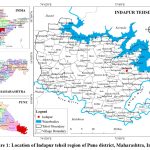 |
Figure 1: Location of Indapur tehsil region of Pune district, Maharashtra, India Click here to view Figure |
Data Collection
The study initiated with the acquisition of both primary and secondary data. Primary data was obtained through interviews, discussions with key informants, and field observations, utilizing structured questionnaires. Additionally, preliminary field visits, data verification, validation, and discussions with members and officials from the Krishi Utpanna Bajar Samiti and the Agriculture Department were conducted. The study was conducted from January 2022 to December 2024. In the initial year, preliminary observations and data collection were undertaken to prepare for the final experiment. The period from 2023 to 2024 experienced normal rainfall, ensuring adequate water availability in the region and a generally stable climate, which facilitated observations and the formulation of conclusions regarding banana cultivation and its economic aspects. Therefore, the final observations were conducted from April 2023 to December 2024. The information gathered primarily depended on the memories of the individuals involved. Those who were unable to provide adequate information were excluded from the selection and data analysis process. Both random and purposive sampling methods were utilized to select farmers and other stakeholders. The participants in the study were purposely chosen from farmers and stakeholders who were willing to share the necessary information. Among these required sample participants were selected using simple random sampling method. Ultimately, based on the size of the farms used for banana cultivation, the respondent farmers were classified into three group categories: small farms are under 0.4 hectares, medium farms are between 0.41 and 0.80 hectares, and large farms are 0.81 hectares or more. Over 640 banana farmers from the region were surveyed, with 90 farmers chosen randomly from each group – small, medium, and large – depending on the data accessible. Overall, data from 270 farmers selected randomly was used for the analysis. An interview schedule was conducted with farmers in the local language. Data obtained from both primary and secondary sources were organized and analysed using the Statistical Package for Social Sciences,2016 (SPSS) as well as Microsoft Excel. The accuracy of the data was verified through cross tabulations and random sampling checks. Descriptive statistics were employed to assess the level of application, which was illustrated through percentages, frequency counts, means, standard deviations, and standard errors. Duncan’s multiple range test (DMRT)21 was used to analyse differences among the variables.
Cost Analysis of Banana Cultivation
The expenses related with banana production were recorded through discussions with farmers. These expenses were categorized into three components: fixed costs, variable costs, and total costs. 22 Fixed costs included the rental value of the land, taxes and levies, as well as overhead expenses such as equipment depreciation and insurance. On the other hand, variable costs consisted of expenditures for labour, land preparation, the acquisition of suckers or tissue culture plantlets, compost and farmyard manure, chemical fertilizers, liquid fertilizers, biofertilizers, plant protection chemicals, and other associated costs. The total production cost is calculated by adding the fixed and variable costs incurred during the banana cultivation process.22 Fixed costs = Rental value + Insurance + Depreciation + Taxes and levies
Variable costs = Land preparation + Suckers + Labor + Manure + Fertilizers + Plant protection + Irrigation + Other expenses.
To evaluate the profitability of banana crop production, various costs were calculated, including Cost A1, A2, Cost B1, B2, and Cost C1, C2 in accordance with the guidelines set forth by the Cost Studies, Directorate of Economics and Statistics, Government of India.22 Cost A1 includes expenses related to hired labour, land preparation, the purchase of suckers or tissue culture plantlets, compost and farmyard manure, chemical fertilizers, liquid fertilizers, biofertilizers, plant protection chemicals, machinery costs, irrigation taxes and levies, as well as overheads such as repairs, equipment depreciation, insurance costs, and interest on operational funds. While cost A2 is the sum of cost A1 and rent paid for leased land (No leased land concept was observed in the tehsil and therefore cost A1 and A2 are same) Cost B1 is the sum of cost A2 and rental value of land rent, and cost B2 is the sum of cost B1 and fixed capital interest. Cost C1 is the sum of cost B2 and expenditure on family labour, and cost C2 is calculated as the sum of cost C1 and 10 percent of cost C1 as administrative input of the farmer.
Returns and profit
Gross income: It is determined by adding the total value at harvest price to the value of any by-products obtained.
Net income: It is calculated by deducting the total cultivation costs from the gross income.
Cost of production per unit: It is determined by dividing the net cultivation expenses per hectare by the overall banana yield measured in tonnes per hectare.
The benefit-cost ratio was calculated by dividing the total gross income by the production cost per hectare at A2, B2 and C2.22 In the research area, farmers utilized a combination of purchased and self-supplied inputs for growing bananas. These inputs were valued based on the current market prices during the study timeframe. The results obtained from data analysis were presented as averages with the standard deviations.
Result and Discussion
Cost Analysis of Banana Cultivation
The expenses associated with various resources utilized for banana cultivation per hectare by various size groups farmers (small farms, medium farms, and large farms) in the Indapur tehsil region are illustrated and their averages are depicted in table 1. Among the cost component A, B, and C, the cost component A1/A2 includes the higher cost items such as hired labour, fertilizers, irrigation, tissue culture plantlets/ suckers which ranges between Rs. 20818.1 to Rs. 47639.4. Table 1 shows the lower-cost items, such as, biofertilizers, plant protection, and incidental expenses, which are priced between Rs. 6978.8 and 13171.6. The results suggest that there is no significant difference in expenditure among different groups of farmers concerning various resources utilized for cultivating bananas.
Table 1: Requirements and their cost per hectare for cultivation of banana.
| Sr. No. | Particulars | Scale of banana producer farmers group and cost incurred per hectare | |||||||
| Cost at small scale |
Cost at medium scale |
Cost at large scale |
Cost at overall |
||||||
| Rs. | % | Rs. | % | Rs. | % | Rs. | % | ||
| 1 | Hired labour | 31996.5 ±7377.3 | 8.1 | 33523.2±7362.4 | 8.3 | 34469.1±7075.3 | 8.2 | 32949.1±7444.3 | 8.1 |
| 2 | Manure | 20818.1±2055.4 | 5.2 | 20982.7±1484.5 | 5.2 | 22547.9±1649.4 | 5.4 | 21209.3±1362.6 | 5.2 |
| 3 | Fertilizer | 31047.9±3421.5 | 7.8 | 33640.1±3041.2 | 8.3 | 33679.7±6843.6 | 8.0 | 32917.1±3426.6 | 8.1 |
| 4 | Biofertilizer | 7010.9±3731.4 | 1.8 | 6978.8±3982.8 | 1.7 | 8544.6±4709.1 | 2.0 | 7673±4199.5 | 1.9 |
| 5 | Weedicide protection | 11639.2±2207.6 | 2.9 | 12265.6±1945.6 | 3.0 | 12960.1±2171.5 | 3.1 | 12156.1±2121.5 | 3.0 |
| 6 | Machinery | 9748.7±1896.1 | 2.5 | 10880.3±1606.3 | 2.7 | 12192.4±1470.9 | 2.9 | 10964.5±1618.9 | 2.7 |
| 7 | Incidental cost | 10971.8±1182.2 | 2.8 | 13171.6±2323.7 | 3.3 | 12402.8±1942.5 | 3.0 | 12138.2±1576.6 | 3.0 |
| 8 | Irrigation | 38904±2874.3 | 9.8 | 40140.7±4413.5 | 9.9 | 40514.6±6180 | 9.7 | 39507.8±4393.8 | 9.7 |
| 9 | cost of tissue culture plantlets | 47639.4±2644.7 | 12.0 | 47383.3±2296.2 | 11.7 | 47138.6±3260.2 | 11.3 | 47261.3±2546.6 | 11.7 |
| Actual total expenditure | 208213.5±16958.4 | 52.8 | 210755.2±19729.4 | 54.2 | 218418.2±18660.5 | 53.6 | 208769.5±18967.2 | 53.5 | |
| 10 | Interest on total expenditure @6% | 12492.8±1017.5 | 3.2 | 12645.3±1183.8 | 3.3 | 13105.1±1119.6 | 3.2 | 12526.2±1138 | 3.2 |
| 11 | Depreciation on implements | 7559.9 | 1.9 | 6609.7 | 1.6 | 6303.7 | 1.5 | 6732.3 | 1.7 |
| 12 | Land revenue * | 185 | 0.0 | 185 | 0.0 | 185 | 0.0 | 185 | 0.0 |
| Cost A1 | 230108.0±17975.9 | 58.0 | 238899.0±20913.2 | 59.1 | 244405.5±19780.1 | 58.4 | 236700.3±20105.3 | 58.4 | |
| Rent paid for leased of land** | 00 | 0.0 | 00 | 0.0 | 00 | 0.0 | 00 | 0.0 | |
| Cost A2 | 230108.0±17975.9 | 63.8 | 238899.0±20913.2 | 65.0 | 244405.5±19780.1 | 64.2 | 236700.3±20105.3 | 64.2 | |
| 13 | Rental value of land (Rs.) | 101323.8 | 25.5 | 102287.8 | 25.3 | 109642.7 | 26.2 | 104418.1 | 25.8 |
| Cost B1 | 331431.7±17975.9 | 83.5 | 341186.7±20913.2 | 84.4 | 354048.1±19780.1 | 84.6 | 341118.3±20105.3 | 84.1 | |
| 14 | Interest on fixed capital @ 10% | 10132.3 | 2.6 | 10228.8 | 2.5 | 10964.3 | 2.6 | 10441.8 | 2.6 |
| Cost B2 | 341564.1±17975.9 | 86.0 | 351415.6±20913.2 | 87.0 | 365012.5±19780.1 | 87.2 | 351560.2±20105.3 | 86.7 | |
| 15 | Family labour (man days) | 19362.3±4442.5 | 4.9 | 15923.3±7145.5 | 3.9 | 15420±5989.7 | 3.7 | 16976±5628.9 | 4.2 |
| Cost C1 | 360926.4±20616.8 | 90.9 | 367338.9±25755.9 | 90.9 | 380432.5±23211.4 | 90.9 | 368536.2±23656.3 | 90.9 | |
| 16 | Administration @10% of C1 | 36092.6 | 9.1 | 36733.9 | 9.1 | 38043.2 | 9.1 | 36853.6 | 9.1 |
| Cost C2 | 397019.0 | 100 | 404072.7 | 100 | 418475.7 | 100 | 405389.8 | 100 | |
| Benefit cost ratio at A2 | 4.5 | – | 4.8 | – | 4.4 | – | 4.6 | – | |
| Benefit cost ratio at B2 | 3.0 | – | 3.3 | – | 2.9 | – | 3.1 | – | |
| Benefit cost ratio at C2 | 2.6 | – | 2.8 | – | 2.6 | – | 2.7 | – | |
*Included crop insurance @Rs.1 per hectare; ** is considered zero as there was no use of leased land and therefore no rent paid; Cost in % = percentage to the total cost per hectare; Cost C2 = Total cost incurred per hectare; Rs. = Mean values ± standard deviation; N=90; Cost at overall= Mean values ± standard deviation derived from 270 samples.
Each farmer tries to minimize expenses while enhancing profits, resulting in some differences in production costs among various farms and crops. An analytical research study found a similar result regarding the costs and revenues of banana cultivation in the Kanyakumari district.23 Therefore, a thorough analysis of the expenditures linked to banana production provides essential insights for recognizing inefficient practices and reducing avoidable financial losses in the banana farming process.
The farmers with smaller farm sizes tend to incur lower costs in specific areas, including hired labour, manure, fertilizer, biofertilizer, plant protection, machinery, and incidental expenses, while facing slightly higher costs for irrigation and tissue culture plantlets compared to their medium and large farm group of farmers. Overall, the utilization of human labour was more pronounced in the small-scale group. These farmers group employed more family labour per hectare than those in the medium and large-scale group of farmers. Table 1 shows that the expense of hiring labour was higher to that of using labour at home. The limited availability of both home and hired labour, has resulted in higher expenses for hired labour.
The cost of labour, including both self-employed and hired workers, accounts for 3.7 to 8.3% of the overall expenses for banana cultivation. Large scale farms primarily depend on hiring labour rather than relying on family members due to a limited members available to assist. This is often the case because those with higher levels of education or better financial stability are able to avoid working on the farm. Additionally, as farm size increases, there is a marked transition towards utilizing hired machinery and a combination of owned machinery, in contrast to small and medium-sized farmers. Wherever necessary, small-scale farmers used bullock labour but it was not of considerable scale while medium and large-scale farmers prefer other methods according to a study by Rede et al.24 The use of bullock labour has been reduced with the introduction of machinery like power tillers and tractor-operated equipment. Additionally, there has been a reduction in the need for bullock labour due to the implementation of drip irrigation compared to traditional farming methods. The labour demand in drip irrigation systems is lower, as this method not only conserves labour during irrigation tasks but also reduces the frequency of ploughing and inter-cultivation. Drip irrigation reduces the occurrence of weeds by delivering water directly to the crop’s root zone.25-27 However, the findings of the present investigation pointed that still there were labour-intensive task in banana cultivation, requiring significant human effort for management of planting, weeding, application of solid fertilizers, propping and the care of both plants and fruits throughout the year. Other critical inputs identified include machine power, micronutrients, and plant protection. Finally, the transport of heavy weighted bunches from field to transport site and handling of huge waste plant biomass in the field. In accordance, Bondar et al.28, Phularaa et al.29 and Rede et al.24 also reported that the banana cultivation was labour-intensive task and involved substantial expenditure on labour.
Given the semi-arid climate of the region, irrigation is most important part of banana cultivation. Farmers in each of the three categories utilize drip irrigation, which accounts for approximately 9.7 to 9.9% of the total expenses incurred for banana cultivation per hectare. The utilization of drip irrigation technology has proven to be more effective in the well-drained soils of Indapur tehsil, which are suitable for banana cultivation and require frequent irrigation due to their low moisture retention capacity. This method significantly reduces water usage by 56% compared to conventional flood irrigation and delivers water and fertilizers directly to the roots of the crops. This specific method enables the accurate use of liquid fertilizers based on the needs of the crops, leading to a reduction in wastage and the overall amount of fertilizer needed.26, 27 The present investigation and earlier reports 28,24 also suggested that drip irrigation system although involved higher expenditure but is most efficient, convenient system for quality banana cultivation. Farmers suggested that, the use of drip irrigation was become possible due subsidy given by state government. Thus, subsidy part on expenditure of drip irrigation strongly supports the farmers for banana cultivation.
The total cost on manure, fertilizer (both solid and liquid fertilizers) and biofertilizers significantly contributing in the average range of 14.8 to 15.5 % to the total cost. Most of the small and medium scale banana producers preferably add dung and farmyard manure in their banana field as they possess domestic animals preferably cows. Their observations suggest that best quality banana production can be achieved with organic farming and were tries to minimize the expenditure on chemical fertilizers. While the large-scale banana producers use higher quantity of fertilizers as they possess a higher capacity for expenditure. Table 1 and Figure 4 demonstrate that the costs incurred by large-scale banana producers have increased considerably when compared to those of small and medium-scale producers. These results were in corroboration with economic studies in banana cultivation in Western Maharashtra where the expenses were rise with the size of banana farming.28,30
The data in table 1 revealed that, depreciation on machinery and implements and interest on working capital and land revenue were slightly variable among the farmers group. The small, medium and large-scale banana producers mainly cultivate Grand- Naine (G-9) tissue cultured variety. Farmers with small and medium-sized farms experience greater expenses for tissue culture plantlets compared to those managing large farms. The information presented in table 1 showed that the farmers managing small and medium-sized farms face greater expenses for tissue culture plantlets in comparison to those managing large farms. This difference can be attributed mainly to the substantial discounts available for bulk purchases of tissue culture plantlets, which are more readily attainable for larger agricultural enterprises. However, tissue culture plantlets cost accounts for 11.3 to 12.0% of the overall expenses for banana cultivation which was very high compare to use of sucker for plantation and other items involved in banana cultivations. The preference among farmers, was for tissue culture plantlets was due to the fact that these plantlets are devoid of diseases and pest problems, ensuring a reliable and high-quality harvest that matures within a relatively defined timeframe, ultimately leading to enhanced yields. In accordance, earlier studies also reported that the prices of tissue culture plantlets were higher than traditional sucker’s cultivation and used tissue culture plantlets for cultivation as they appear superior compare to sucker for production.30, 31
The expenditures related to plant protection and miscellaneous costs were comparatively lower compare to other items used in banana cultivation by all groups of farmers and it is in the range of 8.2 to 9.0% of total cost of banana cultivation. This is in agreement with the earlier study where the minimum expenditure incurred on this aspect.24, 28 This pattern can be attributed to the drip irrigation which drastically minimize the weed problem and the advantageous climatic conditions and other factors that favour banana production, rather than challenges posed by pests and diseases in the Indapur tehsil region. The information in table 1 shows that the percentage of cost A1/A2 in the total cost of cultivating bananas ranged from 63.8 to 65.0% for small, medium, and large-scale producers in the region. This includes the major costs associated with banana cultivation includes such as for hired labour, manure, fertilizers, biofertilizers, irrigation, and tissue culture plantlets as well as the minor cost associated items. There was no significant difference exist between the total expenditure of cost A1/A2 among the small, medium and large-scale group. This is contrasting to the results on banana economics of the Kolhapur28 and Solapur24 district region and western Maharashtra region30 studied earlier.
The data shown in Table 1 suggests that the expenses related to renting land and the interest on capital expenditure contribute to the overall Cost B1 and B2 respectively. The cost of renting the land including interest on it ranged from 28.1% to 28.9% of the total cultivation expenses. It is believed that when there is a high production value of bananas, the rent of the land remains considerably high. The high cost of renting the land is due to the significant income generated from growing bananas.30 The costs related to investments in crucial infrastructure like drip irrigation systems and machinery are also reflected in the interest on the fixed capital. 24,30 The interest cost is about 2.5 to 2.6% of total cost of cultivation. The overall average expenses under category B2, as shown in Table 1, were roughly Rs. 351560.2, which accounts for 86.0 to 87.2% of the total expenses incurred in banana production. Therefore, it is essential to calculate the sum of these two figures in order to determine the overall cost of production.
The cost C1 includes the value of family labour in cost B2, which makes up 3.7 to 4.9 percent of total production cost. The average value of family labour is Rs. 16976/-. Small farmers rely more on family labour, while medium and large farmers use less. The farmer is required to closely monitor all aspects of banana cultivation, starting from the early phases and extending to the marketing process. To support this, the administrative expenses for farmers are projected to be 10% of the cost C1, accounting for 9.1% of the total overall expenditure. The information displayed in Table 1 indicates that the average cost C2 for all farmers is Rs. 405389.8/-, showing no significant variation across different farm sizes. The variations in expenses arise from factors such as land rent, fertilizers, plantlets, irrigation, and labour in the production of bananas in the Indapur area. These findings align with previous economic research on banana cultivation in western Maharashtra.30, in Assam32 and in Uttara Kannada District of Karnataka.10
Cost and returns
As illustrated in Fig. 2, the average yields for small, medium, and large farmer groups were 620.5, 622.9, and 589.4 quintals per hectare, respectively. The overall average yield across these groups was 610.9 quintals per hectare. As depicted in Figure 2, large farms incurred the highest costs related to banana cultivation, while medium and small farms had comparatively lower expenses. This indicates that large farms have higher production costs compared to medium and small farms due to excessive input use and management practices. However, medium farms had higher yield production per hectare than small and large farms but there was no significant difference in the expenditure as per DMRT. However, cultivation costs increased with farm size, as all sizes required similar expenses for machinery, irrigation infrastructure, and initial investments. Medium and large farms required additional materials compared to small farms, leading to variations in production costs per hectare across different farm sizes. (In Fig. 2 and 3 The error bars denote the standard deviation (SD) of samples. The same superscript letter indicates that there is no statistically significant difference in values at a significance level of p≤0.05, as assessed by DMRT).
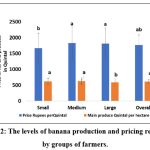 |
Figure 2: The levels of banana production and pricing received by groups of farmers.Click here to view Figure |
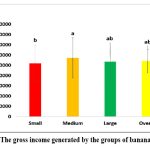 |
Figure 3: The gross income generated by the groups of banana farmers.Click here to view Figure |
The information displayed in fig. 4 indicates a consistent pattern in the costs of producing types A, B, and C, as observed in the cost and return analyses of banana cultivation in Durg District of Chhattisgarh,14 eastern Chitwan region in Nepal33 and in Western Maharashtra and Solapur district of Maharashtra24,30 and in Uttara Kannada District of Karnataka.10 The information provided in Fig. 2, 3, 4 and 5 indicates that the average gross return from banana cultivation was Rs. 1,082,369 per hectare.
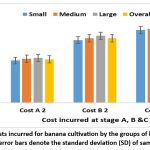 |
Figure 4: The costs incurred for banana cultivation by the groups of banana farmers. Click here to view Figure |
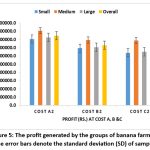 |
Figure 5: The profit generated by the groups of banana farmers. Click here to view Table |
Farmers operating medium-sized farms experienced slightly higher returns, as shown in fig. 5. The overall average price received per quintal was Rs. 1,767.30. However, there was a notable disparity in the prices received by farmers across the region, with the standard deviation ranging from Rs. 470.40 to Rs. 522.20. The data also demonstrated that some farmers received prices close to their cultivation costs, while others obtained significantly higher prices. This considerable variation in pricing may be attributed to factors such as the quality of the produce, demand in both national and international markets, and the absence of a minimum support price scheme for bananas. The production cost per quintal for the medium-sized farmer group was marginally greater than that of both the large farmer group and the smallest farm size group, as illustrated in Fig. 4. This suggests that larger farms may incur higher production costs and yield lower outputs, potentially due to less focus on crop quality. In contrast, small and medium-sized farms did not exhibit significant differences in yield per hectare, yet they received comparatively lower prices. This discrepancy may be linked to the timing of the crop, marketing strategies, and market demand. The costs, profits, and net returns of growing bananas in Durg District of Chhattisgarh14, eastern Chitwan region in Nepal32, in Western Maharashtra30 and in Uttara Kannada District of Karnataka10 align with the findings of the current study on the profits of producing types A, B, and C. The analysis of profit margins across different cost categories (cost A, B, and C) reveals that, although the basic return remains favourable at Rs. 754,609, it experiences a notable decline as additional costs are included in, ultimately dropping to Rs. 622,773 at cost C for all farmers. Farmers operating small-sized farms seem to handle costs more efficiently, whereas those with medium-sized farms achieve greater profits at cost C. Conversely, large-scale farmers come across increased cost pressures and experience lessening returns to scale.
Input-output ratio and profit
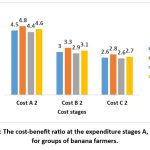 |
Figure 6: The cost-benefit ratio at the expenditure stages A, B, and C for groups of banana farmers. Click here to view Figure |
The data presented in Fig.6 indicates that medium farm size group of farmers were gaining the maximum profitability at all cost (A, B, C) and higher returns compare to the small size and large size farm farmers group. This is evident from the positive input-output ratio, as shown in Fig 6, clearly illustrates this point, even in slight of increasing costs. Both small and large size farm farmers group also showed positive input-output ratio at all cost A2, B2, and C2. This suggests that they were also succeeded in gaining significant returns, as depicted in Figures 5 and 6. At overall level, the input-output ratios illustrated in Fig. 5 and 6 are above one and at cost C2 was 2.7. This indicates that banana cultivation is a profitable fruit farming venture for banana farmers in the Indapur area of Pune district. This is consistent with the findings mentioned that banana farming is a profitable cash crop in Durg District of Chhattisgarh,14 eastern Chitwan region in Nepal32 and in district Kolhapur28 and Solapur of Maharashtra24 as well in the Western Maharashtra,30 and in Uttara Kannada District of Karnataka.10 This difference is attributed to the intensive cultivation practices in banana farming, which lead to higher returns. The results illustrated in Fig. 4, 5, and 6 indicate that variations exist in the input, cost, and return structures among different farm sizes across various regions.
Conclusions
The costs associated with hired labour exceeded those of family labour across all categories of land holdings. Family labour usage was lower in large-sized holdings compared to medium and small sizes. Small-sized holdings had the highest human labour utilization but the least bullock labour usage. Tractor-operated equipment and power tillers replaced bullock labour, especially in medium and large-sized holdings. Across all types of land ownership, spending on hired labour exceeded the use of family labour. The issue of weeding was reduced by implementing a drip irrigation system. Additionally, the use of Chemical herbicides replaced manual weeding, leading to decreased reliance on human labour. All categories of land holdings utilized the drip irrigation method. There is a growing trend in utilizing liquid fertilizers and biofertilizers through drip irrigation systems or foliar applications. The utilization and spending on human labour, tissue culture plantlets/suckers, fertilizers, manures, irrigation systems, and machine power showed differences among different sizes of groups. However, expenses on bio-fertilizers, micronutrients, and plant protection relatively same across all size groups. Despite the higher cost compared to traditional suckers, many farmers preferred plant tissue culture plantlets of the Grand Naine (G-9) variety over other varieties like Shrimanti and Basrai. The G-9 variety is believed to be more resilient, has a higher yield in the field, and is preferred for export and the market. The costs, gross returns, and net returns per hectare differ based on farm size due to varying expenses like irrigation systems, land rental and machinery. Input-output ratios were highest in the small size group, followed by medium and large groups. The findings showed that as the size of the holdings increased, the cost of production per quintal also increased, while the net return per quintal decreased. The medium-sized group had the highest net return per quintal, followed by the small and large-sized groups. The ratios of output to input have surpassed expectations across all three classifications of banana producer groups-small, medium, and large-demonstrating that banana cultivation in the Indapur tehsil area is a successful and profitable endeavour. The study concludes that banana farming in the Indapur area has the potential to be lucrative; however, these results carry several significant policy implications.
Cooperative fruit sale societies can work with private companies to improve the availability of quality tissue culture seedlings for banana growers at competitive prices. Banana growers in the region use drip irrigation, so it’s important to continue the subsidy scheme for drip systems and provide water-soluble fertilizers through banana cooperatives. Farmers in Indapur have different planting distances, but standardizing the spacing between plants is necessary. Both abiotic and biotic factors can affect banana production, so proper management and timely insurance payments are essential. There is a shortage of labor in the region for farm activities, especially during harvesting. Bananas have a short shelf-life due to climacteric ripening, so it’s important to have sufficient cold storage facilities to prevent losses and ensure proper prices in the market. For organic farming, low-cost feed facilities are needed for domestic animals like cows, goats, and sheep. Expansion of banana production requires adequate extension programs to keep up with advancing technologies. Farmers might face financial setbacks and lose interest in trying out new methods in farming or taking risks because prices change throughout the year. As a result, banana farmers should focus on enhancing productivity and cutting costs to guarantee profitability in a competitive market. The government needs to reassure farmers that they will receive fair prices that reflect their production costs.
Acknowledgement
We express our sincere appreciation to the banana cultivators and officers and staff of Indapur tehsil in Pune district, Maharashtra State, India. Our gratitude also extends to Dr. Nikule for his help in gathering both primary and secondary data.
Funding Sources
The author(s) received no financial support for the research, authorship, and/or publication of this article.
Conflict of Interest
The authors do not have any conflict of interest.
Data Availability Statement
The authors declare that the data supporting the findings of this study are available within the paper.
Ethics Statements
This research did not involve human participants, animal subjects, or any material that requires ethical approval.
Author contributions
Vishal Nikam and Harshad Shirke: Conceptualization, Methodology, Survey, Data Collection, Analysis, Writing – Original Draft.
Sunil Ogale: Visualization, Supervision, Project Administration, Conceptualization, Methodology, Review & Editing
Vikas Sule and Vikas Naikawadi: Survey, Data Collection, and data verification
All authors worked together, contributed, reviewed, and approved the manuscript.
Disclaimer (Artificial intelligence)
The author confirms that they did not use generative AI technologies like Large Language Models or text-to-image generators while writing or editing the manuscript.
References
- World Atlas.2020 Most Popular Fruits in the World. https://www.worldatlas.com/articles/the-mostpopular-fruit-in-the-world.html; Jan 2025.
- Voora V., Bermúdez S., Farrell J. J, Larrea C., Luna E. GLOBAL MARKET REPORT. 2023; Banana Prices and Sustainability SUSTAINABLE COMMODITIES MARKETPLACE SERIES, International Institute of Sustainable Development (IISD). https://www.iisd.org/publications/report/global-market-report-bnanas?q=library/global-market-report-banana
- Pushpaveni C., Visagaperumal D., Chandy V. A. Review on Banana Blossom: The Heart of Banana. World J. Pharm. Res. 2019; 8(11): 440–450. https://doi.org/ 10.20959/wjpr201911-15892;
- Doss A., Mazhar S. H., Brahma U. Study on Information Needs Regarding Cultivation and Marketing Constraints of Banana Growers in Agasteeswaram taluk of Kanyakumari District of Tamil Nadu. Int J Advances in Agricultural Science and Technology. 2020; 7 (10), 27-33. DOI:10.47856/ijaast. 2020.v07i10.006
CrossRef - 2025. Banana Market Review, Food and Agriculture Organization of the United Nations Rome, Italy. 2021-2024.
- Guinness World Records (2022). Most Popular Fruit.https://www.guinnessworldrecords.com.world-records/74279-most-popular-fruit
- Banana Link. (n.d.) All About Bananas. 2024; https://www.bananalink.org.uk/all-about-bananas/ Jan 2025.
- Bebber D. P. The Long Road to a Sustainable Banana Trade. Plants, People, Planet. 2023; 5(5): 662–671. https://doi.org/10.1002/ppp3.10331
CrossRef - Platonovskiy N. G., Ibrasheva L. R., Obukhova N. I., Puchkova O. S., et. al. International Banana Trade: Volumes, Countries, and Trends In book: Sustainable Development of the Agrarian Economy Based on Digital Technologies and Smart Innovations. 2024; (pp.25-30). DOI:10.1007/978-3-031-51272-8_5
CrossRef - Naik A. K., Moolimane C. B., Madhu D. M., Sri K. K., Hanumanthappa R., Hithaishree M. Economic Efficiency of Banana Production in Uttara Kannada District of Karnataka, India. Asian Research Journal of Agriculture. 2024; 17(2):106-115.
CrossRef - FAO, IFAD, UNICEF, WFP and WHO. 2024. The State of Food Security and Nutrition in the World 2024 – Financing to End Hunger, Food Insecurity and Malnutrition in All Its Forms. Rome. https://doi.org/10.4060/cd1254en
CrossRef - Vision 2050 report, National Research Centre for Banana (Indian Council of Agricultural Research) Tiruchirappalli, Tamil Nadu, 2015; nrcb.res.in ; Jan 2025.
- Vinayagamoorthi N., Sekhar C., Venkatesa Palanisamy N., Kanthaswamy H. Area, Production and Productivity and Economic Appraisal of Banana in India. Epitome: International Journal of Multidisciplinary Research. 2019; 5(3):1-10
CrossRef - Kumar R., Nishad T. L. Studies on Cost and Return Structure of Banana on Sample Farm. Plant Archives. 2018; 18 (1): 935-938.
- 2017; Comprehensive District Agricultural Plan Report for Pune District in Maharashtra, India.
- Phalphale A. K. A Delineation of Crop Diversification of Kati Circle in Indapur Tahsil (Pune District). International Interdisciplinary Research Journal, 2018; 8(3): 65-69.
- Dhobale G. Rainfall Distribution and Its Variation in the Indapur Tahsil District Pune, Maharashtra. International J Innova research in multidisciplinary field. 2020: 6(5), 133-138. DOIs:10.2015/IJIRMF.2455.0620/202005028.
- Ogale S. B. The study of Tourism Development at Bhigwan Bird Sanctuary, Indapur Tehsil, Pune District (Maharashtra), Review of research, 2022; 11(8):1-4.
- 2011. Government Census Pune District, Maharashtra, India. 2011.
- Bhore J. B., Gatkul B. I., Shinde A. S. Socioeconomic Impact and Environmental Status in Ujjani Dam Affected Area of Indapur Tehsil, Dist. -Pune (MH). J. Science and Research. 2021;10 (9): 152-156.
CrossRef - Duncan D. B. Multiple Range and Multiple F Tests. Biometrics. 1952; 11:1.
CrossRef - 2022. Cost Studies, Directorate of Economics and Statistics, Ministry of Agriculture and Farmers Welfare, Government of India. 2022.
- Vignesh M., Selvakumar R., Azhagesanet R. An Economic Analysis of Trend, Cost and Returns of Banana in Kanyakumari District of Tamil Nadu. Journal of Emerging Technologies and Innovative Research (JETIR), 2022; 9(9): 223-229.
- Rede B. H., Ratnaprabha A. H., Rede G. D. Economics of Banana Production in Solapur District of Maharashtra, India. Asian Journal of Agricultural Extension, Economics & Sociology. 2021; 39(11): 451-458. DOI: 10.9734/ajaees/2021/v39i1130772
CrossRef - Dave A. K., Zala Y. C., Pundir R. S. Comparative Economics of Banana Cultivation in Anand District of Gujarat. Economic Affairs. 2016; 61(2):305-312. DOI: 10.5958/0976-4666.2016.00039.5
CrossRef - Parekh, B.V. N., Patel L., Panchal B. B., Patel H. B., Ramani M. M. Recent Advances in Banana Cultivation. Innovative Farming, 2016; 1(4): 143-146.
- Pratibha P., Suresh K., Jagrati B., Deshmanya L.G. B., Patil K. Banana Cultivation Under Drip and Conventional Irrigation Methods in Karnataka: An Economic Analysis. Environment and Ecology. 2023; 41 (4B): 2625—2632. DOI: https://doi.org/10.60151/envec/ZSAN3337
CrossRef - Bondar U. S., Daundkar K. S., Khedkar S. R. Economics of Production of Banana in Kolhapur District of Maharashtra. International Research Journal of Agricultural Economics and Statistics. 2015; 6(2): 336-341.
CrossRef - Phularaa G., Budhaa J., Puria C., Pant P. Economics of Production and Marketing of Banana in Kailali, Nepal. Food and Agribusiness Management. 2020; 1(1): 43-46.
CrossRef - Rathod R., Gavali A. V. Economic Analysis of Banana Production from Western Maharashtra. The Pharma Innovation Journal. 2021;10(8): 379-384.
- Joshi A., Kalaunia D., Tiwarib U. Application of Good Agricultural Practices (GAP) By the Banana Farmers of Chitwan, Nepal. 2020; 6 (12): 148551-25. doi: https://doi.org/10.1101/2020.06.12.148551
CrossRef - Hazarika M., Sarma R., Phukon K. K. An Analysis on Area Production and Productivity of Banana in Assam. Agricultural Science Digest. 2021; 41(2): 334-337. doi: 10.18805/ag. D-5219
- Ghimire S., Koirala B., Devkota S., Basnet B. Economic Analysis of Commercial Banana Cultivation and Supply Chain Analysis in Chitwan, Nepal. Journal of Pharmacognosy and Phytochemistry. 2019; 5: 190-195. DOI: http://doi.org/10.26480/fabm.01.2023.19.24
CrossRef