


 PDF Downloads:
430
PDF Downloads:
430


Introduction
Broadly, food preservatives may be classified as antioxidants and antimicrobials.1 Antioxidants are substances that delay or prevent food deterioration through oxidative processes. On the other hand, antimicrobial agents are those that inhibit the growth of harmful microorganisms in food.
It has been ascertained that the spoilage of apple juice is mainly due to the proliferation of microorganisms particularly yeast, mold, and lactobacillus species.2 Research has also proven that spore-forming bacteria do not ferment at pH levels below 4.0.3 Lactic acid bacteria (Lactobacillus spp.) give off diacetyl as a volatile metabolic end product, whereas saccharomyces species give off carbon dioxide, ethanol, and other products of fermentation that create an unappealing rotten milk-type Flavors to the juice.
The food industries increasingly demand healthy food preservatives in the market hence buyers demand less poisonous and natural preservatives or antioxidants as discussed in Ibrahim, 2010; Padmaja & Prasad, 2011; Bopitiya & Madhujith, 2014 and Basiri, 2015. To meet this demand, meal corporations inquire for open, safe, careful, and effective antioxidants acquired from legumes, crops, plants, and agricultural residues like grain and edible grain edible grain, nut hulls, and old beverage leaves as noted in Konsoula, 2016.
Antioxidants can prevent oxidative deterioration, which is a major factor in the discoloration and flavour degradation of juice.4 Pomegranate peel extract (PPE), even when reused, shows promising results in treating various chronic health issues due to its notable anticancer properties., in the way that colon and prostate tumor, melanogenesis or skin tumor, cancer, and stomach ulcers.5 Moreover, pigments extracted from plants containing red and blue hues have been used effectively to address several health conditions like Alzheimer’s disease, asthma, prostate tumor, piles, dysentery, stomach ache, vomiting, skin inflammation, piles, and hyperacidity as discussed in Hygreeva 2014; Basiri, 2015 and Derakhshan 2018.
In addition, PPE demonstrates strong antioxidant activity and has been found to have cardioprotective effects by inhibiting the formation of foam cells and cholesterol accumulation in the aorta as in Hygreeva 2014 and Basiri, 2015. Pomegranate peel has larger polyphenolic content and also inhibits various foodborne pathogens and exhibits excellent antifungal actions, antioxidant and antimicrobial activity also.6 An extreme tannin content in PPE, and a compound named punicalagin is considered for its enhanced antimicrobial action.7 PPE can inhibit E. coli, F. sambucinum, P. italicum, B. subtilis, etc, as discussed in Tehranifar 2011; Elsherbiny 2016 and Ismail 2016. Additionally, PPE has been used in biopolymer-based films, enhancing their antimicrobial activity. According to Ali (2019), PPE effectively inhibits both Staphylococcus aureus (Gram-positive) and Salmonella (Gram-negative).
Bioactive compounds in PPE, including polyphenols, flavonoids, and tannins, exhibit significant antioxidant and antimicrobial effects.8,9 Incorporating PPE into fresh apple juice can help prevent oxidation and preserve the juice’s quality and colour. PPE inhibits the growth of various bacteria and fungi, thereby enhancing the microbial stability of the juice.10
Chitosan is a natural polysaccharide derived from chitin found in crustacean shells, also possesses notable antimicrobial properties.11 It has been widely studied for its effectiveness in food preservation, showing the ability to inhibit a broad range of microorganisms including bacteria, yeasts, and molds. Adding chitosan to fresh apple juice can extend its shelf life by preventing microbial spoilage.
Chitosan also serves as a clarifying agent, helping remove suspended particles, cloudiness, and impurities from juice.12 It forms complexes with negatively charged substances like proteins and pectin, causing them to precipitate and leaving behind a clearer juice. This enhances the stability and visual appeal of the product.
Both chitosan and PPE are promising agents for stabilizing fresh apple juice, due to their dual antioxidant and antimicrobial properties.13 When used in combination, they may exhibit synergistic effects, amplifying their ability to preserve freshness and improve juice quality. The oxidative processes responsible for juice degradation can be effectively countered by this combination.
It is important to note that the effectiveness of PPE and chitosan in stabilizing apple juice depends on several factors, including their concentrations, pH levels, storage temperature, and various storage conditions.14,15 Therefore, proper testing and validation protocols must be followed to determine optimal concentrations and usage methods for these additives in juice production.
Data Analysis Using AI Algorithms
A Machine learning regression model – Random Forest Regression Model
Machine learning is an essential tool in various fields, including data analysis, pattern recognition, and predictive modelling. One of the most powerful and widely used machine learning algorithms for regression tasks is the Random Forest Regression Model.16 Random Forest is an ensemble learning method that operates by constructing multiple decision trees during training and then outputting the average prediction of the individual trees for regression tasks. This model is specifically useful when working with complex datasets, as it is capable of capturing non-linear relationships, handling missing data, and preventing over fitting through its bagging technique.
The Random Forest algorithm runs by randomly choosing subsets of characters from the data and creating a decision tree for every subset. Every tree makes an independent prediction, and the final prediction is determined by aggregating the predictions from all the trees (typically by averaging them in regression problems). This process enhances the accuracy and stability of the model compared to a single decision tree, as it reduces the risk of over fitting and improves generalization.17 the blue dashed line in figures follows the actual data closely.
One of the major advantages of Random Forest Regression is its ability to handle large datasets with high-dimensional features and to capture intricate patterns in the data. It also provides valuable insights into feature importance, allowing users to understand which variables contribute the most to the predictive model. Furthermore, Random Forest is robust to outliers and can efficiently deal with both numerical and categorical data.18
Given its versatility, Random Forest Regression can be applied in a wide range of applications like, finance, healthcare, marketing, and food science. In the context of food preservation, for instance, it can be used to model and predict the effects of various factors, such as ingredient concentrations or environmental conditions, on product quality over time. By leveraging the power of Random Forest, researchers can gain deeper insights into complex relationships between variables and make informed decisions to optimize processes and enhance product performance.19
Materials and Methods
In order to determine the stability of apple juice with pomegranate peel extract and chitosan, a quantitative approach measuring multiple characteristics over time are employed.
Preparation of apple juice to be tested
Fresh apples obtained from a local market were chopped and squeezed with a juice extractor in the laboratory, filtered using a clean muslin cloth into sterile conical flasks for obtaining the various samples.20
Preparation of solutions of pomegranate peel extract (PPE)
The preparation of pomegranate peel extract (PPE) solutions involves separation and washing of the pomegranate peels using tap water, drying them in a hot air oven, grinding the dried PPE into coarse powder, and soaking the powder in ethanol and filtering the samples. The latter was kept in the refrigerator at 4 °C. The amount of the yield of the extracts was obtained through dry weight, and the pooled extract was used in the study of pH and antioxidant activities.21
Preparation of solution of chitosan
Raw materials for chitosan solution initially would rely on their having plenty of chitin, which includes mushrooms. Fresh mushrooms were purchased from local market, washed with distilled water for proper cleaning. Chitin is extracted after boiling in an alkali solution of sodium or potassium hydroxide, filtering the mixed liquid, adjusting the pH to the acidic range, collecting the chitosan precipitate, and performed repeated washings and drying for powder or solid form.22
In addition, it should be noted that chitosan produced from plant extract may differ in its properties compared to chitosan derived from animal sources. Yields, purity, and characteristics of the product can vary with species of plant and method of extraction. Hence, further research and characterization of the chitosan produced from plant extract are advisable for possible determination of specific properties and acceptability for use on potential applications.23, 24
Experimental Setup
The experiment is initiated by preparing several containers or test tubes to which different concentrations of chitosan or pomegranate peel extracts are added, and controls with no additives. Apple juice samples are kept under controlled conditions with room temperature, maintaining storage conditions to be uniform during the entire experimental period.
Samples from every treatment are taken at regular intervals to determine the pH level as well as antioxidant activity using appropriate analytical techniques. The determination of these parameters at regular time intervals enabled to estimate stability of apple juice in the presence of chitosan and pomegranate peel extract and thus helped in verifying which additive is effective or not in preserving the juice.
Radical scavenging activity-DPPH
The antiradical activity against DPPH was evaluated using the method described by Nishino (2000), with minor modifications to the sample preparation and reaction volume.25 The stock solutions of peel extracts were prepared at a concentration of 1 mg/ml in ethanol, while that of DPPH in absolute ethanol was prepared to obtain a concentration of 80 μg/ml. A control solution was made, but with the corresponding solvent instead of the extract. The absorbance of the solutions was determined at 517 nm using a UV-1800 spectrophotometer (Shimadzu, Kyoto, Japan), against ethanol. Calculation of inhibition of the DPPH radical by the sample:

Where, Ablank is the absorbance value of the control reaction and a Asample is the absorbance value of the extract. pH changes and the time-dependent antioxidant activities were monitored to estimate the shelf-life stability of the apple juice by comparing treatment samples with the controls.
A Random Forest Regression model uses an assembly of decision trees to make predictions. In this case, the model is used to predict the pH or antioxidant activity based on the concentrations of PPE and Chitosan, and over time.
Results
It was observed that the addition of Chitosan extract to the apple juice helped to clarify it through the removal of suspended particles, cloudiness, and impurities. Thus, chitosan mainly improved the look and stability of the juice when added into it as it was able to pass the time. Adding PPE and chitosan mixture maintained the constant pH and has shown enhanced antioxidant activity to the apple juice at room temperature as given in Graph-2, 4. A slight change in colour of the juice was reported after the 4th day compared to only PPE addition or only chitosan addition, which clearly shows standard PH and improved antioxidant activity of apple juice and hence implies to enhanced stability, whereas Graph -1 and Graph -3 shows addition of only PPE and only chitosan will not improve much stability
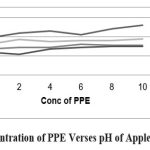 |
Graph 1: Concentration of PPE Verses pH of Apple juice with timeClick here to view Graph |
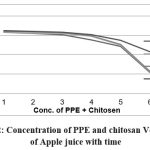 |
Graph 2: Concentration of PPE and chitosan Verses pH of Apple juice with timeClick here to view Graph |
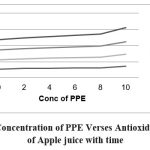 |
Graph 3: Concentration of PPE Verses Antioxidant activity of Apple juice with timeClick here to view Graph |
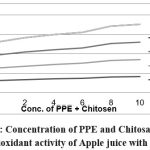 |
Graph 4: Concentration of PPE and Chitosan Verses Antioxidant activity of Apple juice with timeClick here to view Graph |
Report on the Analysis Using Random Forest Regression Model
Based on the analysis conducted using the Random Forest Regression Model, the following potential conclusions can be drawn regarding the impact of pomegranate peel extract (PPE) and chitosan on the pH and antioxidant activity of apple juice.
Effect of PPE on pH
As the concentration of PPE increases, the pH of the apple juice shows a slight increase. This suggests that PPE may have a mild alkaline effect on the juice, although the change is not substantial. If the model exhibits low Mean Squared Error (MSE) , it would indicate that the Random Forest model accurately captures this relationship, providing confidence in the observed trend.
Effect of PPE + Chitosan on pH:
The combination of PPE and chitosan reveals a more intricate interaction. As shown in the results, the pH tends to decrease at higher concentrations of PPE and chitosan, implying that chitosan might neutralize some of the alkaline effects of PPE, leading to a reduction in pH. A higher MSE in this case could suggest that the relationship between PPE + Chitosan and pH is more complex and less predictable compared to the relationship with PPE alone.
Predictions of Antioxidant Activity
As anticipated, increasing the concentration of PPE leads to a rise in antioxidant activity. Similarly, when chitosan is combined with PPE, a similar increase in antioxidant activity is observed (Graph- 4). This reinforces the idea that PPE and its combination with chitosan both contribute to enhanced antioxidant properties of apple juice. The same predictive model can be used to analyse the effect of different PPE and PPE + Chitosan concentrations on the antioxidant activity
Step 1: Data Preparation and Analysis
The dataset, consisting of multiple experiments with varying concentrations of PPE and PPE + Chitosan, along with their corresponding pH and antioxidant activity values, is structured in Data Frame format. This format allows for efficient data manipulation and application of machine learning models, which will be the foundation for regression analysis.
Data Usage Overview
For pH prediction
Independent variable (X): PPE concentration (or PPE + Chitosan concentration)
Dependent variable (y): pH of apple juice
For Antioxidant Activity prediction
Independent variable (X): PPE concentration (or PPE + Chitosan concentration)
Dependent variable (y): Antioxidant Activity of apple juice
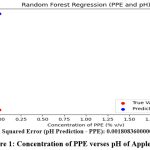 |
Figure 1: Concentration of PPE verses pH of Apple juiceClick here to view Figure |
Mean Squared Error (pH Prediction – PPE): 0.0018083600000003725
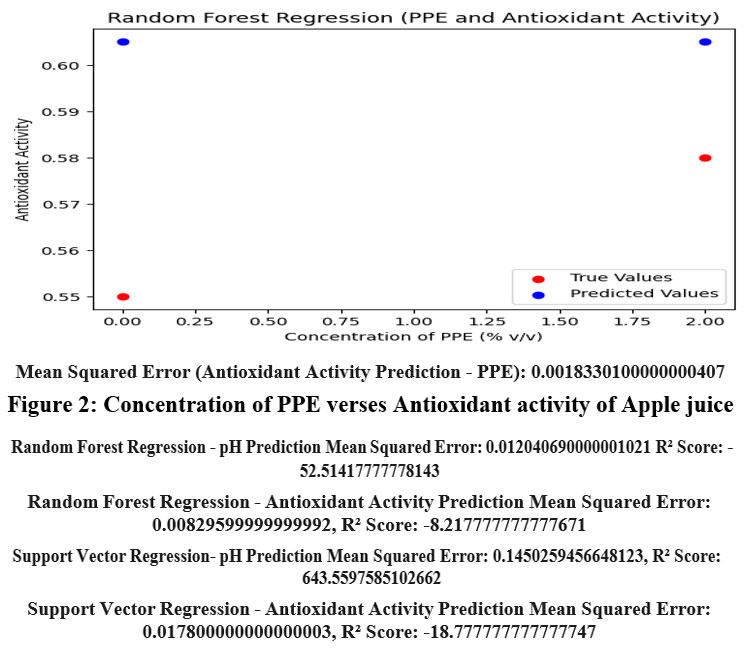 |
Figure 2: Concentration of PPE verses Antioxidant activity of Apple juiceClick here to view Figure |
Mean Squared Error (Antioxidant Activity Prediction – PPE): 0.0018330100000000407
Random Forest Regression – pH Prediction Mean Squared Error: 0.012040690000001021 R² Score: -52.51417777778143
Random Forest Regression – Antioxidant Activity Prediction Mean Squared Error: 0.00829599999999992, R² Score: -8.217777777777671
Support Vector Regression- pH Prediction Mean Squared Error: 0.1450259456648123, R² Score: -643.5597585102662
Support Vector Regression – Antioxidant Activity Prediction Mean Squared Error: 0.017800000000000003, R² Score: -18.777777777777747
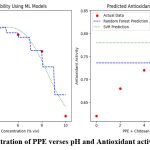 |
Figure 3: Concentration of PPE verses pH and Antioxidant activity of Apple juiceClick here to view Figure |
Discussions
The analysis conducted using the Random Forest Regression Model provides valuable insights into the effects of pomegranate peel extract (PPE) and chitosan on the pH and antioxidant activity of apple juice. The findings indicate that both PPE, chitosan have distinct influence in modifying the properties of apple juice, with varying degrees of interaction between these two additives.
Effect of PPE on pH: (Figure -1)
The regression model indicates that as the concentration of PPE increases, the pH of the apple juice shows a slight increase. This suggests that PPE may introduce a mild alkaline effect to the juice, although the change in pH is not substantial. The Mean Squared Error (MSE) for pH prediction when PPE is used alone was relatively low, indicating that the Random Forest model accurately captures the relationship between PPE concentration and pH. This implies that the influence of PPE on the pH of apple juice is consistent, though not pronounced, and the model demonstrates a reliable prediction of pH changes as PPE concentration increases.
Effect of PPE + Chitosan on pH: (Figure -3)
When PPE is combined with chitosan, the model shows a more complex interaction. At higher concentrations of PPE and chitosan, the pH of the apple juice tends to decrease, which suggests that chitosan may counteract the alkaline effect of PPE. This neutralizing effect could be due to chitosan’s chemical properties, which may influence the overall acidity of the juice. The higher MSE observed for this combination in the Random Forest regression model suggests that the relationship between PPE + chitosan and pH is less predictable than when PPE is used alone. This complexity highlights the need for further exploration to understand the full impact of chitosan on the juice’s pH when combined with PPE.
Predictions of Antioxidant Activity: (Figure -2,3)
As expected, the model predicts that increasing PPE concentration leads to a significant rise in antioxidant activity, which was consistent with the results shown in Graph-3. Furthermore, when chitosan is added to the mixture, a similar increase in antioxidant activity is observed, as demonstrated in Graph- 4. This trend supports the hypothesis that both PPE and its combination with chitosan contribute positively to the antioxidant properties of apple juice. The regression model accurately captures these changes, reinforcing the beneficial effects of PPE and chitosan in enhancing the nutritional quality of apple juice.
Model Performance and Comparison
The Mean Squared Error (MSE) values of the Random Forest regression model suggests, the model performs reasonably well in predicting the pH and antioxidant activity of apple juice. The MSE for pH prediction with PPE was 0.0018, while for antioxidant activity prediction, it was 0.0018 as well. For the Random Forest regression model, the MSE for pH prediction was higher (0.0120) with an R² score of -52.51, indicating some degree of unpredictability in the relationship between PPE + chitosan and pH. However, the MSE for antioxidant activity prediction was 0.0083, which suggests a more reliable model fit.
In comparison, the Support Vector Regression (SVR) model performed less well, with MSE values for pH prediction and antioxidant activity prediction being notably higher (0.1450 and 0.0178, respectively). The R² scores for the SVR model were also much lower, particularly for pH prediction (-643.56) and antioxidant activity prediction (-18.78), indicating that SVR was less effective in capturing the intricate relationships compared to the Random Forest model.
The findings from the analysis suggest that PPE and chitosan both play significant roles in modifying the pH and antioxidant properties of apple juice. PPE appears to have a mild alkaline effect on pH, while the combination of PPE and chitosan creates a more intricate interaction that slightly lowers pH, possibly due to the neutralizing effects of chitosan. In terms of antioxidant activity, both PPE and chitosan appear to enhance the juice’s antioxidant properties, with PPE being the primary contributor.
The Random Forest Regression model provided a better fit for the data than the Support Vector Regression model, as evidenced by the lower MSE values and more reliable R² scores. Despite some complexity in the interaction between PPE and chitosan, the Random Forest model effectively predicted the outcomes for both pH and antioxidant activity, making it a suitable tool for this type of analysis. However, the negative R² scores suggest that there is still potential for further improvement in refining the model particularly for more complex interactions between the variables.
In conclusion, the study underscores the potential of using natural preservatives like PPE and chitosan to enhance the stability and nutritional quality of apple juice.
Future studies could aim at optimizing the concentrations of these additives and investigating their long-term impacts on juice preservation.26 additionally, improving machine learning models to better capture complex interactions will further enhance the understanding and application of these natural preservatives in food science.
Justification for the Use of Random Forest Regression in Modeling Non-Linear Food Interactions
Random Forest is an ensemble learning method based on decision trees, which naturally handle non-linear relationships and interactions between variables. Given the complex chemical interactions between PPE and chitosan and their non-linear effects on pH and antioxidant activity, Random Forest is well-suited for this problem.
Although ensemble methods can overfit in small datasets, Random Forest tends to generalize better than single decision trees or SVR, especially with parameter tuning (e.g., number of trees, maximum depth, etc.).
Random Forest also provides insight into feature importance, which could help quantify the individual impact of PPE and chitosan on the juice’s properties—a valuable tool for food science applications where interpretability matters.
Unlike linear models (e.g., linear regression or SVR with linear kernels), Random Forest does not assume any particular data distribution or linear relationships, making it more adaptable to real-world experimental data that may not follow ideal statistical assumptions.
Conclusion
This study highlights the substantial effect of pomegranate peel extract (PPE) and chitosan on the pH and antioxidant activity of apple juice. The findings reveal that PPE has a mild alkaline effect on the pH of apple juice, while the combination of PPE and chitosan leads to a more complex interaction, slightly decreasing the pH, possibly due to chitosan’s neutralizing properties. Both PPE and chitosan positively influence the antioxidant activity of the juice, with PPE being a primary contributor. The blue dashed line in figure-3 follows the actual data closely, suggesting it effectively predicts pH and antioxidant activity trends. 6-8% of PPE and chitosan provides the best antioxidant activity without rapidly decreasing pH.
The application of the Random Forest Regression model proved effective in predicting the pH and antioxidant activity, outperforming the Support Vector Regression model, particularly in terms of MSE values and R² scores. While the model performed well, the negative R² scores indicate that further refinement is needed, especially in capturing the more intricate interactions between PPE and chitosan.
This study emphasizes the potential of natural preservatives like PPE and chitosan in improving both the nutritional quality and stability of apple juice. Future research should aim to optimize the concentrations of these additives and examine their long-term effects on juice preservation. Overall, the findings suggest that PPE and chitosan could serve as natural, safe alternatives to synthetic preservatives, offering a promising approach for prolonging the shelf life of apple juice and influencing the wider food preservation industry. Furthermore, enhancing machine learning models to better capture complex interactions will provide deeper insights into the role these natural substances can play in food science and preservation.
Acknowledgment
The authors are grateful to the Hon. Secretary, SUES and Principal (MJCET), and other colleagues of Chemistry department, MJCET, Hyderabad for their encouragement and support in completing this work successfully.
Funding Sources
The author(s) received no financial support for the research, authorship, and/or publication of this article
Conflict of Interest
The authors do not have any conflict of interest.
Data Availability Statement
This manuscript incorporates all datasets produced and analysed during this research study. The data used to support the findings are available from the corresponding author upon reasonable request.
Ethics Statement
This research did not involve human participants, animal subjects, or any material that requires ethical approval.
Author Contributions
Shanthi Vunguturi : Conceptualization, Methodology, Investigations, Writing original article , review and editing
Gita Swarupa Pamidimalla : Data curation, formal analysis , editing , supervision
References
- García-García R, Searle SS. Preservatives: food use. In: Caballero B, Finglas P, Toldrá F, eds. Encyclopedia of Food and Health. Vol 4. Oxford: Academic Press; 2016:505-509.
CrossRef - Tournas V, Heeres J, Burgess L. Moulds and yeasts in fruit salads and fruit juices. Food Microbial. 2006;23(7):684-688. doi:10.1016/j.fm.2006.01.003. [PubMed] [CrossRef] [Google Scholar]
CrossRef - Dewanti-Hariyadi R. Microbiological quality and safety of fruit juices. Food Rev Int. 2013; 1:54-57.
- Lindley MG. The impact of food processing on antioxidants in vegetable oils, fruits and vegetables. Trends Food Sci Technol. 1998;9(9):336-340. doi:10.1016/S0924-2244(98)00050-8
CrossRef - Barati Boldaji R, Akhlaghi M, Sagheb MM, Esmaeilinezhad Z. Pomegranate juice improves cardiometabolic risk factors, biomarkers of oxidative stress and inflammation in hemodialysis patients: A randomized crossover trial. J Sci Food Agric. 2020;100(2):846-854. doi:10.1002/jsfa.10096
CrossRef - Al-Zoreky N. Antimicrobial activity of pomegranate (Punica granatum L.) fruit peels. Int J Food Microbiol. 2009;134(3):244-248.
CrossRef - Ardekani MRS, Hajimahmoodi M, Oveisi MR, Sadeghi N, Jannat Akiyama H. Antibacterial action of several tannins against Staphylococcus aureus. J Antimicrob Chemother. 2001; 48(4):487-491. doi:10.1093/jac/48.4.487
CrossRef - Khansari N, Shakery A, Parsa M, et al. Antibacterial activity of pomegranate (Punica granatum L.) peel extracts against Staphylococcus aureus and Escherichia coli. Int J Food Microbiol. 2008;122(1-2):158-163. doi:10.1016/j.ijfoodmicro.2007.11.013
CrossRef - Basu A, Rhone M, Rhone M, Rhone R. Palatability and chemical safety of apple juice fortified with pomegranate peel extract. Food Funct. 2013; 4(10):1468-1473. doi:10.1039/C3FO60150A.
CrossRef - Niazi S, Sheikh A, Alhujaily E, et al. Phenolic profiles, antihyperglycemic, antihyperlipidemic, and antioxidant properties of pomegranate (Punica granatum) peel extract. J Food Biochem. 2019; 43(1):1-9. doi:10.1111/jfbc.12803
CrossRef - Kou S, Peters LM, Mucalo MR. Chitosan: A review of sources and preparation methods. Int J Biol Macromol. 2021;169 :85-94.
CrossRef - Tastan O, Baysal T. Clarification of pomegranate juice with chitosan: Changes on quality characteristics during storage. Food Chem. 2015; 180:211-218. doi:10.1016/j.foodchem.2015.02.053.
CrossRef - Lachowicz S, Oszmiański J, Kalisz S. Effects of various polysaccharide clarification agents and reaction time on content of polyphenolic compound, antioxidant activity, turbidity and colour of chokeberry juice. 2018; 92:347-360. doi:10.1016/j.lwt.2018.02.054.
CrossRef - Viuda-Martos M, Fernandez-Lopez J, Perez-Alvarez JA. Pomegranate and its many functional components as related to human health: A review. Compr Rev Food Sci Food Saf. 2010;9(6):635-654. doi:10.1111/j.1541-4337.2010.00131.x
CrossRef - Mo Y, Ma J, Gao W, et al. Pomegranate peel as a source of bioactive compounds: A mini review on their physiological functions. Front Nutr. 2022; 9:887113. doi:10.3389/fnut.2022.887113
CrossRef - Breiman L. Random forests. Mach Learn. 2001; 45(1):5-32.
CrossRef - Liaw A, Wiener M. Classification and regression by randomForest. R News. 2002;2(3):18-22. Available from: https://CRAN.R-project.org/doc/Rnews/
- Cutler DR, Edwards TC Jr, Beard KH, Cutler A. Random forests for classification in ecology. 2007;88(11):2783-2792. doi:10.1890/07-0539.1
CrossRef - Rokach L, Maimon O. Data Mining with Decision Trees: Theory and Applications. 2nd ed. Singapore: World Scientific Publishing; 2014.
CrossRef - Saadat S, Pandya H, Dey A, et al. Food forensics: Techniques for authenticity determination of food products. Forensic Sci Int. 2022; 333:111243. doi:10.1016/j.forsciint.2022.111243
CrossRef - Derakhshan Z, Ferrante M, Tadi M, et al. Antioxidant activity and total phenolic content of ethanolic extract of pomegranate peels, juice and seeds. Food Chem Toxicol. 2018; 114:108-111. doi:10.1016/j.fct.2018.02.023
CrossRef - Erdogan S, Kaya M, Akata I. Chitin extraction and chitosan production from cell wall of two mushroom species (Lactarius vellereus and Phyllophora ribis). In: AIP Conference Proceedings. Vol 1809, No. 1. Melville, NY: AIP Publishing LLC; 2017:020012.
CrossRef - Poverenov E, Arnon-Rips H, Zaitsev Y, et al. Potential of chitosan from mushroom waste to enhance quality and storability of fresh-cut melons. Food Chem. 2018; 268:233-241.
CrossRef - Hassainia A, Satha H, Boufi S. Chitin from Agaricus bisporus: Extraction and characterization. Int J Biol Macromol. 2018;117:1334-1342
CrossRef - Hseu YC, Chang WH, Chen CS, et al. Antioxidant activities of Toona sinensis leaves extracts using different antioxidant models. Food Chem Toxicol. 2008; 46:105-114. doi:10.1016/j.fct.2007.07.003.
CrossRef - Ahmed F, El-Sappagh S. A survey of Random Forest algorithms for the prediction of food science and safety. Comput Mater Contin. 2020; 65(3):1727-1749. doi:10.32604/cmc.2020.012073