


 PDF Downloads:
726
PDF Downloads:
726


Introduction
Soil is the most widely available growth medium, providing essential support, nutrients, air, and water for plant development. However, various soil-related issues often hinder optimal plant growth. Factors such as improper pH levels, soil compaction, poor drainage, erosion, and pests and pathogens can significantly reduce agricultural productivity. These challenges necessitate exploring alternative growing methods that ensure better control over plant growth conditions. Hydroponics emerges as a revolutionary solution, eliminating the dependency on the soil while providing plants with a precisely balanced nutrient solution. This technique overcomes soil-related constraints, enhances resource efficiency, reduces disease risks, and ensures year-round crop production. By using water-based techniques, hydroponics provides a high-yield, a sustainable method of farming, making it an excellent alternative for urban and climate-challenged regions.1
Moreover, conventional open-field agriculture demands significant resources, including large areas of fertile land, irrigation, and heavy machinery, while highly dependent on weather conditions. Space constraints make traditional farming impractical in areas with a shortage of cultivable land and in urban environments. Additionally, topographical challenges, such as rocky terrain, desertification, and soil degradation, further limit the potential for successful cultivation.2 Recently, a significant challenge faced by conventional open-field agriculture is hiring labour. Many agricultural workers are shifting to other industries, leading to a shortage of skilled labour for farming operations. This labour crisis, combined with the high demands of traditional farming such as land preparation, irrigation management, and harvesting, has made open-field cultivation less sustainable. Under such circumstances, soilless culture, particularly hydroponics, presents a viable alternative. By utilizing automated systems and controlled environments, hydroponics reduces the need for manual labour while ensuring efficient crop production. This method allows for year-round cultivation with minimal human intervention, making it an ideal solution for regions struggling with labour shortages in agriculture.3
Agriculture is an important part of the Indian economy. The need for indoor farming approaches such as hydroponics and aeroponics is increasing due to rising food prices, scarcity of labour, adverse environmental conditions, and diminishing agricultural areas.4 Hydroponics is a contemporary horticulture method that entails cultivating plants without soil, relying instead on agricultural ingredients. While it may need some time to comprehend the hydroponics approach, it is very straightforward.5 This approach involves cultivating and nurturing crops in a hydroponic system.
Furthermore, it has been shown that these crops exhibit a high level of productivity and contain an abundance of advantageous nutrients. Scientists argue that plants cultivated hydroponically have direct contact with their roots since they are absorbed by the roots rather than the soil, acting as an aqueous solvent. In addition to assisting in combating the difficulties caused by climate change, this system facilitates the management of the production system to optimize the use of natural resources and reduce hunger.6
Hydroponics and aeroponics have many similarities, except that aeroponic plants are grown using minuscule droplets of nutritional solution. Hydroponics is making significant progress worldwide, while India is lagging.7 The justification for this broad scope is very beneficial considering the current global conditions, as it might serve as the basis for the environment. One of the many benefits is worldwide adaptability. This approach generates more significant crops with less labour than conventional ranches due to the plant’s accelerated growth. While the farmers are increasingly intrigued by this technology, many are concerned about the expenses associated with its application. It is much more significant than other traditional agricultural techniques. Initially, only a substantial upfront cost is necessary.8
Furthermore, equipment’s like sensors, controllers, pumps, and lighting are necessary for the management and maintenance of crops. In the absence of soil, optimal temperature, purified water, and essential minerals like potassium, phosphate, and nitrate are crucial for supporting plant nutrition and development. The technology also enhances water efficiency. Hydroponic gardening utilizes about 10% of the water used in traditional farming techniques, and any extra water that the plants are unable to absorb is recycled.
Hydroponic farming utilises up to 90% less water than traditional agriculture, which reduces the possibility of pests and diseases spreading through the soil. As the demand for fresh, pesticide-free produce grows, hydroponics stands out as a promising tool for ensuring secure and food production in the future.9 In the coming years, it is expected that hydroponics is going to emerge as an essential approach for sustainable food production, addressing challenges like climate change and the growing global population. As technology advances, hydroponic systems will become more efficient, cost-effective, and accessible, enabling large-scale production of fresh vegetables and fruits in urban and arid regions. Hydroponics will be crucial for preserving ecological sustainability and the availability of food with its ability to maximize space, reduce water usage, and eliminate soil-related issues10 (Figure 1).
This review focuses on various hydroponics approaches and how they contribute to sustainable farming. It addresses different methods, emphasizing their benefits in improved crop yields, space utilization, and water efficiency. By examining these techniques, this review aims to shed light on how hydroponics may improve food production, especially in urban areas with limited cultivable land. The discussion also emphasizes the potential of hydroponics in ensuring food security, reducing environmental impact, and supporting future agricultural advancements.
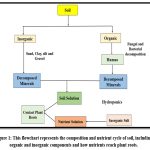 |
Figure 1: This flowchart represents the composition and nutrient cycle of soil, including organic and inorganic components and how nutrients reach plant roots. |
Hydroponics and Sustainable Agriculture
Hydroponics is emerging as a promising tool to reduce the negative effects of climate change, protect ecosystems, and prevent species extinction caused by excessive and intensive agriculture. By enabling efficient water use, a critical resource facing increasing scarcity.11 Hydroponics supports sustainable food production while reducing environmental degradation. Additionally, hydroponic vegetable farming offers higher profitability and ease of management, particularly in developing nations, making it a powerful tool in combating hunger and enhancing food security.12 According to Berkshire Hathaway, it is predicted that the global hydroponics market will expand at an annualised rate of growth CAGR (Compound Annual Growth Rate) of 18.1%, reaching a market value of US$725 million by 2023.13 As a cutting-edge technique in smart agriculture, hydroponics leverages advanced technologies such as drones, big data, and geolocation to optimize crop productivity.14 In the Netherlands, with limited arable land and sunlight, vertical hydroponic farms are being constructed. These high-tech vertical skyscrapers are designed to maximize space efficiency and sustainable crop cultivation.15 Figure 2 illustrates a hydroponic system that grows plants without soil by using a nutrient-rich water solution.
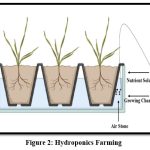 |
Figure 2: Hydroponics Farming |
Hydroponics for Growing Fruits and Vegetables
The importance of ensuring food safety has increased, as seen by a greater demand for sanitary food compared to production levels. Plants are affected by global warming and climate change, which include phenomena such as drought, heavy rain, floods, high temperatures, pests, and more.16 Unlike traditional soil-based cultivation, hydroponic cultivation of vegetables is mainly determined by factors such as the evaluation of water quality, fertility of soil, and natural resources17 (Figure 3). Table 1 illustrates the production of vegetables using a soil-less culture (hydroponics).
Table 1: Indian vegetable production using a soilless culture18
| Vegetables | Production (metric tons) |
| Green leaf | 56.5 |
| Onion | 226 |
| Potato | 56.5 |
| Tomato | 56.5 |
| Greens | 226 |
| Carrot | 113 |
| Cucumber | 113 |
| Garlic | 57 |
| Ginger | 57 |
| Peapod | 113 |
| Leek | 57 |
| Green Beam | 113 |
| Salad greens | 226 |
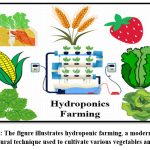 |
Figure 3: The figure illustrates hydroponic farming, a modern soilless agricultural technique used to cultivate various vegetables and crops. |
Quality Improvement in crops through hydroponics
Hydroponics significantly enhances crop quality, yield, and nutritional value compared to traditional soil-based farming. This innovative method allows for precise control of nutrients, water, and environmental conditions, producing superior produce. Consuming fruits and vegetables reduce the likelihood of developing several chronic diseases in adults.19,20 Vegetables include many bioactive chemicals and minerals, such as beta-carotene antioxidants, which positively impact health. It is feasible to enhance the levels of beneficial substances and the quality of fruits and vegetables using an eco-friendly approach like hydroponics. In protected agriculture, it is frequently employed to control the environment and reduce uncertainty in water quality and soil nutrient conditions. The nutritional profile of vegetables and fruits can also be influenced by adjusting the temperature and light levels. A notable disparity in output quality has been seen between lettuces cultivated hydroponically and those grown traditionally.21 Tomatoes’ flavour, acidity, carotenoids, and vitamins were superior under hydroponic systems.22 Based on the study,23 the composition of 80% pumice, 10% perlite, and 10% peat results in approximately 30% more production compared to traditional soil cultivation. Hydroponically cultivated tomatoes had a more delicate texture and superior flavour than conventionally produced ones.
Important Factors in the Hydroponics Farming System
Several factors influence the growth of a plant. We are unable to manage them all. However, we are responsible for the most significant ones, crucial for hydroponics farming (Figure 4).
Temperature
Every crop or plant has specific needs regarding temperature. While some plants can withstand extremely hot or cold temperatures, others cannot. Thus, maintaining water temperature control is crucial for hydroponic farming. The roots of the plant cannot take up nutrients from the water if the temperature of the growing medium or water is too high. High temperatures also cause fungi to attack and cause roots in water by reducing dissolved oxygen.24
Light
During the process of photosynthesis, plants need light to produce food. Plants experience stunted growth when there is no light because they stretch toward the light source. If it doesn’t receive enough light exposure, it eventually dies. Plants require different amounts of light. While some can survive in the shade, others need full sun, and others only need partial sun.25
Nutrients required for hydroponic Farming
Each plant has specific nutritional requirements to stay healthy and yield a bountiful crop. An imbalance in these nutrients causes uneven growth in plants. These nutrients are combined in a liquid solution of pH-balanced water with Total Dissolved Solids (TDS), formulated specifically for hydroponics. These nutrients fall into two categories: Macronutrients and Micronutrients.26
Macronutrients
Macronutrients are the essential nutrients that serve as a basis for plant growth. Nitrogen (N), phosphorus (P), and potassium (K) are crucial macronutrients that plants require in relatively large amounts. These elements are necessary for the metabolic processes and structural development of plants.27
Micronutrients
The trace elements known as micronutrients are usually absorbed from the soil by plants. These compounds participate in a variety of biochemical reactions essential to plant health, including photosynthesis and the growth of roots, and act as cofactors for enzymes. The micronutrients include Boron (B), Zinc (Zn), etc.27
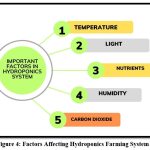 |
Figure 4: Factors Affecting Hydroponics Farming System |
pH
Although the requirements vary among plant species, it is advisable to strive for a pH level ranging from 6 to 6.5 in hydroponic systems. The majority of plants can flourish within this range. This is because the absorption rates of different dietary components, such as phosphorus and nitrogen, vary depending on the pH level. In this range of pH values, the majority of the elements show notable absorption28 (Table 2).
Table 2: pH values for various crops grown without soil.29
| Plants | pH Range |
| Cucumbers | 5.8-6.0 |
| Lettuce | 6.0-6.5 |
| Garlic | 6.0-6.5 |
| Onions | 6.5-7.0 |
| Peas | 6.0-7.0 |
| Pumpkin | 5.0-6.5 |
| Radish | 6.0-7.0 |
| Broccoli | 5.5-6.5 |
| Beans | 6.0-6.5 |
| Tomatoes | 6.0-6.5 |
| Cabbage | 6.5-7.5 |
| Carrots | 5.8-6.4 |
Humidity
It is important to maintain the ideal humidity for plant roots in hydroponic farming. Insufficient humidity may lead to plant dehydration, ultimately causing root dieback. During the growth of plants, particularly in an NFT (Nutrient Film Technique) system, the proliferation of an extensive root system may impede the movement of water and result in the dehydration of the roots.30
Carbon dioxide
Carbon dioxide is necessary for plants to respire and carry out photosynthesis. Plants use the process of photosynthesis, which involves combining CO2 (Carbon dioxide) and water in the presence of sunlight to produce food and oxygen. Since a hydroponic system is an enclosed setup, plants grown using this method require artificial CO2 fertilization.31
Basic Component for Hydroponics Farming System
It is important to maintain the ideal humidity levels for plant roots in hydroponic farming. Insufficient humidity may lead to plant dehydration, ultimately causing root dieback. During the growth of plants, particularly in an NFT system, the proliferation of an extensive root system may impede water movement and result in the dehydration of the roots.32
The nutrient reservoir, a key component of hydroponic systems, is the lifeblood of plant growth. It is frequently used to store and supply more nutrient solutions, ensuring that the plants receive the nutrients they need for healthy development. A mechanism that facilitates the transportation of the nutrient solution to the growth tray is essential for the systems to function correctly. Wicks may be used either passively or actively by an electric water pumping mechanism to achieve this goal. Several systems use air pumps and air stones inside the reservoirs to maintain a constant flow of the nutrient mixture. Typically, hydroponic growing systems use growth lights as a fundamental component of their functioning. Advanced hydroponics systems sometimes use software to monitor and track the plants. Timer systems, even those tiny ones, are often used to maintain a steady schedule for watering and light consumption. Without question, the fertilizer solution added to the water is the most essential element of any hydroponic system.33
Important Nutrients in Hydroponics Farming
All plants cultivated through hydroponics require large amounts of the main macronutrients like nitrogen and potassium (Table 3 & Table 4). These additional micronutrients are required for a plant along with magnesium, sulphur, copper, zinc, molybdenum, boron, and chlorine34 (Figure 5).
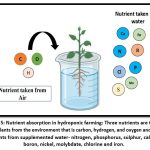 |
Figure 5: Nutrient absorption in hydroponic farming: Three nutrients are taken from plants from the environment that is carbon, hydrogen, and oxygen and nine nutrients from supplemented water- nitrogen, phosphorus, sulphur, calcium, boron, nickel, molybdate, chlorine and iron. |
Table 3: List of elements and their functions.35
| Elements | Functions |
| Carbon | Integral of all organic compounds found in plants. |
| Calcium | Originate as calcium pectate found inside the cell walls. It is a component of the α-amylase enzyme and is necessary to preserve the membrane’s integrity. interferes with magnesium’s capacity to activate enzymes. |
| Zinc | Necessary for the production of the acid indoleacetic hormone. activates the enzymes carboxypeptidase, lactic acid dehydrogenase, glutamic acid dehydrogenase, and alcohol dehydrogenase. |
| Sulphur | Found in proteins and amino acids, among many other organic compounds. Vitamins thiamine, coenzyme A, and biotin all contain sulphur. |
| Nitrogen | Many essential organic compounds including, proteins, Chlorophyll, enzymes, and amino acids. Additionally, it is a part of coenzymes such as NADP, FAD, and NAD. |
| Boron | Plant function is not fully known. It might be necessary for the phloem to transfer carbohydrates. |
| Molybdenum | Plays a vital role in the nitrogen fixation and serve as an electron carrier during the breakdown of nitrate to ammonium. |
Table 4: The vast majority of nutritional solutions includes major element and micro nutrients.36
| Element | Ionic Form | Concentration Range mg/L, ppm |
| Phosphorus (P)Nitrogen (N) | PO₄³⁻NO3 | 30 to 15100 to 200 |
| Calcium (Ca) | Ca2+ | 200 to 300 |
| Sulphur (S) | S2- | 70 to 80 |
| Chlorine (Cl) | Cl– | – |
| Copper (Cu) | Cu2+ | 0.01 to 0.10 |
| Molybdenum (Mo) | MoO₄²– | 0.05 |
| Zinc (Zn) | Zn2+ | 0.05 to 0.50 |
Techniques for Hydroponics Farming System
Plants demand oxygen, mineral nutrients, and water to survive. There are six hydroponic arrangements, each designed to suit specific requirements distinctly.37
Nutrient Film Technique (NFT)
The hydroponic nutrient film technique involves growing plants in a shallow stream of water that contains all the dissolved minerals required for plant growth. A medium is not required for this method. Wooden channels with a slope are used to grow plants hydroponically. Slope-down water is collected, repurposed by the mineral solution, and pumped to the channel’s upper end. This technique is used to grow plants with extensive roots. The roots of the plants are kept in growth containers, which recirculate the water flow. Because the plant roots are hanging in the air and the stream is shallow, the plants take up nutrients through their roots, allowing them to absorb oxygen.38
Drip Frameworks
Water drains on top of plants through smaller tubes, but the process is similar to ebb and flow. This technique is used to grow small plants with less developed root systems. Every Drip System plant receives its own water supply and nutrient solution. As usual, a reservoir containing a nutrient solution is readily available. On the other hand, drip emitters and hoses are used for the distribution. Every plant has a drip emitter and pot, ensuring it receives enough water. The drip system is suitable for large and small plants. However, it is more appropriate than, for example, the NFT system for plants with many roots or a lot of space.39
Wick Systems
The medium in these systems is either rock wool or perlite. Each root is attached to a nylon rope that links it to the reservoir. For plants to use water and minerals, they absorb them and release them into the medium. Since no pumps are needed, this hydroponics farming technique is cost-effective.40
Aeroponics Farming
This water-based system is similar to NFT and does not require a medium. The plants are sprayed with a mist that contains the mineral solution. This works well in a large commercial setting despite being difficult to set up.
Deep Water Culture System
In a DWC (Deep-Water Culture) system, the roots of the plant remain suspended in nutrient-rich, oxygenated water. The setup promotes quicker growth by providing stable availability of nutrients, oxygen, and water.
Ideal Crops for hydroponic
This approach can be used to cultivate vegetables, fruits, animal feed, or crops. When flowers are produced through hydroponics, they produce more bloom and colour.41 Hydroponics systems are more suitable for collecting end products because they are better regulated as well as can be automated. Fruits, vegetables, blossoms, and therapeutic crops belong to a variety of plants that can be grown in soilless or hydroponic cultures.42 Several crops that are suitable for hydroponic farming are shown in Table 5.
Fodder production under hydroponics
Hydroponics is cultivating plants inside a greenhouse in water or nutrient solutions rather than soil. This method may be implemented using either high-tech or low-cost technologies, allowing for the production of hydroponic feed in a relatively short period, often about 7-8 days. Maize grain is the favoured choice for hydroponic fodder production in India, unlike other cereals. Hydroponic fodder offers superior health advantages due to its appealing taste, easy digestion, and nutritional value43 (Table 5).
Farmers can use inexpensive equipment to grow hydroponic fodder to feed their dairy animals. According to the 2012 19th Livestock Census, the total number of livestock in the country is 529.70 million. This includes 199.08 million cattle, which accounts for 37.59% of the total, 108.7 million buffaloes (19.89%), 71.56 million sheep (13.51%), 140.54 million goats (26.54%), and 11.00 million pigs. According to data from 1951 to 2007, the growth rate of cattle, buffaloes, sheep, and goats has shown an upward trend. Cattle have grown by 28.19%, buffaloes by 142.72%, and sheep by 83.02%. Overall, the growth rate of livestock is 80.91%. There is a greater demand for feed and fodder in the entire nation as a result of the increase in cattle numbers and more intensive raising methods.44
The primary constraint in enhancing cattle production has been the paucity of feed. Green fodder production is only allowed to occupy 5% of the total land under cultivation. However, India would need 526 million tons of dry matter, 855 million tons of green feed, and 56 million tons of concentrates. The absence of high-quality green feed hurts the efficiency of cattle in terms of productivity and reproduction. Livestock farmers face significant constraints in green fodder production, including limited land availability, longer harvesting time, increased labour requirements for cultivation, inconsistent availability of high-quality fodder throughout the year, the need for manure and fertilizer, uncertainty regarding rainfall, water scarcity, and the impact of natural calamities resulting from climate change. The technology of hydroponics is becoming a viable alternative for developing feed for animals. It provides an achievable solution to the shortage of fodder and is becoming increasingly popular as a sustainable method of raising livestock in different parts of India.45
Table 5: List of crops that are suitable for growing in areas with low-quality soil.46
| Varieties of crops | Name of crops |
| Therapeutic Plants | Aloe vera |
| Green Leafy Vegetables | Lactuca sativa |
| Condiments | Petroselinum crispum, Ocimum basilicum |
| Fertiliser Plants | Sorghum bicolor, Medicago sativa |
| Blooming/Ornamental Plants | Tagetes patula, Rosa berberifolia, Dianthus caryophyllus |
| Vegetables | Lycopersicon esculentum, Capsicum frutescens, Solanum melongena |
| Fruits | Fragaria ananassa |
Advantages of the hydroponic system over the traditional farming method
Hydroponic farming has become an extremely effective farming method in the modern world because of its numerous benefits. These systems defend the food supply from climate change, benefit the environment, and offer ways to feed the growing number of people worldwide. Below is a list of some of the most significant benefits of hydroponics47 (Figure 6).
Surplus and Scarcity
The cities are expanding with time, and more space is taken up by infrastructure, housing, and businesses, leaving less land for agriculture, nature reserves, or even green spaces that are crucial for maintaining ecological balance. Therefore, additional accommodations are required to meet the demand for urban lodging. Moreover, with the daily surge in urban population, the food demand is increasing. According to Mike Segar, there is widespread hunger. This highlights the disparity between the demand and availability of food and emphasizes the most essential aspect: the need to get more food. In this scenario, geoponics, which refers to agricultural practices that require large amounts of land, seems impractical. Consequently, individuals are endeavouring to transition to hydroponics to mitigate this issue, benefiting from the ability to cultivate crops in a very small area.48,49
Pesticide-free
Farmers frequently apply fertilisers and pesticides in geoponics to enhance the nutritional value of their crops, resulting in non-organic, contaminated products and suboptimal quality products. This issue does not arise with hydroponics. This is because the farmer does not need to add fertilizer to the water, which is already abundant in nutrients. The crop absorbs the necessary nutrients. Furthermore, scientific evidence has shown that greens cultivated hydroponically possess a superior flavour. Therefore, hydroponics surpasses geoponics in yet another area.50
Better Growth Rate
Providing a plant with the precise requirements at the appropriate times will likely result in the plant achieving optimal genetic health and growth. In hydroponics, it is possible to construct an artificial environment by including light or air conditioning in a confined space bounded by four walls. By creating an environment specifically tailored to meet each plant’s unique requirements, they will deliver better results in terms of flavour, greenery, and freshness.51
Conservation of Water
It requires 2-3 litres of water to produce one kilogramme of lush green feed crops instead of 60-80 liters in a traditional fodder production method.52
Shortened green fodder growth time
A fully-grown plant that produces healthy fodder as well as is 25–30 cm tall requires seven days to grow via seed germination. The biomass conversion ratio is much higher, ranging from 7-8 times, as compared to conventional fodder, which takes 70-80 days to mature.53
Enhancing the nutritional value of fodder
Seed germination to produce a mature plant that is 25-30 cm tall and supplies nutritious feed may be completed in about seven days. The biomass conversion ratio is 7-8 times greater than the ratio for traditional fodder, which requires 60-80 days to reach maturity.54
Enhance palatability
Fodder grown hydroponically is more nutritious, delicious, and soft than fodder grown traditionally. It also increases the production of milk and meat.55
Decreased labour needs
Traditional fodder production necessitates ongoing and strenuous effort, but hydroponics only needs 2-3 hours of labour every day.56
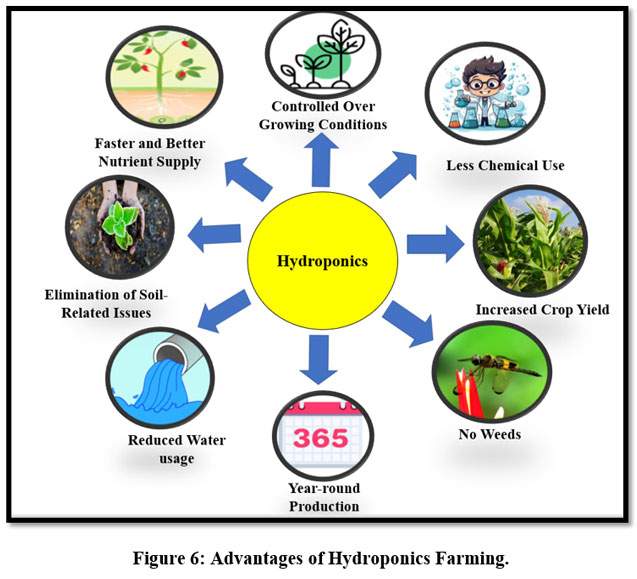 |
Figure 6: Advantages of Hydroponics Farming. |
Limitations of Soil-less culture
Soilless culture has certain drawbacks despite its many benefits. Commercial application demands technical expertise and a substantial upfront cost, but the rewards are significant. Due to its high cost, only high-value crops can be grown using soilless culture. Controlling plant health requires extreme caution. Ultimately, the system needs energy inputs to function.57
Marginal errors can end up affecting the crop.
There is less awareness among people about this technology
High capital investment and requires technical knowledge for management
Hydroponics is not a suitable production system for all horticulture crops.
The Potential reach of this technology
The farming practice with the fastest rate of advancement, Hydroponic farming, has the potential to replace traditional methods of food production. As the world’s population increases and agricultural land shrinks as a result of inadequate land management, people are going to utilise novel methods like aeroponics and hydroponics to expand crop production channels. Land in Tokyo is precious because of the city’s growing population. The nation has shifted to hydroponic rice cultivation to feed its people and protect its valuable land. The rice is cultivated underground in soilless vaults. Four harvest cycles per year, as opposed to the customary one, are possible due to the environment’s complete control. Hydroponics has also been effectively utilized in Israel, which has an arid climate. Organitech has used hydroponic systems to develop crops in shipping containers up to forty feet long. They produce a lot of bananas, citrus fruits, and berries, all of which are typically inappropriate for Israel’s climate. The scientific community is interested in applying hydroponics in developing countries with limited water resources. Similar to all technology, the initial setup expenses for hydroponic systems can be high, but as time passes, costs will decrease, and this option will become more attractive.
In regions of Asia and Africa where water and crops are restricted, hydroponic farming has the potential to supply food to millions of people. The industry is projected to grow significantly, making soil growth conditions increasingly challenging. Adopting a soil-less culture is crucial to increasing the yield and quality of produce and ensuring food security, particularly in countries like India, where urbanization is rapidly expanding. However, the widespread application of this technology can be expedited through government initiatives and the interest of research institutions.
Conclusion
The expansion of urban areas leads to a decrease in agricultural land, which makes it harder to foresee when there will be no more space for farming. If this trend continues, farmland may be the only remaining option for development. However, as the demand for crops rises, more space will be needed for cultivation. This issue has been a concern for years, prompting scientists to devise alternative methods for growing food and plants without relying on land, which is becoming scarce. Additionally, due to environmental degradation, even the available land may be contaminated with harmful substances, leading to the production of unsafe crops. Hydroponics provides a practical solution to land scarcity and soil contamination. Its most significant advantage is accessibility. Anyone with the proper knowledge and equipment can grow vegetables, fruits, and herbs at home, even in urban areas with limited space. This technique provides an economical and sustainable way to produce fresh food without depending on conventional farming, and hydroponic equipment is easily found in stores and via the Internet.
Acknowledgment
The authors are grateful for the constructive comments of the learned referees to improve the quality of the article. The support provided by the Gurukul Kangari (Deemed to be University), Haridwar, India is gratefully acknowledged by authors to carry out this research work.
Funding Sources
The author(s) received no financial support for the research, authorship, and/or publication of this article.
Conflict of Interest
The authors do not have any conflict of interest.
Data Availability Statement
All datasets generated or analysed during this study are included in the manuscript.
Ethics Statement
This research did not involve human participants, animal subjects, or any material that requires ethical approval.
Authors’ Contributions
Kalpana Sagar: Conceptualization, Writing – Original Draft
Km. Priti- Data Collection, Review and Editing.
References
- Sasmal B, Das G, Mallick P, et al. Advancements and challenges in agriculture: a comprehensive review of machine learning and IoT applications in vertical farming and controlled environment agriculture. Big Data and Computing Visions. 2024;1;4(2):67-94.
- Singh C, Nath R. Farming system and sustainable agriculture: Agricultural reform. Sgoc Publication; 2020.
- Ragaveena S, Shirly EA, Surendran U. Smart controlled environment agriculture methods: A holistic review. Reviews in Environmental Science and Bio/Technology. 2021;20(4):887-913.
CrossRef - Kumar TV, Verma R. A Comprehensive Review on Soilless Cultivation for Sustainable Agriculture. Journal of Experimental Agriculture International. 2024;46(6):193-207.
CrossRef - Rajaseger G, Chan KL, Tan KY, et al. Hydroponics: current trends in sustainable crop production. Bioinformation. 2023 30;19(9):925.
CrossRef - Sambo P, Nicoletto C, Giro A, et al. Hydroponic solutions for soilless production systems: issues and opportunities in a smart agriculture perspective. Frontiers in plant science. 2019; 24; 10:923.
CrossRef - Yang X, Luo Y, Jiang P. Sustainable soilless cultivation mode: cultivation study on droplet settlement of plant roots under ultrasonic aeroponic cultivation. Sustainability. 2022; 22;14(21):13705.
CrossRef - Velazquez-Gonzalez RS, Garcia-Garcia AL, Ventura-Zapata, et al. A review on hydroponics and the technologies associated for medium-and small-scale operations. Agriculture. 2022; 29;12(5):646.
CrossRef - Ragaveena S, Shirly Edward A, Surendran U. Smart controlled environment agriculture methods: A holistic review. Reviews in Environmental Science and Bio/Technology. 2021;20(4):887-913.
CrossRef - Naresh R, Jadav SK, Singh M, et al. Role of hydroponics in improving water-use efficiency and food security. International Journal of Environment and Climate Change. 2024;14(2):608-33.
CrossRef - Sousa RD, Bragança L, Da Silva MV, et al. Challenges and solutions for sustainable food systems: The potential of home hydroponics. Sustainability. 2024; 17;16(2):817.
CrossRef - Shilpa, Sharma P, Bansuli. Hydroponics in vegetable crops: A review. Hydroponics: The Future of Sustainable Farming. 2024; 8:15-41.
CrossRef - Mehta S, Malik K. Nanoparticles: Preparation, Properties and Applications.. Multidisciplinary Approach: Enhanced Agriculture Production in a Sustainable way 2023:11.
- Raza S. Innovative Technologies in Agriculture: Leveraging AI, ML, and IoT for Sustainable Food Production and Resource Management. International Journal of Agriculture and Sustainable Development. 2024; 14;6(3):127-46.
- Benis K, Ferrao P. Commercial farming within the urban built environment–Taking stock of an evolving field in northern countries. Global food security. 2018; 1; 17:30-7.
CrossRef - Kour K, Gupta D, Gupta K, et al. Monitoring ambient parameters in the IoT precision agriculture scenario: An approach to sensor selection and hydroponic saffron cultivation. Sensors. 2022; 17;22(22):8905.
CrossRef - Cichocki J, Von CM, Winkler B. Techno-Economic Assessment of an Office-Based Indoor Farming Unit. Agronomy. 2022 15;12(12):3182.
CrossRef - Bihari C, Ahamad S, Kumar M, Kumar A, Kamboj AD, Singh S, Srivastava V, Gautam P. Innovative soilless culture techniques for horticultural crops: A comprehensive review. International Journal of Environment and Climate Change. 2023 Sep;13(10):4071-84.
CrossRef - Xing Y, Wang X. Precision agriculture and water conservation strategies for sustainable crop production in arid regions. Plants. 2024;13;13(22):3184.
CrossRef - Boeing H, Bechthold A, Bub A, et al. Critical review: vegetables and fruit in the prevention of chronic diseases. European journal of nutrition. 2012; 51:637-63.
CrossRef - Yang T, Kim HJ. Characterizing nutrient composition and concentration in tomato-, basil-, and lettuce-based aquaponic and hydroponic systems. Water. 2020; 29;12(5):1259.
CrossRef - Mitsanis C, Aktsoglou DC, Koukounaras A, et al. Functional, flavor and visual traits of hydroponically produced tomato fruit in relation to substrate, plant training system and harvesting time. Horticulturae. 2021;14;7(9):311.
CrossRef - Alan R, Zulkadir A, Padem H. The influence of growing media on growth, yield and quality of tomato grown under greenhouse conditions. Acta Horticulturae. 1994; 366; 429-434.
CrossRef - Cambra C, Sendra S, Lloret J, et al. Smart system for bicarbonate control in irrigation for hydroponic precision farming. Sensors. 2018; 25;18(5):1333.
CrossRef - Sharma A, Manpoong C, Devadas VS, et al. Crop hydroponics, phyto-hydroponics, crop production, and factors affecting soilless culture. ACS Agricultural Science & Technology. 2022; 22;2(6):1134-50.
CrossRef - Kannan M, Elavarasan G, Balamurugan A, et al. Hydroponic farming–A state of art for the future agriculture. Materials today: proceedings. 2022 ;1; 68:2163-6.
CrossRef - Nadeem F, Hanif MA, Majeed MI, Mushtaq Z. Role of macronutrients and micronutrients in the growth and development of plants and prevention of deleterious plant diseases-a comprehensive review. International Journal of Chemical and Biochemical Sciences. 2018 Aug;13:31-52.
- Sardare MD, Admane SV. A review on plant without soil-hydroponics. International Journal of Research in Engineering and Technology. 2013 Mar 25;2(3):299-304.
CrossRef - Tyson RV, Simonne EH, Treadwell DD, et al. Effect of water pH on yield and nutritional status of greenhouse cucumber grown in recirculating hydroponics. Journal of plant nutrition. 2008; 15;31(11):2018-30.
CrossRef - Santosh DT, Gaikwad D. Advances in hydroponic systems: Types and management. Advances in Agricultural Technology.2023;16-28.
CrossRef - Jones Jr JB. Complete guide for growing plants hydroponically. CRC press; 2014; 13.
CrossRef - Roberto K. How-to hydroponics. Futuregarden, Inc.; 2005.
- Son JE, Kim HJ, Ahn TI. Hydroponic systems. InPlant factory 2020; 1 (pp. 273-283). Academic Press.
CrossRef - Bhatla SC, A. Lal M, Kathpalia R, Bhatla SC. Plant mineral nutrition. Plant physiology, development and metabolism. 2018:37-81.
CrossRef - Bhatla SC, A. Lal M, Kathpalia R, Bhatla SC. Plant mineral nutrition. Plant physiology, development and metabolism. 2018:37-81.
CrossRef - Al Meselmani MA. Nutrient solution for hydroponics. InRecent research and advances in soilless culture 2022 Jan 18. IntechOpen.
CrossRef - Mariyappillai A, Arumugam G, Raghavendran VB. The techniques of hydroponic system. Acta Scientific Agriculture. 2020;4(7):79-84.
CrossRef - Graves CJ. The nutrient film technique. Horticultural reviews. 1983;1; 5:1-44.
CrossRef - Shareef TM, Ma Z, Zhao B. Essentials of drip irrigation system for saving water and nutrients to plant roots: As a guide for growers. Journal of Water Resource and Protection. 2019;11;11(09):1129.
CrossRef - Sharma N, Acharya S, Kumar K, et al. Hydroponics as an advanced technique for vegetable production: An overview. Journal of Soil and Water Conservation. 2018;17(4):364-71.
CrossRef - Hasan M, Sabir N, Singh AK, et al. Hydroponics technology for horticultural crops. Bull. TB-ICN. 2018;188(2018):30.
- Lakhiar IA, Gao J, Syed TN, et al. Modern plant cultivation technologies in agriculture under controlled environment: A review on aeroponics. Journal of plant interactions. 2018; 1;13(1):338-52.
CrossRef - Naik PK, Swain BK, Singh NP. Production and utilisation of hydroponics fodder. Indian Journal of Animal Nutrition. 2015; 13;32(1):1-9.
- Ahamed MS, Sultan M, Shamshiri RR, et al. Present status and challenges of fodder production in controlled environments: A review. Smart Agricultural Technology. 2023; 1; 3:100080.
CrossRef - Naik PK, Swain BK, Singh NP. Production and utilisation of hydroponics fodder. Indian Journal of Animal Nutrition. 2015; 13;32(1):1-9.
- Sela Saldinger S, Rodov V, Kenigsbuch D, Bar-Tal A. Hydroponic agriculture and microbial safety of vegetables: promises, challenges, and solutions. 2023 Jan 3;9(1):51.
CrossRef - AlShrouf A. Hydroponics, aeroponic and aquaponic as compared with conventional farming. Sci. Res. J. Eng. Technol. Sci. 2017;27(1):247-55.
- Bradley P, Marulanda C. Simplified hydroponics to reduce global hunger. InWorld Congress on Soilless Culture: Agriculture in the Coming Millennium 554 2000; 14 (pp. 289-296).
CrossRef - Khan S, Purohit A, Vadsaria N. Hydroponics: current and future state of the art in farming. Journal of Plant Nutrition. 2020;10;44(10):1515-38.
CrossRef - Khatri L, Kunwar A, Bist DR. Hydroponics: Advantages and challenges in soilless farming. Big Data Agric. (BDA). 2024; 6:81-8.
CrossRef - Jan S, Rashid Z, Ahngar TA, et al. Hydroponics–A review. International Journal of Current Microbiology and Applied Sciences. 2020; 20;9(8):1779-87.
CrossRef - George P, George N. Hydroponics- (soilless cultivation of plants) for biodiversity conservation. J. Mod. Trends Eng. Sci. 2016;3(06):97-104.
- Fazaeli H, Golmohammadi HA, Tabatabayee SN, et al. Productivity and nutritive value of barley green fodder yield in hydroponic system. World Applied Sciences Journal. 2012; 29;16(4):531-9.
- Shit N. Hydroponic fodder production: an alternative technology for sustainable livestock production in India. Exploratory Animal & Medical Research. 2019; 1;9(2).
- Giovannucci D, Scherr SJ, Nierenberg D, et al. Food and Agriculture: the future of sustainability. The sustainable development in the 21st century (SD21) Report for Rio. 2012; 1;20.
CrossRef - Sharma N, Acharya S, Kumar K, et al. Hydroponics as an advanced technique for vegetable production: An overview. Journal of Soil and Water Conservation. 2018;17(4):364-71.
CrossRef - Sengupta A, Banerjee H. Soil-less culture in modern agriculture. World J. Sci. Technol. 2012;2(7):103-8.