


 PDF Downloads:
422
PDF Downloads:
422


Introduction
The intensive use of chemical fertilizers in modern agriculture has led to a decline in soil health, nutrient leaching and the pollution of water resources.1 Over time, soils become dependent on higher fertilizer inputs while losing natural fertility, posing risks to the environment and human health.2 Sustainable agricultural practices play a crucial role in addressing the global issues of food security and environmental preservation.3 In light of healthy and safe food production and the mitigation of environmental pollution associated with the excessive application of chemical fertilizers, organic farming has emerged as a global priority.4-5 A variety of organic manures derived from animal sources, including bovine dung, sheep manure, poultry manure, silkworm waste, vermicompost and bat guano are frequently employed in organic farming.6 Organic fertilizers present an environmentally sustainable alternative to chemical fertilizers, contributing to soil fertility, increased crop yield, quality and the promotion of sustainable agricultural practices.7-8 The sustained application of organic manure including bat guano, contributes to the soil structure, enhancement of soil aggregation and promotion of crop yield.9
Bat guano is recognized as highly beneficial organic manure due to its rich composition of essential nutrients including carbon, nitrogen, vital minerals and advantageous microorganisms.10 Its application enhances soil fertility, facilitates crop growth and aids in the management of soil-borne fungi and nematodes, while also exhibiting rapid mineralization properties.11-13 Furthermore, the utilization of bat guano has been linked to elevated levels of soil organic carbon, which serve as critical indicators of soil health.14 The bat’s guano is a better alternative compared with other organic fertilizers.15 It has also been extensively used in vegetable cultivation and fulfills the need of K, Ca, Mg, and other minerals that reduce the requirement of chemical fertilizers for vegetable crops such as tomato.16
Tomato (Solanum lycopersicum) is widely grown vegetable crop across the world due to its high production and consumption. It has significant global importance that necessitates nutrient-dense soils to achieve optimal growth and yield. The utilization of organic and inorganic amendments has been shown to considerably affect various growth parameters, fruit quality of tomatoes and soil properties. Numerous studies highlighted the advantages of bat guano, including its application in tomato cultivation in Nigeria17 and its application in other agricultural contexts.18-20 In several countries such as Jamaica, Indonesia and Mexico, the use and commercialization of bat guano as manure is well established; however, this practice is not common in India.19
Scientific research on the comparative effects of bat guano, farmyard manure and chemical fertilizers on plant growth and yield remains limited. Globally as well, research findings on this subject are relatively scarce and fragmented.6, 21-23 In India, only a few studies have reported on the use of bat guano for improving crop productivity.19, 24 Therefore, the present study seeks to evaluate bat guano as an alternative fertilizer in comparison with farmyard manure and chemical fertilizers, focusing on the growth parameters of tomato (Solanum lycopersicum).
Materials and Methods
Collection of bat guano, farmyard manure (FYM) and chemical fertilizer
The old and degraded guano (5 Kg) accumulated at roost site (situated on BBAU campus, 26°46’01″N, 80°55’12″E) of the insectivorous bat Scotophilus heathii; was collected with adequate care and proper sanitation. The Farmyard manure (5 kg) was procured from the Department of Horticulture at BBAU. While the chemical fertilizer (IFFCO), which contains nitrogen, phosphorus, and potassium in 19:19:19 ratio, was acquired from an agrochemical supplier.
Characterization of the bat guano and FYM
Samples of guano and farmyard manure (FYM) were placed in desiccators overnight to eliminate any residual moisture. Additionally, for elemental analysis, the SEM system was equipped with Energy Dispersive X-Ray Spectroscopy (EDS) (Oxford INCA), which facilitated the determination of the elemental composition of both guano and FYM samples.10
Selection of plant species
Solanum lycopersicum (Syngenta TO-3150), developed by Syngenta India Private Limited was chosen for this study owing to its significant agronomic value and its adaptability to the agro-climatic conditions prevalent in Uttar Pradesh, India. This particular variety is extensively cultivated across India, and its short to medium growing season, along with its predictable growth patterns, renders it particularly suitable for fertilizer research. Furthermore, the implementation of standardized agronomic practices, such as optimal plant spacing, treatment, and fertilization, allows for controlled experimental conditions. These characteristics contribute to the reliability of the results, thereby establishing Syngenta TO-3150 as an appropriate variety for evaluating the effects of bat guano, FYM and chemical fertilizers on plant growth, yield, and metal accumulation.
Experimental field
The current experiment was carried out at the Department of Zoology, Babasaheb Bhimrao Ambedkar University (BBAU) Lucknow (26°46’11.75″N, 80°55’42.59″E) India. An experiment was conducted during spring – summer 2024. Initially, the field was cleared of weeds, after that it was partitioned into ten square sections. Each section comprised three pits, each approximately one foot deep. A spacing of 1.5 feet was maintained between adjacent pits to facilitate appropriate spacing for the experimental treatments (Figure 1).
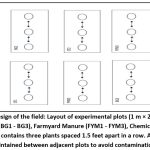 |
Figure 1: Experimetal design of the field: Layout of experimental plots (1 m × 2 m each) with different treatments: Bat guano (BG1 – BG3), Farmyard Manure (FYM1 – FYM3), Chemical Fertilizer (CF1 – CF3), and Control. Each plot contains three plants spaced 1.5 feet apart in a row. A 0.5 m buffer space is maintained between adjacent plots to avoid contamination.Click here to view Figure |
Implementation of the experiment
Cultivation activities including transportation and weeding/hoeing were conducted in accordance with the guidelines outlined in the variety instruction manual. Soil preparation involved plowing three weeks prior to the establishment of plots for transplantation. The transfer of healthy plants to designated pits occurred during the evening hours. Following transportation, the plants were irrigated immediately with subsequent watering occurred every 3 – 4 days during the initial two months (February and March). In contrast, during the months of April and May, irrigation was administered on an alternate – day basis.
Application of bat guano, farm yard manure and chemical fertilizer
Three graded levels of each treatment were applied per plant in triplicates. Bat guano was applied as BG1 = 50 g/plant, BG2 = 100 g/plant, and BG3 = 150 g/plant; farmyard manure as FYM1 = 50 g/plant, FYM2 = 100 g/plant, and FYM3 = 150 g/plant; and chemical fertilizer (NPK) as CF1 = 30 g/plant, CF2 = 60 g/plant, and CF3 = 90 g/plant. At planting, the designated treatment dose was mixed with the excavated soil and incorporated into the pit. The same doses were reapplied at 21-day intervals throughout the experimental period (5 times).
Soil and fruits sample collection
Soil samples (100 gm each pit) were collected from the root zone (15–20 cm depth) of three replicate plants per treatment after 60 days. To ensure representativeness, three subsamples were taken around each plant and homogenized prior to analysis. Samples were oven-dried at 105 °C to constant weight, ground, and sieved through a 2 mm mesh. For fruit analysis, mature tomato fruits were collected from plants per treatment during the harvest season (April-May). Six healthy fruits per plant of each treatment (18 fruits) were washed thoroughly with distilled water, air-dried under shade and subsequently sun-dried about 10 days. The dried fruits were ground and homogenized into fine powder stored in polyethylene bags until digestion with proper labels.25
Sample digestion and elemental analysis
For tomato fruit digestion, 2.0 g of powdered sample was placed in a 100 mL conical flask, followed by the addition of a freshly prepared 2:1 mixture of concentrated HNO₃ (50%) and H₂O₂ (30%). The digest was filtered and diluted to 50 mL with deionized water according to Yaqub et al.26 For soil digestion, 0.5 g of oven-dried soil was digested with HNO₃: HClO₄ (3:1 v/v) following standard protocols. The resulting solution was diluted to 50 mL with deionized water. Elemental concentrations in both soil and fruit digests were determined using Atomic Absorption Spectroscopy (AAS; Model Hitachi Z2300, Hitachi high-tech corporation Japan) according to Singh et al.,27 Sampling was restricted to a single time point (soil at 60 days and fruit at harvest) to capture the peak nutrient availability stage in soil and the final nutrient status of fruits, which directly reflect treatment effects.
Data collection and statistical analysis
Measurements of parameters including plant height, stem circumference, leaf length, and leaf width were obtained utilizing a measuring tape and vernier calipers, while the counts of flowers and fruits were assessed through direct visual observation at 30-day intervals. Data were analyzed using a randomized complete block design (RCBD) with 10 treatments (3 replicates per treatment). Each replicate consisted of a single plot giving 30 observations in total. Prior to analysis, assumptions of ANOVA were tested. Residual normality was verified using the Shapiro–Wilk test, and homogeneity of variances was assessed using Levene’s test. Since no strong deviations from assumptions were detected, raw data were used. Where assumptions were not strictly met, ANOVA was considered robust due to equal replication across treatments.28 Plant height and other growth parameters were analyzed by one-way ANOVA (SPSS v21), with treatment as the fixed factor. Post-hoc comparisons were performed using Tukey’s HSD test at α = 0.05. Results are presented as means ± standard deviation (SD), along with 95% confidence intervals (CI). Effect sizes (η²) were calculated as the proportion of variance explained by treatment.
Results
Characterization of bat guano and farmyard manure
The elemental analysis revealed distinct differences between bat guano and farmyard manure (Supplementary 1). Bat guano was characterized by higher contents of O (52.83 %) and C (23.86 %), Zr (7.57 %), while farmyard manure contained greater amounts of P (1.47 %), Ca (2.15 %), and Si (3.31 %). Sulfur levels were similar in both amendments (3.07–3.78 %), whereas Cl was substantially higher in bat guano (2.55 %) compared to farmyard manure (0.89 %).
Plant growth parameters
Plant height (cm)
Plant height varied significantly among treatments across growth period (Table 1). At 28th day a significant effect on plant height (F (9, 20) = 4.07, p = 0.004, η² = 0.65) was recorded. Treatments increased plant height compared to the control, with CF3 (25.34 ± 1.5cm) and FYM2 (24.34 ± 1.5cm) producing the tallest plants. Bat guano treatments (22.0 ± 3 –24.67 ± 1.5 cm) also enhanced growth, showing effectiveness comparable to chemical fertilizer and FYM. At 59th day significant effect on plant height (F (9, 20) = 22.48, p < 0.001, η² = 0.91) was also recorded. The height of FMY2 treated plants nearly doubled (54.34 ± 1.5 cm) compared to the control (27.33±1.5 cm). The tallest plants were recorded under CF3 (63.67 ± 2.5 cm), followed by BG3 (53.83 ± 1.8 cm). At 89th day, highly significant effect of fertilizer treatments on plant height (F (9, 20) = 69.56, p < 0.001, η² = 0.97) was observed. The tallest plants were obtained with CF3 (68.34 ± 1.5 cm), followed by BG3 (57.34 ± 1.5 cm) and FYM2 (55.07 ± 1.7 cm). At 118th day again highly significant treatment effect on plant height (F = 51.36, p < 0.001, η² = 0.96) was recorded. The CF3 produced the tallest plants (63.00 ± 2.00 cm), while BG3 (58.67 ± 1.5 cm), FYM2 (56.22 ± 1.7 cm) and FYM3 (57.00 ± 2.00 cm) also significantly enhanced growth. The CF2 (32.67 ± 1.5 cm) was comparable to the control (33.67 ± 1.7) indicating poor effectiveness.
Table 1: Plant height (cm) of the tomato plants under different treatments: Values with different letters (a-e) indicate significant differences (p < 0.05) among treatments within each month in Tukey’s test.
| Treatment | 28th day (Mean ± SD) | 59th day (Mean ± SD) | 89th day (Mean ± SD) | 118th day (Mean ± SD) |
| BG1 | 22.00 ± 3ᵃᵇ | 40.00 ± 11.1ᵇᶜ | 43.34 ± 3.43ᵇ | 44.00 ± 4.00ᵇ |
| BG2 | 23.34 ± 2.4ᵃᵇ | 40.00 ± 4.00ᵇᶜ | 43.00 ± 4.00ᵇ | 43.50 ± 4.00ᵇ |
| BG3 | 24.67 ± 1.5ᵇ | 53.83 ± 1.8ᵈ | 57.34 ± 1.5ᵈᵉ | 58.67 ± 1.5ᵈ |
| CF1 | 22.00 ± 2.00ᵃᵇ | 35.67 ± 1.5ᵃᵇ | 42.67 ± 1.5ᵇ | 45.34 ± 1.5ᵇ |
| CF2 | 23.34 ± 1.5ᵃᵇ | 33.34 ± 1.5ᵃᵇ | 33.67 ± 2.5ᵃ | 32.67 ± 1.5ᵃ |
| CF3 | 25.34 ± 1.5ᵇ | 63.67 ± 2.5ᵉ | 68.34 ± 1.5ᵉ | 63.00 ± 2.00ᵈ |
| FYM1 | 24.67 ± 2.5ᵇ | 47.67 ± 2.5ᶜᵈ | 49.23 ± 3.19ᵇᶜ | 50.08 ± 3.3ᵇᶜ |
| FYM2 | 24.34 ± 1.5ᵇ | 54.34 ± 1.5ᵈ | 55.07 ± 1.7ᶜᵈ | 56.22 ± 1.7ᶜᵈ |
| FYM3 | 21.00 ± 2.0ᵃᵇ | 48.67 ± 1.00ᶜᵈ | 53.34 ± 1.5ᶜᵈ | 57.00 ± 2.00ᶜᵈ |
| CONTROL | 17.67 ± 0.7ᵃ | 27.33 ± 1.5ᵃ | 28.99 ± 1.5ᵃ | 33.67 ± 1.7ᵃ |
Stem circumference
Stem circumference increased progressively across treatments from 28 to 118 days (Table 2). At 28th day no significant differences were observed (F (9, 20) = 0.27, p = 0.976, η² = 0.11). Mean values (3.9–5.6 cm) were similar across all groups, with overlapping confidence intervals. At 59th day, treatments effect was significant (F (9, 20) = 2.66, p = 0.033, η² = 0.55). Fertilization increased stem thickness compared to the control (5.20 ± 2.5 mm) with CF3 (10.69 ± 2.2 mm), BG3 (9.44 ± 1.7 mm) and FYM2 (8.86 ± 2.4 mm) producing the thickest stems. CF1 and CF2 did not differ from the control, highlighting variability in treatment effectiveness. At 89th day, no significant effect on stem circumference (F (9, 20) = 2.01, p = 0.093, η² = 0.47). While mean values were higher under BG2 (11.48 ± 1.7 mm), CF3 (10.81 ± 2.2 mm) and FYM2 (10.41 ± 2.2 mm) compared to the control (6.96 ± 2.5 mm). At 118th day, no significant differences in stem circumference among treatments (F = 2.01, p = 0.092, η² = 0.48). Control plants had the thinnest stems (6.91 ± 2.5 mm), while CF3 (11.62 ± 2.5 mm), BG2 (11.11 ± 2.1 mm) and FYM2 (10.96 ± 2.2 mm) showed the largest values. Although mean differences suggested stronger growth under both chemical and organic fertilizers, overlapping confidence intervals and high within-group variability limited statistical significance. Overall, while CF3 supplied readily available nutrients for rapid structural growth, BG and FYM offered a comparable benefit, likely through gradual mineralization and micronutrient enrichment. This indicates that both synthetic and organic amendments can improve stem robustness, contributing to greater plant vigor.
Table 2: Stem circumference (mm) of the tomato plants under different treatments: Values with different letters (a-b) indicate significant differences (p < 0.05) among treatments within each month in Tukey’s test.
| Treatment | 28th day (Mean ± SD) | 59th day (Mean ± SD) | 89th day (Mean ± SD) | 118th day (Mean ± SD) |
| BG1 | 4.55 ± 3.4ᵃ | 7.40 ± 1.00ᵃᵇ | 8.86 ± 1.5ᵃ | 8.78 ± 1.5ᵃ |
| BG2 | 4.88 ± 1.2ᵃ | 7.97 ± 1.2ᵃᵇ | 11.48 ± 1.7ᵃ | 11.11 ± 2.1ᵃ |
| BG3 | 5.30 ± 1.5ᵃ | 9.44 ± 1.7ᵃᵇ | 9.16 ± 1.3ᵃ | 10.40 ± 1.5ᵃ |
| CF1 | 4.21 ± 1.5ᵃ | 5.85 ± 1.4ᵃᵇ | 7.26 ± 1.6ᵃ | 7.47 ± 1.5ᵃ |
| CF2 | 3.91 ± 1.5ᵃ | 5.83 ± 1.4ᵃᵇ | 7.58 ± 1.6ᵃ | 7.95 ± 1.4ᵃ |
| CF3 | 5.56 ± 1.7ᵃ | 10.69 ± 2.2ᵇ | 10.81 ± 2.2ᵃ | 11.62 ± 2.5ᵃ |
| FYM1 | 4.55 ± 1.6ᵃ | 7.19 ± 1.5ᵃᵇ | 9.05 ± 1.5ᵃ | 9.55 ± 1.6ᵃ |
| FYM2 | 5.01 ± 1.5ᵃ | 8.86 ± 2.4ᵃᵇ | 10.41 ± 2.2ᵃ | 10.96 ± 2.2ᵃ |
| FYM3 | 4.65 ± 1.8ᵃ | 7.69 ± 2.3ᵃᵇ | 8.99 ± 2.00ᵃ | 9.75 ± 2.5ᵃ |
| CONTROL | 3.89 ± 2.00ᵃ | 5.20 ± 2.5ᵃ | 6.96 ± 2.5ᵃ | 6.91 ± 2.5ᵃ |
Leaf length (cm)
Leaf length varied across treatments and growth stages (Table 3). Results showed no statistically significant differences in leaf length among treatments at any stage (all p > 0.05). At 28th days, leaf length ranged from 3.67 ± 0.7 cm in CF1 to 5.36 ± 0.5 cm in FYM2 (F = 0.885, p = 0.555, η² = 0.29). At 59th days, mean values ranged from 4.06 ± 1.00 cm in the control to 7.16 ± 0.5 cm in CF3 (F = 1.861, p = 0.119, η² = 0.46). At 89th and 118th days, leaf length ranged from 4.50 ± 1.00 cm (control) to 6.33 ± 0.5 cm (CF3) (F = 1.76, p = 0.140, η² = 0.44) and from 3.50 ± 1.00 cm (FYM1) to 5.86 ± 0.5 cm (CF3) (F = 1.127, p = 0.389, η² = 0.34), respectively. Although statistical significance was not achieved, the moderate-to-large effect sizes (η² = 0.29–0.46) indicate potential biological relevance. Across growth stages, CF3, FYM2, and BG3 tended to produce longer leaves compared to the control, whereas FYM1 and CF1 were associated with the shortest values. These patterns suggest that both organic (FYM, BG) and chemical (CF) amendments may promote leaf elongation relative to the control.
Table 3: Leaf length(cm) of the tomato plants under different treatments: Values with the same letter (a) indicate no significant differences (p < 0.05) among treatments within each month.
| Treatment | 28th day (Mean ± SD) | 59th day (Mean ± SD) | 89th day (Mean ± SD) | 118th day (Mean ± SD) |
| BG1 | 5.00 ± 2.00ᵃᵇ | 5.97 ± 0.9ᵃᵇ | 5.17 ± 1.1ᵃ | 4.67 ± 2.1ᵃ |
| BG2 | 3.97 ± 1.00ᵃ | 6.24 ± 0.5ᵃᵇ | 5.75 ± 0.5ᵃᵇ | 4.00 ± 3.00ᵃ |
| BG3 | 4.36 ± 1.5ᵃᵇ | 6.00 ± 2.00ᵃᵇ | 6.30 ± 0.5ᵃᵇ | 5.67 ± 0.7ᵃᵇ |
| CF1 | 3.67 ± 0.7ᵃ | 4.67 ± 1.5ᵃ | 5.16 ± 1.5ᵃ | 5.16 ± 0.5ᵃ |
| CF2 | 4.00 ± 1.00ᵃ | 5.50 ± 1.00ᵃᵇ | 5.16 ± 0.4ᵃ | 5.33 ± 0.5ᵃᵇ |
| CF3 | 5.00 ± 1.00ᵃᵇ | 7.16 ± 0.5ᵇ | 6.33 ± 0.5ᵃᵇ | 5.86 ± 0.5ᵃᵇ |
| FYM1 | 4.16 ± 0.5ᵃ | 5.00 ± 1.00ᵃ | 4.67 ± 1.00ᵃ | 3.50 ± 1.00ᵃ |
| FYM2 | 5.36 ± 0.5ᵇ | 6.67 ± 1.00ᵃᵇ | 5.84 ± 0.5ᵃᵇ | 5.33 ± 0.9ᵃᵇ |
| FYM3 | 4.16 ± 0.5ᵃ | 5.56 ± 1.5ᵃᵇ | 5.83 ± 0.5ᵃᵇ | 5.16 ± 0.5ᵃᵇ |
| CONTROL | 3.73 ± 1.00ᵃ | 4.06 ± 1.00ᵃ | 4.50 ± 1.00ᵃ | 3.83 ± 1.00ᵃ |
Leaf width (cm)
Leaf width varied across treatments and growth stages (Table 4). At 28th days, it ranged from 1.67 ± 0.4 cm (CF1) to 3.16 ± 0.5 cm (FYM1), with no significant treatment effect (F (9, 20) = 1.516, p = 0.209, η² = 0.41). At 59 days, treatments significantly influenced leaf width (F (9, 20) = 3.005, p = 0.019, η² = 0.58), ranging from 1.73 ± 0.2 cm (CF1) to 3.83 ± 1.00 cm (FYM2), with FYM2, BG1 and CF3 outperforming the control (2.05 ± 0.5 cm). At 89th days, mean values ranged from 2.23 ± 0.5 cm (control) to 4.66 ± 1.5 cm (FYM2), but differences were not significant (F = 1.282, p = 0.306, η² = 0.37). At 118th days, leaf width varied from 2.33 ± 0.5 cm (control) to 4.75 ± 1.5 cm (BG2), with significant treatment effects (F (9, 20) = 2.567, p = 0.038, η² = 0.54). Overall, moderate to large effect sizes (η² = 0.37–0.58) indicate that fertilizer amendments, particularly FYM2, BG2, BG1 and CF3 enhanced leaf width compared to the control.
Table 4: Leaf width (cm) of the tomato plants under different treatments: Values with the same letter (a) indicate no significant differences (p < 0.05) among treatments within each month using Tukey’s test.
| Treatment | 28th day (Mean ± SD) | 59th day (Mean ± SD) | 89th day (Mean ± SD) | 118th day (Mean ± SD) |
| BG1 | 3.12 ± 2.00ᵃ | 3.60 ± 1.4ᵃ | 2.50 ± 1.00ᵃ | 2.67 ± 1.00ᵃ |
| BG2 | 2.20 ± 0.5ᵃ | 3.37 ± 0.5ᵃ | 3.50 ± 1.5ᵃ | 4.75 ± 1.5ᵃ |
| BG3 | 2.63 ± 0.5ᵃ | 3.16 ± 0.5ᵃ | 3.33 ± 1.00ᵃ | 3.90 ± 1.00ᵃ |
| CF1 | 1.67 ± 0.4ᵃ | 1.73 ± 0.2ᵃ | 2.73 ± 0.5ᵃ | 3.00 ± 0.5ᵃ |
| CF2 | 1.96 ± 0.3ᵃ | 2.56 ± 0.5ᵃ | 2.50 ± 0.5ᵃ | 2.66 ± 0.4ᵃ |
| CF3 | 2.90 ± 0.5ᵃ | 3.66 ± 0.4ᵃ | 3.33 ± 0.5ᵃ | 3.16 ± 0.5ᵃ |
| FYM1 | 3.16 ± 0.5ᵃ | 2.76 ± 0.8ᵃ | 2.67 ± 0.3ᵃ | 2.83 ± 0.3ᵃ |
| FYM2 | 2.63 ± 0.3ᵃ | 3.83 ± 1.00ᵃ | 4.66 ± 1.5ᵃ | 4.26 ± 1.5ᵃ |
| FYM3 | 1.76 ± 0.4ᵃ | 2.83 ± 0.3ᵃ | 3.00 ± 2.00ᵃ | 2.67 ± 0.3ᵃ |
| CONTROL | 2.10 ± 0.5ᵃ | 2.05 ± 0.5ᵃ | 2.23 ± 0.5ᵃ | 2.33 ± 0.5ᵃ |
Flowers and fruits
Flower and fruit production varied significantly among treatments, particularly between March and April (Table 5). In March, flower production varied significantly among treatments, ranging from 2.66 ± 1.00 (control) to 39.33 ± 4.00 (CF3), with an overall mean of 16.74. Result showed a highly significant treatment effect (F (9, 20) = 47.74, p < 0.001, η² = 0.96), indicating that fertilizer amendments strongly influenced flowering. CF3 and BG3 (30.33 ± 5.00) recorded the highest flower counts, while the control showed minimal flowering. In April, flowering was limited but still varied significantly among treatments (F (9, 20) = 18.78, p < 0.001, η² = 0.89). The highest flower counts were observed in CF1 (7.00 ± 2.00), BG2 (6.50 ± 2.00) and FYM1 (4.00 ± 2.00), whereas six treatments, including the control, showed no flowering. These results indicate that specific amendments sustained flowering into April, while most treatments failed to support continued production.
Fruit production in March also differed significantly (F = 28.94, p < 0.001, η² = 0.93) among treatments. Our analysis showed highest fruit set under CF3 (17.00 ± 2.00), FYM2 (13.70 ± 1.5) and FYM1 (13.33 ± 2.00) with the lowest in the control (1.50 ± 0.5). In April a similarly strong treatment effect (F (9, 20) = 57.26, p < 0.001, η² = 0.96), with CF3 (18.66 ± 1.4) and BG2 (13.50 ± 2.00) fruits recorded the highest yields, while the control (1.00 ± 00) and no fruits were recorded in FMY2. Together, these findings highlight the strong positive influence of CF and BG amendments on fruiting potential, compared to the inconsistent effects of FYM and the control. Notably, not all treatments that enhanced flowering translated into fruit set. For example, BG3 and FYM2 promoted substantial flowering at 59 days but failed to sustain fruit production by 89 days.
Table 5: The numbers of flowers and fruits in different treatments: values with different letters (a-e) indicate statistically significant differences at (p < 0.05). at Tukey’s test.
| Flowers | Fruits | |||
| Treatments | 59th day (Mean ± SD) | 89th day (Mean ± SD) | 59th day (Mean ± SD) | 89th day (Mean ± SD) |
| BG1 | 9.66 ± 2.4ᵃ | 2.00 ± 1.00ᵃᵇ | 4.66 ± 1.2ᵃᵇ | 3.66 ± 0.8ᵃᵇ |
| BG2 | 19.00 ± 2.00ᵇ | 6.50 ± 2.00ᶜ | 11.00 ± 2.00ᶜᵈ | 13.50 ± 2.00ᵈ |
| BG3 | 30.33 ± 5.00ᶜ | 0.00 ± 00ᵃ | 12.00 ± 3.00ᶜᵈ | 8.00 ± 2.00ᶜ |
| CF1 | 9.00 ± 2.00ᵃ | 7.00 ± 2.00ᶜ | 2.66 ± 1.2ᵃ | 8.00 ± 1.00ᶜ |
| CF2 | 10.33 ± 2.00ᵃ | 0.00 ± 00ᵃ | 5.33 ± 0.5ᵃᵇ | 2.00 ± 1.00ᵃ |
| CF3 | 39.33 ± 4.00ᵈ | 0.00 ± 00ᵃ | 17.00 ± 2.00ᵉ | 18.66 ± 1.4ᵉ |
| FYM1 | 8.46 ± 2.5ᵃ | 4.00 ± 2.00ᵇᶜ | 13.33 ± 2.00ᵈᵉ | 6.00 ± 2.00ᵇᶜ |
| FYM2 | 19.66 ± 3.00ᵇ | 0.00 ± 00ᵃ | 13.70 ± 1.5ᵈᵉ | 0.00 ± 00ᵃ |
| FYM3 | 19.00 ± 2.00ᵇ | 0.00 ± 00ᵃ | 7.66 ± 1.4ᵇᶜ | 6.00 ± 1.00ᵇᶜ |
| CONTROL | 2.66 ± 1.00ᵃ | 0.00 ± 00ᵃ | 1.50 ± 0.5ᵃ | 1.00 ± 00ᵃ |
Soil physicochemical properties post-treatment as compared to control
The soil analysis indicated considerable variation among treatments (Supplementary 1). Bat guano (BG) treatments enhanced soil organic carbon (SOC: 0.35 – 0.91%) and nutrient status, with BG3 showing the highest SOC (0.91%), N (366.6 kg/ha), P (37.8 kg/ha) and Mn (45.92 ppm). Chemical fertilizer (CF) treatments markedly increased K, particularly CF3 (1964 kg/ha) and P (100.7 kg/ha), though SOC remained lower (0.40 – 0.71%). FYM treatments also improved SOC (0.38 – 0.52%) and micronutrient availability, with FYM3 recording the highest Zn (4.24 ppm). In contrast, the control showed lower nutrient levels, including N (214.7 kg/ha), P (28.8 kg/ha) and Fe (9.88 ppm), highlighting the positive influence of organic and inorganic amendments on soil fertility.
Elemental profile in tomato fruits
The elemental analysis of tomato fruits revealed differences among treatments (Table 6). Bat guano (BG) treatments showed higher concentrations of N (2.89 – 3.38%), P (0.48 – 0.58%) and K (3.91- 3.69%) compared to chemical fertilizer (CF) and control, with BG3 also recording the highest Fe content (228 ppm). Farmyard manure (FYM) treatments improved nutrient accumulation, particularly FYM3, which exhibited the maximum P (0.69%) and K (5.65%). In contrast, chemical fertilizer treatments showed relatively lower N (1.67 – 2.07%), P (0.36 – 0.49%), and K (3.18 – 3.76%), while the control recorded the lowest K (2.25%) and S (0.14 mg/kg). Overall, organic amendments (BG and FYM) enriched both macro- and micronutrient concentrations in tomato fruits more effectively than chemical fertilizers and the control.
Table 6: Macro and micronutrient composition of tomato fruits across treatments: The table shows the nutrient composition of soil under different treatments, including macronutrients (N, P, K in %) and sulfur (S in mg/kg), along with micronutrients (Zn, Cu, Fe, Mn in ppm).
| Treatments | N (%) | P (%) | K (%) | S(mg/kg) | Zn (ppm) | Cu (ppm) | Fe (ppm) | Mn (ppm) |
| BG1 | 2.89 | 0.48 | 3.91 | 0.26 | 39 | 11 | 116 | 12 |
| BG2 | 3.13 | 0.58 | 4.79 | 0.31 | 38 | 14 | 132 | 14 |
| BG3 | 3.38 | 0.55 | 3.69 | 0.29 | 38 | 12 | 228 | 13 |
| CF1 | 1.97 | 0.49 | 3.76 | 0.22 | 10 | 14 | 162 | 11 |
| CF2 | 1.67 | 0.36 | 3.18 | 0.18 | 18 | 11 | 172 | 9 |
| CF3 | 2.07 | 0.41 | 3.59 | 0.21 | 32 | 12 | 115 | 6 |
| FYM1 | 2.17 | 0.46 | 3.34 | 0.17 | 26 | 11 | 92 | 10 |
| FYM2 | 2.04 | 0.51 | 3.9 | 0.3 | 42 | 15 | 136 | 8 |
| FYM3 | 2.55 | 0.69 | 5.65 | 0.29 | 39 | 16 | 162 | 14 |
| CONTROL | 2.15 | 0.43 | 2.25 | 0.14 | 31 | 9 | 127 | 8 |
Discussion
Characterization of bat guano and farmyard manure
It is noteworthy that platinum (9.31%) and zirconium (7.82%) were detected in farmyard manure and bat guano, respectively. However, these elements are unusual in organic manures and their detection may be attributed to analytical artifacts associated with SEM-EDS analysis10.
Plant growth parameters
Organic amendments (BG, FYM) were nearly as effective as chemical fertilizers, demonstrating strong potential for sustainable crop production. The superior performance of CF3 can be attributed to the immediate availability of NPK nutrients, which are rapidly absorbed and drive vigorous vegetative growth.29-30 In contrast, bat guano and FYM supplied nutrients more gradually through microbial mineralization, supporting consistent but slightly lower growth.31,32 Beyond direct nutrient supply, organic amendments enhance soil organic matter, microbial activity and nutrient retention, which improve long-term fertility.33,34 The relatively high growth under BG3 further reflects guano’s richness in both macro- and micronutrients, which contribute to plant vigor. While chemical fertilizers ensured rapid early growth, sole reliance may risk soil degradation and nutrient imbalances over time.35 Integrating inorganic fertilizers with organic sources appears to be a sustainable strategy, providing immediate growth benefits while maintaining soil health.
Similar outcomes have been reported with bat guano applications, where enhanced stem diameter was linked to improved nutrient supply and cambial activity.17 From a biological standpoint, increases in stem circumference indicate enhanced secondary growth and vascular tissue development, which strengthen water and nutrient transport capacity.36 The superior performance of CF3 and BG treatments may be attributed to higher nitrogen and phosphorus availability, known to stimulate cambial division and structural reinforcement.37 The absence of strong statistical effects at later stages could be due to variability and limited replication, which often reduces the ability to detect differences in plant growth trials.28
The absence of statistical significance likely reflects high variability and overlapping standard errors, which is common in plant growth experiments with small sample sizes28. Biologically, the consistent tendency for CF3, FYM, and BG to enhance leaf length indicates that nutrient-enriched treatments supported leaf elongation compared to the control. Longer leaves increase photosynthetic surface area and light interception capacity.38 This effect is most plausibly linked to improved nitrogen availability, which promotes chlorophyll synthesis and cell expansion, thereby sustaining vegetative growth.39
The delayed significant differences suggest that nutrient amendments exerted stronger effects on leaf expansion during later growth stages, when demands for photosynthetic surface area are greatest. From a physiological perspective, wider leaves enhance canopy photosynthesis and biomass accumulation due to greater light interception.36 The superior performance of FYM and BG indicates that organic amendments not only supplied macro and micro-nutrients but also improved soil structure and microbial activity, thereby promoting sustained leaf expansion.40 The significant increases in leaf width under organic and CF3 treatments highlight the role of integrated nutrient management in enhancing structural traits that underpin photosynthetic efficiency and crop productivity relative to unfertilized control plants.
This discrepancy may result from nutrient imbalances, where excessive nitrogen favors vegetative growth and flowering but suppresses fruit initiation unless potassium is sufficiently available.41 Conversely, CF3, with its balanced NPK composition, consistently supported flowering and fruiting, indicating efficient nutrient uptake. From a physiological perspective, potassium plays a central role in flower development, fruit set and quality, while nitrogen drives vegetative growth.42,43 The poor fruiting under BG3 and FYM2, despite high flowering, suggests insufficient potassium relative to nitrogen. In contrast, BG2, which showed moderate flowering, produced a relatively high fruit set, highlighting the importance of nutrient balance over absolute flower count. In the long term, reliance solely on chemical fertilizers like CF3 may enhance short-term productivity but risks soil degradation. Organic amendments such as bat guano and FYM improve soil organic matter, microbial activity, and nutrient buffering capacity, supporting sustained fertility.17,41
Soil physicochemical properties post-treatment as compared to control
Soil pH ranged from 7.2 (CF1, BG3) to 9.0 (FYM2), with higher alkalinity under FYM2 potentially reducing micronutrient availability, while moderate pH in BG3 favored nutrient uptake.44-45 Electrical conductivity remained low (0.13-0.28 dS/m), indicating no salinity stress for tomato. Soil organic carbon was markedly enhanced under guano, peaking in BG3 (0.91%), reflecting rapid decomposition and microbial activity that improve soil fertility and structure.46-48 Soils treated with guano, especially BG3, displayed significantly higher SOC levels in comparison to other treatments, suggesting a marked enhancement in organic matter content. Increased SOC is essential for the improvement of soil structure, water retention, and microbial activity.49 Guano also supplied the highest nitrogen (366.6 kg/ha), consistent with its rapid mineralization. The observed increase in nitrogen (N) levels in soils treated with guano, particularly in BG3 which exhibited the highest concentration, emphasizes the effectiveness of guano as a nitrogen rich soil amendment to provide readily available nitrogen and promote plant growth.19
Whereas CF3 maximized phosphorus (100.7 kg/ha) and potassium (1964 kg/ha) due to high solubility of chemical fertilizers.50-51 Sulfur was enriched under CF3 and BG3, supporting amino acid and protein synthesis in tomato.51 Micronutrient availability improved significantly under organic amendments, FYM3 enhanced Zn (4.24 ppm), while BG3 mobilized Cu, Fe, and Mn, likely through organic acid-mediated chelation.46,52 Overall, chemical fertilizers provided immediate macronutrient supply, which can effectively meet short-term nutrient requirements; however, excessive use may result in long-term soil degradation53 while guano and FYM improved SOC and micronutrient availability, suggesting that guano in particular can enhance both soil fertility and long-term sustainability compared with chemical inputs alone. Notably, the highest concentrations recorded were in Cu, Fe, Mn in soils treated with BG3 emphasize the potential of organic amendments to enhance micro-nutrient availability, which is crucial for enzymatic functions and overall plant health.54
Elemental composition in tomato fruits
Nitrogen content ranged from 1.67% (CF2) to 3.38% (BG3), with guano consistently enhancing N accumulation. This is consistent with the high soil N availability under guano treatments (BG2-BG3), reflecting rapid mineralization and efficient plant uptake.47,50 The enhanced nitrogen content in the fruits is essential for protein synthesis and contributes to the overall quality of the fruit.55 The elevated potassium levels observed in fruits treated with FYM3 underscore the effectiveness of FYM in fulfilling potassium requirements, which are essential for the development, coloration and flavor of fruits.12 Phosphorus was maximized in FYM3 (0.69%), while potassium reached its highest level in the same treatment (5.65%), underscoring the role of FYM in supplying slowly mineralized P and K reserves.48,51 Sulfur concentrations were highest under FYM2 and BG2, paralleling the elevated soil S levels observed in these treatments, suggesting that both guano and FYM enhance S assimilation in tomato fruits. Among micronutrients, Zn and Cu were significantly enriched under FYM2 and FYM3, respectively, consistent with organic matter-mediated mobilization of these elements.52 The most striking, iron accumulation in BG3 reached 228 ppm, substantially higher than in other treatments. The elevated Fe reflects both high soil Fe availability and guano-derived organic acids that enhance Fe solubility and root uptake.46,52 From a health and market perspective, high micronutrient levels like Fe and Zn are advantageous for nutritional quality, especially in addressing iron deficiency. But Fe concentration in BG3 fruits substantially exceeded common sufficiency range, warranting further analysis regarding food safety and bioavailability.32 Similarly, Mn levels were highest in FYM3 and BG2–BG3 (14 ppm), which align with improved soil micronutrient availability. Overall, guano (especially BG3) enhanced N and Fe concentrations, while FYM3 promoted P, K, Zn, and Cu accumulation. These differences indicate that organic amendments not only improve soil fertility but also translate into nutrient-dense fruits.
Sustainability to use of bat guano as organic manure
Bat guano contributes to long-term soil fertility by enriching organic carbon, nitrogen, and phosphorus, while enhancing microbial activity that promotes nutrient cycling and soil structure.56 Its rapid mineralization and balanced nutrient profile make it especially effective in tropical and sandy soils, sustaining soil productivity over time7. However, there are potential environmental risks. Nutrient leaching from over-application may cause eutrophication in nearby water bodies. Additionally, guano composition varies with bat species and diet, sometimes containing heavy metals that may accumulate in soils and crops if not regularly monitored.57 From a cost-effectiveness perspective, bat guano is often locally available in regions with large bat colonies, lowering dependency on costly synthetic fertilizers. Although collection and processing require labor, overall costs are generally lower than chemical inputs, making guano an economically viable organic amendment.58
Conclusion
The study demonstrates that organic amendments, particularly bat guano (BG) and farmyard manure (FYM), offered substantial advantages over chemical fertilizers (CF) in improving soil health and tomato crop performance. BG3 consistently enhanced soil organic carbon, nitrogen, and micro-nutrient availability, which translated into superior vegetative growth and fruit quality. The FYM3 treatment has P, K, Zn enrichment, underscoring its potential for nutrient supply. CF treatments, while effective in boosting flowering and fruiting in the short term and was less impact on soil nutrient profiles compared to organic treatments. The elemental composition of tomato fruits further validated the efficacy of BG and FYM treatments, with BG3 and FYM3 contributing to higher nitrogen, phosphorus, potassium, and micro-nutrient accumulation. Overall, the study highlights the dual benefits of organic amendments in sustaining soil fertility and enhancing crop productivity, advocating for their broader adoption in sustainable agricultural practices. Further research is recommended to explore the long-term impacts of these treatments on soil health and crop performance across diverse agro-ecological settings.
Acknowledgement
The author would like to thank Babasaheb Bhimrao Ambedkar University (BBAU) for granting the Ph. D research works. The department of Zoology, BBAU, is highly appreciated for allowing experimental work. The authors sincerely thank Dr. Mukesh Kumar (USIC, BBAU, Lucknow) for facilitating SEM-EDS analysis of the samples and Dr. Shiv Ram Singh (ICAR-IISR, Lucknow) for helping soil and tomato sample analyses. The authors also express their gratitude to Dr. Venkatesh Kumar R. for supporting the field experiment.
Funding Source
Financial support through UGC Non-NET fellowship to AS wide Enrollment Number 1693/20 is acknowledged.
Conflict of interest
The authors do not have any conflict of interest.
Data Availability statement
All the data are available in the manuscript.
Ethics Statement
This research did not involve human participants, animal subjects, or any material that requires ethical approval.
Informed Consent Statement
This study did not involve human participants, and therefore, informed consent was not required.
Permission to reproduce material from other sources
Not applicable.
Author Contributions
Amita Singh: Conceptualization, Methodology, Data Collection, Writing – Original draft.
Manjulendra Kumar: Analysis, Writing- Review and Editing.
Vadamalai Elangovan: Resources management, Supervision.
References
- Tanimu J., Iwuafor E. N. O., Odunze A. C., Tian G. Effect of incorporation of leguminous cover crops on yield and yield components of maize. World J Agric Sci. 2007;3(2):243–249.
- Mehedi T. A., Siddique M. A., Shahid S. B. Effect of urea of cow dung on growth and yield of carrot. J Bangladesh Agric Univ. 2012;10:9-13.
CrossRef - Al-Erwy A., Al-Toukhy A., Bafeel S. Effect of chemical, organic and bio fertilizers on photosynthetic pigments, carbohydrates and minerals of wheat (Triticum aestivum) irrigated with sea water. Int J Adv Res Biol Sci. 2016;3(2):296-310.
- Michael T., Phiwokwakhe D., Paul K., Wahome O., Tajudeen O. Effects of chicken manure on growth, yield and quality of lettuce (Lactuca sativa) ‘Taina’ under a lath house in a semi-arid sub-tropical environment. Am Eurasian J Agric Environ Sci. 2012;12(3):399-406.
- Naseer B. S, Sivakumar A., Subramanian M. S. Effect of manures on biomass production and pharmacobiochemical properties of some greens. Anc Sci Life. 2003;23(2):123-130.
- Aye K. N. , Oo C. C. Effects of bat (Hipposideros pomona Andersen, 1918) guano in comparison with cow dung on the growth and yield of tomato plant (Solanum lycopersicum) in Magway. Univ Yangon Res J. 2022;11(2):417-428.
- Subhan A. H., Hidayat N., Gunadi. Penggunaan pupuk nitrogen dan pupuk kandang ayam pada tanaman cabai di lahan kering. J Hort. 1998;8(3):1178-1183.
- Suwandi S., Sopha G. A., Yufdy M. P. Efektivitas pengelolaan pupuk organik, NPK, dan pupuk hayati terhadap pertumbuhan dan hasil bawang merah. J Hortikultura. 2015;25(3):208-221.
CrossRef - Padbhushan R., Rakshit R., Das A., Sharma R. P. Effects of various organic amendments on organic carbon pools and water stable aggregates under a scented rice–potato–onion cropping system. Paddy Water Environ. 2016;14:481-489.
CrossRef - Misra P. K., Gautam N. K., Elangovan V. Bat guano: a rich source of macro and microelements essential for plant growth. Ann Plant Soil Res. 2019;21(1):82-86.
- Bharambe C. M., Swapna S., Patil. Impact of bat guano on degradation of water pollutants in Purna River in Buldana district, MS (India). Res J Int Multidiscip Res J. 2015;2(4).
- Ganeshamurthy A. N., Rupa T. R., Kalaivanan D., et al. Potassium nutrition of fruit crops. Comparative evaluation of potassic fertilizers. Indian J Fertil. 2023;19(3):204-219.
- Ikram N. A., Abdalla M. A., Mühling K. H. Developing iron and iodine enrichment in tomato fruits to meet human nutritional needs. 2024;13(23):3438.
CrossRef - Abd Rahman S. S. N., Tingga R. C. T., Bukhori M. F. M., Abdullah S. M. A. A. A brief review of the nutritive value and chemical components of bat guano and its potential use as a natural fertiliser in agriculture. Borneo J Resour Sci Technol. 2023;13(1):22-31.
CrossRef - Mentler A., Partaj T., Strauss P., Soumah M., Blum W. E. Effect of locally available organic manure on maize yield in Guinea, West Africa. Paper presented at: 17th World Congress of Soil Science; 2002 Aug 14–21; Bangkok, Thailand. Bangkok: Department of Land Development, The Soil and Fertilizer Society of Thailand, International Union of Soil Sciences; 2002:441.
- Hashim A. B., Aminuddin H., Siva K. B. Nutrient content in rice husk ash of some Malaysian rice varieties. Pertanika J Trop Agric Sci. 1996;19:77-80.
- Karimou A. H, Yadji G., Fanna A. G., et al. Effect of different rate of bat guano on growth and yield of tomatoes (Lycopersicon esculentum Mill) in Niamey, Niger. J Exp Agric Int. 2020;42(3):34-46.
CrossRef - Dimande P., Arrobas M., Rodrigues M. Â. Under a tropical climate and in sandy soils, bat guano mineralizes very quickly, behaving more like a mineral fertilizer than a conventional farmyard manure. 2023;13(5):1367.
CrossRef - Shetty S., Sreepada K. S., Bhat R. Effect of bat guano on the growth of Vigna radiata Int J Sci Res Publ. 2013;3(3):1-8.
- Almohammedi A. N, Almehemdi A. F, Ajeelee R. K. Impact of bat guano (Otonycteris hemprichii Camp) and seaweed extract on some growth and yield traits of Baraka seed (Nigella sativa). J Biol Agric Healthc. 2014;4(1):57–65.
- Pierson E. D. Tall trees, deep holes, and scarred landscapes: conservation biology of North American bats. In: Kunz TH, Racey PA, eds. Bat Biology and Conservation. Washington, DC: Smithsonian Institution Press; 1998:309-325.
- Hutchinson G. E. Survey of Existing Knowledge of Biogeochemistry: 3. The Biogeochemistry of Vertebrate Excretion. Bull Am Mus Nat Hist. 1950;96:1-554.
- Abidemi O. O. An assessment of the nitrogen, phosphorus, and potassium levels of some animal wastes as organic fertilizer sources. Electron J Environ Agric Food Chem. 2011;10(3):1988.
- Sridhar K. R., Ashwini K. M., Seena S., Sreepada K. S. Manure qualities of guano of insectivorous cave bat Hipposideros speoris. Trop Subtrop Agroecosyst. 2006;6:103-110.
- Khan N., Yaqub G., Hafeez T., Tariq M. Assessment of health risk due to pesticide residues in fruits, vegetables, soil, and water. J Chem. 2020;2020:5497952. doi:10.1155/2020/5497952
CrossRef - Yaqub G., Ilyas F., Idrees M., Mariyam V. Monitoring and risk assessment due to presence of heavy metals and pesticides in tea samples. Food Sci Technol. 2018;38(4):625–628.
CrossRef - Singh Y. V., Kant S., Singh S. K., Sharma P. K., Jat L. K., Kumar M., Yadav R. N. Assessment of physico-chemical characteristics of the soil of Lahar block in Bhind district of Madhya Pradesh (India). Int J Curr Microbiol Appl Sci. 2017;6(2):511–519.
CrossRef - Gomez K. A., Gomez A. A. Statistical Procedures for Agricultural Research. 2nd ed. John Wiley & Sons; 1984.
- Tilman D., Cassman K. G., Matson P. A., Naylor R., Polasky S. Agricultural sustainability and intensive production practices. 2002;418(6898):671-677.
CrossRef - Souri M. K., Hatamian M. Aminochelates in plant nutrition: a review. J Plant Nutr. 2019;42(1):67–78.
CrossRef - Sothearen T., Furey N. M., Jurgens J. A. Effect of bat guano on the growth of five economically important plant species. J Trop Agric. 2014;52(2):169-173.
- Jones J. J., Wolf B., Mills H. A. Plant Analysis Handbook: A Practical Sampling, Preparation, Analysis, and Interpretation Guide. Athens, GA: Micro Macro Publishing; 1991:213 pp.
- Dimande P., Arrobas M., Rodrigues M. Â. Effect of bat guano and biochar on okra yield and some soil properties. 2023;9(7):728.
CrossRef - Lal R. Restoring soil quality to mitigate soil degradation. 2015;7(5):5875-5895.
CrossRef - Singh M., Singh V. P., Reddy K. S. Effect of integrated use of fertilizer nitrogen and farmyard manure or green manure on transformation of N, K and S and productivity of rice-wheat system on a Vertisol. J Indian Soc Soil Sci. 2001;49(3):430-435.
- Poorter H., Niklas K. J., Reich P. B., Oleksyn J., Poot P., Mommer L. Biomass allocation to leaves, stems and roots: meta-analyses of interspecific variation and environmental control. New Phytol. 2012;193(1):30-50.
CrossRef - Anten N. P., Schieving F. The role of wood mass density and mechanical constraints in the economy of tree architecture. Am Nat. 2010;175(2):250-260.
CrossRef - Wright I. J., Reich P. B., Westoby M. The worldwide leaf economics spectrum. 2004;428(6985):821-827.
CrossRef - Taiz L., Zeiger E. Plant Physiology. 5th ed. Sunderland, MA: Sinauer Associates; 2010:629.
- Anjum A., Khan A. Decomposition of soil organic matter is modulated by soil amendments. Carbon Manag. 2021;12(1):37–50.
CrossRef - Premsekhar M., Rajashree V. Influence of organic manures on growth, yield and quality of okra. Am Eurasian J Sustain Agric. 2009;3(1):6-8.
- De Luca A., Corell M., Chivet M., Parrado M. A., Pardo J. M., Leidi E. O. Reassessing the role of potassium in tomato grown with water shortages. 2021;7(2):20.
CrossRef - Woldemariam S. H., Lal S., Zelelew D. Z., Solomon M.T. Effect of potassium levels on productivity and fruit quality of tomato (Lycopersicon esculentum). J Agric Stud. 2018;6(1):104-117.
- Fageria N. K., Baligar V. C., Jones C. A. Growth and Mineral Nutrition of Field Crops. 3rd ed. Boca Raton: CRC Press; 2010.
CrossRef - Marschner H., ed. Marschner’s Mineral Nutrition of Higher Plants. 3rd ed. London: Academic Press; 2011.
- Lindsay W. L., Norvell W. Development of a DTPA soil test for zinc, iron, manganese, and copper. Soil Sci Soc Am J. 1978;42(3):421-428.
CrossRef - Palita S. K., Panigrahi R., Panda D. Potentiality of guano of Black-bearded Tomb bat (Taphozous melanopogon) as organic manure to improve growth, photosynthetic response, and soil OC, N, P, K in finger millet and black gram. Proc Natl Acad Sci India Sect B Biol Sci. 2021;91(1):185–193.
CrossRef - Geisseler D., Smith R., Cahn M., Muramoto J. Nitrogen mineralization from organic fertilizers and composts: literature survey and model fitting. J Environ Qual. 2021;50(6):1325–1338.
CrossRef - Lal R. Soil health and carbon management. Food Energy Secur. 2016;5(4):212-222.
CrossRef - Bayu W., Rethman N. F. G., Hammes P. S., Alemu G. Effects of farmyard manure and inorganic fertilizers on sorghum growth, yield, and nitrogen use in a semi-arid area of Ethiopia. J Plant Nutr. 2006;29(2):391-407.
CrossRef - Havlin J. L., Tisdale S. L., Nelson W. L., Beaton J. D. Soil Fertility and Fertilizers. 8th ed. New Delhi: Pearson Education India; 2016.
- Bolan N. S., Adriano D. C., Curtin D. Soil acidification and liming interactions with nutrient and heavy metal transformation and bioavailability. Adv Agron. 2003;78:215-272.
CrossRef - Chen L., Yang S., Gao J., et al. Long-term straw return with reducing chemical fertilizers application improves soil nitrogen mineralization in a double rice-cropping system. 2022;12(8):1767.
CrossRef - Dhaliwal S. S., Sharma V., Mandal A., et al. Improving soil micronutrient availability under organic farming. In: Advances in Organic Farming. Woodhead Publishing; 2021:93-114.
CrossRef - Zhang J., Lv J., Dawuda M. M., et al. Appropriate ammonium-nitrate ratio improves nutrient accumulation and fruit quality in pepper (Capsicum annuum). Agronomy. 2019;9(11):68.
CrossRef - Bafadhal F., Fauzi A., Nurani D., Monconegoro D. A., The influence of bat guano on peat soil properties in the oil palm plantations. J Trop Soils. 2023;28(3):117-125.
CrossRef - Marwa E. M., Andrew T., Hatibu A. A., Challenges facing effective use of bat guano as organic fertilizer in crop production: a review. Int J Eng Appl Sci (IJEAS). 2021;8(8):8–15.
CrossRef - Yadav M. K., Singh P., Sharma T., Bedwal S., Elangovan V., Chemical composition of guano of lesser mouse-tailed bat (Rhinopoma hardwickii) and its significance in the cave ecosystem. J Exp Zool India. 2017;20(2):85–88.