


 PDF Downloads:
339
PDF Downloads:
339


Introduction
Pulses such as black gram and chickpea play a crucial role in sustainable agriculture due to their ability to fix atmospheric nitrogen and improve soil fertility. However, their productivity remains relatively low in many regions due to poor soil structure, nutrient depletion, and improper nutrient management practices. Sustainable farming aims to improve soil health and maintain good crop yields without harming the environment. Frequent use of chemical fertilizers has led to deterioration of soil health by reducing organic matter content, disturbing soil microbial activity, and causing nutrient imbalances and thereby reduced soil fertility. This not only affects soil quality but also impacts crop productivity and environmental sustainability. Healthy characteristics such as bulk density, porosity, water holding capacity and hydraulic conductivity are essential for optimal root growth. These factors also support efficient water movement and nutrient availability for crops like black gram. Organic manures play an important role in restoring these properties by improving organic carbon and thereby increasing soil aggregation and deducing compaction.1 Goat manure (GM) is rich in nitrogen and phosphorus, which help improve soil structure and fertility.2 Swine manure (SM) provides a balanced nutrient supply and supports better soil aeration.3 Vermicompost (VC) enhances soil porosity and water holding capacity while promoting the activity of soil organisms that keep the soil loose and fertile.4 These amendments not only improve the soil’s physical environment but also enhance root penetration and crop growth.5 A viable and sustainable approach is the integration of organic and inorganic nutrient sources, commonly referred to as Integrated Nutrient Management (INM), which helps in maintaining soil health while ensuring optimum crop yield. Despite these benefits, research comparing the effects of different organic manures on soil characteristics under black gram cultivation remain limited. Statistical tools like correlation and regression6 helps to reveal how soil properties like bulk density, porosity and especially water retention capacity influences plant growth and yield. Observing plant traits such as plant height, leaf number and pod production alongside soil physical soil parameters gives a clearer understanding of how organic amendments contribute to sustainable crop production. It is hypothesized that improvements in soil physical properties induced by organic manure application have a significant positive relationship with the growth and yield of black gram.
Materials and Methods
The field experiment was conducted at Servaikaranmadam, Thoothukudi district, Tamil Nadu (8̊ 705’ latitude and 78̊ 378’ longitude) during Rabi season 2024-2025. The experimental field was prepared by ploughing the soil thoroughly followed by harrowing and levelling to obtain a fine tilth. The plots were laid out as per the experimental design before sowing. Eight different treatments comprising of two levels of organic manure application viz., 8 t ha-1 (A plots) and 17 t ha-1 (B plots) were arranged in a randomized block design (RBD) with three replications. The experimental design was developed to test the hypothesis that organic manure application influences soil physical properties and crop yield. The treatments comprised T1 – GM, T2 – SM, T3 – VC, T4 – GM+SM, T5 – GM+VC, T6 – SM+VC, T7 – GM+SM+VC, and T8 – Control (no organic manures). The organic manures used in the study, namely Goat Manure (GM), Swine Manure (SM), and Vermicompost (VC), contain essential nutrients such as nitrogen (N), phosphorus (P), and potassium (K) in varying proportions, contributing to improved soil fertility and crop growth. Black gram variety of Vamban BG (4), released by Tamil Nadu Agricultural University (TNAU) was used for this study. 3 – 4 irrigations and hand weeding at 30 and 45 Daya After Sowing (DAS) were followed throughout the crop duration. Soil samples were collected both before and after harvest to assess changes in physical attributes including Bulk Density (BD), Particle Density (PD), Water Holding Capacity (WHC), Pore Space (PS), Saturated Moisture (SaM), and Permeability (PE). These properties were analysed by Keen Raczkowski box, following the method described by Keen Raczkowski.7 Each plot measured 4 m × 3 m as gross plot size, while the central area of 3 m × 2 m was considered as net plot for recording yield. The yield of black gram was recorded per plot and expressed in kg ha-1. Data analysis was carried out using the Statistical Package for the Social Sciences software (SPSS). Correlation analysis was done to find the strength and direction of the relationship between soil physical properties and yield. Multiple linear regression was employed to develop prediction models with yield as the dependent variable and the various soil parameters as independent variables. It can be expressed as,
Y = α + β1X1+ β2X2 + ……+ βkXk
Here, Y represents independent variable, α is the intercept, β1, β2, …. Βn are the regression coefficient and X1, X2, …Xn denote the dependent variables. Regression equations were constructed for each application rate and R2 values were used to estimate the goodness of fit for each model. In the initial stage itself, ten plants were selected randomly and tagged, to monitor and record various biometric observations of black gram. The observations on plant growth factors were made at 15, 30, 45, 60 and 90 Days After Sowing (DAS). The plant height was ascertained by measuring from ground level to top of the leaves using steel tape. The mean height for ten plants was recorded as plant height in cm for each plot. The number of matured pods per plant was recorded at the time of harvest for the randomly selected ten plants. This was done for each treatment and thus average was found out. The number of leaves on ten randomly selected ten plants were recorded, and the average was calculated and presented per plant. The weight of the pod was measured in wet condition and then it was made to dry under sunlight to reduce the moisture level to below 10 %. Then yield of the pod was noted and expressed in kg ha-1.
Results
Physical properties of the soil
Bulk density showed a significant decline in the organically treated soils compared with the control. For the concentration of 8 t ha-1, bulk density (BD) ranged from 0.8755 gm cm-3 to 1.0599 gm cm-3, while in the B plots it has reduced further reaching 0.8476 gm cm-3 in T7-B as shown in Figure 1. Particle density also declined in the treated plots compared to the control. In the A plot, PD varied between 0.9686 gm cm-3for T4-A and 1.2791 gm cm-3 for T1-A, whereas for the 17t ha-1 concentration it ranged from 0.9020 gm cm-3 (T7-B) to 1.0998 gm cm-3 (T1-B) as shown in Figure 2.
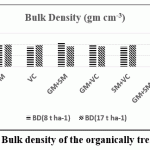 |
Figure 1: Bulk density of the organically treated soils |
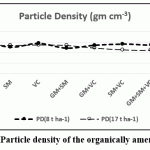 |
Figure 2: Particle density of the organically amended soils |
Water Holding Capacity improved significantly with the addition of manure. In the A plots, WHC increased from 16.13% to 22.68% in T7-A plot. Among the B plots, the highest WHC was observed in T4-B with 28.30%, T7-B (26.79%) and T5-B (24.61%), compared to the control (16.99%). Pore Space increased significantly in organic input applied plots. In A plots, PS ranged from 25.11% (T4-A) to 29.24% (T7-A), while in B plots it improved further, reaching 32.50% in T5-B. This enhancement reflects improved soil structure and aggregation with higher manure application. Earlier work highlighted the role of organic matter in maintaining stable aggregates and continuous pores for air and water flow. The highest PS was obtained with T5-B (32.50%) and T4-B (31.90%), while the control had lower porosity (25.72%).
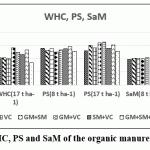 |
Figure 3: WHC, PS and SaM of the organic manure applied plots |
Saturated Moisture increased gradually with organic manures. In A plots SaM plots ranged from 19.38% (T1-A) to 25.36% (T7-A) as represented in Figure 3, whereas, in B plots it increased significantly, attaining a maximum of 32.35% in T4-C. This improvement can be attributed to the increased levels of organic carbon and improved soil porosity. Together, these factors enhance the soil’s ability to retain water available to plants. These observations are in similar and evident in concentration at 17 t ha-1, where SaM reached the highest levels in T4-B (32.35%) and T5-B (26.88%), while the control plot recorded the lowest value (18.51%).
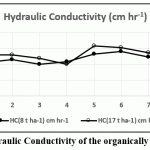 |
Figure 4: Hydraulic Conductivity of the organically amended soils. |
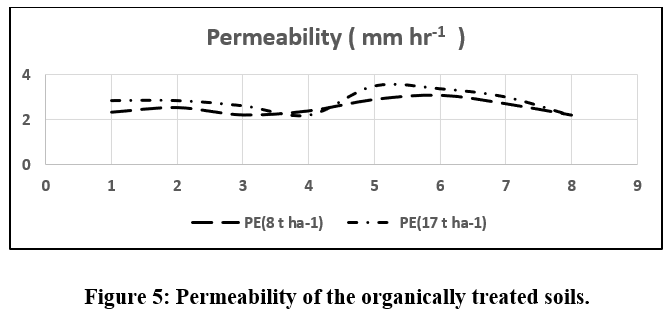
Hydraulic Conductivity increased under organic treatments. In A plots, as displayed in Figure 4. HC ranged from 0.2004 cm hr-1 (T3-A) to 0.2829 cm hr-1 (T6-A), whereas in the B plots it raised to 0.3183 cm hr-1 (T5-B). Higher HC at elevated manure concentrations reflects improved aggregate stability and macropore continuity, thereby enhancing infiltration and drainage. In the B amended plots like T5-B (0.3183 cm hr-1) and T6-B (0.3069 cm hr-1) proposed significantly higher HC than the control (0.1998 cm hr-1). Permeability was lowest in the control (2.19 mm hr-1) as shown in Figure 5. and increased under organic amendments, indicating reduced soil compaction and better root penetration. In A plots, PE ranged from 2.20 mm hr-1 (T4-A) to 3.11 mm hr-1 (T6-A), while in B plots, it increased to 3.50 mm hr-1 (T5-B), whereas in the B plots it further increased to 3.49 mm hr-1 in T5-B and 3.37 mm hr-1 in T6-B. The application of organic manures also influenced the yield of black gram. Among all treatments, GM + SM + VC (T7-A) recorded the highest yield of 605 kg ha⁻¹, which was 84.46% higher than the control. This treatment also showed lower bulk density (0.8755 g cm⁻³) and higher porosity (29.24%), water holding capacity (22.68%) and soil moisture (25.36%).
 |
Figure 5: Permeability of the organically treated soils. |
The application of organic manures, namely Goat manure (GM), Swine manure (SM), and Vermicompost (VC), significantly influenced the soil physical properties and yield of black gram (Vigna mungo L.) at different application rates. At the application rate of 8 t ha⁻¹, the treatment GM + SM + VC (T7-A) recorded the highest yield of 605 kg ha⁻¹, which was 84.46% higher than the control (Table 1). This treatment also exhibited the lowest bulk density (0.8755 g cm⁻³) and the highest porosity (29.24%), water holding capacity (22.68%), and soil moisture (25.36%).
Correlation analysis indicated a strong negative correlation between bulk density and yield (r = −0.77**), whereas positive correlations were observed between yield and porosity (r = 0.79**), soil moisture (r = 0.73**), and water holding capacity (r = 0.48). Although the SM + VC treatment (T6-A) recorded the highest infiltration and percolation rates, it did not produce the highest yield. Regression analysis was conducted to assess the relationship between soil physical parameters and yield at 8 t ha⁻¹. The regression equation obtained was:
Y = 2164.563 – 1939.020 (BD) + 3602.016 (PD) + 41.367 (WHC) – 282.044 (PS) + 139.928 (SaM) – 66.284 (HC)
R² = 99.6 %
At the higher application rate of 17 t ha⁻¹, organic manure treatments also significantly improved soil physical properties and crop yield. Among the treatments, GM + VC (T5-C) produced the highest yield of 990 kg ha⁻¹, indicating the strong influence of this combination on soil quality and crop productivity (Table 2). The treatment plots amended with organic manures, particularly in combination, demonstrated lower bulk density, improved water holding capacity, and increased porosity compared with the control. The lowest bulk density (0.8476 g cm⁻³) was recorded in GM + SM + VC (T7-C), indicating improved soil aeration and structural stability. The highest water holding capacity (28.30%) was observed in GM + SM (T4-C), while GM + VC (T5-C) showed the maximum porosity (32.51%) and high soil moisture content (26.88%). Correlation analysis revealed a strong negative correlation between yield and bulk density (r = −0.7360). In contrast, yield showed a significant positive correlation with water holding capacity and porosity (r = 0.8390) and a moderate positive correlation with soil moisture (r = 0.6175**). Water holding capacity exhibited a strong negative correlation with bulk density (r = −0.8766**) and positive correlations with porosity (r = 0.7900) and soil moisture (r = 0.9236**). Hydraulic conductivity and permeability were positively associated with yield (r = 0.6893 and r = 0.6892, respectively), although these relationships were not statistically significant. Both hydraulic conductivity and permeability were significantly and negatively correlated with particle density (r = −0.7220 and r = −0.7219**).
Regression analysis for the manure concentration of 17 t ha⁻¹ yielded the following equation:
Y = 2311.661 (BD) + 323.202 (PD) + 112.942 (WHC) + 134.158 (PS) – 99.655 (SaM) + 2422.785 (HC) – 6712.18
R² = 98.3 %
Table 1: Correlation for physical attributes of GM, SM & VC @ 8 t ha-1
| Properties | Yield | BD | PD | WHC | PS | SaM | HC | PE |
| Yield | 1 | |||||||
| BD | -0.771(**) | 1 | ||||||
| PD | 0.357 | -0.307 | 1 | |||||
| WHC | 0.478 | -0.421 | -0.509 (**) |
1 | ||||
| PS | 0.790 (**) |
-0.894 (**) |
0.579 | 0.188 | 1 | |||
| SaM | 0.735 (**) |
-0.718 (**) |
-0.158 | 0.621 | 0.670 | 1 | ||
| HC | 0.337 | -0.473 | -0.140 | 0.517 | 0.293 | 0.385 | 1 | |
| PE | 0.337 | -0.473 | -0.141 | 0.518 | 0.293 | 0.385 | 1.000 (**) |
1 |
** Correlation is significant at 0.05 level (2 – tailed)
BD – Bulk Density; PD – Particle Density; PE – Permeability; PS – Pore Space; SaM – Saturated Moisture; HC – Hydraulic Conductivity; WHC – Water Holding Capacity
Table 2: Correlation for physical attributes of GM, SM & VC @ 17 t ha-1
| Properties | Yield | BD | PD | WHC | PS | SaM | HC | PE |
| Yield | 1 | |||||||
| BD | -0.7360 (**) | 1 | ||||||
| PD | -0.5884 | 0.7170 | 1 | |||||
| WHC | 0.8390 (**) | -0.8766 (**) | -0.5587 | 1 | ||||
| PS | 0.8390 (**) | -0.7062 (**) | -0.3701 | 0.7900(**) | 1 | |||
| SaM | 0.6175 | -0.6759 | -0.3550 | 0.9236(**) | 0.8660(**) | 1 | ||
| HC | 0.6893 | -0.3459 | -0.7220 (**) | 0.2334 | 0.2869 | 0.1149 | 1 | |
| PE | 0.6892 | -0.3457 | -0.7219 (**) | 0.2333 | 0.2868 | 0.1148 | 1.0000 (**) |
1 |
** Correlation is significant at 0.05 level (2 – tailed)
BD – Bulk Density; PD – Particle Density; PE – Permeability PS – Pore Space; SaM – Saturated Moisture;
HC – Hydraulic Conductivity; WHC – Water Holding Capacity
Biometric observations
Plant height increased gradually with crop growth under all treatments. At 17 t ha⁻¹, the SM+VC treatment recorded plant heights of 13, 21.8, 36.2 and 38.8 cm at 15, 30, 45 and 60 DAS respectively, with the maximum height of 38.8 cm being 50.82% higher than the control. When both concentrations were compared at 60 DAS, the highest plant height (40.8 cm) was observed in GM+SM+VC at 8 t ha⁻¹ as represented in Figure 6 and Figure 7.
 |
Figure 6: Average Plant Height (cm) at 15, 30, 45 and 60 DAS for the concentration of 8 t ha-1 |
 |
Figure 7. Average Plant Height (cm) at 15, 30, 45 and 60 DAS under the application rate of 17 t ha-1 |
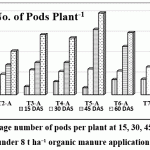 |
Figure 8: Average number of pods per plant at 15, 30, 45, and 60 DAS under 8 t ha⁻¹ organic manure application |
The number of pods per plant varied among treatments. GM+SM+VC at 8 t ha⁻¹ recorded higher pod numbers up to 45 DAS, with values of 3.8, 6.8 and 12.7. At 60 DAS, the GM treatment produced the maximum number of pods, which was 49.73% higher than the control, as displayed in Figure 8. At 17 t ha⁻¹, SM+VC recorded the highest number of pods per plant (19.2), representing a 52.08% increase over the control, as shown in Table 3
Table 3: Average number of pods per plant at 15, 30, 45, and 60 DAS under 17 t ha⁻¹ organic manure application.
| Manure | Plot | Average Number of Pods Plant-1 | |||
| 15 DAS | 30 DAS | 45 DAS | 60 DAS | ||
| GM | T1-B | 1.5 | 5.7 | 8.1 | 13.5 |
| SM | T2-B | 2.1 | 7 | 9.4 | 17.1 |
| VC | T3-B | 1.9 | 8.0 | 14.3 | 20.9 |
| GM+SM | T4-B | 1.6 | 5.9 | 10.7 | 15.5 |
| GM+VC | T5-B | 3.3 | 5.3 | 11.5 | 19.0 |
| SM+VC | T6-B | 3.2 | 6.3 | 15.0 | 19.2 |
| GM+SM+VC | T7-B | 3.2 | 5.6 | 7.3 | 11.0 |
| CONTROL | T8 | 1.8 | 4.9 | 8.4 | 9.2 |
The number of leaves per plant increased from 15 DAS to 60 DAS across all treatments. In the control, the number of leaves increased from 8.80 to 28.70, as given in Figure 9. The GM+SM+VC treatment recorded the highest number of leaves at early stages (15 and 30 DAS), while the GM+VC treatment produced the maximum number of leaves at 60 DAS (60 leaves), which was 84.93% higher than the control. At 17 t ha⁻¹, GM+VC recorded the highest number of leaves (61.70), as represented in Figure 10.
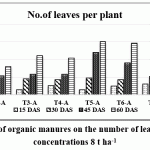 |
Figure 9: Effect of organic manures on the number of leaves per plant for concentrations 8 t ha-1 |
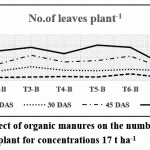 |
Figure 10: Effect of organic manures on the number of leaves per plant for concentrations 17 t ha-1 |
Discussion
The reduction in bulk density observed in the organic manure treated soils indicates improved soil structure and reduced compaction. The incorporation of organic residues generally decreases soil density because organic materials are lighter than mineral soil particles and enhance aggregation. Similar reductions in bulk density following organic manure application have been reported in earlier studies.8 The addition of organic matter improves soil porosity and enhances the development of soil aggregates, which contributes to improved root proliferation and nutrient uptake. Similar observations have been reported previously.9,10 Particle density showed slight variations among treatments, which may be attributed to the incorporation of organic matter having lower density compared to mineral particles.
The significant improvement in water holding capacity with manure application reflects the role of organic matter in enhancing soil aggregation and increasing capillary pores. Organic matter possesses hydrophilic properties that enable soil to retain greater amounts of water, which is particularly beneficial under water-limited conditions. Earlier studies have also demonstrated that the incorporation of organic residues enhances soil water retention capacity.11 The increase in pore space observed in the manure treated plots further indicates improved soil structure and aggregation. Organic amendments promote the formation of stable soil aggregates and continuous pore networks, which facilitate air and water movement in soil.12 Higher manure concentrations generally produced greater porosity, suggesting improved structural stability. The improvement in saturated moisture in the treated plots may be associated with increased soil organic carbon and enhanced pore distribution.
Organic amendments improve the soil’s capacity to retain plant-available water through enhanced aggregation and capillary action. The higher saturated moisture observed in the B plots indicates that greater organic inputs enhance soil moisture retention. Similarly, the increase in hydraulic conductivity under organic manure treatments reflects improved aggregate stability and macropore continuity. Improved pore networks facilitate greater infiltration and drainage. However, excessively high conductivity may increase nutrient leaching, indicating the need for balanced organic manure application. Permeability also increased with organic amendments, indicating reduced soil compaction and improved soil structure. Enhanced permeability promotes better infiltration and reduces surface runoff, thereby improving soil moisture dynamics. The present study further demonstrated that the application of organic manures, particularly goat manure, swine manure and vermicompost, significantly improved soil physical properties and increased the yield of black gram. The highest yield recorded in treatment T7-A (GM + SM + VC) suggests that combined manure applications produce synergistic effects on soil quality and crop productivity.
The strong negative correlation observed between bulk density and yield (r = −0.77) ** supports earlier findings that reduced soil compaction enhances crop growth.13 Furthermore, positive correlations between yield and porosity (r = 0.79), soil moisture (r = 0.73) and water holding capacity (r = 0.48) confirm that improved soil physical conditions play a key role in crop productivity.14,15 Similar improvements have also been reported in previous studies, which highlighted the role of vermicompost in enhancing soil porosity and plant available water.16 Interestingly, although the SM + VC treatment (T6-A) showed the highest infiltration and percolation rates, it did not produce the highest yield. This indicates that balanced improvement in multiple soil physical properties rather than a single parameter is essential for maximizing crop productivity. Integrated nutrient management practices are therefore considered effective for improving soil quality and crop yield simultaneously.17
The improved plant height, pod number and leaf production under organic manure treatments may be due to better nutrient availability, enhanced soil structure and increased microbial activity. The combined application of manures such as GM, SM and VC provides balanced nutrients that support both vegetative growth and reproductive development. These results indicate that integrated organic manure application can significantly enhance crop growth compared with the control.
Conclusion
The present study clearly demonstrates that the combined application of goat manure and vermicompost (GM+VC) at 17 t ha-1 and goat manure, swine manure and vermicompost (GM+SM+VC) at 8 t ha-1 was identified as the most effective treatment, producing the highest yield of black gram. These treatments notably improved soil physical properties, including reduced bulk density and enhanced water holding capacity, porosity, and soil moisture. Farmers are recommended to adopt this organic manure combination to improve soil health and achieve higher and sustainable crop productivity.
Acknowledgement
The authors would like to thank the Tamil Nadu Agricultural University, Killikulam for the support and implementation of the study.
Funding Sources
The author(s) received no financial support for the research, authorship, and/or publication of this article.
Conflict of Interest
The authors do not have any conflict of interest.
Data Availability Statement
The manuscript incorporates all datasets generated and analysed during the present study.
Ethics Statement
This research did not involve human participants, animal subjects, or any material that requires ethical approval
Informed Consent Statement
This study did not involve human participants, and therefore, informed consent was not required.
Permission to reproduce material from other Sources
Not Applicable
Author Contributions
Suya Padhra Haridha Rajagopalan: Conceptualization, methodology, experiment, data analysis, interpretation of results, writing and original draft preparation, Review of manuscript and editing.
Pushpa Simson: Data collection, resources, validation and supervision
References
- Bhattacharyya, R., Kundu, S., Prakash, V., and Gupta, H. S. “Soil aggregation and organic carbon dynamics under conservation agriculture in a rice–wheat system”. Soil Tillage Res. 2021; 206, 104841. https://doi.org/10.1016/j.still.2020.104841
CrossRef - Brady, N.C., and Weil, R.R. The Nature and Properties of Soils (15th ed.). Pearson. 2017.
- Ghosh, B. N., Singh, R. D., and Kumar, N. “Effect of organic manures and biofertilizers on soil properties and productivity of pulses in rainfed conditions”. Soil Sci. Plant Nutr. 2021; 21(2): 1287–1299. https://doi.org/10.1007/s42729-021-00452-3.
- Goswami, A., Bharose, R., Thomas, T., and Naga, I.R. “Effects of integrated nutrient management on soil properties, growth, and yield of black gram (Vigna Mungo L.) var. Shekhar-2”. Int. J. Environ. Clim. Change. 2023; 3(9): 3526-3533.
- Hati, K.M., Swarup., Dwivedi, A.K., and Bandyopadhyay, K.K. “Effect of organic manure on physical and hydraulic properties of soil”. Soil Science. 2006; 171(3): 193-199.
- Keen, B.A and Raczkowski, H. “The relation between the clay content and certain physical properties of a soil”. J. Agric. Sci. 1921;11(4): 441-449.
CrossRef - Kumawat, P., Meena, R. S., and Yadav, S. K. “Role of goat manure in improving soil fertility and enhancing crop productivity in dryland farming systems”. Legume Res. 2022; 45(3): 385–392. https://doi.org/10.18805/LR-4550.
CrossRef - Lal, R. “Managing soils for climate-resilient agriculture”. Soil Tillage Res. 2020: 204, 104719. https://doi.org/10.1016/j.still.2020.104719.
CrossRef - Lal, R., and Stewart, B.A. Soil Organic Matter and Feeding the Future. CRC Press, 2018
- Lee, S. H., Park, H. J., and Kim, J. W. “Comparative evaluation of swine manure and compost on soil properties and crop performance in sustainable farming”. Agronomy. 2023; 13(5): 1278. https://doi.org/10.3390/agronomy13051278.
CrossRef - Patel, D., Singh, V., and Rana, R. S. “Statistical approaches to relate soil physical properties with crop performance in organic farming systems”. Int. J. Agric. Stat. 2022; 14(2): 115–124. https://doi.org/10.5958/0974- 1924.2022.00014.5.
CrossRef - Ramesh, T., Rathika, S., and Maheswari, M. Effect of organic amendments on soil physical properties and yield of black gram (Vigna mungo. L.). Legume Res. 2021; 44(5), 586–590. https://doi.org/10.18805/LR-4246
CrossRef - Rani, P., Rajesh, K., and Devi, S. “Influence of organic manures on physical characteristics of soil and performance of legumes”. Legume Res. 2021; 44(6): 765-770. https://doi.org/10.18805/LR-4123.
CrossRef - Sharma, S., Gite, D., Mishal, N., and Darvhankar, M. “Effect of integrated use of organic and inorganic source of nutrients on growth and yield of black gram (Vigna Mungo L. Hepper)”. Plant Sci. Today. 2023;10(4): 3008-3016. https://doi.org/10.14719/pst.2523.
- Singh, A., and Kumar, P. “Vermicompost: A sustainable organic amendment for improving soil health and crop productivity”. Appl. Soil Ecol. 2022; 176: 104472. https://doi.org/10.1016/j.apsoil.2022. 104472.
- Varatharajan, T., Dass, A., Choudhary, A. K., Sudhishri, S., Pooniya, V., Das, K., Rajanna, G. A., Prasad, S., Swarnalakshmi, K., Harish, M. N., Dhar, S., Singh, R., Raj, R., Kumari, K., Singh, A., Sachin, K. S., and Kumar, P. “Integrated management enhances crop physiology and final yield in maize intercropped with blackgram in semiarid South Asia”. Front. Plant Sci. 2022; 13, 975569. https://doi.org/10.3389/fpls.2022.975569.
CrossRef - Zhou, X., Chen, Y., and Zhang, M. “Influence of organic amendments on soil structure, microbial activity, and crop productivity in degraded soils”. Soil Use Manag. 2023; 39(1): 123–134. https://doi.org/10.1111/sum.12845.
CrossRef