


 PDF Downloads:
368
PDF Downloads:
368


Introduction
India’s national economy and way of life are heavily dependent on Agriculture. According to the Annual report of Agriculture and Farmers welfare, published by Government of India in 2024-25, agriculture and its allied fields employ 54.6% of India’s total workforce.1Agriculture faces several challenges in meeting the food demand of rapidly growing population.By 2050, theworld population is projected to reach 9.77 billion. In addition tothe in population increase the additional challenges are climate change, land degradation and reduction of natural resources. Crops are also subjected to various biotic and abiotic stresses that reduces the productivity of crops. In order to achieve sustainable agriculture, ecofriendly alternatives are required to be practiced and reducing the use of chemicals in the form of fertilizers and pesticides.
Vigna radiata, also known as green mung or green gram is one of the ancient pulse crops originated in Asia and Africa. It is an important legume species used in many parts of the World. It has a high nutritional value, drought tolerance and short life-cycle. It is a rich source of protein, dietary fibres, minerals, vitamins and variety of bioactive compounds However, its productivity is greatly affected due to various biotic and abiotic factors.2 Studies indicate that salinity stress as low as even 50mM NaCl results in reduction of the yield by 60% and drought stress negatively affects its germination and reproductive ability.3
The rhizosphere of the plant is inhabited by plant growth promoting rhizobacteria (PGPR). They interact with plants and promote their growth.4 They positively affect plant growth by direct and indirect mechanisms. The primary plant growth promoting attributes of PGPR include nitrogen fixation, phosphate solubilization, synthesis of plant hormones like Auxins, Gibberellins and ethylene, HCN production and ammonia production.5 There are additional properties of PGPR that also contribute to plant growth and health like Potassium solubilization, zinc solubilization, siderophore production, ACC deaminase production, etc.6PGPR offer multiple agronomic advantages includingenhanced germination, nutrient acquisition, increased biomass accumulation and tolerance to biotic and abiotic stresses, thus promoting sustainability as alternatives to chemicals.7
Multifarious PGPR are the bacterial strains that possesses various plant growth promoting attributes simultaneously.8The rationale of the present study in to isolate such strains from rhizosphere soil that can be a strategic approach to identify a superior organism as a bioinoculant with multiple plant growth promoting attributes and tolerating different types of stress conditions.9Our study focuses on isolation and identificationof multifunctionalPGPR, characterize their plant growth promoting traits through in vitro assays and evaluate their effects on growth promotion of Vigna radiata.
Materials and Methods
Sampling and Isolation
Four soil samples were collected from the rhizosphere of Triticum aestivum (Wheat) grown in Nashik region. 30 to 60 days old seedlings were collected with intact roots.10 The roots were washed with sterile distilled water to remove bulk soil. The roots with rhizosphere soil were suspended in 100 mL sterile saline. Saline flasks were kept on shaker at 28oC for one hour. Supernatant was collected and diluted serially. Onsterile Nutrient agar plates, 100 µl diluted soil suspension wasplated and the plates were incubated at 28oC for 24-48 hours to obtain isolated colonies. Colonies were examined for their morphological dissimilarities like colour, elevation, size, shape and surface and sub-cultured on sterile nutrient agar slants.
Screening for Indole acetic acid production
Screening of isolates for IAA production was done in presence and absence of tryptophan using Salkowski method.11,12 PGP isolates were grown in Luria broth (Himedia) and in tryptophan broth (Himedia) and incubated for 48 hours at room temperature. Centrifugation of broth at 10,000 rpm for 15 minutes was carried out following incubation for 48 hours incubation at room temperature. 1 ml of supernatant was mixed with 2 mL of Salkowski reagent, 2-3 drops of orthophosphoric acid was added and incubated at room temperature in dark for 1 to 2 hours and pink to red colouration was observed as positive test for IAA production.13The absorbance of pin colour was determined at 530 nm. A standard curve of pure IAA ranging from 1 to 100 µg mL-1 was used to calculate the IAA concentration.
Screening of isolates for nitrogen fixing and phosphate solubilizing ability
Isolates were streaked on nitrogen free Ashby’s mannitol agar plates to screen for their nitrogen fixing ability.14,15Isolates were spot inoculated on Pikovskaya’s agar plate containing tricalcium phosphate as an insoluble source of phosphate to screen for phosphate solubilizing ability.16 The plates were incubated at 28oC for 5-6 days to check for clear halo surrounding the colony.17
Potassium solubilization by PGP isolates
Isolates were spot inoculated on modified Aleksandrov agar containing Bromo thymol Blue (BTB) (0.5% glucose, 0.05% MgSO4.7H2O, 0.0006% FeCl3, 0.06% CaCO3, 0.2% CaPO4, 0.3% Mica, 3% agar pH 7.2 and bromo thymol indicator).18After 4 to 5 days of incubation at room temperature, the formation of yellow to orange halo around the colony was observed that indicate potassium solubilization.19
Zinc solubilization by PGP isolates
Isolates were spot inoculated on Bunt and Rovira medium containing insoluble zinc source i.e. zinc oxide. The plates were incubated at room temperature for 4 to 5 days to observe clear halo surrounding the colony that indicate zinc solubilization.20
Exopolysaccharide production by PGP isolates
Screening of PGP isolates was carried out using Sucrose salt medium (SSM) agar (1% sucrose, 0.1% (NH4)2SO4, 0.001% NaCl, 0.05% MgSO47H2O, 0.2% K2HPO4, 0.05% yeast extract, and 0.001% CaCO3) supplemented with 0.5%w/v aniline blue.21Isolates ere streaked in quadrants on SSM agar plates. The plates were incubated at room temperature for 24 to 48 hours and observed for the formation of blue colonies.
Siderophore production by PGP isolates
Chrome Azurol S (CAS) agar plates were used to determine siderophore formation.22,23Quadrants were made on CAS agar plates and the overnight grown culture of PGP isolates was spot inoculated in the quadrants. The plates were incubated at room temperature for 5 to 6 days to observe for yellow to orange halos surrounding the colony.
Ammonia production by PGP isolates
Sterile 10 ml peptone water added in tubes were inoculated with 24 hours old culture of selected PGP isolates. The tubes were incubated for 48–72 hours at 28oC. Development of yellow to brown color on addition of 0.5 mL Nessler’s reagent was regarded as a positive test for ammonia production.24
Molecular identification of isolates using 16S rRNA sequencing
DNA extraction method was used to isolate the genomic DNA of selected PGP isolates. Universal 16SrDNA primers were used to amplify 16S rRNA gene of selected isolates to be identified, at their specific annealing temperature. Sanger’s DNA sequencing method was used to directly sequence the amplification products that were purified by enzymatic method. Sequencing analysis SeqA8 software was used to analyse the data. Nucleotide BLAST analysis was performed at NCBI server. Http://www.ncbi.nlm.nih.gov/BLAST.
Effect of selected PGP isolates on seed germination of Vigna radiata:
Seeds of Vigna radiata were surface sterilized by 0.1% HgCl2 for 1 minute and ethanol for 30 seconds and 3 times with sterile distilled water. After drying the seeds in laminar for 1 hour, they were coated with PGP isolates in log phase by soaking the seeds in its suspension of the density equivalent to 0.5 McFarland standard for 30 minutes. The soaked seeds were placed on sterile Hoagland medium with 0.8 % agar.25The seeds were allowed to germinate for three days in dark after which the seedlings were subjected to 10 to 12 hours of photoperiod and 10 to 12 hours of darkness for about 7 days. Thirty seeds were placed in each plate. After 7 days Germination percentage and Vigor index were determined.
Statistical analysis
Statistical analyses were performed using Minitab software version 17. Data from the plant trial was analyzed using One-way analysis of variance (ANOVA) and the post-hoc test Fisher was used to compare the significant differences (p < 0.05) of bacterial treatments in terms of features of plant growth under the influence of different PGP isolates.
Results
Based on the morphological differences between the colonies obtained on nutrient agar, Thirty PGP isolates were selected from the wheat rhizosphere soil samples (Fig.1). These isolates were maintained and stored at 4oC on sterile nutrient agar slants and at -15oC in glycerol stocks. The results of the screened PGP isolates for different plant growth promoting attributes like nitrogen fixation, phosphate solubilization, potassium solubilization, zinc solubilization, Indole acetic acid production, siderophore production and exopolysaccharide production is shown in Table 1.
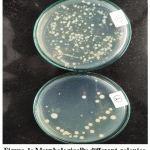 |
Figure 1: Morphologically different colonies Click here to view Figure |
Table 1: Plant growth promoting attributes of isolates.
| Isolate | Nitrogen fixation | Phosphate solubilization | IAA production | Siderophore production | EPS production | Potassium solubilization | Zinc solubilization | Ammonia production |
| NP7 | + | + | – | – | + | – | – | – |
| NP10 | + | + | – | + | ++ | – | – | – |
| NP12 | + | + | ++ | + | – | ++ | – | + |
| NS1 | + | + | – | – | ++ | – | – | – |
| NS10 | + | + | – | – | ++ | – | – | – |
| NS11 | + | + | – | – | ++ | – | – | – |
| NS17 | + | + | – | + | ++ | – | – | + |
| NS19 | + | + | – | – | ++ | – | – | + |
| NW3 | + | + | – | – | ++ | – | + | – |
| NW7 | + | + | – | – | + | – | – | – |
| NW9 | + | + | – | – | + | – | – | – |
| NW11 | + | – | – | – | + | – | – | – |
| NW15 | + | + | – | – | – | – | – | – |
| NW17 | + | – | – | – | – | – | – | – |
| NW19 | + | + | + | + | + | ++ | + | + |
| PT2 | + | + | +++ | + | – | – | + | + |
| PT3 | + | + | – | – | + | – | – | – |
| PT4 | + | – | – | – | – | – | – | – |
| PT5 | + | – | – | – | + | – | – | – |
| PT6 | + | + | – | + | – | + | – | – |
| PT7 | + | – | – | + | – | + | + | + |
| TD1 | + | – | + | + | – | – | + | + |
| TD2 | + | – | + | + | + | + | + | + |
| TD3 | + | – | – | – | – | – | + | + |
| TD4 | + | ++ | ++ | + | + | ++ | + | + |
| TD5 | + | – | + | – | + | + | + | + |
| TD6 | + | – | + | – | + | – | – | + |
| TD7 | + | – | – | – | – | – | – | + |
| TD8 | + | + | + | + | – | – | + | + |
| TD9 | + | + | + | – | + | – | + | + |
All the isolates could grow on nitrogen free Ashby’s Mannitol agar (Himedia). Twenty isolates showed a visible halowhen spot inoculated after 4 to 5 days of incubation at room temperature due to solubilization of insoluble Tricalcium phosphate that was added in Pikovskaya’s medium (Fig 2).
Indole acetic acid (IAA) production was used as a primary method of screening the PGP isolates. Using Salkowski method IAA production was checked in both presence and absence of tryptophan. NP12, NW19, PT2, TD1, TD2, TD4, TD5, TD6 and TD8 showed pink colouration in presence of tryptophan, however, NP12, NW19, PT2, TD4 and TD8 showed IAA production even in absence of tryptophan.The amount of IAA produced by PGP isolates was quantified by measuring the absorbance of pink colour at 530 nm using spectrophotometer and comparing the values with a standard curve of IAA prepared using the range of IAA concentrations from 1 to 100 µgmL-1. The highest IAA producer was found to bePGP isolate PT2 followed by TD4 as shown in Figure 2.
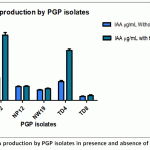 |
Figure 2: IAA production by PGP isolates in presence and absence of tryptophanClick here to view Figure |
One of the three vital macro nutrients that plants need is Potassium. Seven PGP isolates were capable of solubilizing potassium that was indicated by the colour change of bromo thymol blue indicator to yellow indicating the production of acid for solubilization (Fig 3A). Zinc solubilization was checked by spot inoculation on sterile Aleksandrov agar and observing a clear halo surrounding the growth of zinc solubilizing PGP isolate indicating the solubilization of insoluble zinc oxide (Fig 3B). Exopolysaccharide production was assessed on SSM medium (Sucrose salt medium) containing aniline dye. The isolates that take up blue colour of aniline was selected as exopolysaccharide producers (Fig 3C). Twenty isolates showed exopolysaccharide production which is considered as one of the important properties of PGPR for protection of plants against desiccation, reducing the uptake of sodium ions by forming a protective barrier and helping plants to combat salt stress. Twelve PGP isolates showed siderophore production when inoculated on CAS agar producing purple to orange halos around the colony (Fig. 3D). The type of siderophore produced by the PGP isolate is indicated by the variation in the colour of halo.Ammonia production by PGP isolates was checked by addition of Nessler’s reagent in peptone water tubes inoculated with PGP isolates. Ammonia producing ability is one of the important properties of PGPR to expand the accessibility of essential nutrients to plants. 15 PGP isolates showed yellow to brown coloration after addition of Nessler’s reagent indicating the production of ammonia.
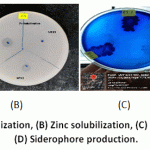 |
Figure 3: (A) Potassium solubilization, (B) Zinc solubilization, (C) Exopolysaccharide production, (D) Siderophore production.Click here to view Figure |
Selected PGP isolates were identified by molecular identification method using 16S rRNA gene sequencing. The BLAST analysis from NCBI database was carried out for all the selected isolates to find out their relationship with already known isolates. Morphologically all isolates were Gram negative rods except TD8 which wasGram positive rod The percentage of 16S rRNA sequence identity and their obtained NCBI Accession numbers of isolates are indicated in Table 2.
Table 2: Molecular identification of PGP isolates and their obtained NCBI accession numbers
| Sr. No. | PGP Isolate | Isolate identified as | Percent similarity (%) | NCBI Accession number |
| 1 | PT2 | Proteus mirabilis | 100 | PP177352 |
| 2 | NP12 | Pseudomonas putida | 100 | PP159175 |
| 3 | NW19 | Serratia rubidae | 99.79 | PP177351 |
| 4 | TD4 | Pseudomonas fulva | 100 | PV249042 |
| 5 | TD8 | Bacillus subtilis | 100 | PV249043 |
Phylogenetic analysis was done to find out the evolutionary relationships among the isolates and already known species based on the 16S rRNA sequence reports and phylogenetic tree was obtained as depicted in the Figure 4.
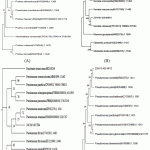 |
Figure 4: Phylogenetic tree of (A) Proteus vulgaris PT2, (B) Serratia rubidae NW19, (C) Pseudomonas fulva TD4, (D) Pseudomonas putidaNP12 Click here to view Figure |
Based on theplant growth promoting properties, PGP isolates PT2, NP12, NW19and TD4 were selected for seed germination assays of Vigna radiata. Green moong (Vigna radiata) has a high nutritional value, drought tolerance and short life-cycle. The seeds were given different treatments by soaking them in the suspension of selected PGP isolates and allowed to germinate on sterile Hoagland medium as shown in the Figure 5.
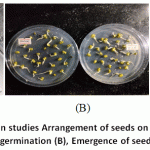 |
Figure 5: Seed germination studies Arrangement of seeds on Hoagland medium plates (A),Seed germination (B), Emergence of seedlings (C).Click here to view Figure |
Growth parameters like germination index, root length, shoot length and Vigor index was calculated and shown in Table 3. The experiment was performed in triplicates with proper control. The data was analysed byFisher pairwise comparison test using Minitab software version 17. Pseudomonas fulva TD4 showed significant increase in Vigor index compared to control.
Table 3: Seed germination indices
| Treatments | Percent Germination after 48 hours (%) | Mean root length (cm) | Mean shoot length (cm) | Mean Wet weight (g) | Mean Dry weight (g) | Vigor Index |
| Control | 80.64 | 14.854CD(±3.017) | 4.948AB(±2.619) | 0.21D(±0.067) | 0.084E(±0.03) | 1596.833 |
| Proteus vulgaris PT2 | 86.66 | 17.502AB(±4.915) | 5.304AB(±2.869) | 0.3459C(±0.0799) | 0.09DE(±0.03) | 1976.368 |
| Pseudomonas putida NP12 | 96.42 | 14.019D(±5.023) | 4.758AB(±2.912) | 0.3724BC(±0.107) | 0.122AB(±0.04) | 1810.478 |
| Serratia rubidae NW19 | 82.35 | 16.948ABC(±4.518) | 5.232AB(±3.424) | 0.2552D(±0.128) | 0.09CDE(±0.04) | 1826.523 |
| Pseudomonas fulva TD4 | 96.66 | 17.637A(±3.656) | 5.880AB(±2.777) | 0.4008B(±0.083) | 0.110BCD(±0.04) | 2273.153 |
Standard deviations are indicated by values in brackets. The parameters, root length, shoot length, wet weight and dry weight were recorded after 8 days of treatment. Fisher pair-wise comparison test indicates that the values superscribed with the same letter do not significantly differ (p ≤ 0.05). Total 30 seeds were used per treatment.
Discussion
Plant growth promoting rhizobacteria (PGPR) play a crucial role in sustainable agricultureby enhancing plant productivity through multifaceted mechanisms involving nutrient mobilization, phytohormone production, and improvement of soil physicochemical properties.20 In the present study, four efficient PGPR isolates; Proteus vulgaris PT2, Pseudomonas putida NP12, Serratia rubidae NW19, and Pseudomonas fulva TD4 were identified and characterized for their plant growth promoting potential. These genera are well documented in the rhizosphere for their beneficial interactions with plants,26,27 however, previous investigations have largely emphasized Pseudomonas putida and Pseudomonas fluorescens. Notably, our findings highlight Pseudomonas fulva TD4 as a comparatively underexplored yet highly efficient PGPR, thereby expanding the repertoire of potential bioinoculant candidates.
Nitrogen availability remains a primary limiting factor for plant growth as a constituent of proteins, nucleic acids, enzymes, chlorophyll, etc. Biological nitrogen fixation represents an ecologically sustainable strategy to supplement nitrogen inputs in agroecosystems. The ability of all selected isolates to grow on nitrogen free medium suggests their potential diazotrophic capability, which is a fundamental trait associated with PGPR mediated plant growth promotion. This attribute is particularly significant in reducing dependence on synthetic nitrogen fertilizers and justifying associated environmental impacts. Phosphorus, despite being abundant in soils, predominantly exists in insoluble forms, limiting its bioavailability. The capacity of PGPR to solubilize phosphate through the secretion of low molecular weight organic acids constitutes a critical mechanism for enhancing phosphorus uptake.
In addition to nutrient mobilization, phytohormone production, particularly indole-3-acetic acid (IAA) is a key determinant of PGPR efficacy. IAA modifies the plant auxin pool to either optimal or suboptimal levels, directly enhancing plant development.28,29 IAA modulates root architecture by promoting lateral root formation and elongation, thereby increasing the absorptive surface area. In this study, Proteus vulgaris PT2 exhibited the highest IAA production, followed by Pseudomonas fulva TD4, indicating their strong potential to influence plant developmental processes. The observed IAA production in the presence of tryptophan further confirms the tryptophan dependent pathway as a dominant mechanism in these isolates
Siderophore production represents another critical trait contributing to both nutrient gain and biocontrol activity. By chelating ferric ions under iron limiting conditions, siderophores enhance iron availability to plants while simultaneously restricting its accessibility to competing phytopathogens.24 The positive siderophore activity observed in Pseudomonas putida NP12 and Proteus vulgaris PT2 underscores their dual role in promoting plant growth and suppressing pathogen proliferation, thereby contributing to plant health.
In addition to nitrogen and phosphorus, potassium and zinc are essential nutrients influencing plant metabolic processes and overall productivity. Potassium solubilizing bacteria facilitate the release of potassium from insoluble silicate minerals through acidolysis and chelation mechanisms. Consistent with previous reports, Pseudomonas fulva TD4 and Pseudomonas putida NP12 demonstrated significant potassium solubilization capacity. Similarly, zinc solubilization by PGPR enhances micronutrient availability, which is crucial for enzymatic activities, chlorophyll synthesis, and hormonal regulation. Interestingly, isolates exhibiting zinc solubilization also showed elevated IAA production, suggesting a potential synergistic relationship between micronutrient mobilization and phytohormone synthesis, warranting further molecular investigation.
Exopolysaccharide (EPS) production is increasingly recognized as a critical determinant of rhizobacterial functionality under stress conditions. EPS contributes to soil aggregation, improves water retention, and enhances soil structure, thereby facilitating root growth and microbial colonization. Moreover, EPS mediated biofilm formation on root surfaces provides a protective microenvironment that mitigates abiotic stresses such as drought, salinity, and nutrient deficiency as well as indirectly preventing fungal infections of plants by competing with pathogens for iron acquisition.25 The ability of the selected isolates to produce EPS highlights their potential role in enhancing plant resilience under adverse environmental conditions, further supporting their applicability as bioinoculants
The practical implications of these functional traits were validated through seed germination and plant growth assays using Vigna radiata. Inoculation with PGPR isolates significantly improved germination parameters and seedling vigour compared to untreated controls. Among the isolates, Pseudomonas fulva TD4 exhibited the highest vigour index, indicating its superior plant growth–promoting efficiency. This enhanced performance can be attributed to the cumulative effect of multiple traits, including nutrient solubilization, phytohormone production, and stress mitigation mechanisms. These findings are in agreement with earlier studies demonstrating the effectiveness of Pseudomonas spp. as biofertilizers and bio-stimulants.
Overall, the present study underscores the importance of exploring diverse and indigenous rhizobacterial populations for sustainable agricultural applications. The identification of Pseudomonas fulva TD4 as a potent PGPR with multifarious growth promoting qualities provides a promising path for the development of effective bioinoculant formulations. Future studies focusing on genomic characterization, field level validation, and formulation development are warranted to fully exploit its agricultural potential.
Conclusion
The isolation, screening, and characterisation of diverse plant growth promoting rhizobacteria (PGPR) from wheat rhizosphere soil were successfully demonstrated in this work, along with their possible use in stimulating Vigna radiata growth. Among the thirty-one isolates obtained, four strains—Proteus vulgaris PT2, Pseudomonas putida NP12, Serratia rubidae NW19, and Pseudomonas fulva TD4 exhibited multiple plant growth promoting attributes, including nitrogen fixation, phosphate solubilization, phytohormone (IAA) production, siderophore production, potassium and zinc solubilization, ammonia production, and exopolysaccharide synthesis.
Quantitative analysis revealed that Proteus vulgaris PT2 was the highest IAA producer, whereas Pseudomonas fulva TD4 combined substantial IAA production with several additional beneficial traits, reflecting its multifarious PGPR nature. Seed germination and seedling growth assays further confirmed that inoculation with selected PGPR significantly enhanced germination percentage, root and shoot growth, biomass accumulation, and vigor index compared to the uninoculated control. Notably, Pseudomonas fulva TD4 consistently outperformed other isolates, recording the highest germination percentage and vigor index, thereby emerging as the most promising bioinoculant candidate.
Overall, the findings highlight the importance of exploiting indigenous, multifunctional PGPR as eco-friendly alternatives to chemical fertilizers for sustainable agriculture. The superior performance of Pseudomonas fulva TD4 suggests its strong potential for development as a biofertilizer to improve productivity of Vigna radiata and possibly other crops. However, further studies involving greenhouse and field trials, formulation development, and evaluation under diverse agro-climatic conditions are warranted to validate its large-scale applicability and long-term benefits in sustainable crop production systems.
Acknowledgement
We acknowledge Deccan Education Society for the financial support by sanctioning the seed money to this project.
Funding Sources
Financial support was sanctioned to the first author Ms. Saylee Kalekar, Assistant Professor, D. E. S.’s Fergusson College (Autonomous), Pune, by Deccan Education Society/RCC/13/06/2022 under Seed money grant sanctioned to promote research activities in the college by faculty members and students.
Conflict of Interest
The authors do not have any conflict of interest.
Data Availability Statement
This research manuscript contains all the datasets produced and examined throughout the study.
Ethical Statement
This research did not involve human subjects, animal subjects or any material that requires ethical committee approval.
Informed Consent Statement
This study did notinvolve human participants and therefore, informed consent was not required.
Permission to reproduce material from other sources
Not applicable
Author Contributions:
Saylee Vilas Kalekar:Data collection, experiment performing, analysis of data, compilation of the results and writing original draft.
NiranjanPrakashrao Patil:Supervision, visualization, review and analysis
Rajashree Bhalchandra Patwardhan:Supervision, visualization and review.
References
- Government of India. State of Indian Agriculture, 2012-13.; 2013.
- Goswami D, Parmar S, Vaghela H, Dhandhukia P, Thakker JN. Describing Paenibacillus mucilaginosus strain N3 as an efficient plant growth promoting rhizobacteria (PGPR) . Cogent Food Agric. 2015;1(1):1000714. doi:10.1080/23311932.2014.1000714
CrossRef - Ali B, Sabri AN, Hasnain S. Rhizobacterial potential to alter auxin content and growth of Vigna radiata (L.). World J Microbiol Biotechnol. Published online 2010. doi:10.1007/s11274-010-0310-1
CrossRef - Dobbelaere S, Vanderleyden J, Okon Y. Plant growth-promoting effects of diazotrophs in the rhizosphere. CRC Crit Rev Plant Sci. Published online 2003. doi:10.1080/713610853
CrossRef - Mesele E. Molecular Mechanisms of Plant Growth – Promoting Rhizobacteria ( PGPR ) in Biofertilization and Disease. Published online 2026:1-15. doi:10.1155/ioa/9398708
CrossRef - Lallawmkimi MC, Patil S, Upadhyay DK, et al. Application of Nanotechnology in Agriculture: Opportunities and Challenges in the Context of Environmental Sustainability. Arch Curr Res Int. 2025;25(1):37-53. doi:10.9734/acri/2025/v25i11035
CrossRef - Bakthavatchalu S, Shivakumar S, Sullia SB. Identification of multi-trait PGPR isolates and evaluation of their potential as biocontrol agents. Acta Biol Indica. 2012;1(1):61-67.
- Yadav NS, Sakshi I, Gaur RK. Biochemical characterization of bacteria isolated from Rhizosphere soils of sugarcane grown in Uttar Pradesh. Res J Biotechnol. 2024;19(3):70-75. doi:10.25303/1903rjbt070075
CrossRef - Ebrahimi A, Amini R, Dabbagh A, Nasab M. Enhancement of essential oil yield and quality of basil ( Ocimum basilicum L .) via intercropping system , AMF and PGPR. Published online 2026:1-16.
CrossRef - Fatima Z, Saleemi M, Zia M, et al. Antifungal activity of plant growth-promoting rhizobacteria isolates against Rhizoctonia solani in wheat. African J Biotechnol. 2009;8(2):219-225. doi:10.5897/AJB2009.000-9040
- Yasmin H, Nosheen A, Naz R, Bano A, Keyani R. L-tryptophan-assisted pgpr-mediated induction of drought tolerance in maize (Zea mays L.). J Plant Interact. 2017;12(1):567-578. doi:10.1080/17429145.2017.1402212
CrossRef - Gigaulia P, Tantwai K, Sapre S, Pandey S, Upadhyay AK, Nema S. Efficacy of Plant Growth Promoting Rhizobacteria to Improve the Biochemical Properties and Development of Wheat Seedlings under Drought Stress Control. J Glob Agric Ecol. 2024;16(1):42-50. doi:10.56557/jogae/2024/v16i18528
CrossRef - Lwin KM, Myint MM, Tar T, Aung WZM. Isolation of plant hormone (Indole-3-Acetic Acid – IAA) producing rhizobacteria and study on their effects on maize seedling. Eng J. 2012;16(5):137-144. doi:10.4186/ej.2012.16.5.137
CrossRef - Fz B, Ghanem M, Ml B, et al. Isolation , Screening , Characterization of PGPR of Lentils Lens culinaris. 2018;(September):91-104.
- Patwardhan Rajashree B, Deshmukh Neha S, Deshmukh Neha B, Gore Suneeti S. Study of microbial diversity and effect of plant growth promoting rhizobacteria isolated from kaas plateau, western ghats as biostimulants in floriculture. Res J Chem Environ. 2020;24(10):112-125.
- Majeed A, Kaleem Abbasi M, Hameed S, Imran A, Rahim N. Isolation and characterization of plant growth-promoting rhizobacteria from wheat rhizosphere and their effect on plant growth promotion. Front Microbiol. 2015;6(MAR):1-10. doi:10.3389/fmicb.2015.00198
CrossRef - Singh TB, Sahai V, Ali A, et al. Screening and evaluation of PGPR strains having multiple PGP traits from hilly terrain. J Appl Biol Biotechnol. 2020;8(4):38-44. doi:10.7324/JABB.2020.80406
CrossRef - Balogh B, Jones J, Iriarte F, Momol M. Phage Therapy for Plant Disease Control. Curr Pharm Biotechnol. Published online 2010. doi:10.2174/138920110790725302
CrossRef - RAJAWAT MVS, SINGH S, TYAGI SP, SAXENA AK. A Modified Plate Assay for Rapid Screening of Potassium-Solubilizing Bacteria. Pedosphere. 2016;26(5):768-773. doi:10.1016/S1002-0160(15)60080-7
CrossRef - Javed H, Javed Akhtar M, Asghar HN, Jamil A. Screening of zinc solubilizing bacteria and their potential to increase grain concentration in wheat (Triticum aestivum). Int J Agric Biol. 2018;20(3):547-553. doi:10.17957/IJAB/15.0514
CrossRef - Cheng C, Shang-Guan W, He L, Sheng X. Effect of Exopolysaccharide-Producing Bacteria on Water-Stable Macro-Aggregate Formation in Soil. Geomicrobiol J. 2020;37(8):738-745. doi:10.1080/01490451.2020.1764677
CrossRef - Arora NK, Verma M. Modified microplate method for rapid and efficient estimation of siderophore produced by bacteria. 3 Biotech. 2017;7(6):1-9. doi:10.1007/s13205-017-1008-y
CrossRef - Pérez J, López M, Camacho J. Characterization of plant growth promoting bacteria (PGPR) isolated from the rhizosphere of Arthrocnemum macrostachyum. Biosaia. 2016;4(5):30. doi:10.1111/j.1438-8677.2009.00207.x.(3)
- Noha IO, Shixue Y. Isolation and characterization of pea plant (Pisum sativum L.) growth-promoting Rhizobacteria. African J Microbiol Res. 2018;12(34):820-828. doi:10.5897/ajmr2018.8859
CrossRef - Li H, Cheng Z. Hoagland nutrient solution promotes the growth of cucumber seedlings under light-emitting diode light. Acta Agric Scand Sect B Soil Plant Sci. 2015;65(1):74-82. doi:10.1080/09064710.2014.967285
CrossRef - Aeron A, Kumar S, Pandey P, Maheshwari DK. Emerging Role of Plant Growth Promoting Rhizobacteria in Agrobiology. In: Bacteria in Agrobiology: Crop Ecosystems. ; 2011. doi:10.1007/978-3-642-18357-7_1
CrossRef - Sandeep P, Rakh R, Guru S, Mahavidyalaya B, Jadhav M, Baisthakur P. Plant-Growth-Promoting-Rhizobacteria ( PGPR ) – Mechanism , Applications and Scope. 2023;(November).
- Yousef NMH. Capability of Plant Growth-Promoting Rhizobacteria (PGPR) for producing indole acetic acid (IAA) under extreme conditions. Eur J Biol Res. 2018;8(4):174-182. doi:10.5281/zenodo.1412796
- Kolano A, Faligowska A. Potential of PGPR to Enhance Soybean Productivity in Europe. Published online 2026.
CrossRef