


 PDF Downloads:
84
PDF Downloads:
84


Introduction
Phosphorus (P) is the second only to nitrogen among mineral nutrients which required for plant growth and development and involved in important metabolic pathways like nutrient uptake, biological oxidation, and energy metabolism.1-3 In soil, it precipitates as orthophosphate. Tremendous use of inorganic fertilizers which can provide a source of phosphorous to the plant can lead to deterioration of quality of soil with less availability of nutrients to the crops.4 Phosphorus solubilizing bacteria (PSB) releases inorganic and organic soil P pools by solubilization and mineralization and enhances Phosphorus availability to plants, thus play an important role in Phosphorus nutrition.5Use of phosphorus solubilizing bacteria (PSB) as inoculants increases P uptake. These bacteria also increase the possibility of using phosphatic rocks in crop production.6The salt-tolerant or halophilic soil microorganisms that possess the ability to solubilize insoluble phosphorus also facilitate the development of saline-alkali soil-based agriculture.7Therefore, for improving plant phosphorus uptake inoculation of soil or crops with phosphate solubilizing/mineralizing microorganisms is a promising.8Additionally, phosphate solubilising bacteria can enhance the number of trace elements, soil nitrogen, potassium content and secrete a variety of plant growth-promoting hormones which is essential to increase plant growth.9
Since the 1950s Phosphate solubilizing bacteria (PSB) have been used as bio fertilizers. PSB secrets organic acids like carboxylic acid, which dissolves inorganic phosphates.8,10,11To decrease the pH and to combine PO43– to form HPO42– or H2PO4– these organic acids ionize protons and increase phosphate solubility. Organic acid anions are also able to form a complex with metal cations (Ca2+, Al3+, and Fe3+) and consequently, release PO43–. Similarly, which has been reported by several studies that PSB-assisted phytoextraction may improve the mobility of Cadmium in soil.12-14 Use of these microorganisms as eco-friendly bio fertilizer helps to reduce the use of phosphate fertilizers, which is expensive as well.
However, despite the developments made in biofertilizer research, there is one crucial area where further research is still needed: a lack of strains capable of tolerating multiple forms of environmental stress. Specifically, what’s required is a strain that can effectively act as biofertilizers which is able to carry out phosphate solubilization while serving as IAA producers, salt tolerance strain, heavy metal resistant, and antibiotics resistant strain. The need for such versatile strains is particularly urgent in environmentally fragile areas like the Sundarbans. Due to tsunami and several natural disasters, soil of this site is saline. Additionally, as a result of the rapid transformation of the Sundarbans area into a major tourist attraction, there have been many motorized boats on its waters. Constant exposure to commercial paint from these motorized boats has led to excessive amounts of lead (Pb) and other heavy metals in the soils. Oil spillage and other hydrocarbon leakage decrease the fertility of soil.4These soils form highly stressful ecosystems, characterized by both heavy metals and antibiotics, thus making it an area of co-selection for both heavy metals and antibiotics. The major aim of this research will thus involve isolation, screening, and evaluation of a new generation of multipurpose biofertilizers with combined heavy metal and multidrug resistance properties.
Materials and Methods
Isolation and screening
Soil samples were collected from a selected site(22.3209° N, 88.6724° E) in Canning, South 24 Parganas, West Bengal, India. Physiochemical properties of the soil were measured like pH, Salinity etc. Sterilecollection equipment (spatula, test tube) was used. A series of 6 serial dilutions were carried out using 1g of soil in 9ml sterile water as stock.0.1ml aliquot from dilutions 10-5 and 10-6 were plated on Pikovskaya agar media (readymade supplied by Himedia; composition in g/l: yeast extract 0.50g, dextrose 10.00g,calcium phosphate 5.0g, ammonium sulphate 0.50g, potassium chloride 0.20g, magnesium sulphate 0.10g, manganese sulphate 0.0001g, ferrous sulphate 0.0001g, agar 2%).The inoculated plates were incubated at 37°C for 72 hours. The colonies capable of phosphate solubilization were identified by presence of clear halo zones around them. These colonies were picked and via streak plate method pure cultures were obtained. The pure colonies were spotted on separate Pikovskaya agar plates and incubated for 24 hours at 37°C and their solubilization index (SI)15were calculated as per equation.

The colony having the maximum SI value was selected for further study
Phylogeny
To isolate bacterial genomic DNA from the overnight culture grown in Luria-Bertani broth HiMedia’sHiPurA™ Bacterial Genomic DNA Purification was used. Then this DNA was used for 16SrRNA amplification. Here, two universal primers, (27F 5’-AGAGTTTGATCCTGGCTCAG-3’; 1492R 5’GGTTACCTTGTTACGACTT-3’) were used to amplify 16S rRNA of the bacterium.16,17 A 25 µL of total volume was taken for PCR amplification with 2.5 µL buffer containing MgCl2, 2 µL template DNA, 0.5 µL each of the forward and reverse primers, 0.5 µL dNTP mix, 0.25 µL Taq DNA polymerase and 18.75 µL nuclease free water.Next,the PCR was performed parameters were and the 50°C for 2 min, 95°C for 10 min, and then 38 cycles at 95°C for 30 s and 62°C for 1 min. After purification of 16SrDNA by gel electrophoresis, sequencing of amplicon was done using Applied Biosystem 3500 series genetic analyser system. The obtained 16SrDNA sequence was then used to determine the most closely related sequence available in GenBank database using NCBI BLAST. Phylogenetic tree was constructed using the MEGA 11 software.
Characterization
The morphological and biochemical properties of the isolate were determinedas a part of the study by the classical morphological and biochemical tests. The isolate Acinetobacter sp. strainAM1, was routinely grown on Pikovskaya agar media (readymade supplied by Hi-medialaboratory). For morphological characterization, the colony morphology such as, shape, size, colour, texture and margin were noted after incubation for 72 hours at 37°C. Gram staining and capsule staining were performed by the standard protocols and the cells were visualised under 1000X magnification and 400X magnification respectively.18-20Motility test was performed by the standard hanging drop method21and visualisation was done under 45X objective lens of the microscope (Olympus Magnus MLX-B).
To discern biochemical characteristics, variety of tests were performed. Catalaseactivity was evaluated using previously determined method using 3%H2O2.22Amylase activity was determined by the standard starch hydrolysis test using iodine as the reagent.22Urease and Nitrogenase tests were carried by growing the isolate on Urea agar media (observation of colour change) and Burk’sagar media (observation of growth in nitrogen free media) respectively.Presumptive and IMViC tests were carried out according to standard protocol.23-25Further, the several experiments were carried out in triplicates in order to characterize them. Susceptibility to the antibiotics – Streptomycin (25), Chloramphenicol (30) and Tetracycline(30)was tested by the disc diffusion procedure (µg/disc) on LB (Luria Bertani agar from Himedia laboratory) media for 24 hours at 37°Cusing antibiotic discs obtained from Himedialaboratory. Tolerance against heavy metals – Cu, Hg, Zn and Pb was tested by cup plate method on LB agar media for 48 hours at 37°C for up-to 30μg/ml concentration of the respective heavy metals. Sensitivity to salt was tested using LB media supplemented with varying percentages of NaCl concentrations (1% to 15%). Salt uptake ability of the isolate wastested by growingthe bacteria in LB broth supplemented with 3% NaClfor 24 hours at 37°C after which supernatant was collected by centrifugation (Spinwin MC-01 microcentrifuge) at 4000rpm for 10 minutes. The amount of residual Na ions presents in the broth before and after bacterial growth was measured by flame spectroscopy (Systronics µ Controller Based Flame photometer with Compressor – Type 128; LPG gas as fuel for the Flame; 3 ml sample required for test).The aero tolerance nature of the isolate was determined by the growth position in test tube containing nutrientbroth mediaafter 24 hours of incubation at 37°C. Growth characteristics on a variety of carbon sources (Starch, Glucose, Fructose, Sucrose, Lactose and Maltose) and nitrogen sources (Alanine, asparagine, aspartic acid, gelatine and ammonium dihydrogen phosphate) were evaluated to check the best suitable nutrient sources for growth. OD (at 600nm) was noted using a spectrophotometer (Schimadzu – UV 1800) to measure the turbidity after 24 hours of incubation at 37°C to determine the nutrient sources supporting maximum growth.
Growth profile
The growth analysis was done in triplicate. 1% inoculum from a 48 hours culture was added to LB broth and growth was monitored at regular intervals (every 30 minutes) for 5 hours by measuring the OD (at 600nm) using a spectrophotometer (Schimadzu – UV 1800). An Absorbance vs Time graph was plotted. Also, at every 30 min interval, some of the culture was taken out, serially diluted and then plated followed by incubation at 37°C for 24 hours to obtain the CFU/ml for every 30 minutes interval. Generation time was calculated from the CFU/ml of bacteria at the starting and the end of the log phase (corresponding to initial population and final population) as observed from the growth curve. Formula used was:

Determination of organic acid and IAA production
The ability of the isolate to produce organic acid was determined by using Bromothymol blue as an indicator. The isolate was grown for 48 hours at 37°C on Pikovskaya agar plate withadded Bromothymol blue pH indicator.
Indole Acetic Acid production by the isolate was determined by colorimetric method using Salkowski reagent as an indicator.26 To 2 ml bacterial supernatant, 4 ml Salkowski reagent was added followed by incubation for 90 minutes. Observation was made for colour change and O.D (at 530nm) was measured. The obtained value was compared against pure IAA standard curve to determine the concentration of IAA produced.
Quantitative estimation of phosphate solubilization
Phosphate solubilization by the bacterial isolate was assayed for 5 days post inoculation. In a 25 mL of Pikovskaya broth 0.1 mL of bacterial culture was inoculated and incubated at 37°C for 5 days. 1.5 mL of aliquots was withdrawn from the culture on each and every day up-to 5 days post inoculation and centrifuged for 8-10 mins at 10,000 rpm at room temperature to obtain the supernatants. The concentration of soluble phosphate was estimated by adding 4 mL of Phosphate reagent containing 2.5% ammonium molybdate, 6(N) H2SO4 and 10% ascorbic acid to 1 mL of the supernatant of each day and measuring the absorbance at 829 nm in a Shimadzu UV-1800 UV-Visible Spectrophotometer. Phosphate concentrations were calculated from a standard curve set up with different concentrations of sodium dihydrogen phosphate solution using the Phosphate reagent in a similar manner.
Determination of Plant Growth promoting activity of the strain on Green gram plant:
As AM1 showed various plant growth promoting ability it was introduced in soil with several carrier like sawdust, cowdung and their combination in a ratio of 2:1 that is 40gm carrier with 20ml of bacterial culture (CFU=2 X10⁸/ml) to check its ability of plant growth promotion. Germinated green gram seeds were sown on pots with carrier soil and control soil pot. In between 5 days interval for 25 days plant height was measured along with length of leaves.In another set of experiment Germinated Green gram plant were planted in soil containing 3 % NaCl in soil with sawdust as carrier containing bacterial inoculum (CFU=2 X10⁸/ml) and without inoculum to test whether this strain is capable of increasing plant growth in terms of both height of plant and leaf length measurement in soil containing stress factor like NaCl.
Also, NPK content of the soil was measured for evaluation of NPK content of soil before and after (25 days) bacterial inoculation.
Statistical test
All the experiments were done in triplicates and subsequent standard errors were calculated using the formula SE = σ / √n, where SE is standard error, σ is the sample standard deviation and n is the sample size. ANOVA analysis were done for plant height and leaf length study at 5 % level of significance. All studies were conducted using MS-Excel.
Results
Isolation and screening
Physiochemical properties of soil were measured. The soil collected was silty clay type with yellowish brown colour, pH- acidic (4.1), organic carbon -1.26%.Initially there were 6 morphologically different colonies showed halo zone around the colony in Pikovskaya Agar plates. Of the various different colonies obtained on the initial dilution plates, 3 showed halo zone around them and were good phosphate solubilizers — AM1, AM2 and AM3. The solubilisation index varied significantly among the isolates for the same time and conditions of incubation. Of all three isolates, AM1 showed the highest solubilization index (0.8±0.08)and was selected for further study.
Phylogeny
After amplification of genomic DNA by PCR, it was amplified using two universal primer and after NCBI BLAST analysis it can be concluded that AM1 showed highest similarity (92.61%) with Acinetobacter oleivorans strain SD12.The result obtained by morphological and other biochemical tests also confirms this bacterium is of Acinetobactergenus. The top few matches were used to construct the phylogenetic tree using MEGA 11 software (Fig 1). NCBI Accession number is given.
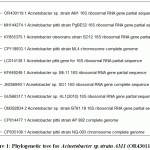 |
Figure 1: Phylogenetic tree for Acinetobacter sp. strain AM1 (OR430119.1).Click here to view Figure |
Morphology and Biochemistry
The colonies of the isolate Acinetobacter sp. strain AM1 on Pikovskaya agar plates were observed to be circular in shape, white and opaque in colour and medium in size with an entire margin and smooth texture. Gram-stained bacterial cells when viewed under 100X objective lens of the microscope were found to be cocci and occurred singly, or in clusters. The isolate was Gram negative, showed absence of capsule and was motile as inferred from the clear erratic movement seen under 450X magnification.
Results obtained for the various biochemical tests are noted in the Table 1. Growth was observed at the top of the tube when inoculated in Nutrient broth for 24 hours at 37˚C in standing condition indicating, this bacterium is aerobe. The OD obtained after incubation in various nitrogen and carbon sources showed that the highest growth was detected with asparagine and starch as their preferred nutrient source. The comparative data is represented in the Fig2 and Fig3. The isolate was tolerant to salt till upto 3% and showed significant growth in 3% NaCl. The Na ion concentration in the supernatant obtained after 24 hours of incubation — 9.350 g/l — was found to be lower than that obtained before inoculation (initial Na ion concentration) — 10.015 g/l —which goes on to show that the isolate did uptake some amount of salt thus causing the decrease in the salt concentration in media.
Table 1: Biochemical tests (+ indicates positive test result; while – indicates negative test results)
| Biochemical Tests | Results |
| Starch hydrolysis test | + |
| Catalase test | + |
| Urease test | – |
| Nitrogenase test | + |
| Presumptive test | + |
| Indole test | – |
| Methyl red test | + |
| Voges proskauer test | + |
| Citrate test | + |
| Susceptibility to Streptomycin (25μg/disc) | + |
| Suseptibility to Chloramphenicol (30μg/disc) | + |
| Susceptibility to tetracycline (30μg/disc) | + |
| Tolerance to heavy metals (Cu, Hg, Zn and Pb; upto 30μg/ml) | + |
(All experiments were performed in triplicates)
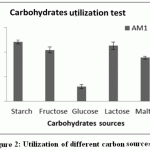 |
Figure 2: Utilization of different carbon sources.Click here to view Figure |
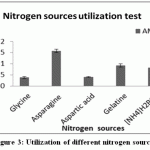 |
Figure 3: Utilization of different nitrogen sources.Click here to view Figure |
Growthprofile analysis
Growth profile analysis is important in bacteria to be used for bioremediation or bio inoculation. To overcome and healthily compete with the already existing flora of the new environment, a short generation time is ideal. The growth curve obtained for the isolate is demonstrated in Fig.4. Generation time of the isolate was found to be around 57 minutes.
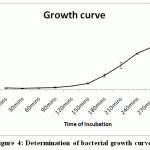 |
Figure 4: Determination of bacterial growth curve.Click here to view Figure |
Determination of organic acid and IAA production
Yellow colouration of the bromothymol bluesupplementedPikovskaya media was observed on the growth of the isolate indicating a decrease in thepH which is caused due to production of organic acids by the isolate. The isolate is positive for organic acid production.
The analysis for IAA production showed positive results indicating that the isolate was able to produce this phytohormone. The quantity of IAA produced, as determined from the IAA standard curve (Fig.5) was found to be 0.16mg/ml.
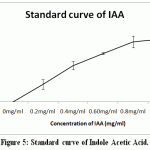 |
Figure 5: Standard curve of Indole Acetic Acid.Click here to view Figure |
Estimation of soluble phosphate concentration
To determine the rate of phosphate solubilisation by the isolate, soluble phosphate was estimated from culture supernatant each and every day up-to 5 days post inoculation. A standard curve of sodium phosphate was constructed for phosphate estimation. For Acinetobacter sp. Strain AM1 strain soluble phosphate increases from 5.02 ±0.9 μ/ml at day 1 post inoculation to 42.37±0.11 μ/ml at 5 days post inoculation (Fig 6). This result also considered the fact that the organism is able to release some organic acid in the media that may help to convert insoluble phosphate to soluble one.
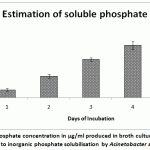 |
Figure 6: Soluble phosphate concentration in µg/ml produced in broth culture upto 5 days post inoculation due to inorganic phosphate solubilisation by Acinetobacter sp. Strain AM1.Click here to view Figure |
Study of plant growth promoting effects on Green Gram plant
The plant height and leaf sizes were measured at every 5 days interval for 25 days and graph for plant height and leaf sizes was drawn with these values. These two graphs indicate that both plant height (Fig.6) and leaf sizes (Fig.7) was maximum in which AM1 was inoculated with Sawdust as carrier. Fig 8 and Fig 9 showed variation of plant height and leaf length in presence of 3% NaCl treated soil. Again, both plant height and leaf length were increased to bio-inoculated plant compared to that of control plant indicating this bacterium can efficiently promote plant growth both in normal soil and in saline soil. This, increase was found to be statistically not significant for all experimental sets (ANOVA analysis at 0.05 level of significance). Therefore, dry weight of the control plant and bio-inoculated plants were measured and ANOVA analysis at 5% level of significance were carried out.Dry weight of green gram plants was observed to increase after 25 days post-application of biofertilizers compared to control plants as a result of incorporation ofnutrients in the plants (increased growth of plants). Upon ANOVA analysis at 5% level of significance, the calculated P < 0.05 indicating that increase in dry weight of Green gram plants observed is significant.
Also, after 25 days nitrogen, potassium and phosphorus content of the soil increase about 9.51%, 12.52% and 25% respectively in respect to control soil (without carrier and AM1) (Table 2).
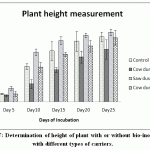 |
Figure 7: Determination of height of plant with or without bio-inoculum with different types of carriers.Click here to view Figure |
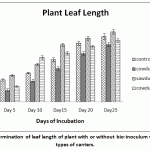 |
Figure 8: Determination of leaf length of plant with or without bio-inoculum with different types of carriers.Click here to view Figure |
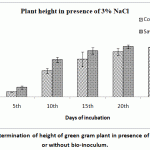 |
Figure 9: Determination of height of green gram plant in presence of 3 % NaCl with or without bio-inoculum.Click here to view Figure |
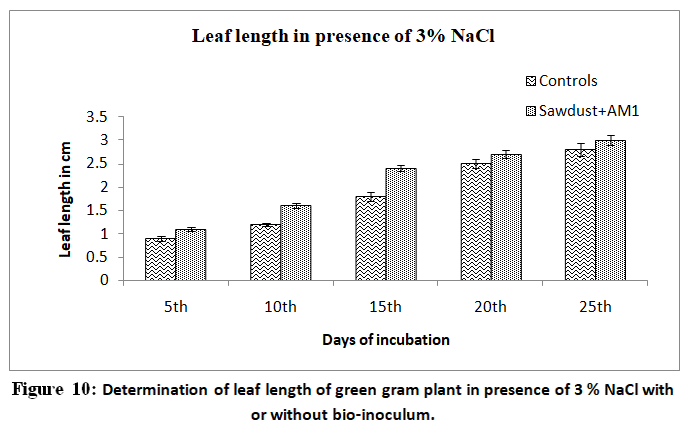 |
Figure 10: Determination of leaf length of green gram plant in presence of 3 % NaCl with or without bio-inoculum.Click here to view Figure |
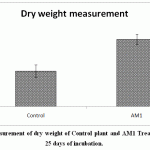 |
Figure 11: Measurement of dry weight of Control plant and AM1 Treated plant after 25 days of incubation.Click here to view Figure |
Table 2: Table for ANOVA analysis at 5% level of significance
| ANOVA | ||||||
| Source of Variation | SS | df | MS | F | P-value | F crit |
| Between Groups | 45.78844 | 1 | 45.78844 | 45.19461 | 0.00255 | 7.708647 |
| Within Groups | 4.052557 | 4 | 1.013139 | |||
| Total | 49.84099 | 5 |
Table 3: Determination of soil nitrogen, phosphorous and potassium content-
| Sample | pH | N2(kg/ha) | P2O5(kg/ha) | K2O(kg/ha) |
| Control soil after 25 days | 7.48 | 449.03 | 9.11 | 568.51 |
| Bio-inoculated soil after 25 days | 7.51 | 491.77 | 11.39 | 639.74 |
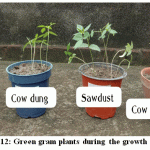 |
Figure.12: Green gram plants during the growth period.Click here to view Figure |
Discussion
In this study the isolation of Acinetobacter sp. AM1 (NCBI Accession: OR430119.1) fromthe saline soils of Canning (22.3209° N, 88.6724° E), South 24 Parganas, West Bengal, India, makes this organism a promising candidate as a stress-tolerant biofertilizer for ecologically sensitive areas such as the Sundarbans. This bacterium is shown to have the ability of nutrient mobilization (insoluble phosphate to soluble phosphate) and phytohormone production (IAA) along with high salinity tolerance.
The most prominent function of AM1 as an agent of promoting plant growth is through its high efficiency of phosphate solubilization. Quantitative in vitro studies revealed that there was a significant increase in the concentration of soluble phosphate, from5.02±0.9 μg/ml on day 1 to 42.37±0.11 μg/ml by day 5 post-inoculation. Solubilization of tricalcium phosphate to more soluble phosphate (bioavailable form) is caused by organic acid secretion from the bacteria, indicated by the change in colour in bromothymol blue-enriched Pikovskaya agar medium. The released protons from these organic acids reduce the pH, which chelates with metal cations such as Ca2+, Al3+, Fe3+.
Other than nutrient mobilization, AM1 synthesize 0.16 mg/ml of IAA. Being a critical phytohormone, the production of IAA by AM1 aids in promoting root elongation and lateral growth, thus increasing the root surface area for increased uptake of nutrients.
The fragile ecosystem of Sundarban (canning) is subjected to environmental stressors in the form of saline water and heavy metals. The isolate AM1 was found to be highly adaptable to heavy metals (Cu, Hg, Zn, and Pb) up to30μg/ml, and exhibited resistance to commonly used antibiotics. Moreover, it has been observed through flame spectroscopy that this strain also exhibited tolerance to salinity (up to 3% NaCl), reducing residual sodium ions in the medium from 10.015 g/l to 9.350 g/l through cellular uptake.
Finally, the efficiency of AM1 was confirmed through an experiment involving a 25-day pot experiment conducted on green gram (Vigna radiata). While visible growth parameters such as plant height and leaf length did show an increase that failed statistical significance through ANOVA testing, there was a highly significant increase observed in the biomass dry weight (P=0.00255). This proves the capability of the biofertilizer to effectively promote internal nutrient assimilation and overall structure strength rather than external elongation. This is evidenced by the soil analysis conducted after harvest, which revealed higher levels of chemical soil fertility with the use of biofertilizer increasing available nitrogen by 9.51%, potassium by 12.52%, and phosphorus by 25% compared to control samples.
Conclusion
Demand of food is increasing day by day as population is increasing, so, proportionally food production should increase. But soil salinity, presence of heavy metals and inability of phosphate solubilization is a major problem.
Also, excessive uses of chemical fertilizers lids to soil fertility, harm normal soil microbes etc and can cause environment pollution.So, aPhosphate solubilizing bacterium like AM1 (Acinetobacter sp. strain AM1) that solubilize phosphorus in orthophosphate which plant can take up easily and have ability to produce organic acid, IAA and enzyme like phosphatase that has enormous role in plant growth promotion can act as biofertilizer. The present investigation is significant and relevant as the bacteria AM1 is able to solubilize insoluble phosphate to soluble one with simultaneous plant growth promoting hormone producing effects. This strain can increase in plant height and leaf length when sawdust was used as carrier. This increase in plant height, leaf length, soil N, P, K content indicates that this strain may be used as potential biofertilizer in not only in normal soil but also in saline soil therefore aiding sustainable agriculture in harsh environment. Also, this Phosphate solubilizing bacteria act as environmentally friendly, cost effective biofertilizer that is advantageous in many ways.
Acknowledgment
Authors would like to acknowledge Department of Microbiology, Bijoy Krishna Girls’ College, Howrah for providing infrastructural support.
Funding Sources
The author(s) received no financial support for the research, authorship, and/or publication of this article.
Conflict of Interest
The authors do not have any conflict of interest.
Data availability statement
The data involving the organism are available in NCBI GenBank Database (OR430119,https://www.ncbi.nlm.nih.gov/nuccore/OR430119.1/). The data generated during &/or analyzed during the study are available from the corresponding author on reasonable request.Data will be made available on request.
Ethics Statement
This research did not involve human participants, animal, subjects, or any materials that require the ethical approval.
Informed Consent statement
This research did not involve human participants, animal, subjects, or any materials that require the ethical approval
Permission to reproduce material from other sources
Not applicable.
Authors’ Contribution
- Ahana Mondal and Manasi Upadhyay– Experiment, Validation, Data analysis and Resources.
- Biswajit Saha– Supervision, Conceptualization, Data analysis, Writing original draft, review and editing, resources.
References
- Azziz G, Bajsa N, Haghjou T, et al. Abundance, diversity and prospecting of culturable phosphate solubilizing bacteria on soils under crop–pasture rotations in a no-tillage regime in Uruguay. Applied Soil Ecology. 2011;61:320-326. doi:10.1016/j.apsoil.2011.10.004
CrossRef - Tak HI, Ahmad F, Babalola OO, Inam A. Growth, photosynthesis and yield of chickpea as influenced by urban wastewater and different levels of phosphorus. International Journal of Plant Research. 2012;2(2):6-13. doi:10.5923/j.plant.20120202.02
CrossRef - Nesme T, Metson GS, Bennett EM. Global phosphorus flows through agricultural trade. Global Environmental Change. 2018;50:133-141. doi:10.1016/j.gloenvcha.2018.04.004
CrossRef - Saha B, Sen A. Effects of Plant Growth Promoting Halotolerant Pseudomonas Aeruginosa JCM 5962 with Hydrocarbon Degradation Ability, Isolated from Sundarbans Mangrove Area in West Bengal, on Abelmoschus esculentus (Okra) Plant Growth. Current Agriculture Research Journal. 2024;12(2):786-802. doi:10.12944/carj.12.2.23
CrossRef - Park JH, Bolan N, Megharaj M, Naidu R. Isolation of phosphate solubilizing bacteria and their potential for lead immobilization in soil. Journal of Hazardous Materials. 2010;185(2-3):829-836. doi:10.1016/j.jhazmat.2010.09.095
CrossRef - Chen YP, Rekha PD, Arun AB, Shen FT, Lai W a., Young CC. Phosphate solubilizing bacteria from subtropical soil and their tricalcium phosphate solubilizing abilities. Applied Soil Ecology. 2006;34(1):33-41. doi:10.1016/j.apsoil.2005.12.002
CrossRef - Zhu HJ, Sun LF, Zhang YF, Zhang XL, Qiao JJ. Conversion of spent mushroom substrate to biofertilizer using a stress-tolerant phosphate-solubilizing Pichia farinose FL7. Bioresource Technology. 2012;111:410-416. doi:10.1016/j.biortech.2012.02.042
CrossRef - Alori E, Fawole O, Afolayan A. Characterization of Arbuscular Mycorrhizal Spores Isolated from Southern Guinea Savanna of Nigeria. Journal of Agricultural Science. 2012;4(7). doi:10.5539/jas.v4n7p13
CrossRef - Shaw A, Mukherjee A, Saha B. A Review on the Role of Phosphate Solubilizing Microorganisms with a Brief Focus on its Genetic Aspects. International Journal of Research Publication and Reviews. October 2022:363-372. doi:10.55248/gengpi.2022.3.10.15
CrossRef - Sun X, Tian X, Jia M, Hu X, Zhang C, Zhao L. Phosphate-solubilizing bacteria: a review of diversity, mechanisms, and applications in sustainable agriculture. Frontiers in Microbiology. 2026;17:1778470. doi:10.3389/fmicb.2026.1778470.
CrossRef - Gulati A, Sharma N, Vyas P, et al. Organic acid production and plant growth promotion as a function of phosphate solubilization by Acinetobacter rhizosphaerae strain BIHB 723 isolated from the cold deserts of the trans-Himalayas. Archives of Microbiology. 2010;192(11):975-983. doi:10.1007/s00203-010-0615-3
CrossRef - Rubio PJS, Godoy MS, Della Mónica IF, Pettinari MJ, Godeas AM, Scervino JM. Carbon and Nitrogen Sources Influence Tricalcium Phosphate Solubilization and Extracellular Phosphatase Activity by Talaromyces flavus. Current Microbiology. 2015;72(1):41-47. doi:10.1007/s00284-015-0914-7
CrossRef - Guo J, Tang S, Ju X, Ding Y, Liao S, Song N. Effects of inoculation of a plant growth promoting rhizobacterium Burkholderia sp. D54 on plant growth and metal uptake by a hyperaccumulator Sedum alfredii Hance grown on multiple metal contaminated soil. World Journal of Microbiology and Biotechnology. 2011;27(12):2835-2844. doi:10.1007/s11274-011-0762-y
CrossRef - Jeong S, Moon HS, Nam K, Kim JY, Kim TS. Application of phosphate-solubilizing bacteria for enhancing bioavailability and phytoextraction of cadmium (Cd) from polluted soil. Chemosphere. 2012;88(2):204-210. doi:10.1016/j.chemosphere.2012.03.013
CrossRef - Pande A, Pandey P, Mehra S, Singh M, Kaushik S. Phenotypic and genotypic characterization of phosphate solubilizing bacteria and their efficiency on the growth of maize. Journal of Genetic Engineering and Biotechnology. 2017;15(2):379-391. doi:10.1016/j.jgeb.2017.06.005
CrossRef - Weisburg WG, Barns SM, Pelletier DA, Lane DJ. 16S ribosomal DNA amplification for phylogenetic study. Journal of Bacteriology. 1991;173(2):697-703. doi:10.1128/jb.173.2.697-703.1991
CrossRef - Kitahara K, Yasutake Y, Miyazaki K. Mutational robustness of 16S ribosomal RNA, shown by experimental horizontal gene transfer in Escherichia coli. Proceedings of the National Academy of Sciences. 2012;109(47):19220-19225. doi:10.1073/pnas.1213609109
CrossRef - Coico R. Gram staining. Current Protocols in Microbiology. 2005;00(1):Appendix 3C. doi:10.1002/9780471729259.mca03cs00
CrossRef - Duguid JP. The demonstration of bacterial capsules and slime. The Journal of Pathology and Bacteriology. 1951;63(4):673-685. doi:10.1002/path.1700630413
CrossRef - Breakwell DP, Moyes RB, Reynolds J. Differential staining of bacteria: capsule stain. Curr ProtocMicrobiol. 2009Nov;Appendix3:Appendix 3I. doi: 10.1002/9780471729259.mca03is15. PMID: 19885936.
CrossRef - Benson, H.J., 1981. Microbiological Applications: A laboratory Manual in General Microbiology. Wm.C. Brown Publishers, Iowa
- Smibert RM (1994) Phenotypic characterization. In: Gerhardt P (ed) Methods for general and molecular bacteriology. American Society for Microbiology, Washington, pp 607–654
- MacWilliams, M. P. (2009). Citrate test protocol. American Society for Microbiology, 1-7
- MacWilliams, M. P. (2012). Indole test protocol. American Society for Microbiology, Washington, DC.
- McDevitt, S. (2009). Methyl red and voges- proskauer test protocols. American Society for Microbiology, 8.
- Gang S, Sharma S, Saraf M, Buck M, Schumacher J. Analysis of Indole-3-acetic Acid (IAA) Production in Klebsiellaby LC-MS/MS and the Salkowski Method. Bio Protoc. 2019 May 5;9(9):e3230. Doi: 10.21769/BioProtoc.3230. PMID: 33655016; PMCID: PMC7854044.
CrossRef
Abbreviations
PGP (Plant growth promoting),
NPK (Nitrogen, phosphorous, Potassium),
PSB (Phosphate solubilising Bacteria),
IAA (Indole acetic acid)