


 PDF Downloads:
215
PDF Downloads:
215


Introduction
Jackfruit (Artocarpus heterophyllus), an evergreen tropical fruit tree belonging to the Moraceae family, has been a staple food in Sri Lanka since ancient times.1 It is widely cultivated across several Asian countries, including India, Bangladesh, Malaysia, Indonesia, Thailand, the Philippines, and Sri Lanka. In south-central and southeast Asia, jackfruit is considered a significant crop and is recognized as the national fruit of both Bangladesh and Indonesia. Due to its affordability and widespread availability, it is often referred to as “the poor man’s food”.2 The jackfruit tree is characterized by large, elliptical, dark green leaves arranged alternately. Juvenile leaves on young shoots are typically deeply lobed. Female flower heads develop into oblong or oval receptacles, in contrast, the flower heads of male plants are typically sessile or grow on short peduncles that emerge from terminal twigs.1
However, despite its successful cultivation in recent years, jackfruit farming still faces challenges—one of the most critical being leaf diseases, which significantly impact both yield and fruit quality.3 These diseases manifest in varying sizes, colors, and shapes,4 often presenting as holes or brown and black patches on the leaves.5
Traditionally, farmers rely on manual visual inspection to detect diseases, which requires expert knowledge to identify infected areas accurately.6 In agriculture, plant diseases pose a major threat, leading to considerable economic losses. Early and accurate disease detection is therefore essential for timely intervention and prevention of disease spread.7 Visual monitoring is especially crucial at early stages, as symptoms often begin on lower leaves and progress throughout the plant.8
There are two types of plant diseases: biotic and abiotic. Living pathogens like bacteria, viruses, fungi, and nematodes are examples of biotic factors, whereas environmental elements like soil moisture, temperature, and humidity are examples of abiotic factors.9 Among various diseases, leaf diseases are particularly detrimental, being a primary contributor to reduced crop output. Studies indicate that plant diseases and pests are responsible for nearly half of global agricultural losses.10 Therefore, effective management and rapid disease identification are vital for boosting crop productivity.
In modern horticulture and agriculture, technological advancements such as Machine Learning (ML) and computer vision have become effective instruments for automated and accurate illness diagnosis. These technologies employ image recognition algorithms through platforms like automated imaging systems and smartphone applications to rapidly detect symptoms on plant leaves, stems, and fruits.11
Several ML and DL techniques have been used to improve the precision of disease categorization and detection including k-means clustering, convolutional neural networks (CNNs), random forests (RF), fuzzy logic (FL), support vector machines (SVM), and artificial neural networks (ANN).12 Among these, CNN architectures such as AlexNet, LeNet, InceptionV3, VGGNet, ResNet, GoogLeNet, and DenseNet have demonstrated exceptional performance in training and testing plant disease images, significantly improving detection accuracy.13 The major contributions of this work on jackfruit leaf disease detection are as follows:
A new DL-based approach is introduced to efficiently recognize and categorize different jackfruit leaf diseases.
The model incorporates advanced preprocessing techniques, including flipping, rotation, noise reduction, contract adjustment and color enhancement, to improve dataset diversity and enable
Finally the classification stage employs an Improved ResNet architecture that improves the network’s ability to focus on relevant leaf features, resulting in more accurate disease identification.
The proposed model’s effectiveness is validated through various performance metrics.
The rest of the paper is organized as follows: Section II presents a structured literature review categorizing prior works by approach type. Section III details the research gaps with explicit alignment to our proposed model’s contributions. Section IV describes the methodology, including preprocessing and classification using the Improved ResNet architecture. Section V presents results and comparative evaluations. Section VI discusses the findings, and Section VII concludes with limitations and future research directions.
Literature Review
Satvik Vats14 presented a novel method to illness classification on the jackfruit leaf by presenting the usage of CNNs in the context of federated learning. They train the model to target five distinct jackfruit leaf disease kinds using data from five customers. Federated learning minimizes data transfer while maintaining information privacy through the use of decentralized data. Their review suggests that the model was effective in a number of ways. Based on local (client-specific) and global (aggregated) data, efficacy was measured using a macro average, a micro average, and a weighted average.
Satvik Vats15 had been presented a new case study in the classification of jackfruit leaf disease using federated learning and a CNN. Four consumers’ information helps determine the severity of the condition. By employing federated learning, that paradigm avoids centrally storing sensitive data while maintaining data privacy and collaborative learning. One of the tasks involved defining mild cases (2650 percent, or almost one in four), severe cases (51%–75%, or nearly two out of three), and critical cases (76%–100%). In order to obtain an average global model, they employ a federated learning model in which data from each of the four clients was passed up.
Five distinct jackfruit leaf diseases were studied by Ankita Suryavanshi16 using CNN and Federated Learning. In order to give a global model while preserving accuracy, privacy, and data security, the system creates a federated architecture that aggregates model modifications. Five distinct clients’ local data have been utilized to do this.
The DL-based AgirLeafNet model, which combines NASNetMobile for feature extraction and Few-Shot Learning (FSL) for classification, was recently invoked by Sajjad Saleem.17 An innovative method called the Excess Green Index (ExG) was a specific vegetation index that might improve the framework’s capacity to determine and recognize vegetative characteristics even in situations with little labeled data, highlighting the enormous potential for that use.
The unique Learning based Agricultural Support System (NLASS), a unique technique developed by V.S. Prakash,18 employs AI and learning logics to detect plant leaf diseases intelligently. By cross-validating that strategy with the conventional SVMtechnique, the effectiveness of the suggested approach was assessed. Image content categorization and a supervised classifier neural network served as the foundation for the proposed decision-making system.
Jonah Flor V. Oraño19 had been demonstrated the application of image processing and ML techniques to create a predictive model for the computer-based and mobile-based classification of jackfruit fruit damage brought on by diseases and pests. Images of both healthy and diseased fruit were first taken, and they were divided into two datasets: 60% for training and 40% for testing. Every dataset included five distinct classes. After that, pre-processing techniques like scaling, cropping, and median filtering were used to prepare these photos for information extraction.
The objective of Tania Nilakandhi20 was to ascertain the antibacterial component composition of the crude extract of jackfruit leaves and their impact on Edwardsiellatarda bacteria in vitro. Using Tryptone Soy Agar (TSA) media and five different concentrations of jackfruit leaf crude extract, the inhibition test was conducted in three replications (75 mg/L, 150 mg/L, 225 mg/L, 300 mg/L, and 375 mg/L). Two types of controls were used for comparison, and the samples were incubated twice for a total of twenty-four hours.
A maturity classification method had been created by Gene Lorenzo B. Bacalla21 using the SVM as the classification model and the Uniform Local Binary Pattern (ULBP) operator as the texture descriptor. To highlight the jackfruit’s rind, the Region of Interest (ROI) was first taken from the photographed image.
From the reviewed literature, it is evident that while CNN and federated learning models have been explored for jackfruit leaf disease classification, these studies often lack enhanced feature recalibration, do not employ advanced attention mechanisms such as SE blocks, and seldom integrate extensive preprocessing for dataset diversity. Moreover, cross-platform deployment and early-stage symptom detection remain insufficiently addressed.
Research Gap
Although DL has shown strong potential in plant disease detection, its application to jackfruit leaf disease identification remains limited and fragmented. The following specific gaps exist in current research:
Limited publicly available datasets – Existing works either rely on small, private datasets or datasets for other crops. This limits robust model training, validation, and generalization.
Difficulty in distinguishing visually similar diseases – Many jackfruit leaf diseases share overlapping symptoms (e.g., spots, discoloration), causing misclassification in conventional models.
Insufficient focus on early-stage detection – Current methods21 struggle to detect diseases in their initial stages, when symptoms are subtle and harder to identify.
Lack of advanced feature attention mechanisms – Most existing CNN-based models do not incorporate attention modules like Squeeze-and-Excitation (SE) blocks, which can prioritize disease-relevant features for improved accuracy.
Minimal cross-platform or real-time deployment considerations – Current approaches19 rarely design models that are both accurate and lightweight enough for integration into mobile or field-based applications.
The proposed Improved ResNet model addresses these gaps by employing extensive data augmentation to mitigate dataset limitations, integrating SE blocks to focus on discriminative disease features and enhance separation between visually similar classes, improving early detection through preprocessing that highlights subtle texture and color variations, and utilizing an efficient architecture suitable for deployment across various platforms, including mobile devices.
Materials and Methods
Jackfruit leaf disease detection involves the identification and classification of diseases affecting jackfruit leaves using computational techniques, particularly DL models. The main objective of the suggested method is to develop an automated DL-based system that can accurately and efficiently classify various jackfruit leaf diseases. The methodology consists of two key stages: preprocessing and classification. In the preprocessing stage, input images are subjected to various techniques, including flipping, rotation, noise reduction, contract adjustment and color enhancement. These techniques broaden the dataset’s diversity and aid in the model’s generalizedbetter by simulating different variations of leaf images. Finally, in the classification stage, an improved ResNet architecture is employed to perform the disease classification. ResNet has been improved by adaptively recalibration of channel-wise feature responses. This enables the network to concentrate more efficiently on important features, hence increasing the accuracy of classification. The block diagram (Figure 1) depicts the general workflow of the suggested strategy and each technique used in the respective stages is discussed in detail in the subsequent sections.
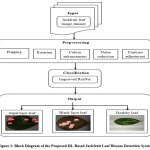 |
Figure 1: Block Diagram of the Proposed DL-Based Jackfruit Leaf Disease Detection System |
Preprocessing
Preprocessing is essential for enhancing the quality and consistency of input images, making them suitable for accurate DL-based classification. In this study, preprocessing involves the methods of data augmentation to enhance model generalization and diversify datasets. These techniques help prevent overfitting and ensure that the model learns meaningful patterns rather than memorizing specific image features. In this study, the following methods are employed:
Flipping
Horizontal and/or vertical flipping is applied to create mirrored versions of the original images. This technique introduces orientation-based diversity and allows the model to recognize disease symptoms regardless of the leaf’s positioning. For example, a lesion appearing on the left side of a leaf in one image might appear on the right after flipping, helping the model learn position-invariant features.
Rotation
Random rotation of images at various angles simulates different orientations in which leaves may appear in natural conditions. Since leaves on trees can be viewed from many angles in real environments, this technique improves the model’s ability to detect diseases even when the leaf is tilted or rotated. It enhances spatial learning and ensures that features are not position-dependent.
Color Enhancement
Adjustments in image brightness, contrast, hue, and saturation are applied to simulate variations in lighting conditions and camera quality. These changes improve the model’s sensitivity to subtle color differences that are often indicative of specific leaf diseases. By enhancing color features, this technique helps highlight the diseased regions more clearly, leading to better feature extraction and classification accuracy.22
Noise Reduction
A Gaussian filter is applied to each image to suppress unwanted random noise while preserving essential disease features such as leaf texture and lesion boundaries. This step ensures that small noise artifacts do not mislead the feature extraction process.
Contrast Adjustment
The image contrast is adjusted to enhance the visibility of disease spots and texture variations. This improves the model’s ability to differentiate between healthy and infected regions.
The input image undergoes preprocessing using the above techniques to improve its quality and diversity. The resulting processed image is then passed to the next phase for classify the jackfruit leaf disease detection.
Classification for Jackfruit Leaf Disease Detection using Improved ResNet
An improved SE-ResNet model, based on the traditional ResNet architecture, is employed in this study for the efficient detection of classifying the jackfruit leaf diseases. While the original ResNet framework is effective in mitigating the vanishing gradient problem through residual learning, it lacks the capability to model inter-channel feature dependencies. To overcome this limitation, a Squeeze-and-Excitation (SE) blockare integrated into the ResNet structure. This enhancement enables the model to adaptively recalibrate channel-wise feature responses, improving its focus on the most informative features and thereby boosting classification accuracy. A detailed explanation of the ResNet and SE-ResNet architecture is provided below,
ResNet Architecture
A typical ResNet-50, used as the baseline in this study, begins with an initial 7×7 convolution layer followed by a 3×3 max pooling layer to reduce spatial dimensions. The main body comprises four stages of residual blocks, each containing multiple bottleneck units (1×1, 3×3, and 1×1 convolutions). The 1×1 convolutions reduce and then restore the channel dimensions, while the 3×3 convolution extracts spatial features. Each convolutional layer uses multiple kernels to compute feature maps, is followed by Batch Normalization (BN) to stabilize training, and applies a ReLU activation function to introduce non-linearity. The residual connections (shortcut links) allow the network to learn residual mappings, which address the vanishing gradient problem and improve training stability. Finally, the architecture ends with global average pooling and a fully connected layer with a softmax activation for classification. Consequently, the convolutional layer’s computation formula is:

Here, uni represents the output feature map from the (n -1)th convolutional layer, and uni-1 denotes the input feature map from the (n -1)th convolutional layer. The symbol m indicates the number of convolutional layers, k is the convolution kernel, B is the bias term, and F(.). refers to the activation function (ReLU in this work). Where j is the number of input feature vectors and n is the system’s size.
The convolution layer’s characteristics are used to choose the pooling layer. It can speed up calculations and decrease the model’s size. Average pooling and maximal pooling are examples of common pooling processes. The following is the calculating procedure:
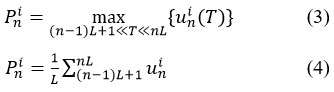
Where, uni(T) is the activation value of the T neurons’ output, Pni is the pooling layer’s output, and L is the pooling layer’s size. The batch normalization (BN) layer is used to address deep network training issues that could result in gradient explosion or dispersed gradients. As a normalized approach, it is suggested. The BN is calculated as follows:
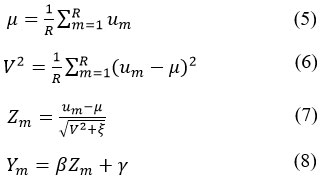
Where, m stands for the observation value, and um and Ym are the input and output features of the BN. R is the number of each batch sample in the task, ξ is a constant that is nearly equal to 0, and β and γ are two training parameters. The ResNet is made up of several stacked residual modules. The residual module sends the input data straight to the output via a shortcut link. The model as a whole just needs to learn the various input-output components, which simplifies network learning tasks and enhances network evaluation capabilities. Its method of learning is:

Where, the Evergrande mapping is denoted by u, the unknown mapping by h(u), and the residual mapping by f(u). By addressing the shortcut connection, the ResNet’s calculation properties shift from the multiplication to the addition technique, significantly reducing the network degradation issue that has arisen. increase the model training’s stability, The training network has a significantly higher number of layers. Figure 2 shows the structure of the ResNet residual block.23
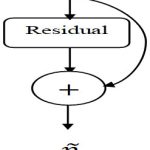 |
Figure 2: ResNet structure |
SE-ResNet Architecture
In SE-ResNet, a Squeeze-and-Excitation (SE) block is inserted after the last convolution in each residual block, before the shortcut connection is added. The SE block consists of:
Squeeze: Global average pooling condenses each feature map into a single channel descriptor.
Excitation: Two fully connected (FC) layers are applied — the first reduces the channel dimension by a ratio (bottleneck), followed by a ReLU activation; the second restores the original dimension, followed by a sigmoid activation to generate channel weights.
Recalibration: The original feature maps are scaled channel-wise by these weights, boosting important features and suppressing less relevant ones.
While standard ResNet focuses on spatial feature extraction, SE-ResNet also models inter-channel dependencies. This means the model learns which feature maps are most important for classification, not just where features are located. In the case of jackfruit leaf diseases, SE blocks help highlight disease-specific color and texture patterns while reducing the influence of irrelevant background features. This selective emphasis improves feature quality and contributes to the observed performance gain of the improved model. The following is a mathematical expression for this process:

By utilizing residual learning to solve the vanishing gradient issue, SE-ResNet makes it possible to train deeper neural networks efficiently. The gating mechanism is represented by G, the ReLU activation by ψ, and the sigmoid activation function by σ in this architecture. In the SE block, ϖ1 and ϖ2 stand for the weights of the two completely connected layers, and Ω for global average pooling.

Convolutional layers are employed in SE-ResNet to extract features through the application of filters that identify various patterns in the input data. The following is a description of the convolution operation: The residual mapping function μ(p,{ϖm}), where ϖm represents the filter weights, yields the output q given an input p.

In layer ζ, the input image or feature map is indicated by ζζ, the convolution kernel by kζ, and the feature map value at location (m,n) is represented as μζmn.24
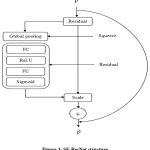 |
Figure 3: SE-ResNet structure |
Figure 3 illustrates the integration of the SE block within the ResNet residual framework. In each residual unit, the SE block is placed after the convolutional layers, enabling adaptive recalibration of channel-wise feature responses before they are added to the shortcut connection. This integration enhances the network’s ability to focus on disease-related features in jackfruit leaves. By embedding SE blocks within the ResNet architecture, the network can adaptively emphasize informative features while suppressing less relevant ones, resulting in more effective classification of jackfruit leaf diseases.The following section presents the experimental evaluation conducted to validate the effectiveness of the proposed model.
Results
A thorough experimental assessment of the suggested methodology is provided in this section. The implementation is carried out using the MATLAB platform, and the evaluation is performed using datasets obtained from Kaggle comprises 13,245 images, distributed as follows: Healthy Leaf – 5,125 images, Black Spot – 4,215 images, and Algal Leaf Spot – 3,905 images. Although the dataset is relatively balanced, slight variations in class size were addressed through targeted data augmentation to ensure uniform representation during training. This dataset is ideal for developing plant disease detection models. A detailed performance analysis is conducted, along with a comparison against existing methods to assess the overall effectiveness of the approach.
Performance Analysis for the Proposed Improved ResNet Method
Using a variety of performance criteria, the effectiveness and dependability of the suggested enhanced ResNet approach are thoroughly assessed. The evaluation’s findings provide valuable information about the classifier’s general efficacy, which is described below.
Table 1: Evaluation of the suggested approaches’ performance
| Performance metrics | Proposed (%) |
| Accuracy | 99.25 |
| Precision | 98.56 |
| Recall | 98.64 |
| F1-Score | 98.25 |
| Sensitivity | 98.64 |
| Specificity | 98.32 |
An overview of the performance results of the recommended method for jackfruit leaf disease detection is given in Table 1. The model’s strong classification performance was demonstrated by its 99.25% accuracy, 98.56% precision, 98.64% recall, 98.25% F1-score, 98.64% sensitivity, and 98.32% specificity. These outstanding metrics clearly demonstrate the superior performance of the improved ResNet method, with its notably high accuracy surpassing other evaluated approaches and emphasizing the model’s resilience and reliability.
Comparative Analysis for the Proposed Improved ResNet Model
This section compares the suggested improved ResNet classifier’s performance to a number of popular techniques, including traditional ResNet, CNN, ANN, DenseNet, and Long Short-TermMemory (LSTM). A thorough examination of the findings is given below.
Table 2: Performance comparison between traditional ResNet and Improved ResNet
| Metrics | Traditional ResNet | Improved ResNet |
| Accuracy | 98.45% | 99.25% |
| Precision | 97.85% | 98.56% |
| Recall | 97.92% | 98.64% |
| F1-score | 97.88% | 98.25% |
Table 2 compares the classification performance of the traditional ResNet and the proposed Improved ResNet. The results show that the Improved ResNet consistently achieves higher accuracy, precision, recall, and F1-score, demonstrating its superior capability in detecting jackfruit leaf diseases.
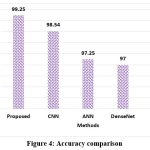 |
Figure 4: Accuracy comparison |
The proposed model’s accuracy performance is displayed in the Figure 4. The improved ResNet classifier outperforms conventional techniques with an astounding total accuracy of 99.25%. By contrast, CNN scores 98.54%, ANN accomplishes 97.25%, DNN records 97%, and LSTM performs the worst at 96.58%. These results unequivocally show that the improved ResNet classifier outperforms all other models evaluated in terms of accuracy.
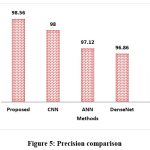 |
Figure 5: Precision comparison |
The precision performance of the suggested enhanced ResNet classifier is shown in Figure 5, underscoring its superiority over current methods. The enhanced ResNet outperforms conventional techniques like CNN, ANN, DNN, and LSTM, which attain precision scores of 98%, 97.12%, 96.86%, and 96%, respectively, with a greater precision of 98.56%. These outcomes unequivocally show that the model has improved its capacity to generate predictions that are more accurate.
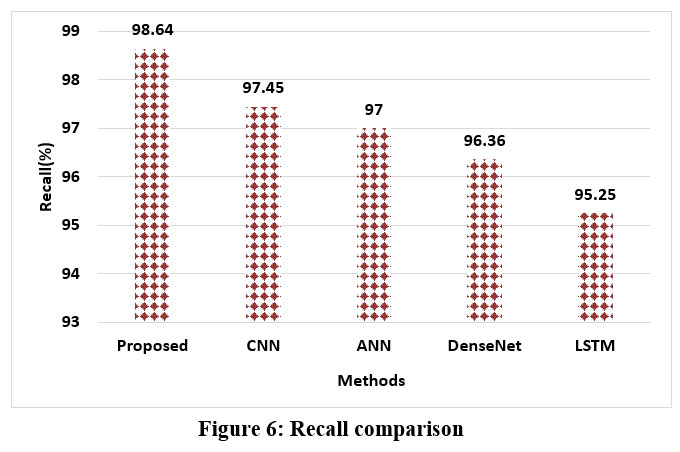 |
Figure 6: Recall comparison |
Figure 6 shows the suggested improved ResNetclassifier’s recall performance. The improved ResNet model beats conventional methods such as CNN (97.45%), ANN (97%), DenseNet (96.36%), and LSTM (95.25%) with a sensitivity of 98.64%. This substantial improvement highlights the improved ResNet can identify jackfruit leaf disease in comparison to traditional models.
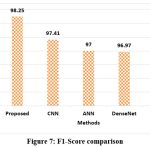 |
Figure 7: F1-Score comparison |
The F1-score performance for the suggested improved ResNet model is shown graphically in Figure 7. The proposed method outperforms current techniques like CNN (97.41%), ANN (97%), DenseNet (96.97%), and LSTM (96.12%) with an amazing F1-score of 98.25%. These findings demonstrate that the mmprovedResNet model is the most successful in detecting jackfruit leaf disease, as evidenced by the highest F1-score it produces.
The results indicate that the improved ResNet classifier outperforms existing methods across various performance metrics. The experimental analysis confirms that the proposed approach offers higher accuracy in detecting jackfruit leaf diseases. A comparative evaluation further highlights the advantages of the improved ResNet model over previously published studies.
Table 3: Comparison between Proposed Approach and Related Works
| Ref. no | Techniques | Accuracy | Precision | Recall | F1-Score |
| [14] | CNN | 97 | – | – | – |
| [15] | CNN | 92.06 | – | – | – |
| [16] | CNN | 99 | 98.01 | 98.03 | 98.02 |
| [17] | AgrileafNet model | 98 | – | 97 | 98 |
| [18] | Novel Learning based Agricultural Support System | 98.27 | – | – | – |
| [21] | Uniform local binary pattern | 93.33 | – | – | – |
| Proposed | Improved-ResNet | 99.25 | 98.56 | 98.64 | 98.25 |
The performance metrics of the suggested classifier and those of the current approaches are contrasted in Table 3. With an accuracy of 99.25%, the data demonstrate that the suggested strategy performs better than earlier techniques. The main reason for this excellent performance is the application of DL classifiers, which improve the accuracy of jackfruit diseasedetection.
Discussion
The results clearly demonstrate that the proposed Improved ResNet model outperforms all compared techniques in jackfruit leaf disease classification. Key discussion points include:
Superior Accuracy
The model’s 99.25% accuracy highlights its robustness and reliability for practical deployment.
Enhanced Feature Attention
The integration of SE blocks within the ResNet architecture enables effective feature recalibration, helping the model focus on the most relevant leaf features.
High Generalization
Through rigorous data augmentation during preprocessing (flipping, rotation, color enhancement), the model generalizes well across variable image conditions. While data augmentation improves generalization, excessive or unrealistic transformations can lead to non-representative samples that may confuse the model. In this study, augmentation parameters were carefully chosen to reflect plausible variations in real-world leaf appearances, thereby avoiding over-augmentation artifacts.
Robustness Across Metrics
The model consistently achieved high values in precision, recall, F1-score, sensitivity, and specificity—confirming its ability to make both accurate and reliable predictions.
Outperformance Over Existing Methods
The proposed model surpasses all reviewed prior studies in all comparable performance metrics, substantiating the advantage of using SE-ResNet architecture in plant disease detection tasks.
Conclusion
This research proposes an effective DL-based method for jackfruit leaf disease detection, integrating advanced preprocessing techniques with Improved ResNet architecture for classification. The model was implemented in MATLAB and trained on a publicly available Kaggle dataset, achieving a classification accuracy of 99.25% and surpassing existing methods across various evaluation metrics confirms its reliability as anefficient method for identifying illnesses in jackfruit leaves. However, the study has certain limitations, as the model lacks the ability to adapt dynamically to seasonal changes in leaf appearance. Future research will explore adaptive strategies such as incremental learning, which allows the model to update continuously with new seasonal data, and transfer learning, enabling knowledge transfer from one season’s dataset to another. These approaches can help maintain sustained performance year-round and improve robustness to seasonal variability.
Acknowledgement
I would like to express my deepest gratitude to my supervisor, Dr. K. SEETHARAMAN, Former Professor in Department of Computer and Information Science, Annamalai University, for their invaluable guidance, constructive feedback, and continuous encouragement throughout the course of this research on jackfruit disease detection using Deep Learning-Based Improved ResNet Model. I also extend my sincere thanks to the faculty members and staff of the Department of Computer Science, Arignar Anna Government Arts College, Villupuram for providing the necessary facilities, technical support, and resources that contributed to the successful completion of this work.
Funding Sources
The author(s) received no financial support for the research, authorship, and/or publication of this article.
Conflict of Interest
The authors do not have any conflict of interest.
Data Availability Statement
The datasets generated or analyzed during the current study are publicly available in the Kaggle repository (https://www.kaggle.com/datasets/shuvokumarbasak4004/jackfruit-leaf-diseases).
Ethics Statement
This research did not involve human participants, animal subjects, or any material that requires ethical approval.
Informed Consent Statement
This study did not involve human participants, and therefore, informed consent was not required.
Permission to reproduce material from other sources
Not Applicable
Author Contributions:
Radhika Gunasekaran: Visualization, Supervision, Writing – Review & Editing, Project Administration.
Mahendran Thambusamy: Conceptualization, Methodology, Data Collection, Analysis, Writing – Original Draft.
References
- Ranasinghe RASN, Maduwanthi SDT, Marapana RAUJ. Nutritional and health benefits of jackfruit (Artocarpus heterophyllus Lam.): a review. International journal of food science 2019, No. 1 (2019): 4327183.
CrossRef - Bhure SS. Studies on fruit rot of jackfruit caused by Lasiodiplodia theobromae [dissertation]. Dapoli: Dr. Balasaheb Sawant Konkan Krishi Vidyapeeth; 2021.
- Trinh DC, Mac AT, Dang KG, et al. Alpha-EIOU-YOLOv8: an improved algorithm for rice leaf disease detection. AgriEngineering. 2024;6(1):302-317.
CrossRef - Mahadevan K, Punitha A, Suresh J. Automatic recognition of rice plant leaf diseases detection using deep neural network with improved threshold neural network. e-Prime-Advances in Electrical Engineering, Electronics and Energy. 2024;8:100534.
CrossRef - Shanthi DL, Vinutha K, Ashwini N. Tomato leaf disease detection using CNN. Procedia Computer Science. 2024;235:2975-2984.
CrossRef - Chen Z, Wang G, Lv T, Zhang X. Using a hybrid convolutional neural network with a transformer model for tomato leaf disease detection. Agronomy. 2024;14(4):673.
CrossRef - Vijay CP, Pushpalatha K. DV-PSO-Net: a novel deep mutual learning model with heuristic search using particle swarm optimization for mango leaf disease detection. Journal of Integrated Science and Technology.Vol.12, No.5 (2024): 804-804.
CrossRef - Kunduracıoğlu İ, Paçal İ. ” Deep learning-based disease detection in sugarcane leaves: evaluating Efficient Net models.” Journal of Operations Intelligence. 2024;2(1):321-335.
CrossRef - Farhan HR, Kod MS, Taqi A, Ghazi SA. Ovarian cancer detection based on Elman recurrent neural network. Periodica Polytechnica Electrical Engineering and Computer Science. 2024;68(2):202-212.
CrossRef - Patil RR, Kumar S. A bibliometric survey on the diagnosis of plant leaf diseases using artificial intelligence. Library Philosophy and Practice. 2020:1-26.
- Paramanandham N, Sundhar S, Priya P. Enhancing disease detection with weight initialization and residual connections using LeafNet for groundnut leaf diseases. IEEE Access. 2024.
CrossRef - Ramesh S, Hebbar R, Niveditha M, et al. Plant disease detection using machine learning. In: 2018 International Conference on Design Innovations for 3Cs Compute Communicate Control (ICDI3C). IEEE; 2018:41-45.
CrossRef - Durmuş H, Güneş EO, Kırcı M. Disease detection on the leaves of the tomato plants by using deep learning. In: 2017 6th International Conference on Agro-Geoinformatics. IEEE; 2017:1-5.
CrossRef - Vats S, Kukreja V, Mehta S. Detecting jackfruit leaf disease with advanced federated CNN models brings new frontiers. In: 2024 IEEE International Conference on Interdisciplinary Approaches in Technology and Management for Social Innovation (IATMSI). Vol 2. IEEE; 2024:1-6.
CrossRef - Vats S, Khanna MS, Kukreja V, Mehta S. Emerging trends in agritech: federated learning CNN-based jackfruit leaf disease severity detection. In: 2024 IEEE IATMSI. Vol 2. IEEE; 2024:1-6.
CrossRef - Suryavanshi A, Kukreja V, Chamoli S, Mehta S, Thapliyal S. Enabling precision agriculture: a federated learning CNN approach to diagnosing jackfruit leaf diseases. In: 2023 12th International Conference on System Modeling & Advancement in Research Trends (SMART). IEEE; 2023:29-35.
CrossRef - Saleem S, Sharif MI, Sajid MZ, Marinello F. Comparison of deep learning models for multi-crop leaf disease detection with enhanced vegetative feature isolation and definition of a new hybrid architecture. Agronomy. 2024;14(10):2230.
CrossRef - Prakash VS, Vanitha R, Nikam SV, et al. Revolutionizing agriculture: artificial intelligence assisted plant leaf disease detection using deep learning principles. In: 2024 10th International Conference on Communication and Signal Processing (ICCSP). IEEE; 2024:586-591.
CrossRef - Oraño JFV, Maravillas EA, Alia CJG. Classification of jackfruit fruit damage using color texture features and backpropagation neural network. Int J Adv Sci Eng Inf Technol. 2020;10(5):1813-1820.
CrossRef - Nilakandhi T, Prajitno A, Fadjar M, Hidayati DA, Pratama G. Effect of giving jackfruit (Artocarpus heterophyllus) leaves crude extract as an alternative antibacterial of Edwardsiella tarda bacteria in vitro. Journal of Aquaculture and Fish Health 12, No. 1 (2023): 105-114.
CrossRef - Bacalla GLB, Corate ENC, Yumang AN. Jackfruit maturity classification using uniform local binary pattern and support vector machine. In: 2023 IEEE 5th Eurasia Conference on IoT, Communication and Engineering (ECICE). IEEE; 2023:605-610.
CrossRef - Abir SI, Shoha S, Hossain MM, et al. Deep learning-based classification of skin lesions: enhancing melanoma detection through automated preprocessing and data augmentation. Journal of Computer Science and Technology Studies 6, no. 5 (2024): 152-167.
CrossRef - Shen K, Zhao D. Fault analysis and fault degree evaluation via an improved ResNet method for aircraft hydraulic system. Scientific Reports. 2025;15(1):4132.
CrossRef - Tiwari A. Computational assessment of tumor microenvironment heterogeneity and tumor-stroma interactions using SE-ResNet based enhanced feature extraction networks in high-resolution breast cancer histopathology. ResearchGate. Published December 2023.
List of Abbreviations
SE: Squeeze-and-Excitation
BN: Batch Normalization
CNN: Convolutional Neural Network
ANN: Artificial Neural Network
LSTM: Long Short-Term Memory
DL: Deep Learning
ML: Machine Learning