


 PDF Downloads:
221
PDF Downloads:
221


Introduction
The global agricultural landscape is undergoing rapid transformations, driven by a combination of climate change, technological innovation, socio-economic demands, and policy interventions.1 One of the most critical manifestations of these transformations is the alteration in cropping patterns, mainly the spatial and temporal distribution of crops cultivated across different regions. Cropping pattern changes, whether driven by market incentives, water availability, or climate shifts, have far-reaching consequences not only for agricultural productivity but also for the overall economy, environmental sustainability, and public health outcomes.2 While certain transitions have resulted in increased income and food availability, others have led to severe ecological degradation, nutritional imbalances, and health vulnerabilities. Understanding the multidimensional impacts of cropping pattern shifts is thus, critical to informing sustainable agricultural policy, particularly in ecologically fragile and socio-economically vulnerable regions.3 Globally, the transition from traditional, diversified cropping systems to high-value, input-intensive monocultures has become a defining trend of modern agriculture. In many developing countries, including those in Sub-Saharan Africa and Southeast Asia, farmers have increasingly adopted commercial crops such as oilseeds, fruits, and biofuels in response to market liberalization and export-oriented agricultural policies.4 Economically, such changes can improve profitability and integration into global markets, but they also expose farmers to higher levels of income volatility due to price shocks and climatic risks. Many scientific studies and empirical research have highlighted the negative impact of climate change and global warming on agriculture 5,6 emphasizes that extreme weather events can lead to reduced crop yields and increased fluctuations in staple food prices, posing serious threats to food security and poverty reduction efforts. Changes in climate conditions are expected to influence agriculture by affecting both farm income and food prices, ultimately impacting food security and livelihoods.7 Without suitable adaptation strategies, agriculture may no longer remain a reliable source of livelihood, especially in regions heavily dependent on farming. This challenge is particularly concerning for smallholder farmers in developing countries like India, where limited infrastructure and reliance on rainfall make them more vulnerable to climate-induced risks. Research also suggests that rainfall plays a crucial role in determining crop acreage and farmers decisions regarding crop selection.8 Crops grown during the autumn season are especially sensitive to rainfall variations. In areas with lower rainfall, farmers tend to prefer irrigated Boro rice over rain-fed Aman rice, whereas in regions with higher rainfall, the preference is reversed. Due to this sensitiveness to rainfall enlarges the diverse cropping probability and cropping decisions by farmers.9 Conditions of the extreme drought causing by the climate change results reduction in the productivity of the crops due to the immobilization of the nutrients and salt build up in the soil which in turn affects the soil health and leads soil infertility.10 These lands become barren and are abandoned by the farmers with the passage of time that creates many social and economic problems. It has been observed that in upcoming future decades, productivity of the major crops will sharply reduce due to the challenges of the global warming, water scarcity and other environmental ramifications.11,12 In recent years, India’s cropping patterns have continued to evolve in response to climate variability, government incentives, and changing consumer preferences. Cash crops such as cotton, sugarcane, soybean, and perennial fruit crops produce have gained prominence, especially in semi-arid and rainfed regions of Maharashtra, Madhya Pradesh, and Andhra Pradesh.13 While these shifts can increase household income during normal years, they also make farming systems more vulnerable to erratic monsoon patterns and prolonged droughts, both of which are becoming more frequent under climate change. Moreover, these crops require intensive use of pesticides and synthetic inputs, raising serious environmental and health concerns. Empirical studies have reported elevated rates of pesticide-related illnesses, including neurological disorders and cancer, particularly in regions with poor regulatory oversight.14,15 Additionally, the economic risks associated with these shifts especially in the absence of price support or crop insurance have contributed to indebtedness and farmer suicides, indicating a deep-seated agrarian distress fueled by unsustainable cropping decisions.16,17
In the context of the Indian Himalayan region, particularly Jammu and Kashmir (J&K), the impacts of cropping pattern changes are both understudied and critically important. Traditionally, J&K’s agricultural systems were characterized by subsistence farming of climate-resilient crops like barley, millets, pulses, and indigenous rice varieties.18 However, in recent decades, the region has witnessed a gradual but persistent shift toward cash-oriented cropping, especially in the form of large-scale apple cultivation.19 This shift has improved farmer incomes and contributed significantly to the state’s GDP (Gross Domestic Product), with horticulture alone accounting for over 9% of GDP.38 Yet, the environmental trade-offs are concerning. Expansion of orchards into ecologically sensitive zones has led to deforestation, soil erosion, and altered hydrological cycles. Moreover, the heavy reliance on chemical pesticides in apple orchards poses significant health risks to both farmers and consumers, including pesticide poisoning and long-term exposure effects.20 This underscores the urgent need to assess cropping pattern changes in J&K not only from an economic standpoint but through an integrated lens that includes ecological sustainability and public health.
Thus, this study aims to comprehensively examine the underlying causes as well as the socio-economic, environmental, and health-related impacts of the changing cropping patterns in Anantnag district, of the Kashmir Valley. By analysing shifts in land use from traditional paddy cultivation to perennial fruit crops, particularly apple, walnut, pear and cherry farming, the study throws light on the broader implications of these cropping transitions. It investigates not only the drivers behind these changes but also explores how these shifts have influenced farmer’s livelihoods, food security, ecological balance, and public health in the region.
Materials and Methods
Study Area and Data Description
The Anantnag district is located in the southern part of the Jhelum Valley, situated at an elevation of approximately (1,600 m) above sea level. It lies about 53 kilometres from Srinagar, the capital city. The southern portion of the district shares its borders with the Tehsils of Reasi, Banihal, and Kishtwar in the Jammu region, while the eastern boundary adjoins the Kargil Tehsil of the Ladakh division. These southern and eastern areas are characterized by dense forests and rugged mountainous terrain. To the north and west, the district is bordered by Pulwama, while Kulgam lies to its immediate west.21
Anantnag district is renowned for its thriving horticulture industry in South Kashmir. The region’s favourable agro-climatic conditions support the cultivation of a wide range of fresh fruits, including apples, pears, apricots, peaches, plums, and cherries, as well as dry fruits such as walnuts and almonds. Over the past two decades, horticulture has experienced significant growth, increasingly replacing traditional agricultural practices like paddy cultivation. In addition to horticulture, tourism also plays a vital role in the local economy, serving as another major source of livelihood for the residents.22–24
This study employs a mixed-methods approach, integrating both primary and secondary data to analyse shifting cropping patterns in the Anantnag district. Primary data was collected through structured surveys from 200 randomly selected farmers, on the primary reasons for changing in cropping patten, and its socio-economic impacts. Secondary data on agricultural (e.g., rice) and perennial fruit crops (apple, walnut, pear, cherry) was sourced from official repositories.39,40 Historical rainfall data was obtained from the IMD (Indian Meteorological Department), Srinagar, focusing on Pahalgam and Kokernagh stations to assess climatic trends . For rainfall trend analysis, the non-parametric Theil-Sen estimator was implemented in Spyder 6 (Python 3.9) using scipy.stats.theilslopes to calculate median slope, intercept, and 95% confidence intervals, providing robust trend quantification. The Theil-Sen estimator is a non-parametric technique used to determine the slope of a trend line in time series data by computing the median value from all possible slopes formed between pairs of data points.
To estimate the slope (β) using the Theil-Sen method:
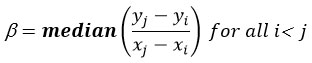
Where:
(xi,yi)(x_i, y_i)(xi,yi) and (xj,yj)(x_j, y_j)(xj,yj) are pairs of observations
β\betaβ is the estimated slope of the trend line
The median is taken over all combinations of i<ji < ji<j
To evaluate land-use changes, Landsat satellite imageries (2001–2020) were acquired from the (United States Geological Survey)38 and processed in ArcGIS 10.8.2. On-screen digitization was employed for precise LULC classification on a scale of 1:30000 for analysing the changes under areas of agriculture and horticulture. Google Earth Pro was incorporated for the ground observation of 2001 because of the unavailability of the field data; whereas in the case of 2020, field visits along with the Google Earth Pro application were used. The investigators randomly selected 100 sample points of each year, and after comparing with the ground observation, it was found that the “overall accuracy and kappa coefficient” for the maps of 2001 and 2020 were 81% and 0.78% and 80% and 0.79%, respectively.
Results
Dynamics in the area and Production
In the year 2001, the area under rice cultivation was 38,893 ha, which increased to 40,927 ha by 2005. By 2010, this area had reduced to 24,480 ha, further declining to 23,860 ha in 2015 and 21,730 ha by 2020. However, it is important to note that the adoption of modern fertilizers improved production per hectare. In 2001, rice production was 1.46 tonnes per ha, rising to 2.12 tonnes per ha in 2010 before decreasing slightly to 2.00 tonnes per ha by 2020. This trend in rice productivity over time is depicted in table 1. Problems of food insecurity have been observed in the district, as this marginal increase fails to meet the growing demand for rice driven by population growth, as noted by Lone et al., 25. Satellite data pertaining to the Lidder valley confirms this trend, revealing a reduction in rice fields from 118 km² in 2001 to 50.5 km² in 2020. This significant decline is illustrated in figure 1. In contrast, perennial fruit crops crops showed significant growth in both cultivated area and production. The area under perennial fruit crops expanded from 31,016 hectares in 2001 to 42,995 hectares by 2005 – a gain of 11,979 hectares. However, population growth and urban expansion26,27 subsequently converted much of this land to built-up areas, reducing perennial fruit crops land to 36,617 hectares in 2020. Figure 2 shows the significant expansion of horticulture in the Lidder valley, where the area increased from 17 sq. km to 109 sq. km., a net increase of 92 sq. km over 19 years (2001-2020The production of perennial fruit crops increased consistently over the years, driven by extensive pesticide and fungicide application, the introduction of new apple cultivars, and advancements in technological inputs. As shown in Table 1, production rose from 203,558 metric tonnes in 2001 to 254,192 metric tonnes in 2020, reflecting a sustained upward trend.
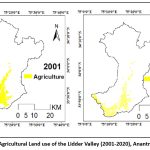 |
Figure 1: Agricultural Land use of the Lidder Valley (2001-2020), Anantnag DistrictClick here to view Figure |
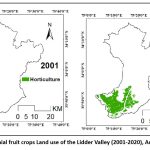 |
Figure 2: Perennial fruit crops Land use of the Lidder Valley (2001-2020), Anantnag DistrictClick here to view Figure |
Table 1: Year-wise Area and Production of Rice and Major Perennial Fruit Crops in Anantnag District
| Year | Rice Area (Ha) | Rice Production (Tonnes/Ha) | Perennial Fruit Crop Area (Ha) | Perennial Fruit Crop Production (MT) |
| 2001 | 38893 | 1.46 | 31016 | 203558 |
| 2002 | 39013 | 2.05 | 36984 | 203705 |
| 2003 | 39904 | 2.43 | 38496 | 204778 |
| 2004 | 40375 | 2.62 | 42238 | 216835 |
| 2005 | 40927 | 2.88 | 42995 | 224017 |
| 2006 | 39595 | 2.82 | 45756 | 237907 |
| 2007 | 25086 | 2.59 | 28464 | 151856 |
| 2008 | 24450 | 2.3 | 29248 | 214073 |
| 2009 | 24440 | 2.19 | 30643 | 165338 |
| 2010 | 24480 | 2.12 | 31362 | 205047 |
| 2011 | 25147 | 2.15 | 34256 | 178553 |
| 2012 | 25147 | 2.22 | 27165 | 209214 |
| 2013 | 25133 | 2.1 | 36617 | 214886 |
| 2014 | 23904 | 0.81 | 28884 | 206793 |
| 2015 | 23860 | 3.08 | 33343 | 269124 |
| 2016 | 23074 | 3.02 | 33483 | 237120 |
| 2017 | 22829 | 3.01 | 31274 | 269031 |
| 2018 | 21668 | 2.8 | 23450 | 265512 |
| 2019 | 21811 | 2.97 | 31713 | 310146 |
| 2020 | 21730 | 2 | 31790 | 254192 |
Socio-economic Impact
Primary data on the socio-economic impacts of shifting cropping patterns reveals a marked improvement in farmers’ economic condition. Analysis of 200 surveyed farmers indicated that apple orchards generated an average gross income of ₹4.5 lakh/year, with net profit of ₹3 lakh/year after accounting for labour, pesticides, and maintenance costs (₹1.5 lakh). This represents a 6–15 times increase in the net income compared to paddy farming, which barely met subsistence needs (₹0.2–0.5 lakh/year). The high profit margin (66.6%) underscores the economic viability of perennial fruit crops especially apples enabling 57.5% of respondents (115 farmers) to construct concrete houses, 29.5% (59 farmers) to purchase four-wheelers, and 15% (30 farmers) to acquire two-wheelers (Table 02). All 200 respondents emphasized that their children now attend reputed private schools within the district, a shift directly attributed to enhanced financial stability from apple cultivation.
Table 2: Comparative Analysis of Economic and Socio-Economic Outcomes: Paddy vs. Apple Cultivation
| Parameter | Paddy Cultivation | Apple Cultivation |
| Gross Income (₹/year) | Subsistence (₹1.2 lakh) | ₹4.5 lakh |
| Net Profit (₹/year) | ₹0.2–0.5 lakh | ₹3.0 lakh |
| Profit Margin | 15–40% | 66.60% |
| Socio-Economic Gains | Minimal subsistence | 115 concrete houses, 59 four-wheelers, 100% private schooling |
Impact on Food security
Rice (paddy) is the staple food across the entire Kashmir Valley, and it holds a central place in the daily diet of its people, with rice being preferred during both lunch and dinner. However, the changing land use pattern, particularly the conversion of paddy fields into apple orchards, has impacted the self-sufficiency of many households in terms of rice production. The J&K produces only 30% of its food needs and imports about 70% from the other states of India.28 Agricultural land in the valley had shrunk from 4,67,700 ha (2015) to 389,000 ha (2025) — a loss of 78,700 ha in just 10 years. A primary survey of 200 farmers in the study region revealed that 44% (88 respondents) are now exclusively dependent on government-supplied rice through the Public Distribution System (PDS), having abandoned paddy cultivation entirely as they no longer possess any paddy or cultivated land. Meanwhile, 34% (68 respondents) reported that they still obtain a year’s supply of rice from their remaining, unconverted paddy fields. However, due to the insufficiency of their harvest, they are also dependent on ration stores for about seven months of the year. Additionally, 22% (44 respondents) indicated that they are able to meet their rice requirements from their paddy lands for only seven months, and for the remaining five months, they too rely on the ration stores. This shift suggests a growing dependence on external food supply sources, highlighting a significant trade-off between economic prosperity from horticulture and the region’s traditional food security.
Health and Environmental Impacts
In the Kashmir Valley, approximately nine sprays of pesticides and fungicides are applied in apple orchards annually. While the extensive use of high-quality pesticides has significantly boosted apple production, it has also led to a range of serious health and environmental concerns. The most commonly used chemicals include Mancozeb, Bitertanol, Chlorpyrifos, Captan, Dodine, and Carbendazim. Notably, Mancozeb, Captan, and Chlorpyrifos have been classified as carcinogenic substances. Several studies 20,29,30 have linked these chemicals to life-threatening diseases such as cancer among farmers in the region.
Primary data collected from farmers in newly established apple orchards reveal significant health risks associated with prolonged agrochemical exposure as shown in figure 3. Among 200 respondents, 44.5% (89 farmers) reported symptoms such as skin/eye irritation, severe headaches, restlessness, and vomiting following pesticide and fungicide application. Specific ailments included 29% (58 farmers) with eye/skin irritation and 26.5% (53farmers) experiencing nausea, vomiting, hair loss, or nail disorders. Alarmingly, respondents also noted exacerbated pre-existing endocrine disorders (e.g., thyroid imbalances, diabetes) linked to sustained pesticide use. Additionally, 19.5% (39 female respondents) actively involved in spraying operations reported menstrual cycle irregularities, underscoring gendered health vulnerabilities.
The period from March to May sees the highest frequency of pesticide and insecticide spraying, coinciding with the peak rainfall season in the valley. This overlap results in the runoff of pesticides into nearby rivers and canals, severely impacting water quality and posing a significant threat to aquatic ecosystems. According to our primary survey, all 200 respondents identified water contamination as the most severe environmental impact of pesticide use. Additionally, respondents also reported noticeable levels of air and soil pollution resulting from continuous and excessive spraying practices.
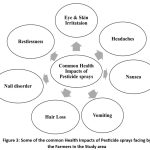 |
Figure 3: Some of the common Health Impacts of Pesticide sprays facing by the Farmers in the Study areaClick here to view Figure |
Drivers for Changing Pattern
Rainfall changing trends and cropping pattern shifts are closely interlinked in the Kashmir Valley.31–35 Diverse trends in rainfall within the study area were recorded as shown in figures 10 and 11. For the Pahalgam dataset, the Theil-Sen estimator yielded an estimated slope of -5.2 mm/year, indicating a declining trend in annual rainfall, as depicted in figure 5, where blue dots represent observed rainfall and the red line denotes the estimated trend. Similarly, for the Kokernagh dataset, the Theil-Sen estimator revealed an increasing trend from 2001 to 2010 (64.85 mm/year), followed by a declining trend from 2011 to 2020 (-10.40 mm/year). Figure 6, illustrates these trends, with green and red lines representing the respective periods. Both Figures 7 and 8 highlight substantial rainfall variability, with notable peaks in 2014 and 2015 and relatively lower values in 2016 and 2020. The 95percent confidence intervals for both datasets reinforce the observed trends, underscoring fluctuations in rainfall patterns over time. According to primary survey data from 200 farmers, 50% (100 respondents) identified climate change-induced water scarcity as the primary driver for converting paddy fields to perennial fruit crops, particularly apple orchards. Economic incentives, such as higher profitability and market demand, were cited by 40% (80 respondents) as their key motivation. Only 10% (20 respondents) attributed the shift to other factors, including labour availability, land fragmentation, or policy influences. Figure 4 presents this distribution, emphasizing the dominance of climatic stressors and economic aspirations in reshaping agricultural practices. Declining water resources emerging as the most critical catalyst for land-use transformation in the region.
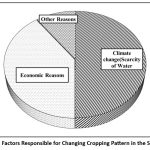 |
Figure 4: Factors Responsible for Changing Cropping Pattern in the Study areaClick here to view Figure |
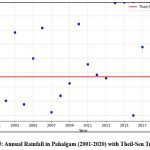 |
Figure 5: Annual Rainfall in Pahalgam (2001-2020) with Theil-Sen Trend LineClick here to view Figure |
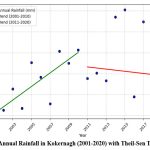 |
Figure 6: Annual Rainfall in Kokernagh (2001-2020) with Theil-Sen Trend linesClick here to view Figure |
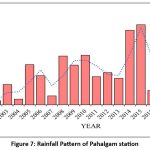 |
Figure 7: Rainfall Pattern of Pahalgam stationClick here to view Figure |
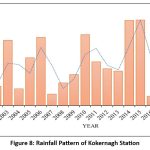 |
Figure 8: Rainfall Pattern of Kokernagh Station Click here to view Figure |
Discussion
The present study highlights a notable transition in land use patterns in the Kashmir Valley, particularly the shift from subsistence-based paddy farming to commercially driven horticulture. This transformation is shaped by a combination of climatic, economic, and socio-cultural factors. The observed decline in rice cultivation aligns with broader patterns reported in Himalayan agrarian zones, where traditional crops are increasingly abandoned due to rainfall irregularities, erratic water availability, and changing thermal profiles.22,31
Horticulture, particularly apple cultivation, has emerged as a dominant land use due to its higher economic returns, market demand, and compatibility with changing agro-climatic conditions. Similar trends have been documented by Khursheed et al.,28 who observed significant perennial fruit crops expansion in Southern Kashmir driven by favourable government policies and evolving farmer aspirations. The shift is not merely agronomic but also socio-economic in nature, contributing to improved income levels, housing conditions, and access to private education. These developments reflect a reconfiguration of rural livelihoods from subsistence to semi-commercial models.
However, this shift has raised serious concerns around food self-sufficiency. With nearly half of the respondents fully dependent on the Public Distribution System for rice, the study underscores a growing disconnection between land use and local food production. A study of Jamal and Sheikh36 cautioned that such dependence, when combined with climate vulnerability and logistical disruptions, could significantly undermine food security in the region. The current findings reinforce these concerns and call for a re-evaluation of land use strategies that prioritize short-term economic gain over long-term food resilience.
The health impacts reported in this study further complicate the sustainability of this transition. Intensive pesticide use in horticulture has led to reported cases of skin irritation, nausea, reproductive irregularities, and fatigue issues also found by the study of Riyaz et al.,20 who linked orchard chemical exposure to rising health risks in Kashmir’s rural districts. The gendered nature of these health impacts, particularly among women involved in spraying operations, calls for urgent attention to occupational safety, education, and the promotion of non-chemical alternatives.
Climatic variability especially declining rainfall trends observed at Pahalgam and Kokernagh appears to be both a cause and consequence of shifting agricultural practices. Rain-fed paddy farming, traditionally widespread, is no longer viable under the present conditions. The expansion of horticulture, though adaptive in one sense, brings with it new ecological pressures, including increased use of inputs, water stress, and reduced biodiversity.37
Overall, this study provides spatial and socio-economic evidence of rural land transformation that has significant policy implications. It suggests that future planning in Kashmir must strike a balance between income diversification, food security, and environmental health. Integrating sustainable perennial fruit crops practices (such as bio-pesticides and integrated pest management), promoting in-situ rice preservation zones, and regulating unplanned land conversion through village-level land use plans could offer a holistic pathway forward. Furthermore, raising farmer awareness regarding the safe handling and appropriate use of pesticides is essential, particularly in tourism-driven areas where short-term economic interests may overshadow long-term health and environmental considerations. The findings contribute to broader discourses on agrarian change, resilience, and development in fragile mountain ecosystems.
Conclusion
This study highlights a major shift in Anantnag’s cropping patterns, with paddy cultivation declining and horticulture expanding significantly between 2001 and 2020. Driven by water scarcity and the pursuit of higher economic returns, this transition has improved livelihoods but also increased dependency on external food support and raised concerns about environmental degradation and human health due to excessive agrochemical use. These findings call for integrated land use planning that balances economic benefits with food security, environmental protection, and public health. Perennial fruit crops expansion should be guided toward ecologically suitable areas, while productive paddy lands must be preserved. Promoting farmer education, the use of biopesticides, and integrated pest management is essential to minimize health and ecological risks. The future of agriculture in the region depends on a sustainable and inclusive approach that supports economic growth, ensures food and health security, and safeguards environmental integrity.
Acknowledgement
We express our sincere gratitude to the Department of Geography and the Allama Iqbal Library, University of Kashmir, for providing essential research facilities. We are also thankful to the India Meteorological Department, Srinagar, for supplying the necessary data. Finally, we extend our heartfelt thanks to Dr. Basharat Ahmad Malik for his valuable support and guidance throughout the course of this research.
Funding Sources
This research was supported by the University Grants Commission (UGC), Government of India, under the Junior Research Fellowship (JRF) scheme, Grant No. 200150593248.
Conflict of Interest
The authors do not have any conflict of interest.
Data Availability Statement
The data supporting the findings of this study are available from the corresponding author
upon reasonable request.
Ethics Statement
This research did not involve human participants, animal subjects, or any material that requires ethical approval.
Informed Consent Statement
Informed consent was obtained from all respondents who participated in this study. The participants were fully briefed about the objectives of the research, assured that their participation was voluntary, and informed of their right to withdraw at any stage. All responses were kept confidential and used solely for academic purposes.
Permission to reproduce material from other Source
Not Applicable
Declaration of Individual Author Contributions
Azhar U Din Waza: Collected and analyzed data, prepared figures, drafted the initial manuscript, and coordinated the submission process.
Javid Ahmad Rather: Assisted in data interpretation, contributed to literature review, revised the manuscript, and ensured overall accuracy of content.
Mohammad Shafi Bhat: Provided academic supervision, conceptual guidance, and critical feedback throughout the manuscript revision process.
Shafqat Maqbool: Refined the research methodology, improved analytical precision, and strengthened the paper’s scientific rigor.
Aaqib Ashraf Bhat: Contributed to manuscript revision, improving clarity, structure, and adherence to academic writing standards.
Chhering Tandup Conducted detailed review of the manuscript, enhancing presentation, coherence, and compliance with journal formatting requirements.
References
- Parrey HA, Shah SA, Bhat MS, Thoker IA, Hajam FA. Understanding Climate Vulnerability and Adaptation among Farmers: A Micro-Level Study from the North Western Himalayas. Int J Environ Clim Chang. 2025;15(5):173-194. doi:10.9734/ijecc/2025/v15i54844
CrossRef - Giller KE, Delaune T, Silva JV, et al. The future of farming: Who will produce our food? Food Secur. 2021;13(5):1073-1099. doi:10.1007/s12571-021-01184-6
CrossRef - Singh NP, Bantilan C, Byjesh K. Vulnerability and policy relevance to drought in the semi-arid tropics of Asia – A retrospective analysis. Weather Clim Extrem. 2014;3(June):54-61. doi:10.1016/j.wace.2014.02.002
CrossRef - Heumesser C, Holger AK. Productive Diversification of African Agriculture and Its Effects on Resilience and Nutrition. Worl Bank Group; 2018. doi:10.1596/30262
CrossRef - Vesco P, Kovacic M, Mistry M, Croicu M. Climate variability, crop and conflict: Exploring the impacts of spatial concentration in agricultural production. J Peace Res. 2021;58(1):98-113. doi:10.1177/0022343320971020
CrossRef - Chatzopoulos T, Pérez I, Zampieri M, Toreti A. Climate extremes and agricultural commodity markets : A global economic analysis of regionally simulated events. Weather Clim Extrem. 2020;27(April 2018):100193. doi:10.1016/j.wace.2019.100193
CrossRef - Aryal JP, Sapkota TB, Khurana R, Khatri-Chhetri A, Rahut DB, Jat ML. Climate change and agriculture in South Asia: adaptation options in smallholder production systems. Environ Dev Sustain. 2020;22(6):5045-5075. doi:10.1007/s10668-019-00414-4
CrossRef - Oehninger EB, Lawell CCL, Springborn MR. The Effects of Climate Change on Crop Choice and Agricultural Variety. Agric Appl Econ. 2017;12(August):1-92. https://clinlawell.dyson.cornell.edu/ ag_climate_change_paper.pdf
- Paria B, Mishra P, Behera B. Climate change and transition in cropping patterns: District level evidence from West Bengal, India. Environ Challenges. 2022;7(March):100499. doi:10.1016/j.envc.2022.100499
CrossRef - Arora NK. Impact of climate change on agriculture production and its sustainable solutions. Environ Sustain. 2019;2(2):95-96. doi:10.1007/s42398-019-00078-w
CrossRef - Liaqat W, Barutçular C, Farooq MU, et al. Climate change in relation to agriculture: A review. Spanish J Agric Res. 2022;20(2):1-15. doi:10.5424/sjar/2022202-17742
CrossRef - Damania R, Desbureaux S, Hyland M, Islam A. Uncharted Waters the New Economics of Water Scarcity and Variability. Worl Bank Group; 2017. https://documents1.worldbank.org/curated/en/ 680051554963678174/pdf/Uncharted-Waters-The-New-Economics-of-Water-Scarcity-and-Variability.pdf
CrossRef - Sharma E, Chettri N, Eriksson M, et al. Climate Change Impacts and Vulnerability in the Eastern Himalayas. Book. 2009;(May 2018):32. doi:10.1007/978-3-540-88246-6
CrossRef - Shekhar C, Khosya R, Thakur K, et al. A systematic review of pesticide exposure, associated risks, and long-term human health impacts. Toxicol Reports. 2024;13(October):101840. doi:10.1016/ j.toxrep.2024.101840
CrossRef - Akhter S, Bhat MS, Bhat SA, Mir S. Evaluating the Spatial Distribution Networks and Efficiency of Postharvest Supply Chains for the Sustainability of Vegetable Enterprise in the Valley of Kashmir, India. Agribusiness. 2024;8(December):1-28. doi:https://doi.org/10.1002/agr.22001
CrossRef - Kumari S, Mishra RR, Mishra A, Jhariya PN. Estimation of costs and returns per hectare of banana cultivation in Vaishali district of Bihar. Estim costs returns per hectare Banan Cultiv Vaishali Dist Bihar. 2021;10(10):1347-1350.
- Kaur M, Faizan M, Alam P. Farmers ’ suicide and stress resilience in agriculture through microbial interactions : a perspective analysis. Discov Plants. 2025;42(2):1-9. doi:10.1007/s44372-025-00121-7
CrossRef - Birthal PS, Hazrana J. Crop diversification and resilience of agriculture to climatic shockfile:///C:/Users/Lenovo/OneDrive/Desktop/3rd chapter/7-1-315-605.pdfs: Evidence from India. Agric Syst. 2019;173(October 2018):345-354. doi:10.1016/j.agsy.2019.03.005
CrossRef - Lone FA, Ganaie MI, Ganaie SA, Bhat MS, Rather JA. Evaluation Criteria for the Suitability of Apple Cultivation in Kashmir Valley, India. Asian J Agric Dev. 2023;20(1):71-85. doi:10.37801/ajad2023.20.1.p1
CrossRef - Riyaz M, Aamir Iqbal W, Sivasankaran K, Ignacimuthu S. Impact on Farmers’ Health Due to the Pesticide Exposure in the Agrarian Zones of Kashmir Valley: A Review. Acta Sci Agric. 2020;4(2):01-07. doi:10.31080/asag.2020.04.impact-on-farmers-health-due-to-the-pesticide-exposure-in-the-agrarian-zones-of-kashmir-valley-a-review
CrossRef - Lone SA, Mayer IA. Geo-spatial analysis of land use/land cover change and its impact on the food security in District Anantnag of Kashmir Valley. GeoJournal. 2019;84(3):785-794. doi:10.1007/s10708-018-9891-2
CrossRef - Sheikh TH, Ahmed R, Purohit A. Shifting of Agriculture to Horticulture in Anantnag District: A Geographical Analysis. Int J Agric Syst. 2022;10(2):116. doi:10.20956/ijas.v10i2.3682
CrossRef - Waza AUD, Ikram M, Rayaz K, Tandup C, Pednekar S, Kannojiya K. Estimation of Groundwater Potential Using Analytical Hierarchy Process ( AHP ): A Case Study of Kulgam District of Jammu and Kashmir , India. In: Rani S, ed. Land and Water Nexus in South Asia. Advances in Asian Human. Springer Berlin Heidelberg; 2025:387-405. doi:https://doi.org/10.1007/978-3-031-87429-1_14
CrossRef - Waza AUD. Evaluating Changes in Vegetation and Non-Vegetation Patterns of Lidder Valley, Kashmir, India by Using Remote Sensing and GIS. Int J Trend Sci Res Dev. 2023;7(3):1361-1370. doi:https://doi.org/10.5281/zenodo.824101
- Lone SA, Lone BA, Manzoor A, Dar SN, Mayer IA. Food Security and Energy intake in South Kashmir ( J & K-India ) -A Tehsil Level Study of District Anantnag Food Security and Energy intake in South Kashmir ( J & K-India ) – A Tehsil Level Study of District Anantnag. IOSR J Humanit Soc Sci. 2017;22(July):43-49. doi:10.9790/0837-2207144349
- Rafiq M, Mishra AK, Meer MS. On land-use and land-cover changes over Lidder Valley in changing environment. Ann GIS. 2018;24(4):275-285. doi:10.1080/19475683.2018.1520300
CrossRef - Waza AUD, Malik BA, Gavit RH. Dynamics of land use and land cover in Northern India: a systematic review. GeoJournal. 2023;88(8):4297–4324. doi:10.1007/s10708-023-10870-1
CrossRef - Khursheed V, Jamal S, Wani, Suhail A. Impact Assessment of Land Use Land Cover Dynamics and Population Growth on Food Security of Kashmir Valley, India. In: Towards Sustainable Natural Resources: Monitoring and Managing Ecosystem Biodiversity. Springer International Publishing; 2022:1-351. doi:10.1007/978-3-031-06443-2
CrossRef - Riyaz M, Mathew P, Paulraj G, Ignacimuthu S. Entomophily of Apple ecosystem in Kashmir valley, India A review. Int J Sci Res Biol Sci. 2018;5(5):155-163. doi:10.26438/ijsrbs/v5i5.155163
CrossRef - Bhat AR. Pesticides and brain cancer linked in orchard farmers of Kashmir. 2010;31(4). doi:10.4103/0971-5851.76191
CrossRef - Bhat MS, Mir S, Parrey HA, Thoker IA, Shah SA. Climate change, hailstorm incidence, and livelihood security: a perspective from Kashmir valley India. Nat Hazards. 2024;120(3):2803-2827. doi:10.1007/s11069-023-06307-0
CrossRef - Bhat MS, Rather JA, Kanth T, Bhat MS. Core-Winter Temperature in Kashmir Valley ( 1950-2010 ) as an Indicator of Climatic Change. Asian Reson. 2015;4(July):151-154.
- Parrey HA, Shah SA, Bhat MS. Analysing Climate Change Manifestations Through People’s Perception in Kashmir Valley, India. J Adv Zool. 2024;45(February):819-832. doi:10.53555/jaz.v45i2.3847
CrossRef - Ganaie TA, Jamal S, Ahmad WS. Changing land use/land cover patterns and growing human population in Wular catchment of Kashmir Valley, India. GeoJournal. 2021;86(4):1589-1606. doi:10.1007/s10708-020-10146-y
CrossRef - Jamal S, Ahmad WS. Assessing land use land cover dynamics of wetland ecosystems using Landsat satellite data. SN Appl Sci. 2020;2(11):1-24. doi:10.1007/s42452-020-03685-z
CrossRef - S Jamal WAAAAS. Monitoring land use/land cover change detection and urban expansion with Remote Sensing and GIS techniques in Anantnag District of Kashmir Valley. Geogr. 2019;66(1):60-69.
- Waza AUD, Pednekar S, Gadhe UG, Kumar K, Tomar S. Dynamics of Land Use / Land Cover Transformation : A Geospatial Study of Lidder Watershed of Kashmir Valley , India Area. In: Sema R, ed. Land and Water Nexus in South Asia. Springer Nature Switzerland; 2025:437. https://www.barnesandnoble.com/w/land-and-water-nexus-in-south-asia-seema-rani/1146974684
CrossRef - J&K Horticulture Industry: Driving Economic Growth, Challenges, Kashmir Horizon, October 15, 2024.
- Directorate of Economics and Statistics, Department of Agriculture and Farmers Welfare, Ministry of Agriculture and Farmers Welfare, Govt. of India
- Perennial fruit crops Department of Jammu & Kashmir
- USGS Earth Explorer