


 PDF Downloads:
198
PDF Downloads:
198


Introduction
India is a major exporter of herbs and medicinal plan extracts. The country’s diverse climate allows for the cultivation of a wide variety of medicinal plants, and India has established itself as a global hub for both raw herbs and processed herbal products. It ranks among the top exporters of herbal products, with a growing in the global pharmaceutical, cosmetic, and wellness sectors.1 The country is responsible for supplying nearly 80 percent of the global demand for medicinal plants, with key export markets in Europe, the United States, and parts of Asia. The export of herbs and value-added medicinal plant extracts has been steadily increasing in India. India exported herbs worth USD 330.18 million in 2017-18, marking a growth of 14.22 percent compared to the previous year. Additionally, the export of value-added medicinal herb extracts and herbal products reached USD 456.12 million in the same period, showing a growth rate of 12.23 percent over the previous year.2 Tamil Nadu plays a pivotal role in India’s medicinal plant export sector.3 It accounts for approximately 40 percent of the country’s total herbal exports. The state is one of the top contributors, with districts like Dindigul, Tiruppur, and Karur being major hubs for the cultivation of medicinal plants such as Glory Lily, Senna, and Aloe Vera.4
Glory Lily (scientifically known as Gloriosa Superba), also called “Senganthal Poo” in Tamil and “Flame Lilly” in English, is the state flower Tamil Nadu and the national flower of Zimbabwe. This striking flower blooms during the rainy season (October to December), and Karthigai Month (Mid-November to Mid-December), which coincides with the North East monsoons. Despite being highly toxic, the glory lily possesses significant medicinal properties, though it must be processed before use in treatments.5 Its tubers are used to treat snake and scorpion bites as well as conditions such as cancer, and skin diseases. Additionally, the seeds contain a chemical called Colchicine, which is used to treat joint pains and rheumatism.6 Due to its medicinal and economic benefits, the plant has become a lucrative source of income for farmers in Tamil Nadu, with cultivation spanning over 10,000 acresacross the districts of Dindigul, Tiruppur, and Karur. Approximately 80 percent of the exports-quality seeds of glory lily are procured from farms at Thoppampatty and Ottanchatram in Dindigul district, Mulanur and Dharapuram in Tiruppur district, and Aravakurichi in Karur district. Among these areas, the Oddanchatram block in Dindigul district stands out as a major cultivation hub for Glory Lily. Over the past two decades, many farmers in the region have shifted to growing the Glory lily, initially finding it economically beneficial to the farmers.
Despite the growing demand, farmers in the region have faced several challenges, particularly with fluctuating prices. For example, the price of Glory Lily has dropped from Rs. 2000 per kg in 2021 to Rs. 1200 in 2022, largely due to middlemen’s intervention. Additionally, issues such as inadequate government financial support, poor marketing facilities, and high input costs have further hindered farmers’ profitability. In light of these, challenges, this study aims to examine the economics of Glory Lily cultivation in Oddanchatram block, Dindigul district.
Objectives
The specific objectives of the study are:
To study the socio-economic profile of glory lily cultivators.
To estimate the cost, profit, and determinants of glory lily cultivation, and
To examine the marketing channels and the challenges faced by glory lily cultivators.
Materials and Methods
The study is based on primary data, collected through a pre tested personal interview schedule. For the present study, Dindigul District was selected purposively due to the significant number of farmers cultivating Glory lily in the region. There are 14 blocks in the district and Oddanchatram block, where the cultivation of Glory lily is highly concentrated, was identified from secondary data and a pilot study. Seven villages – Ambilikai, Paravalasu, Thumbichipalayam, Vadaparuthiyur, Kulathuputur, Esakampatti, and Vadukavalasu were chosen as sample villages, and total 50 farmers were selected randomly from these selected villages. The data collected were analysed using various tools like percentages, averages, Garrett Ranking Technique, and regression analysis. In the regression analysis, various relevant variables such as land ownership size, input costs, access to irrigation, price, and market access were included. This approach aims to assess the extent to which these factors influence variations in farm income across the study area.
Results and Discussion
This section presents an in-depth analysis based on field data. The researchers have also calculated the cost, revenue, and marketing channels of glory lily cultivation, and this provides valuable economic insights into the livelihoods of glory lily farmers.
The data in table 1 provides an overview of the distribution of farmers based on landholding size and ownership among the surveyed respondents. A total of 50 respondents were considered for the study. Among them, the majority are marginal farmers holding less than 1 hectare of land, comprising 32 percent of the respondents. This is followed by small farmers with land between 1 to 2 hectares, accounting for 24 percent. Medium farmers (4–10 hectares) make up 18 percent, while semi-medium farmers (2–4 hectares) constitute 14 percent of the total. Smaller proportions, 12 percent, are large farmers owning more than 10 hectares of land. The data reveals that marginal and small farmers comprise the majority of respondents; representing more than 56 percent. This reflects a pattern typical of many Indian rural areas, where landholdings are fragmented and small.7
Table 1: Type of Farmers, Land Size and Ownership
| Type of Farmers with Land Size | No. of Respondents | Percent |
| Type of Farmers with land Size for Cultivable Purpose | ||
| Marginal Farmers (less than 1 hectare) | 16 | 32 |
| Small Farmers (1- 2 hectare) | 12 | 24 |
| Semi-Medium (2-4 hectare) | 7 | 14 |
| Medium (4 -10 hectare) | 9 | 18 |
| Large Farmers (above 10 hectare) | 6 | 12 |
| Ownership of Land | ||
| Own Land | 50 | 100 |
Access to government subsidies or any other benefits from the government might be easier due to clear land ownership. The universal ownership pattern underscores opportunities for sustainable agricultural development programs. The total land owned by 50 respondents is 535 acres, out of which only 270 acres are used for agricultural purposes. The majority of the respondents have livestock on their farms, and the remaining land is used as grassland to feed them. All respondents own their land; none of them have rented land for the cultivation of glory lily.
Experience in Agriculture and Glory Lily Farming
The distribution of the Glory Lily farming activities based on their farming experience is provided in the following table.
Table 2: Farming Experience of the Respondents
| Farming Experience(years) | Agriculture | Glory Lily |
| No .of Respondents (Percentage) | No .of Respondents (Percentage) | |
| Below 10 | 17 (34) | 15 (30) |
| 11-20 | 9 (18) | 30 (60) |
| 21-30 | 13 (26) | 5 (10) |
| Above 30 | 11 (22) | – |
| Total | 50 (100) | 50 (100) |
The majority of farmers have less than ten years of experience in agriculture; 22 percent of respondents have been cultivating since they were young, and 18 percent of respondents have between eleven and twenty years of experience. It can be concluded that nearly all of the respondents have extensive agricultural experience overall. The experience of the growers in the cultivation of Glory Lily is an important factor influencing the area, production, and productivity of Glory Lily. Also, specialized knowledge in medicinal crops such as glory lily is often transmitted or adopted based on regional agro-climatic advantages and market demand.8 In order to get an insight into this data on experience in Glory Lily cultivation, obtained from the respondents. 60 percent of the respondents had 11-20 years of experience growing glory lilies. Approximately one-third (30 percent) of those surveyed have less than ten years of glory lily growing experience. Those with twenty-one to thirty years of experience come next (10 percent). The majority of the sample farmers had more than five years of experience. There are significant differences between the experience patterns in general agriculture and the production of glory lily.
Land used for Glory Lily Farming
Land use of Glory Lily cultivation is an important factor that influences the cost-benefit analysis. It is classified under three categories, such as below 1 acre, 2-4 acres and above 4 acres.
Table 3: Land used for the Cultivation of Glory Lily
| Glory Lily farming(Acres) | Present | Past |
| No. of Respondents | No. of Respondents | |
| Below 1acre | 7 (14) | 1 (2) |
| 2-4 acres | 39 (78) | 43 (86) |
| Above 4 acres | 4 (8) | 6 (12) |
| Total | 50 (100) | 50 (100) |
Note: Data in parenthesis shows the percentage value
The table highlights the change in the acreage distribution of Glory Lily farming among 50 respondents between the past and present. In the present scenario, the majority (78 percent) of respondents cultivate Glory Lily on 2 to 4 acres, compared to 86 percent in the past, indicating a slight decrease in this category. Meanwhile, the proportion of respondents farming on less than 1 acre has increased significantly from 2 percent to 14 percent, suggesting a shift toward smaller-scale farming. Similarly, those cultivating on more than 4 acres have decreased from 12 percent in the past to 8 percent in the present, reflecting a possible reduction in larger-scale cultivation. Overall, the data indicates a trend towards smaller landholdings for Glory Lily farming over time. Some farmers are not interested in cultivating Glory Lily due to the high maintenance costs and intensive labour requirements. The total area of all respondents that is cultivated at present for Glory Lily cultivation is 135 acres. But in past years they owned 174 acres for Glory Lily cultivation. Due to unfavourable climate, high cost input, and maximum price for seed, they reduced their Glory Lily cultivation area and used it for some other crops from which they get better income. All the sample respondents are using wells and bore-wells for agricultural purposes.
Varieties of Tuber
Tuber is a very important raw material in glory lily farming. Farmers primarily use two major types of tubers: the Andhra variety and the local variety. These are the dominant tuber types cultivated in the study area. The types of tuber varieties used by farmers are provided in the following table.
Table 4: Tuber Varieties used by Farmers
| Name of Variety | No. of Respondents | Percentage |
| Andhra variety | 24 | 48 |
| Local variety | 24 | 48 |
| Both variety | 2 | 100 |
The varieties of tuber cultivated by the sample farmers include the Andhra variety and the local variety. The Andhra variety is similar to the hybrid one; its gives a high yield, but the duration of the tuber is less (3-5 years). The local variety is just a country tuber; it gives a low yield as compared to the Andhra variety, not so much difference; the duration of the yield is more than 10 years. An equal proportion of respondents (48 percent each) cultivate the Andhra variety and the local variety, indicating no significant preference between the two. Only a small fraction (4 percent) of the respondents growing both varieties, suggesting limited diversification in tuber farming.
Table 5: Mode of Tuber Purchased
| Sources | No. of Respondents | Percentage |
| Nearby village | 7 | 14 |
| Through brokers | 29 | 58 |
| Purchase from Andhra Pradesh | 3 | 6 |
| Others | 11 | 22 |
A significant majority of respondents (58 percent) purchase tubers through brokers, indicating the strong role intermediaries play in the tuber supply chain. About 22 percent of farmers obtain tubers through other sources, including relatives, friends, or nearby farms. This suggests a notable reliance on social networks and local informal arrangements. Only 14 percent of respondents purchase tubers from nearby villages, which may indicate limited local availability or preference. A small proportion (6 percent) of respondents source tubers directly from Andhra Pradesh, possibly due to a preference for specific quality or variety. However, this option might be constrained by factors such as access, cost, or logistics. Another important point is that some farmers store and reuse their own tubers after the final harvest (IVth year) depends upon the storage facility and quality of tuber. However, in the present paper, none of the sample respondents reported using this mode.
Table 6: Cost of Tuber
| Amount of tuber (Rs./Kg.) | No. of Respondents | Percentage |
| 20-200 | 7 | 14 |
| 201-400 | 26 | 52 |
| 401-600 | 13 | 26 |
| 600-800 | 4 | 8s |
The average cost of tuber is around Rs. 400 rupees. Most respondents (52 percent) purchased tubers within the Rs. 201–400 range, indicating this as the most common and affordable price bracket. Higher price ranges (Rs. 401– 800) were chosen by 34 Percent. Only 14 percent accessed tubers at the lowest price, pointing to limited low-cost availability. Tuber rate is not constant one it will change according to demand.
Table 7: Tuber Required for Glory Lily Production
| Tuber required (Kg ) per acre | No. of Respondent | Percentage |
| 150-300 | 30 | 60 |
| 301-600 | 16 | 32 |
| 601-900 | 4 | 8 |
| Total | 50 | 100 |
The majority of the respondents, that is, 60 percent, are using 150 to 300 kg tubers per acre, and 32 percent are using 301 to 600 kg tubers per acre for Glory Lily cultivation. Only few of the respondents (8 percent) are requiring above 600kg tubers per acre. Tubers are planted in the bed with a width of 1 feet width during the rainy season, maintaining 60 x 45 cm spacing. The plant requires support as it is a climber. Number of tuber requirements varied according to size of the tuber. Approximately 15,000 -16,000 required for one acre.
Yield of Seeds of Glory Lily
Yield of seeds depends upon the light, soil and water condition. The Glory Lily thrives in full sun to partial shade, although in hot and dry climates, it benefits from some protection during the intense afternoon sun, such as dappled shade from taller surrounding plants. While it can tolerate some shade, too little sunlight may reduce its flowering potential. The plant prefers rich, well-drained soil – sandy or loamy textures are ideal. During the growing season, from spring to fall, it requires consistent moisture. In the absence of rainfall, regular watering is essential, but it is equally important to ensure proper drainage to prevent the roots from sitting in soggy soil, which can lead to rot.
Table 8: Opinion about Yield per acre (Seasonal)
| Yield (kg.) | No. of Respondents | Percentage |
| In a Favourable Climate Condition | ||
| 200-400 | 32 | 64 |
| 401-600 | 18 | 36 |
| Total | 50 | 100 |
| In a Unfavourable Climate Condition | ||
| 10-50 | 22 | 44 |
| 51-100 | 21 | 42 |
| 101-150 | 4 | 8 |
| 151-200 | 3 | 6 |
| Total | 50 | 100 |
They get a maximum yield up to 400 to 600 kg and a minimum of 200 – 400 kg in a favourable climate conditions. At the same, in an unfavourable climate condition the maximum yield is up to 100-200 kg only and the minimum yield is up to 10-100 kg per acre. Climate such as rainfall, wind, snow, and summer are the some of the climates must suitable for Glory Lily cultivation. Also, these factors are the important factors that determine the production of Glory Lily.
Table 9: Maximum Price Received during the Glory Lily Farming
| Price (Rs. /kg.) | No of Members | Percentage |
| 1100-2000 | 18 | 36 |
| 2000-3000 | 25 | 50 |
| 3000-4000 | 7 | 14 |
| Total | 50 | 100 |
The above table explains that half of the respondents (50 per cent) received from Rs. 2000 to 3000 a highest price for their seeds. Next to this, 36 per cent of the respondents received amount from Rs. 1100 to 2000. And only 14 per cent are received highest price above 3000 for the sale of Glory Lily seeds during their lifetime. At present seed sale for Rs. 1500.
Establishment Cost of Glory Lily Cultivation (Per Acre)
Establishment cost for a Glory Lily production includes all those costs incurred during first 3 years of a plantation. First initial investment required 2 lakhs for pre-land preparation and purchasing of raw materials like pipe for drip irrigation, stone, tie wire, iron rod reed plant stick, all these are one-time investment, except reed plant stick because it replaced every 3 years or once it’s damaged. Other expenditure for every year Glory Lily cultivation included insecticide and pesticide cost, labour charges, machinery charges.
Table 10: Establishment Cost for Glory Lily Cultivation (per acre)
| Expenditure (Rs.) | No. of Respondents | Percentage |
| Pesticides and insecticide cost | ||
| 20000-40000 | 14 | 28 |
| 40001-60000 | 33 | 66 |
| Above 60000 | 3 | 6 |
| Total | 50 | 100 |
| Labour charge | ||
| 20000-40000 | 44 | 88 |
| 40001 -60000 | 5 | 10 |
| above 60000 | 1 | 2 |
| Total | 50 | 100 |
| Machinery cost | ||
| 1000-10000 | 47 | 94 |
| 10001-20000 | 2 | 4 |
| Above 20000 | 1 | 2 |
| Total | 50 | 100 |
| Other Expenditure | ||
| 1000-10000 | 48 | 96 |
| 10001-20000 | 2 | 4 |
| Total | 50 | 100 |
In the pesticides and insecticide cost, the majority (66 percent) spend between Rs. 40,001-60,000, which is a considerable investment, reflecting the high input requirement for pest and disease control in medicinal crops like Glory Lily. Followed by 28 percent in the Rs.20,000-40,000range, and only 6 percent above Rs.60,000 respectively. These high costs can be attributed to the sensitivity of Glory lily to pest infestations, especially during its flowering and tuber development statages.9 For labour costs, most respondents (88 percent) incur expenses between Rs.20,000-40,000, with just 10 percent spending Rs. 40,001-60,000 and a minimal 2 percent above Rs.60,000. In terms of machinery costs, 94 percent of farmers have expenditures in the Rs. 1000-10,000 range, 4 percent spend Rs.10,001-20,000, and only 2 percent report costs above Rs.20,000. This reflects the limited mechanization in Glory Lily Cultivation, which typically depends on manual operation due to the delicacy of the plant and tubers.10 Lastly, for other expenditure, nearly all respondents (96 percent) spend Rs. 1000-10,000 respectively. This indicates that machinery and other expenditures tend to be relatively low, while labour and pesticides/insecticides are significant cost components for the respondent.
Cost-Return Analysis
The present paper has analyzed the economics of Glory Lilly cultivation, the costs incurred in production, the yield obtained per unit area, and the returns were estimated. The estimation of the cost of cultivation of crops and returns is very important in farm economics as it helps in decision-making at various levels, such as farmers, researchers, policy makers, bankers, and the administrators. The summary of these costs and profits has been analyzed systematically. The above information calculated and tried on cost-return analysis presented are below:
Table 11: Cost of Cultivation of Glory Lilly
| S. No | Types of Cost | First Year Cost (Rs./Per-acre) | Second Year Cost (Rs./Per-acre) | Third Year Cost (Rs./Per-acre) | Fourth Year Cost (Rs./Per-acre) |
| 1. | Land Work/ Pre-Cultivation Task | 20,800 (1.83) | 22,500(1.98) | 22,500(1.98) | 22,500(1.98) |
| 2. | Tuber Cost (cost of tuber1kg of tuber@400Rs.) | 203,600(18.00) | 0 | 0 | 0 |
| 3. | Structural Setup (includes stone or old tyres, bamboo posts, tie wire, iron rods) | 150,000(13.26) | 0 | 0 | 0 |
| Reorganization | 0 | 3,500(0.30) | 7,000(0.61) | 4,000(0.35) | |
| 4. | Pesticide & fertilizers | 52,000(4.59) | 50,000(4.42) | 50,000(4.42) | 45,000(3.97) |
| 5. | Manual Operation | ||||
| Pollination Labour & Plant Securing | 82,000(7.25) | 82,000(7.25) | 82,000(7.25) | 72,000(6.36) | |
| Weed Management | 21,000(1.85) | 21,000(1.85) | 21,000(1.85) | 17,500(1.54) | |
| 6. | Harvest Expense | 21,000(1.85) | 21,000(1.85) | 21,000(1.85) | 21,000(1.85) |
| Post-harvest Expense (Storage Preparation, Crop Drying, and Packaging Cost) | 3,500(0.30) | 3,500(0.30) | 3,500(0.30) | 3,500(0.30) | |
| 7. | Cultivation Expense | 5,53,900 (48.97) | 2,03,500(17.99) | 2,07,000(18.30) | 1,66,600(14.73) |
| Overall Cost of Cultivation | 1,131,000 (100 %) | ||||
Note: Figures in parentheses denote percentage
The cost of cultivation in terms of land preparation, ploughing, support system, sowing, weeding, protection, and harvesting are the major operations in Glory Lily cultivation. The planting was majorly taken up from June to July. Moreover, seeds have majorly been harvested in the month of January. The details on the cost of cultivation of Glory Lily for a period of four years are as follows: farmers are once planting of tuber, it will harvest from further three years. Hence, some of the farmers are over the production only in three years. The details in cost and returns for Glory Lily are depicted in the following table.
Table 12: Cost and Returns of Glory Lily
| Harvesting Periods | Yield (Kg/acre) | Price (Rs./Kg.) | Return in Rupees (Yield x Price) | Cost of Cultivation in Rupees | Net Return in Rupees | Economics of Scale |
| First Year | 150 | 2,000 | 3,00,000 | 5,53,900 | -2,53,900 | Negative Return |
| Second Year | 300 | 1,800 | 5,40,000 | 2,03,500 | 3,36,500 | Increasing Return with High Profit |
| Third Year | 250 | 1,300 | 3,25,000 | 2,07,000 | 1,18,000 | Decreasing Return with Low Profit |
| Fourth Year | 130 | 1,500 | 1,95,000 | 1,66,600 | 28,400 | Decreasing Return with Low Profit |
| Total | 13,60,000 | 131,010 | 2,29,000 | |||
The table illustrates the annual and cumulative agricultural performance metrics over four years, focusing on yield, price, income, cost of cultivation, and net returns. The average seed yield was 150 kg in the first year, 300 kg in the second year, 250 kg in the third year and 130 kg in the fourth year per acre. Yield and income peaked in the second year, supported by a high production of 300 kg/acre and a moderately high price of Rs.1800/Kg, both metrics declined significantly in subsequent years. These fluctuations indicate that they are influenced by factors such as weather conditions, pest/disease infestation, or soil nutrient depletion – issues that commonly affect medicinal crops like Glory lily.11
The cost of cultivation also varied, being highest in the first year and lowest in the fourth year, indicating potential shifts in farming practices or resource inputs. Despite the fluctuation in yields and prices, the overall net return over four years was Rs. 229,000, with the second year being the most profitable. However, negative returns in the first year. Generally, production of glory lily has given the highest level of production in mid years. Besides, the farmers have spent much more on input. The important point is that the total average income and net return of respondents is Rs. 1,360,000 and Rs.229,000 in the entire period from the first to the fourth year.
Factors Determining the Income (Net Return) of Glory Lily Cultivation
It is elucidated from the regression analysis from the following table, the relationship between the dependent and independent variables, which were statistically significant. It could be interpreted from the R2 value is 7.02 given in this table that the endogenous variables were explained by the exogenous variables by 70 percent, and the model is statistically significant. To ensure the reliability of the regression coefficients, multicollinearity among the independent variables was tested using the Variance Inflation Factor (VIF). All VIF values were found to be within acceptable limits (i.e., less than 5), indicating no severe multicollinearity.
Table 13: Factors Determining the Income (Net Return) of Glory Lily Cultivation
| Variables | Co-efficient | ‘t’ Value | Remarks |
| Area | 0.436 | 2.088 | Significance |
| Input Cost (Including all cost) | 0.5797 | 4.0346 | Significance |
| Source of Irrigation | 0.0467 | 2.874 | Significance |
| Price | 0.674 | 4.446 | Significance |
| Marketing | 0.0732 | 2.445 | Significance |
The above regression analysis shows that area, input cost, price, and marketing channel are statistically significant in the income of glory lily cultivation. The area and input costs and prices have increased; it will positively influence the income of their farmers. Also, irrigation is one of the important factors that positively influence the net return of the glory lily cultivation.
Marketing of Glory Lily
Marketing is one of the key factors influencing glory lily farmers. However, marketing facilities were found to be insufficient for the respondents. Unstable prices and the involvement of numerous intermediaries in the market channel are the primary reasons for these insufficient facilities. Moreover, in India, a major portion of their production of medicine is sold to intermediaries like contractors and commission agents who operate in many of areas, particularly tribal regions.12 The marketing of glory lily is largely unorganized. The marketing channel involves producers, promoters, processing companies, and exporters, including commission agents, each playing a specific role.
The researcher identified various marketing channels used by glory lily farmers in the study area. The major channels are as follows:
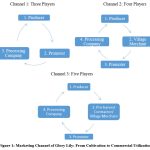 |
Figure 1: Marketing Channel of Glory Lily: From Cultivation to Commercial Utilization |
Farmers sell their glory lily through these different channels, which ultimately lead to the processing company. Upon analysis of these channels, it was found that farmers benefit more from channel I due to the reduced involvement of intermediaries compared to other channels. Marketing issues are major problems for glory lily farmers; it is the impact of their income. Ooddanchadram market is the biggest market in the State of Tamil Nadu; it is nearest to glory lily farming but did not have accessibility of this glory lily. The researcher has focused more on market issues with the help of mean score and rank, which are discussed as follows:
Table 14: Marketing Constraints of Glory Lily
| Constraints | Mean Score | Rank |
| Lack of co-ordination among producers to increase their bargaining power | 70.01 | I |
| Low price | 68.23 | II |
| Price Fluctuation | 67.88 | III |
| Inadequate Finance | 50.12 | IV |
| No Alternate Buyers | 48.98 | V |
| High Cost of Transport | 45.34 | VI |
It could be inferred from the table 11 that the lack of coordination was ranked 1st with a mean score of 70.01. Next to this, low price was in second position with a mean score of 68.23, and followed by other constraints such as price fluctuation (3rd), inadequate finance (4th), no alternate buyers (5th) and high cost of transport (6th) respectively.
Conclusion
The study highlights the potential prosperity of glory lily cultivation, despite the challenges faced by farmers. While there are various issues, the profitability of glory lilies exceeds that of other crop in study area. The farmers receive an average price of Rs. 1500 per kg for seeds, with many earning between Rs. 2000-3000. Over a span of four years, net returns amount to Rs. 2.29 lakh, with the second year being the most profitable. Various factors such as land area, input costs, irrigation, pricing, and marketing practices significantly influence farmers’ income. Addressing issues such as marketing inefficiencies and price volatility is critical for enhancing farmer income. Therefore, it is essential for the government to give more attention to the glory lily sector. Given its profitability and growth potential, it is highly likely that glory lily cultivation will continue to experience a positive trend in the coming years.
Acknowledgement
We would like to express our sincere gratitude to Ms. N. Arun Priya for her timely help during the data collection in the study area. We also extend our heartfelt thanks to the Ministry of Horticulture, Government of Tamil Nadu, for providing valuable information for rigorosus this research paper. Additionally, we thank all the sample respondents for generously sharing their time and field data.
Funding Sources
The authors received no financial support for the research, authorship, and/or publication of this article.
Conflict of Interest
The authors do not have any conflict of interest.
Data Availability Statement
This statement does not apply to this article.
Ethics Statement
This research did not involve human participants, animal subjects, or any material that requires ethical approval.
Informed Consent Statement
This study did not involve human participants, and therefore, informed consent was not required.
Permission to reproduce material from other sources
Not Applicable
Author Contributions
P. Satheswaran: Conceptualization, Methodology, Data Collection, Analysis, Writing – Original Draft.
M. Radhika: Writing, Review & Editing.
References
- Saravanan R, and Das M , Medicinal Plants Industry in India: Challenges, Opportunities and Sustainability, Medicinal Plants, 2024, 16(1), 1–14.
CrossRef - Ministry of Commerce & Industry and Government of India, “Export of Herbs and Herbal Products”,Answer to Lok Sabha Question No. 486,Document No. LS‑07‑01‑2019.
- Balaji P, Fernando N L M, Vidhyavathi A, Santhasheela M, Production and Marketing of Senna in Thoothukudi District of Tamil Nadu: Problems and Prospects, International Research Journal of Agricultural Economics and Statistics, 2016,7(1),29-33.
CrossRef - Kannan R and Rohini A, Economic Analysis of Production and Marketing of Gloriosa Superba L. in Tamil Nadu, International Journal of Chemical Studies,2019, 7(3), 4275-4278.
- Peranantham S, Manigandan G, and ShanmugamK, Fatal Gloriosa SuperbaPoisoning–a Case Report, International Journal of Medical and Pharmaceutical Science, 2014, 4(10), 21-24.
- Chatterjee and Ghosh, Gloriosa: A High Demanding Pharmaceutical Plant in Near Future, International Journal of Economic Plants, 2015, 2(12), 89-102.
- Government of India, Agricultural Census 2015-16 (Phase –I & II Report), Ministry of Agriculture and Farmers Welfare, 2020.
- Rao R V, Sahoo UK and De L C, Medicinal Plants Cultivation and Their Role in Rural Livelihood and Bioeconomy: A Review, Indian Journal of Agricultural Science, 2017, 87(5), 567-574.
- Sharma V, Joshi S, and Nair A, Pest and Disease Management in Glory Lily (Glariosa superba L.): Emerging Challenges and Practices, Journal of Medicinal Plants Research, 2021, 15(2), 56-62.
- Prusty B K, Patra H K and Das S, Cost-Benefit Analysis of Glory Lily (Glariosa superba L.), Cultivation in Tribal Regions of Odisha, Indian Journal of Agricultural Economics, 2021, 76(3), 392-398.
- Sundararajan K, Elumalai K, and Rani G (2022), Yield Variability and Economic Analysis of Glariosa superb Cultivation in Tamil Nadu, Indian Journal of Economic Botany, 2022, 47(2), 143-150.
- Datta S K, Marketing of Wild Medicinal Plants: Tribal Economy in India, Economic and Political Weekly, 2001, 36(38), 3598-3602.