


 PDF Downloads:
67
PDF Downloads:
67


Introduction
Migration involves a shift from ”low-paying, low-productivity” agricultural work to ”more productive” (and presumably better-paying) employment in industrial or non-farm sectors.1 Migration is not driven by economic factors alone; environmental change has also emerged as a significant and increasingly studied driver of population movement. Both sudden and gradual environmental changes have historically triggered various forms of displacement worldwide. But migration is typically influenced by a complex interplay of factors, and it is seldom attributable to a single cause such as climate change or other environmental pressures.2
Kerala, state of India has long experienced both inflows and outflows of population, with the Malabar Migration holding a particularly prominent place in its demographic history. Most contemporary out-migration from the state is international. But the Malabar Migration, which began in the early 1920s and tapered off by the late 1960s, was internal in nature—characterized by movement within the state. One of the most significant aspects of this migration was that the migrants primarily belonged to a distinct socio-economic group: peasant farmers. A large number of agrarian families from the former princely state of Travancore migrated and resettled in the erstwhile Malabar district of the Madras Presidency.3 A unique feature of this migration was its community-based character. Groups of homogenous people—often extended kinship networks—migrated together in search of better livelihood opportunities.4
Among these migrants were the Syrian Christians, followers of St. Thomas the Apostle, who represent a prominent community deeply rooted in agricultural traditions and known for their pioneering spirit. Many of them settled in the highlands of Malabar and Idukki, transforming once-forested terrain into thriving agricultural zones.5 Today, however, these communities are increasingly being forced to abandon their hard-earned assets- a disheartening reversal. Confronted with shrinking agricultural viability, recurring wildlife intrusions and inadequate support systems, many are relinquishing the very lands their forebears once cultivated.6 While the original migration was propelled by the promise of opportunity, the current exodus is driven by despair and systemic neglect. Reverse migration in Kerala’s highlands is happening because farming, once productive, has become unsustainable. When examining the economic dimensions more closely, anthropological evidence accumulated over the past several decades suggests a more nuanced picture.7 This paper seeks to understand how these intertwined factors are influencing the reverse migration of agrarian communities in Kerala’s highlands, and to explore the socio-economic challenges faced by those undergoing this transition.
The literature combines historical narratives, sociological, and economic perspectives to examine the drivers and impacts of migration, situating the discussion within broader environmental, policy, and sustainability challenges affecting agriculture and rural livelihoods in Kerala.
The Malabar migration, occurring between the late 1920s and early 1960s, was a major demographic and socio-economic transformation in Kerala, involving the movement of Syrian Christian peasants from Travancore and Kottayam to the Malabar highlands. This migration, documented in The Exodus from Travancore to Malabar by K. G. Sivaswamy,8 was driven by harsh living conditions in the source regions, including disease, food shortages, and limited economic opportunities.
Migration led to significant changes in land use, particularly in Kannur district. Joseph⁹ analyzes this shift using indicators such as TCA (Total Cropped Area), NAS (Net Area Sown), CWL (Cultivable Waste Land), showing that post-migration land use followed Ricardian rent principles driven by economic rationality. Similarly, Retna Raj¹⁰ examines changes in agricultural practices and social relations, highlighting both migration push factors and evolving attitudes of native farmers. Tom¹¹ further interprets the Malabar migration as a mass peasant movement, emphasizing the broader push–pull dynamics and underlying socio-economic processes.
Over time, the highlands became increasingly unsuitable for agriculture due to environmental degradation, terrain changes, climate variability, and frequent disasters, leading to reverse migration. This refers to the movement of former migrants and highland farmers back to lowland, urban, and semi-urban regions in search of stability and better opportunities.12 Reverse migration has emerged from the growing unsustainability of a once-productive agrarian sector.
The drivers and impacts of reverse migration are complex. Mahajan and Majumdar¹³ identify wildlife conflict, declining productivity, and climate uncertainty as key factors, situating these within global trade and environmental policy dynamics. From a policy perspective, Ashok et al.14 propose measures such as a legal MSP for select crops and expanded MGNREGA support. Mani¹⁵ and the Economic Survey of Kerala16 further highlight challenges related to cropping patterns, productivity, forestry degradation, and human-wildlife conflict, alongside state-led strategies for sustainable development and conservation under the 14th Five-Year Plan.17
Journalistic sources also highlight the reverse migration trend. Articles such as Reverse Migration in Hilly Areas¹¹ and Malabar Migration: Is the Dream Coming to an End?¹⁷ document the movement from highlands to urban and semi-urban areas, driven by soil degradation, ecological decline, crop diseases, wildlife conflict, and structural constraints like land fragmentation. In this context, the study examines the key drivers of migration among highland farmers, with particular focus on human-wildlife conflict and the economic impacts of declining agricultural productivity.
In line with the study’s focus on highland migration trends, the following objectives have been formulated to guide the investigation:
To analyse the drivers of agrarian exodus and reverse migration in Kerala’s highlands.
To assess the socio-economic and environmental challenges faced by the farming communities.
Materials and Methods
This exploratory study adopted a mixed-methods approach, integrating quantitative surveys, qualitative interviews, and historical-comparative analysis to examine the underlying factors contributing to reverse migration among highland farmers in Kerala.
The research was conducted in three geographically adjacent and agro-ecologically similar panchayats in Kozhikode district—Koorachund, Chakkittapara, and Maruthonkara. These locations were purposively selected due to their notable history of agrarian migration, high incidence of human-wildlife conflict, and ongoing agricultural distress. The historical relevance gets highlighted by the centenary of the first large-scale settlement by migrant farmers in the region, while the ecological significance lies in the degradation of natural habitats and the frequency of wildlife incursions-such as the 2024 wild boar attack in Kakkayam (Koorachund Panchayat).
The sampling frame comprised the list of registered and active farming households obtained from local Krishi Bhavans and panchayat records. To ensure representativeness and geographical diversity, the study adopted a stratified random sampling technique with proportional allocation. The three panchayats served as distinct strata. Within each stratum, respondents were selected using simple random sampling. This technique was chosen to capture intra-stratum homogeneity and inter-stratum diversity while minimizing selection bias.
A total of 139 farming households were surveyed, with the sample size determined based on proportional representation of farming populations in each panchayat and considerations of field feasibility. The respondents primarily belonged to the second and third generations of Syrian Christian farmers who had migrated from Travancore and Kottayam regions. The proportional allocation ensured that each panchayat’s demographic weight was reflected in the sample, enhancing the generalizability of the findings within the regional context.
The quantitative component involved the administration of structured questionnaires designed to capture demographic details, landholding patterns, cropping choices, incidence of wildlife conflict, migration history, and levels of livelihood satisfaction Data was analyzed using descriptive statistics and correlation matrices to identify patterns and relationships between migration-related variables. Regression analysis was employed to examine the influence of independent variables such as age and income on occupational mobility and migration decisions. The qualitative component consisted of semi-structured interviews conducted with a purposive sub-sample of respondents to gain deeper insight into farmers’ personal experiences, perceptions of risk, historical memory, and adaptation strategies. These narratives were used to the quantitative findings.
Further, the study applied comparative historical analysis to trace shifts in land use, household labor patterns, and migration motivations over time. Secondary data sources-including agricultural reports, census documents, and published studies-were used to contextualize current trends within Kerala’s larger socio-economic and environmental framework.
Results and Discussion
This study undertook an integrated economic and environmental analysis of the highland exodus in Kerala. It examined the current socio-economic conditions of migrant farming communities, their adaptive strategies, and the historical route of their migration. By exploring the interplay of agrarian distress, environmental degradation, and socio-political challenges, the study sought to uncover the root causes of continued displacement and instability. The findings offered critical insights into the long-term consequences of migration on agrarian livelihoods, economic resilience, and the preservation of cultural identity among these communities.
Demographic Characteristics and Occupational Trends of Respondents
The study surveyed 139 respondents from three highland panchayats in Kozhikode district-Koorachund (46), Maruthonkara (46), and Chakkittapara (47)-representing the second and third generations of migrated Syrian Christian peasants. The age distribution remained relatively balanced across categories. Table 1 indicated that agriculture and allied activities remain the primary occupation across all age groups, engaging over 70 per cent of respondents. However, younger cohorts-particularly those aged 30- 40 years showed relatively higher participation in the service sector, with minimal engagement in daily wage labor across the sample.
Despite this transition, no respondent expressed willingness to sell or permanently abandon ancestral agricultural land. Even among those primarily engaged in non-agricultural occupations, land continued to be cultivated or retained as a supplementary source of income. The continued ownership and use of ancestral land highlight both a strong cultural attachment to agrarian heritage and the role of land as a strategy for income diversification and security. Household profiles revealed that most families consisted of five to seven members across three generations, underscoring the persistence of joint family systems. This also illustrated the resilience of traditional rural social organization, suggesting that demographic and cultural continuities remain deeply embedded within processes of economic transformation.
Table 1: Age and Occupational Distribution (%)
| Age group (years) | Agriculture& allied activities | Service sector | Business | Daily wages | Total |
| 30-40 | 69.70 | 21.21 | 9.09 | 0.00 | 100.00 |
| 40-50 | 70.59 | 20.59 | 8.82 | 0.00 | 100.00 |
| 50-60 | 70.59 | 20.59 | 8.82 | 0.00 | 100.00 |
| 60-70 | 71.05 | 15.79 | 10.53 | 2.63 | 100.00 |
| Total | 70.50 | 19.42 | 9.35 | 0.72 | 100.00 |
To further examine the relationship between age and occupational choice, a multinomial logistic regression was conducted. The analysis confirmed a statistically significant association between age and occupation (p-value = 5.566e-07). The regression results indicated that older individuals, particularly those in the 60–70 years age group, have a significantly higher likelihood of being engaged in agriculture compared to other occupational categories. In contrast, younger respondents, especially those below 40, were more likely to be employed in the service sector, while the middle-aged group (40–50 years) showed a mixed distribution across agriculture and services
Table 2: Duration of Residency (%)
| Duration | Percentage |
| 30-40 years | 1.45 |
| 40-50 years | 19.57 |
| 50-60 years | 40.58 |
| 60-70 years | 31.88 |
| 70-80 years | 6.52 |
| Total | 100.00 |
The residency data supported demographic pattern. A substantial majority (over 72%) of respondents resided in the area for 50–70 years, reflecting deep-rooted settlement and strong community ties. This long duration of residency suggested that the local population is predominantly ageing, with older households continuing in agriculture and preserving traditional land-based identities. The very low proportion of residency among those in the 30- 40 years range indicated weak retention of younger generations, likely driven by out-migration and declining birth rates. Taken together, the regression findings and residency data point to an ageing agrarian society in the study.
Migration Dynamics
Dynamics of migration from Travancore to the highland regions of Malabar and Idukki emphasised on land acquisition and the evolution of landholding structures Available records indicated that the peak period of migration occurred between 1950 and 1960, with notable flows also visible during the 1940s and 1970s. The migration of agrarian communities, predominantly Syrian Christian peasants, unfolded in two distinct phases.
The first phase, beginning in the early 1920s, was driven by the availability of fertile land at relatively low prices in the hilly tracts of Malabar. Settlers, particularly from densely populated regions such as Kottayam, were drawn by the prospects of agricultural expansion. The second phase, commencing in the 1940s, accelerated under the socio-economic disruptions of World War II and the Indian independence movement. Widespread poverty and food insecurity emerged as critical push factors during this period. Historical accounts attributed the earliest organized migration to Joseph Palakattel,18 who lead a group of settlers in 1930.
These patterns reflect a migration process shaped by both opportunity and distress. While the initial phase was largely opportunity-driven, centered on land availability and prospects of agrarian growth, the later phase reflected a more complex interplay of structural poverty, food insecurity, and socio-political transformations. Across both phases, the search for cultivable land and the aspiration for an improved standard of living remained the dominant motivations. A survey-based analysis of migrant households identified the key factors influencing migration decisions, as shown in Table 3:
Table 3: Reasons for migration from Travancore
| Rank | Reasons | Percentage |
| 1 | Availability of fertile land | 88.57 |
| 2 | Cheaper land price in the area | 82.86 |
| 3 | Suitable area for cultivation of cash crops like rubber, species etc., | 74.29 |
| 4 | Presence of Syrian Christian settlers | 60.00 |
| 5 | Similar conditions as in Kottayam | 54.29 |
| 6 | Easy access to local markets and urban centers | 5.71 |
| 7 | Land reform movements | 2.86 |
Agrarian incentives remained the dominant force shaping migration patterns. The availability of fertile, affordable land and the potential to cultivate high-value crops such as rubber, cardamom, and pepper act as strong pull factors. Cultural continuity and the presence of co-religionist settlers further consolidated migration decisions, underscoring the interplay between economic opportunity and social networks. Land acquisition in Malabar initially took place through Janmi (landlord–tenant) transactions. It reflected the persistence of feudal ownership structures, but gradually shifted toward direct purchases, marking a transition to private ownership and market-based transfers.
Post-migration landholding patterns revealed considerable dynamism, with 58.27 per cent of respondents reporting changes in land size. These variations arose from inheritance, subdivision, market purchases, and state interventions. By contrast, the stability reported by some households pointed to the security provided by established ownership rights, sustained cultivation, and the absence of external pressures to divest. Together, these trends highlight how agrarian incentives and evolving ownership practices underpin both the continuity and transformation of landholding structures in the highland settlements. Changes in land size- both increases and reductions have been illustrated in Table 4:
Table 4: Reasons for increase and decrease in land size
| Ranking | Reasons for Increase | Percentage | Reasons for Decrease | Frequency |
| 1 | Expansion due to increased income | 55.56 | For marriage purposes | 41.38 |
| 2 | For expansion of agriculture | 40.74 | Indebtedness | 29.31 |
| 3 | To increase wealth | 17.28 | Government policies | 8.62 |
| 4 | _ | _ | For treatment of diseases | 6.90 |
The data showed that rising income levels and agricultural expansion were the primary drivers of land acquisition. Respondents with stable or increasing incomes frequently reinvested their earnings in additional land, aiming to expand agricultural operations or diversify holdings. Land reductions were commonly associated with familial obligations such as dowries and marriage settlements, reflecting prevailing socio-cultural norms. Financial distress also emerged as a major cause of land loss, with loan repayment and debt servicing cited as key pressures. In addition, state-led land acquisition for infrastructure projects and health-related emergencies contributed to further fragmentation and ownership decline.
These patterns suggest that migration from Travancore to Malabar and Idukki is shaped by a convergence of economic opportunity, agrarian hardship, and social networks. Post-migration landholding structures remained highly dynamic. It showed both the potential for upward mobility through reinvestment and the persistent vulnerabilities arising from cultural obligations, indebtedness, and policy interventions. The findings highlighted the dual nature of agrarian resettlement, where opportunity and risk coexist within the evolving landscape of land ownership.
Economic factors
The analysis of income distribution showed that most respondents fell within the lower- and middle-income ranges. A significant share earned between ₹50,000 and ₹1,00,000 annually, while many were concentrated in the ₹1,00,000–₹3,00,000 bracket, forming a modest middle-income segment. Only a small fraction report incomes between ₹3,00,000 and ₹5,00,000. This emphasizes the limited presence of higher earnings and the concentration of households within modest income groups.
The primary drivers of income change were raising agricultural expenses, escalating labour costs, crop diseases, and declining output prices. Farmers faced mounting input costs for fertilizers, seeds, machinery, and pesticides, while wage demands and the shortage of skilled workers further constrained the productivity. Wildlife incursions and falling market prices reduced the returns, and inadequate state support deepened financial insecurity. Although a small number of respondents cited climate change, structural constraints remained the dominant challenge. These pressures illustrated the precarious nature of agrarian livelihoods in the highlands and economic insecurity as a central factor driving migration away from agriculture.
Table 5: Major Reasons for Changes in Farming Income (Last 10 Years)
| Rank | Reason | Percentage |
| 1 | Increased agriculture expenses | 88.9 |
| 2 | Increase in crop disease and pest attacks | 86.1 |
| 3 | Labour expenses | 80.6 |
| 4 | Increase in animal attacks/ intervention | 80.6 |
| 5 | Reduction in price of agricultural commodities | 59.7 |
| 6 | Reduction in skilled labour | 54.2 |
| 7 | Reduced government support | 36.1 |
| 8 | Climatic change | 1.4 |
| 9 | Loss in agriculture (no income progressions) | 1.4 |
| 10 | Increased price for agriculture production | 1.4 |
Escalating agricultural costs, including input prices, labour charges, and operational expenditures, have directly reduced farmers’ disposable income, thereby limiting opportunities for productive investment. A considerable proportion of respondents emphasized that inadequate investment in agriculture, such as lack of modern technology, efficient irrigation systems, and quality inputs, has constrained productivity and profitability. This financial constraint impeded the adoption of improved farming practices and reduces income stability. Declining savings, in turn, reflected the combined impact of higher expenses and low investment returns. The absence of adequate financial security further restricted the capacity of farmers to reinvest in productive activities, heightening their vulnerability to economic shocks and diminishing their resilience.
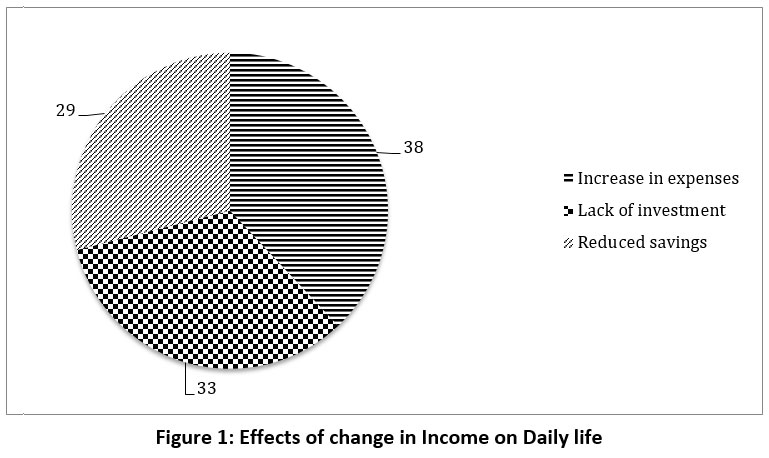 |
Figure 1: Effects of change in Income on Daily life |
Agricultural and Environmental Challenges
The analysis highlighted the major environmental challenges confronting farmers in the highland region. Human-wildlife conflict and unpredictable weather conditions emerged as the most critical factors. Erratic rainfall patterns created uncertainty in agricultural planning. A majority of respondents also reported increasing wildlife incursions, with animals damaging crops, destroying livestock, and forcing households to invest heavily in protective measures. Pest attacks and crop diseases add further strain, requiring higher spending on pesticides and control strategies. The combined effects of erratic rainfall, wildlife conflict, and pest prevalence not only weaken household resilience but also threaten long-term food security.
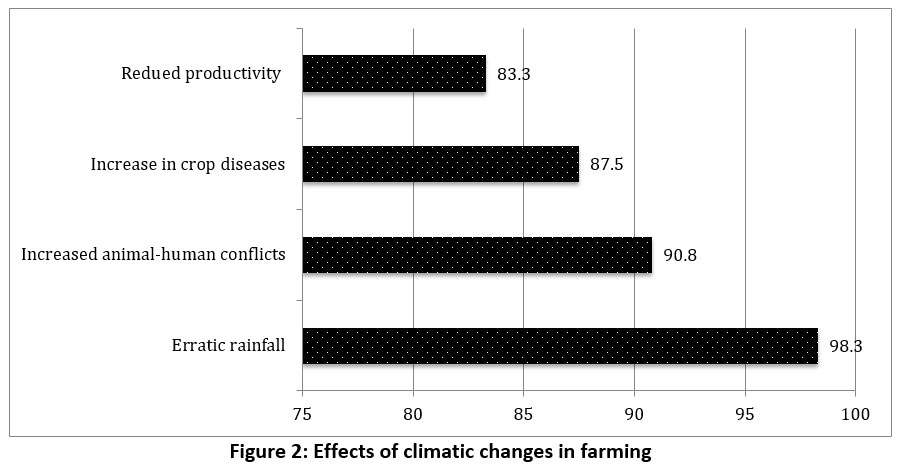 |
Figure 2: Effects of climatic changes in farming |
The most frequent environmental issue reported was human-wildlife conflict. The encroachment of animals into farmlands led to significant crop destruction, loss of livestock and increased costs for protective measures. This not only reduced productivity but also increased financial burden of farmers. The erratic rainfall patterns, including unseasonal and excessive rainfall, disrupt traditional farming cycles. Lack of predictable rainfall worsened agricultural planning, leading to uncertainty in income generation. The prevalence of pest attacks is also a critical concern, reducing both quantity and quality. Repeated pest infections lead to declining yields and financial loss.
Table 6: Environmental issue faced by Respondents
| Rank | Environmental issues | Percentage |
| 1 | Human-wildlife conflicts | 95 |
| 2 | Inappropriate rainfall | 85 |
| 3 | Pest attacks | 82 |
| 4 | Unpredictable weather conditions | 73 |
From the analysis of human-wildlife encounters, half of the respondents experienced wild animal encounters daily. This suggested that human-wildlife conflict was a persistent and serious issue in the area. Regular exposure to wild animals can lead to frequent crop destruction, loss of livestock and potential threats to human safety. A large proportion of respondents have reported about animal encounters multiple times a week. Even though it was not severe as daily encounters, this frequency still indicates a high level of wildlife intrusion into human settlements, requiring intervention strategies such as fencing, deterrents and better conservation policies.
Table 7: Frequency of Wildlife Encounters
| Frequency of encounters | Percentage |
| Daily | 48.2 |
| Twice or thrice a week | 36.7 |
| Once in a week | 10.1 |
| Fortnight | 5.0 |
| Total | 100.0 |
The list of major animals that possess threat to the livelihood included wild boar, snakes, peacocks, monkey, elephant, India guar etc. The wild boars were the primary creatures responsible for crop destructions, likely due to their high population density, adaptability, and tendency to raid crops like roots, grains and crops. The presence of snakes did not possess direct threat to the crops but reflected as safety risk. Peacocks often targeted grains and vegetables, while monkey raided coconut and arecanut palms. The official data of Department of Forest in Kozhikode district circle suggested the number of deaths, due to human-wildlife conflict in 2023 were 4 while 51 individuals were injured
Findings from the study indicated that wildlife-related crop losses were substantial and recurrent. Nearly half of the respondents (46.04%) reported annual crop damage valued between ₹10,000 and ₹50,000. This suggested frequent wildlife intrusions causing significant, though not catastrophic, losses. A further 35.97 per cent experienced higher losses ranging from ₹50,000 to ₹1,00,000 per year, pointing to severe and recurring human-wildlife conflict in certain areas. Smaller losses of ₹1,000 to ₹10,000 were reported by 17.99 per cent of respondents. This reflected underreporting of minor damages or the effectiveness of mitigation measures in limiting small-scale intrusions.
Dynamics of Exodus
The dynamics of exodus reflected both the motivations driving movement to urban and semi-urban areas and the reasons some individuals remain in rural settings. A majority of respondents preferred to stay in rural areas, citing family ties, land ownership, and local employment opportunities. Around 40 per cent expressed a clear intention to migrate, driven by rural distress, declining agricultural profitability, and the search for non-agricultural employment. A small group, about 5 per cent, remain undecided, reflecting uncertainty shaped by economic and social conditions. As one respondent noted: “We spend more than we earn. My children tell me to stop farming, but this land is all I have.”
The ranking of factors revealed a generational divide. Migration is strongest among the youth, who leave for education, employment, and improved living standards. Over half of the respondents pointed to better infrastructure, healthcare, and education as key attractions. Concerns over safety and security, including natural disasters, political instability, and human-wildlife conflict, also influenced decisions. Economic hardship was a recurring theme. It drew attention to the financial strain of farming. At the same time, the reasons for staying were rooted in necessity and attachment. Many reported having no viable livelihood outside agriculture, while others expressed satisfaction with their current lifestyle. These responses suggested that migration decisions are shaped more by compulsion than choice, reflecting the tension between rural distress and the pull of urban opportunity.
Table 9: Intentions of Movement
| Rank | Reasons for movement | Percentage | Reasons for not moving | Percentage |
| 1 | Migration of younger generation | 64.5 | No other means of living | 82.0 |
| 2 | Better standard of living | 51.6 | Satisfied with current situation | 34.5 |
| 3 | More safe and secure place to live | 38.7 | Better income | 10.1 |
| 4 | Reduction in agricultural prices | 30.6 | _ | _ |
The level of satisfaction of the respondents included that the majority of them were neutral or somewhat satisfied (54.7 per cent). They felt they were economically stable but not completely secure. A large proportion of the respondents expressed satisfaction with their economic situation. This suggested some level of economic resilience, possibly due to stable income sources or cost—of-living in their current location. Very few indicated outright dissatisfied.
The density plot showed how satisfaction scores were distributed. There was a clear peak around score 3. The distribution was slightly right-skewed, meaning there were some higher satisfaction scores pulling the distribution to the right. The average satisfaction score was about 3.16, confirming most responses clustered around this value. The standard deviation was 0.45. The analysis thus suggested that while most respondents reported moderate satisfaction levels (around 3), those with higher incomes tend to report slightly higher satisfaction scores. The relationship with age was less pronounced but still slightly positive.
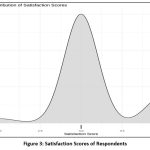 |
Figure 3: Satisfaction Scores of Respondents |
The correlation matrix visually represents the relationship between three variables via; satisfaction score, age numeric and income category. The values inside the matrix indicate the correlation coefficients, which measures the strength and direction of relationships between the variables.
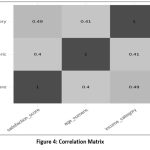 |
Figure 4: Correlation Matrix |
The key observations included the following;
Satisfaction score vs. income category (0.49)
There was a moderate positive correlation suggesting that as income increases, economic satisfaction tends to increase. This aligns with the general expectation that higher income leads to greater satisfaction.
Satisfaction score vs. age numeric (0.40)
There was a weaker but still positive correlation indicating that older individuals tend to have slightly higher satisfaction levels. This might be due to increased financial stability or reduced expectations over time.
Age numeric vs. income category (0.41)
There was a moderate positive correlation suggesting income tended to increase with age. This was a common trend as people progressed in their careers and accumulated wealth over time.
All the variables showed positive correlations, meaning that as one variable increases, the others tend to increase as well. The strongest relationship was between satisfaction and income, indicating that economic well-being plays a significant role in individual satisfaction. The weakest correlation was between age and satisfaction, meaning that age alone was less significant satisfaction compared to income.
Summary and Conclusion
The agrarian exodus and reverse migration in Kerala’s highlands reflected the combined pressures of declining agricultural productivity, escalating input costs, and persistent human-wildlife conflict. These challenges were compounded by deeper systemic issues, including ecological degradation, market fluctuations, and the absence of robust institutional support. The generational divide, where younger cohorts increasingly turned to non-farm sectors, further emphasized the weakening continuity of agrarian livelihoods.
Addressing these concerns require more than short-term relief. Climate-resilient farming, sustainable land-use planning, and effective wildlife conflict mitigation are essential for ecological and livelihood security. At the same time, policies such as guaranteed price support, subsidized inputs, expanded MGNREGA, and investments in agro-processing can revitalize rural economies. Strengthening infrastructure, healthcare, and education could reduce distress-driven migration while creating viable opportunities within highland communities. By integrating environmental stewardship with socio-economic equity, Kerala can stabilize its agrarian base and curb the trend of reverse migration, ensuring a more sustainable and inclusive model of rural development.
Acknowledgment
We sincerely acknowledge the Department of Economics, St. Teresa’s College, Ernakulam, for their constant support and encouragement throughout the course of this study. Their academic guidance and institutional backing played a vital role in shaping this research.
Funding Sources
The authors received no financial support for the research, authorship, and/or publication of this article
Conflict of Interest
The authors do not have any conflict of interest
Data availability statement
The manuscript incorporates all datasets produced or examined throughout the research study. All relevant data are included within the article.
Ethics Statement
This research did not involve any experiment of human participants, animal subjects or any material that requires ethical approval.
Informed Consent Statement
This study did not involve any experiment of human participants, and therefore, informed consent was not required.
Permission to reproduce material from other sources
Not Applicable
Author Contributions
Treesa Siby- Conceptualization, methodology, data collection , analysis , writing of the original draft
Anupa Jacob– Supervision, review, editing and revision of the manuscript
References
- Chauhan TS, Gopalakrishnan S, Selvaraj M. Fleeing the Hills: The Impact of Migration on India’s Mountain Areas. 2016.
- Ou-Salah L, Van Praag L, Verschraegen G. The role of environmental factors and other migration drivers from the perspective of Moroccan and Congolese migrants in Belgium. Comp Migr Stud. 2022;10(36). doi:10.1186/s40878-022-00327-3
CrossRef - Joseph KV. Migration and Economic Development of Kerala. Mittal Publications; 1988.
- Praveenkumar P, Karunakaran N. Pattern of occupational shift among Malabar migrants: A case study of Kallar Grama Panchayath in Kerala. J Manag Res Anal. 2024;11(3):189-191. doi:10.18231/j.jmra.2024.041
CrossRef - Bayly S. Saints, Goddesses and Kings: Muslims and Christians in South Indian Society, 1700–1900. Cambridge University Press; 1989.
CrossRef - Mohanakumar S, Sharma RK. Analysis of farmer suicides in Kerala. Econ Polit Wkly. 2006;41(16):1553-1558.
- de Haan A, Rogaly B, eds. Labour Mobility and Rural Society. Frank Cass; 2002.
- Sivaswamy KG. The Exodus from Travancore to Malabar. 1992.
- Joseph JV. Malabar migration and its impact upon the land utilisation pattern in Kerala. J Emerg Technol Innov Res. 2019;6(4).
- Raj MR. Patterns of Social Change Among the Migrant Farmers of Kannur District: A Case Study. Centre for Development Studies; 2003.
- Tom R. Reading across Malabar migration: Experiences from Malom. J Emerg Technol Innov Res. 2019;6(6):596.
- Mathew R. Reverse migration in hilly areas. The Hindu. November 23, 2023.
- Mahajan A, Majumdar K. Impact of environmental tax on comparative advantage of food and food products: A study of G20 countries in light of environmentally sensitive goods. Indian Econ J. 2021;69(4):705-728. doi:10.1177/00194662221097853
CrossRef - Ashok G, Roy R, Juneja R, Prasad MK. A New Deal for Agriculture: Towards Viksit Bharat @2047 – Agricultural Policy and Sustainability. NITI Aayog; 2022.
- Mani KP. Performance of Agriculture in Kerala. 2020.
- Kerala State Planning Board. Economic Review 2022–23: Volume I. Government of Kerala; 2023.
- Mathew R. Malabar migration: Is the dream coming to an end? The Hindu. January 7, 2020.
- Elikkutty NV. Ishtikakal [Malayalam edition]. Kindle ed. 2024.