


 PDF Downloads:
71
PDF Downloads:
71


Introduction
Background on Global Entrepreneurship or International Entrepreneurship
International entrepreneurship, as defined by McDougall and Oviatt, encompasses innovative, proactive, and risk-seeking behaviors that transcend national boundaries to generate value within organizations. It involves launching and managing businesses across multiple countries while necessitating a comprehensive understanding of diverse cultures, legal systems, and market dynamics.1
Key to this venture is the ability to forge relationships with local stakeholders and navigate complex regulations, alongside leveraging a robust digital presence to engage global customers.1 Recent research indicates that the sophistication of entrepreneurial activities is positively correlated with economic development, suggesting that strengthening institutional frameworks is crucial for maximizing entrepreneurial resources.2
Additionally, advanced technologies are transforming how multinational firms manage global value chains. These technologies enhance performance and foster trust within business networks while also confronting global challenges such as sustainability.3
Importance of Small-Scale Farming in Global Markets
Small-scale farming is vital for global food security, with smallholder production estimated to account for 50–70% of global food production.4 Indeed, smallholder farms of two to five hectares produce 46% of the world’s food on about one-third of agricultural land, playing a key role in producing essential global agricultural products like rice, peanuts, coffee, cocoa, bananas, and tea.5
In rural areas, approximately 90% of the population engages in farming as a livelihood, relying on small-scale farming, fishing, raising livestock, and non-farm activities. However, these populations often face significant poverty challenges, and households with diverse income sources are more likely to survive financially than those relying on a single source.6
Additionally, small-scale family farms are inherently environmentally sustainable7 and are particularly critical in developing countries, where they produce up to 70% of locally consumed food, contributing to dietary diversity and nutritional security. For example, small-scale farmers in Egypt—who represent 28% of the workforce—encounter obstacles such as high input costs and limited market access, yet their contributions remain essential for local food security.8
These global patterns highlight how small-scale producers operate within increasingly internationalized value chains, making entrepreneurship and market adaptability essential for their growth. Tea, as a globally traded commodity, illustrates this intersection particularly well, especially in regions like Assam where small growers contribute significantly yet remain distant from international markets.
Purpose and Significance of the Study
Assam tea, a globally renowned export, faces minimal direct marketing involvement from the small tea growers (STGs) in the international market, and limited research exists on their challenges and potential.
This study seeks to explore the entrepreneurial journeys of three small tea industry entrepreneurs, focusing on their family dynamics, personal traits, motivations for global expansion, and the benefits and challenges of operating internationally. By detailing their experiences, the research aims to enhance understanding of the interplay between family influence and personal characteristics in business success.
Ultimately, the findings will highlight the strategic need for adaptation to international markets and identify areas for improvement to boost the global competitiveness of Assam’s tea entrepreneurs.
Literature Review
Overview of Existing Research on Global Entrepreneurship
Entrepreneurship has been extensively defined and conceptualized within academic literature, with A.H. Cole (1959) establishing it as the deliberate activity of individuals or groups aimed at creating and sustaining profit-oriented business ventures that produce and distribute goods and services. This foundational definition has given rise to critical discussions regarding the significance of growth as a defining characteristic of entrepreneurship.9
Young entrepreneurs have been identified as increasingly advantageous due to their propensity for risk-taking, capacity to learn from failures, and the practical experiences they accumulate.10 Additionally, the influence of family support and values is recognized as pivotal in shaping entrepreneurial endeavours, functioning as positive educational models that enhance human and social capital.11 Factors contributing to entrepreneurial success often include essential personal traits such as self-efficacy, conscientiousness, locus of control, need for achievement, and innovativeness.12 The discourse surrounding the value of formal education in entrepreneurship, particularly within the Indian context, remains contentious given that some successful entrepreneurs thrive without traditional educational backgrounds.13
In the realm of agricultural entrepreneurship—referred to as Agripreneurship—research indicates a substantial contribution to rural economic development, encompassing both production and marketing of agricultural products.14 The acknowledgment of smallholder agriculture’s role in economic growth underscores the potential of market-oriented agricultural strategies as a key outcome of Agripreneurship 15.
The emergence of global entrepreneurs (GE) marks a significant shift in the entrepreneurial landscape, where these actors engage in innovative and international business activities from the outset.16 This phenomenon deviates from the conventional Uppsala2 model, which posits a gradual domestic-to-international expansion, instead highlighting the “born global” entrepreneur model. International entrepreneurs (IE) now integrate insights from both international business and entrepreneurship.17 Motivations for cross-border engagement comprise defensive strategies to maintain competitiveness and offensive strategies to explore new product opportunities and capitalize on cross-border advantages.18
The benefits of international expansion for entrepreneurs are categorized into three dimensions: strategic, financial, and production-related advantages.18 The post-COVID-19 era has redefined entrepreneurship as a creative and innovative endeavour capable of unfolding on a global scale.19 characterized by a focus on opportunity identification and resource utilization worldwide.20 Nevertheless, GEs confront challenges associated with distance, contextual differences, and resource limitations, necessitating core competencies in establishing a global purpose, forming strategic alliances, coordinating supply chains, and managing multinational organizations.18
The role of small businesses in global trade
The increasing recognition of small businesses, particularly small and medium-sized enterprises (SMEs), reflects their significant contributions to global trade and economic development. Research indicates that SMEs dominate both manufacturing and service sectors, accounting for over 55% of GDP, 50% of exports, and more than 65% of total employment in high-income countries.21 This substantial presence highlights their crucial role in diversifying trade portfolios and enhancing competitiveness in international markets.22, 23
One key advantage of SMEs is their adaptability and ability to foster close customer relationships, allowing them to differentiate successfully in niche markets.24 This agility enables SMEs to respond to market changes and drive innovation at a pace often outstripping larger firms.25 Furthermore, SMEs are uniquely positioned to embrace transformative sustainability practices that promote environmental, social, and economic resilience.26
Despite their advantages, SMEs face several challenges in penetrating global markets, including limitations in technology, cultural and social differences, complex regulations, and hurdles in international marketing.27 Access to finance remains a significant barrier, as SMEs often encounter difficulties securing credit due to asymmetric information, elevated default risks, and insufficient collateral, rendering them more vulnerable than larger enterprises.28
In conclusion, the integration of small businesses into global trade networks is essential for fostering inclusive economic growth. This necessitates the implementation of supportive policies and resources aimed at enhancing their capacity and facilitating market access.29
Empowering Small Tea Growers of Assam: Overcoming Challenges and Exploring Global Opportunities
The tea industry in Assam, a vital component of India’s economy for nearly 200 years, produced approximately 655.36 million kg of tea in 2022-23, accounting for nearly half of the nation’s total production (1370.83 million kg).30 This sector generates significant foreign exchange earnings, around USD 361 million, and employs about 1.2 million workers.31 A crucial player in this landscape is the Small Tea Growers (STGs), who contributed 332.08 million kg, representing 50.67% of the state’s production in 2022-23.30
STGs provide direct employment to approximately 0.3 million labourers and support nearly 1.5 million families.32 Since their inception in 1978, with just 16 units, STGs have expanded to 144,222 units across 22 districts, utilizing 809.48 million m2 33. This growth is fuelled by local youth entrepreneurship, who have utilized private lands and previously underused Public Grazing Range (PGR) areas to cultivate tea.34
However, the sector faces challenges, including a saturated domestic market and fluctuating tea prices.35 To overcome these hurdles and enhance earnings, it is essential for STGs to focus on increasing tea prices through trade promotions and to explore new international markets such as Turkey, Saudi Arabia, and Iraq 36. Additionally, the establishment of 260 Bought Leaf Factories (BLFs), processing around 50% of the green leaf produced by STGs, demonstrates significant potential for development.37, 38
Finally, leveraging initiatives like the Export and Logistics Policy 2019 (ELP) can simplify processes and foster efficient coordination with stakeholders, ensuring that Assam’s small tea growers are well-equipped to navigate challenges and seize global opportunities. 39
Methodology
This study is a purely theoretical qualitative investigation that employed a conceptual and interpretive approach. It involved conducting in-depth telephonic interviews with three STGs from Assam, who were randomly selected from an STG database and met specific criteria, such as originating from small plantations and actively engaging with international markets. The decision to select only three STGs was guided by the exploratory nature of this research, where the objective was to gather rich, in-depth insights rather than achieve statistical generalization. Since no significant academic research exists on small tea growers from Assam selling their products globally, and because government databases do not contain official information on such exporters, a small but information-rich sample was methodologically appropriate and credible. These participants were chosen using purposive sampling, a technique widely used in qualitative research to identify information-rich cases relevant to the research objectives 40,41. Information about these three entrepreneurs was obtained through personal references and networks within the grower community, including recommendations from other small tea growers familiar with their international activities. To enhance reliability, the selected growers belonged to a Tea Cluster3 recognized by the Government of India.42 Additionally, WhatsApp was used to collect photographs and product details of the teas they sold globally, serving as supplementary verification of their export-related activities.
The interviews followed a semi-structured format, allowing for flexibility while ensuring consistency across participants.43 Each interview lasted approximately 45–60 minutes and was conducted in Assamese or English, depending on participant preference.44 The interview guide was divided into thematic sections covering (a) personal and family background, (b) motivations for entering tea cultivation, (c) key entrepreneurial traits and decision-making processes, (d) experiences with international markets, (e) challenges faced during internationalization, and (f) future growth aspirations. Sample guiding questions included: “What motivated you to expand your tea business toward international markets?”, “How do you perceive risk in your entrepreneurial decisions?”, and “Can you describe major challenges faced during export-oriented activities?”
All interviews were audio-recorded with consent and transcribed verbatim, then deleted by the researchers at the interviewees’ request. The study used a thematic analysis approach, following steps such as familiarization, initial coding, theme development, theme refinement, and interpretation.45 Coding was done manually to enable close engagement with the data, which focused on identifying recurring patterns related to entrepreneurial motivations, personal characteristics, family influences, and internationalization strategies.46 Themes were refined iteratively to ensure alignment with the theoretical framework of international entrepreneurship.
Limitations
This study acknowledges several limitations. First, the small sample size limits generalizability; however, it remains appropriate for a qualitative exploratory context where the goal is depth rather than breadth. Second, the absence of official databases or prior scholarly work on globally active STGs restricted the availability of secondary data for triangulation. Third, reliance on personal references to identify participants may introduce selection bias, though this was mitigated by selecting growers from a government-recognized Tea Cluster and verifying export activity through WhatsApp-shared product photographs. Finally, telephonic interviews, while practical, may not fully capture the nuances that face-to-face interactions provide.
Case Descriptions and Findings
Case Study 1: Tridip Gogoi’s Journey in Natural Tea Farming and Global Expansion
Tridip Gogoi (TG)47, a 40-year-old resident of Likson village in Golaghat district, Assam, embarked on his tea farming journey in 1999. After dropping out of college, he returned to his village and started a small tea plantation on 38,900 m2 of land. Initially, he relied on agents for selling the GL from his plantation. To enhance his knowledge on tea cultivation, he visited Tocklai Tea Research Institute (TTRI).
In 2012, TG transitioned to natural farming4 and successfully produced the first handmade tea (green tea) from his plantation. His passion for environmental conservation led him to convert 10,724 m2 of land from conventional farming to natural farming, which took three years to complete. Alongside tea cultivation, he also engaged in beekeeping, a practice initiated by his father in 1962.
In 2017, after five years of selling value-added products in the domestic market, TG expanded his reach to international markets, sending his first consignment to the Netherlands. Today, he sells a variety of products, including green tea (GR), orthodox black tea (OB), yellow tea (YL), golden tips (GO), white tips (WH), silver tips (SL), and aged tea cakes (ATC), in both domestic and international markets such as the Netherlands, Germany, Iran, and the UK. To manage global logistics and payments, he collaborates with an agency named Eteakol Private Limited (EPL).
To sell a small quantity of products in foreign countries, he enlists the help of his friends living there. To manage excess stock, he manufactures products based on global customer needs. He created the brand “Urmika Tea” and packaged it with an Assamese touch to appeal to local consumers, particularly those seeking authentic Assam tea. He appointed a sales executive for the local market and opened a small store to showcase his product range.
TG faced numerous challenges while expanding his business globally. The small domestic market for his value-added products led him to explore international opportunities. Natural farming proved beneficial as it helped his products meet export compliance norms i.e., maximum residue limit (MRL)5. However, he struggled with natural farming expansion due to the unavailability of a buffer zone.6 Consequently, he had to sell GL directly to agents. Unpredictable weather in Assam negatively impacted tea production, affecting his business. Additionally, finding skilled labor for timely tea plucking (3 days of plucking rounds) was difficult. Lastly, financial constraints prevented him from obtaining organic certification, which could have benefited his products through Tea Board of India (TBI) registration.
He concluded the discussion by reminiscing about how, throughout the COVID-19 pandemic, he had sold around 500 kg of his products globally. This was achieved by raising awareness among people outside their country regarding the health advantages of handmade tea sourced from natural gardens. However, he expressed concern that the residents of their own nation were still uninformed about the benefits of consuming Assam tea.
Case Study 2: Maddhujya Gogoi’s Journey to Entrepreneurship and the Success of Chah Bari: Gogoi & Sons
The second individual interviewed from STG was Maddhujya Gogoi (MG) 48, a person in his forties from Dabohibil village, Borhat, Charaideo district, Assam. His desire to become an entrepreneur can be traced back to his school days after reading a book called “Professor Baruar Chithi” by Professor Birinchi Kumar Barua. This book made him realize that any project should be beneficial for society and there are numerous ways to create a positive impact.
MG first encountered the term “green tea (GT)” in 1996 when he went to Vellore with his father, who was diagnosed with colon cancer. A doctor suggested that GT might help slow down cancer growth. As a small tea cultivator, MG’s father became curious about GT after tasting it in Vellore. They bought a packet of GT in Kolkata on their way back home. After completing his Department of Electronics and Accreditation of Computer Classes (DOEACC) O-level course in Assam and a PG Diploma in Export Management in Israel, MG returned to India in 2001 to manage the family’s small tea farm, “Chah Bari: Gogoi & Sons.”
During his time in Israel, MG encountered GT again through his Japanese and Korean roommates. Upon returning to India, he used the “Yahoo search engine” to learn more about the product and its potential benefits. As financial difficulties plagued his family due to his father’s medical expenses, Gogoi decided to focus on the family’s tea farm.
Initially, as a common practice in Assam, he sold the green leaf produce from his 18,767 m² plot of land to agents. However, due to a financial crisis, he couldn’t buy necessary agricultural inputs. Consequently, the farm grew naturally. This unexpectedly helped him meet MRL compliance norms for exporting value-added products. To support his family during tough times, he registered as a sub-broker with Securities and Exchange Board of India (SEBI). His father, an instrumentation engineer, encouraged him to manufacture handmade GT from their plantation in 2002.
In order to gain a comprehensive knowledge of the tea industry, he journeyed to countries such as Taiwan, Japan, China, Korea, and Singapore, which are renowned for their top-quality tea production. Additionally, he interacted with experienced organic tea producers like Mr. Gobin Hazarika and Mr. Dhiren Phukan from Assam to learn the fundamentals of organic tea cultivation. Before obtaining his Export-Import License (EIL) in 2007, he began selling handmade tea in local markets starting from 2006.
For the first time in 2007, he brought handmade GT from his plantations to Japan, sharing it among friends to gather feedback and understand potential improvements. In 2014, recognizing Assam tea’s potential in the EU market, he took OB samples from his plantation to European tea counters for direct sales. Despite low perceived value in India, a German tea counter offered him USD 62.4 per kg, revealing global demand. This boosted his confidence, leading to the commercial sale of GT, OB, silver needle (SN), white peony (WP), and specialty Assam tea (SAT) in 2017, both domestically and internationally, at profitable prices.
Today, premium customers from various countries like Germany, the US, Japan, Israel, France, Italy, Russia, and the Czech Republic visit his farm or purchase products through his local outlet, “Assam Teehaus.” These international customers cover the shipping costs. He employs 48 workers and utilizes advanced machines from Taiwan for consistent quality production. Despite not having organic certification, his products undergo testing by concerned agencies before exportation, ensuring customer satisfaction.
Scaling up his production process was challenging, as he faced delays in setting up infrastructure due to a lack of government support and social stigma. However, Gogoi’s determination and passion for making a positive impact on society through his tea business have led to his success and the growth of Chah Bari: Gogoi & Sons.
He increased production capacity by acquiring an additional 8,043 m² land plot. He concluded the discussion by stating: “To stay competitive in the market, we need to consistently produce uniform tea quality. It’s crucial to maintain our product’s commercial viability for its survival in the market. Recognizing and thoroughly understanding issues may lead to business opportunities for their resolution”.
Case Study 3: Rana Gogoi’s Journey in Natural Tea Farming and Entrepreneurship
Rana Gogoi (RG) 49, a 40-year-old entrepreneur, resides in Koliapani Village, Geleki, Sibsagar district, Assam. His journey began 20 years ago when he returned home after dropping out of college. Inspired by his father, a tea farmer and teacher, RG was introduced to Mr. Dhiren Phukan, an organic tea grower. Instead of focusing on high yield, RG’s father planted tea saplings (P126, N436, and S3A3 clones) that would produce superior quality tea, ideal for specialty tea in Assam’s growing conditions. This decision turned out to be a blessing, as it gave their products uniqueness.
As concerns about chemical hazards grew, RG decided to abandon the use of agricultural inputs on his farmland, opting for natural farming. This choice helped him overcome common issues like pest attacks and low production due to erratic weather conditions. RG visited the TTRI and met various experts to learn about the tea business.
RG’s journey began with a humble start when he attended a buyer-seller meet organized by TBI in 2016, but was unable to participate actively due to financial constraints; however, a kind officer from Mizoram showcased his products on his platform, leading to widespread acclaim and boosting his confidence. The following year, a fortuitous visit by Australian tourists to his farm, recommended by a senior scientist from TTRI during their educational trip, marked a turning point, as they became his first international customers and opened doors to a global market. Initially selling his GL through agents and later processing it himself after adopting natural farming practices in 2013, RG’s perseverance transformed his farm and product reach, culminating in recognition and success beyond his local community.
Immediately after that incident, he sent a few samples of his products to an accredited quality testing agency to ensure their superior quality, crucial for his business. Gaining high acclaim and appreciation from the international agency, he decided to sell his products globally with his friend’s help, who possessed an EIL. In return, he aided his friend in connecting with Assam farmers for acquiring plants and machinery. Both benefited from this mutual assistance, as he found obtaining an EIL challenging. He also signed a vendor’s agreement with EPL for global customer connectivity. His products, retailed under the brand “Lakhimi Tea” locally, catered to niche markets in Australia, the US, and Canada, diversifying from GT and OB to GO, WH, oolong tea (OO), and tea balls (TB). Innovating with tea wand-lollipop (TWL), he achieved a profitable price of USD 84.24/kg. Recently, he sold 5 kg of GO at a record USD 96.27/kg. Embracing eco-friendliness, he used banana plant fiber packaging material at USD 0.2 per bag. Continuously analyzing customer feedback, he improved his products and satisfied long-term customers, maintaining his ethical business practices that fostered goodwill among them. Whenever he introduces a new product, RG sends a complimentary sample along with the pre-ordered consignment and awaits customer feedback to enhance the product further.
He concludes the conversation by stating that “The global demand for Assam’s specialty tea, due to its health benefits, is significantly increasing. The STGs of Assam should capitalize on this opportunity by not solely relying on intermediaries for sales. Trust is vital in this business, forming the basis for social, economic, and emotional exchanges among the STG community of Assam. Additionally, the lack of government efforts in providing information and promoting awareness about available schemes to support research and development (R&D) in this sector poses a major obstacle to its growth”.
Discussion
Analysis
This case study analysis examines the entrepreneurial journeys of three STGs in Assam by integrating empirical findings with established theories of entrepreneurship, agripreneurship, and internationalization. The discussion demonstrates how individual agency, family embeddedness, learning orientation, and structural constraints collectively shape global entrepreneurial outcomes in a rural agribusiness context.
Family Roles and Entrepreneurial Foundations
Although none of the three entrepreneurs originated from business families, family support emerged as a decisive enabling factor in their entrepreneurial journeys. Consistent with the literature emphasizing entrepreneurship as a purposive activity aimed at creating and sustaining ventures (Cole, 1959), the moral encouragement and value-based upbringing provided by parents functioned as an informal yet powerful resource. This aligns with studies identifying family influence as a positive educational model that enhances both human and social capital, particularly for first-generation entrepreneurs.
In the rural agripreneurial context of Assam—where institutional support systems remain limited—family backing substituted for formal mechanisms such as access to finance or structured mentoring. The findings therefore reinforce the argument that entrepreneurial success does not solely depend on inherited business capital but can be nurtured through family-driven resilience, risk tolerance, and value orientation, particularly among young entrepreneurs who are more willing to experiment and learn from failure.
Personal Characteristics and Entrepreneurial Behaviour
The success of the three entrepreneurs is strongly rooted in their personal characteristics, echoing well-established findings in entrepreneurship literature that associate traits such as self-efficacy, innovativeness, need for achievement, and adaptability with venture success. TG’s environmental consciousness and shift toward natural farming reflect both ethical entrepreneurship and strategic compliance with international quality norms, demonstrating how personal values can translate into competitive advantage.
MG’s inquisitiveness, international exposure, and openness to learning exemplify the learning orientation emphasized in global entrepreneurship research. His willingness to acquire tacit knowledge from international tea cultures and experts underscores the role of experiential learning and cultural exposure in shaping entrepreneurial opportunity recognition. RG’s determination to pursue quality excellence, adapt products based on customer feedback, and innovate continuously mirrors the behavioural attributes highlighted in studies on SME competitiveness and niche market success.
Collectively, these cases illustrate that entrepreneurial performance in agribusiness extends beyond technical farming skills to include cognitive flexibility, ethical commitment, and a proactive learning mindset—qualities particularly relevant in post-COVID global entrepreneurship, where opportunity identification and resource mobilization transcend national boundaries.
Internationalization Process
Analyzing the internationalization processes of the three entrepreneurs from the Uppsala perspective and Born Global perspective, as well as their offensive and defensive approaches, can be summarized as follows:
Table 1: Internationalization Perspectives and Approaches of Entrepreneurs: A Comparative Analysis
| Entrepreneur | Perspective | Approach | ||
| Uppsala | Born Global | Offensive | Defensive | |
| TG | His internationalization process can be seen as a gradual and sequential approach, moving from domestic to international markets. He started by selling his products in the domestic market, then expanded to the Netherlands in 2017. | His approach does not fit the Born Global perspective, as he did not start his business with internationalization in mind. Instead, he initially focused on the domestic market and later expanded internationally. | His offensive approach is evident in his decision to go global when the domestic market was not sufficient for his value-added products. He also took advantage of natural farming compliance norms, which helped him access international markets. | His defensive approach can be seen in his struggle to eliminate excessive stock by manufacturing products based on global customers’ requirements. He also faced challenges in getting organic certification, which would have helped him register his products with TBI. |
| MG | His internationalization process can also be seen as a gradual and sequential approach. He initially focused on the domestic market, then started selling his products in Israel, and eventually expanded to various countries like Taiwan, Japan, China, Korea, Singapore, Germany, the US, France, Italy, Russia, and the Czech Republic. | His approach aligns more with the Born Global perspective, as he had a clear intention to go global right from the beginning. He actively sought knowledge about green tea production and marketing in various countries and established international connections. | His offensive approach is evident in his proactive efforts to understand global tea markets, establishing connections with veteran organic tea producers, and participating in international events. He also took advantage of his family’s financial crisis to manage the farm and eventually enter international markets. | He faced challenges in scaling up production due to lack of government support and social stigma. He also had to overcome delays in setting up infrastructure and managing issues like pest attacks and low production due to erratic weather conditions. |
| RG | His internationalization process can also be seen as a gradual and sequential approach, starting with the domestic market and later expanding to international markets. | Similar to TG, his approach does not fit the Born Global perspective, as he initially focused on the domestic market and later expanded internationally. | His offensive approach is evident in his decision to sell his products globally after receiving high acclaim and appreciation from an international agency. He also signed a vendor’s agreement with EPL to get connected with global customers. | He faced challenges in obtaining an EIL for himself, which he overcame by collaborating with a friend. He also struggled with the lack of government support in providing information and creating awareness about available schemes for research and development in the tea sector. |
The internationalization processes of the three STGs reveal a predominantly gradual and experiential pathway, consistent with the Uppsala model’s emphasis on incremental learning and risk reduction. All three entrepreneurs initially established themselves in domestic markets before expanding internationally, relying on accumulated knowledge, foreign contacts, and confidence gained through prior market interactions. This pattern is characteristic of small agribusiness firms operating under resource constraints and information asymmetry.
However, MG’s case departs from a purely incremental model and reflects features of the Born Global perspective. His early intention to internationalize, proactive global networking, and deliberate acquisition of international market knowledge resonate with the literature on global entrepreneurs who engage in international business activities from the outset. This coexistence of gradual and accelerated internationalization pathways supports recent scholarship suggesting that international entrepreneurship often follows hybrid trajectories rather than rigid theoretical models.
Furthermore, the entrepreneurs’ strategies reflect a combination of offensive and defensive internationalization motives. Offensive motivations included opportunity recognition, premium pricing for specialty teas, and niche market creation, while defensive motivations stemmed from domestic market saturation, price volatility, and limited local demand—challenges well documented in STG and SME literature.
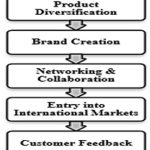 |
Figure 1: Globalization Process of Small Tea Growers (STGs). |
Motivations and Benefits of Going Global
The decision to go global was primarily opportunity-driven, as international markets offered better remuneration for differentiated, value-added tea products. This aligns with agripreneurship research highlighting market-oriented agricultural strategies as critical for rural income enhancement. Exporting enabled the entrepreneurs to position Assam tea within premium global segments, thereby overcoming the constraints of a saturated domestic market.
Entrepreneurs emphasize the advantages of global expansion by showcasing strategic, financial, and production-related benefits from three distinct case studies, as summarized below:
Table 2: Exploring the Multifaceted Advantages of Global Expansion for Entrepreneurs: A Comprehensive Analysis of TG, MG, and RG Cases
| Entrepreneur | Benefits of Global Expansion | ||
| Strategic | Financial | Production-related | |
| TG | § Expansion of natural farming led to MRL compliance, enabling him to enter the international market.§ Diversification of products and brand creation (Urmika Tea) helped increase market reach and consumer base.§ Engaging a sales executive and having a store for local display boosted local sales. | § Global sales of products at remunerative prices improved financial status.§ Timely delivery through an agency ensured smooth international transactions. | § Expansion of natural farming on a portion of land helped maintain product quality.§ Engaging skilled labor for tea plucking ensured quality production.§ Initiates handmade tea production, aligning with customer preferences, to harmonize resources efficiently. This approach, known as “demand-driven manufacturing,” signifies the future of manufacturing 50. |
| MG | § Natural farming allowed him to fulfill MRL compliance norms and export products.§ Diversification of products and direct exporting to various countries increased revenue.§ Importing sophisticated machines from Taiwan ensured consistent quality production. | § Selling a wide range of products in domestic and global markets at better prices improved financial status.§ Shipping charges borne by premium customers added to financial gains. | § Importing sophisticated machines from Taiwan ensured consistent production quality.§ Overcoming hurdles like delays in infrastructure setup and social stigma demonstrated resilience in production. |
| RG | § Conversion to natural farming improved product quality and eliminated chemical hazards.§ Diversification of products and signing a vendor’s agreement with EPL expanded market reach.§ Incremental improvements based on customer feedback-maintained product quality and customer satisfaction. | § Diversification and innovation in products led to higher revenue and better financial outcomes.§ Remunerative prices for specialty products like tea wand-lollipop and golden tips contributed to financial gains. | § Opting for natural farming overcame common issues like pest attacks and low production due to erratic weather conditions.§ Diversifying production to cater to niche markets in different countries-maintained production relevance. |
The benefits of international expansion observed across the cases span strategic, financial, and production-related dimensions, consistent with existing international entrepreneurship frameworks. Strategically, natural farming practices facilitated compliance with global MRL standards, enhanced brand credibility, and supported differentiation. Financially, access to premium markets improved income stability and profitability. From a production perspective, exposure to international quality expectations encouraged process improvements, technology adoption, and demand-driven manufacturing—reflecting the learning advantages often associated with internationalization.
These findings reinforce the literature on SMEs, which emphasizes their agility, close customer relationships, and ability to innovate rapidly in niche markets—often outperforming larger firms in specialized segments.
Challenges and Structural Constraints
Despite their achievements, the entrepreneurs faced significant barriers that mirror challenges widely reported in SME and STG internationalization literature. These included limited access to finance, certification hurdles, regulatory complexities, infrastructure gaps, skilled labour shortages, and information asymmetry regarding government schemes. Such constraints highlight the “liability of smallness” faced by rural agripreneurs, who must navigate global markets with constrained resources and limited institutional backing.
The persistence of these challenges underscores the need for supportive policy frameworks, improved access to finance, and targeted dissemination of information related to export promotion and research and development initiatives.
Global Tea Prospects: Entrepreneurial Journeys in Quality, Trust, and Niche Markets
The entrepreneurial journeys examined in this study demonstrate that STGs can successfully integrate into global value chains by leveraging quality, sustainability, and trust-based relationships. Their focus on natural farming, specialty products, and customer-centric innovation aligns with theories of competitive advantage through differentiation.
The findings also reaffirm the critical role of SMEs and agripreneurs in global trade and rural economic development. With enhanced infrastructure, institutional support, and access to global market intelligence, Assam’s STGs are well positioned to expand their international footprint and contribute meaningfully to inclusive growth and export diversification.
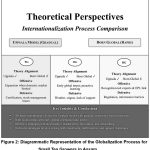 |
Figure 2: Diagrammatic Representation of the Globalization Process for Small Tea Growers in Assam. |
Overall Synthesis
The analysis demonstrates that the entrepreneurs’ experiences strongly validate multiple theoretical frameworks:
Family Support Theory – family encouragement as a foundation for entrepreneurial behaviour
Personality Trait Theory – curiosity, adaptability, and learning orientation as success drivers
Uppsala Model – gradual internationalization through experiential learning
Born Global Theory – early internationalization through global exposure (MG)
SME Internationalization Barriers – financial, regulatory, and informational challenges
Innovation and Niche Strategy Theory – success through product uniqueness and quality focus
The cases not only support existing theory but also extend it by showing:
How rural agripreneurs can integrate into global value chains
The role of natural farming and sustainability as competitive assets
The importance of friendship networks and private agencies in enabling global entry
The Theory of Small Tea Growers’ Global Expansion
STGs in Assam, India, have successfully expanded their businesses globally by focusing on natural farming, value-added products, and adapting to changing market demands. Key factors contributing to their global expansion include:
Natural farming
Converting tea plantations to natural farming not only helps in fulfilling MRL compliance norms for export but also improves product quality and ensures environmental conservation.
Diversification and innovation
STGs have diversified their product range to cater to niche markets and have introduced innovative products like tea wands and eco-friendly tea bags.
Customer feedback
Regularly seeking feedback from customers and making incremental improvements based on their suggestions helps in satisfying long-term customers and maintaining product quality.
Networking and collaborations
Building relationships with international buyers, exporters, and other stakeholders has helped STGs establish a global presence and overcome challenges like obtaining export licenses.
Branding
Creating a unique brand identity for their products helps STGs differentiate themselves in the global market and increases consumer awareness.
However, challenges such as limited access to government support, financial constraints, and lack of awareness about available schemes for research and development persist, which may hinder the growth of STGs in Assam.
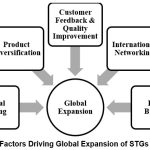 |
Figure 3: Factors Driving Global Expansion of STGs in Assam. |
Policy Measures and Research Priorities
The policy measures and research priorities from these three cases involve:
Supporting natural farming practices and providing guidance on meeting MRL compliance norms, essential for exporting goods in the international market. This can be achieved by offering training programs, subsidies for organic certification, and facilitating access to buffer zones for land expansion.
Encouraging entrepreneurial spirit and providing financial support for STGs to invest in agricultural inputs, machinery, and processing units. This can be done through micro-credit schemes, low-interest loans, and grants.
Promoting awareness and education on tea cultivation, processing, and marketing, including organizing workshops, seminars, and study tours to tea research institutes and successful tea farms.
Facilitating access to EIL and global market linkages for STGs, either through government-supported agencies or by providing financial assistance to establish their own export-import businesses.
Developing a strong quality control system, including regular testing and certification of products by accredited agencies, to ensure the production of high-quality, unique, and authentic Assam tea.
Establishing a more efficient and affordable system for participating in buyer-seller meets and international trade fairs, including waiving participation fees or providing subsidies for STGs.
Promoting eco-friendly packaging materials and encouraging the use of local resources, such as banana plant fibre, to reduce environmental impact.
Developing a comprehensive database and information system on available schemes and support programs for R&D activities in the tea industry, ensuring that STGs are aware of these opportunities and can benefit from them.
Conclusion
In conclusion, the three case studies highlight the entrepreneurial journeys of TG, MG, and RG, who have successfully ventured into the tea industry in Assam. They have overcome various challenges, such as financial constraints, lack of government support, and erratic weather conditions, by embracing natural farming practices and focusing on quality products. Their perseverance and adaptability have allowed them to tap into both domestic and international markets, thereby contributing to the growth of the specialty tea industry in Assam. However, they emphasize the need for improved government support in terms of providing information and awareness about available schemes to promote research and development in this sector.
Acknowledgement
Without the support of the entire SME at Sibsagar University, who generously shared their knowledge and expertise, we would not have been able to embark on this adventure. We express our gratitude to all our friends and well-wishers for their moral support. We sincerely thank the three interviewees for their time and patience in answering our questions. Lastly, we acknowledge our family for their unwavering confidence, which has kept our spirits and motivation strong throughout this process.
Funding Sources
The author(s) received no financial support for the research, authorship, and/or publication of this article.
Conflict of Interest
The authors do not have any conflict of interest.
Data Availability Statement
The manuscript incorporates all datasets produced or examined throughout this research study.
Ethics Statement
This research did not involve human participants, animal subjects, or any material that requires ethical approval. Regarding the case study on three small tea farmers— Tridip Gogoi, Maddhujya Gogoi, and Rana Gogoi — appropriate ethical considerations were observed to ensure confidentiality and voluntary participation.
Informed Consent Statement
This study did not involve human participants, and therefore, informed consent was not required.
Permission to reproduce material from other sources
Not Applicable
Author Contributions
- Ankur Gogoi: Conceptualization, Methodology, Investigation, Validation, Visualization, Formal analysis, Writing – original draft, Resources
- Rashida Tahira Noorain: Project administration, Data curation, Supervision, Writing review & editing
References
- Bhargav K. S. Challenges and Opportunities in International Entrepreneurship. International Journal of Creative Research Thoughts (IJCRT). 2023;11(5):232-238. www.ijcrt.org
- Ácsc ZJ, Szerb L. The Global Entrepreneurship Index (GEINDEX). Vol 5.; 2009. doi:10.1561/0300000027
CrossRef - Ahi AA, Sinkovics N, Shildibekov Y, Sinkovics RR, Mehandjiev N. Advanced technologies and international business: A multidisciplinary analysis of the literature. International Business Review. 2022;31(4):1-17. doi:10.1016/J.IBUSREV.2021.101967
CrossRef - Giller KE, Delaune T, Silva JV, et al. The future of farming: Who will produce our food? Food Secur. 2021;13(5):1073-1099. doi:10.1007/S12571-021-01184-6/FIGURES/8
CrossRef - Smallholder farmers, agricultural sustainability and global food security – Zero Carbon Analytics. November 6, 2023. Accessed April 4, 2025. https://zerocarbon-analytics.org/archives/food/ smallholder-farmers-agricultural-sustainability-and-food-security
- Mphande FA. Infectious Diseases and Rural Livelihood in Developing Countries. NIH Public Access and PMC. doi:10.1007/978-981-10-0428-5_2
CrossRef - Guth M, Stępień S, Smędzik-Ambroży K, Matuszczak A. Is small beautiful? Techinical efficiency and environmental sustainability of small-scale family farms under the conditions of agricultural policy support. J Rural Stud. 2022;89:235-247. doi:10.1016/J.JRURSTUD.2021.11.026
CrossRef - How Small-Scale Farming Can Transform Local Food Markets. Freight Farms. June 10, 2024. Accessed April 4, 2025. https://www.freightfarms.com/blog/small-scale-farming
- Korsgaard S, Anderson AR. Enacting entrepreneurship as social value creation. International Small Business Journal. 2011;29(2):135-151. doi:10.1177/0266242610391936
CrossRef - Doshi K. WHY IS IT IMPORTANT TO START YOUNG? LinkedIn Corporation. September 23, 2019. Accessed May 20, 2023. https://www.linkedin.com/pulse/why-important-start-young-kriya-doshi
- Cardella GM, Hernández-Sánchez BR, García JCS. Entrepreneurship and Family Role : A Systematic Review of a Growing. Front Psychol. 2020;10(2939):1-17. doi:10.3389/fpsyg.2019.02939
CrossRef - Yangailo T, Qutieshat A. Uncovering dominant characteristics for entrepreneurial intention and success in the last decade: systematic literature review. Entrepreneurship Education. 2022;5(2):145-178. doi:10.1007/s41959-022-00073-z
CrossRef - Ukhalkar J. Should entrepreneurs have formal education? Indian Youth. Accessed May 20, 2023. https://www.indianyouth.net/entrepreneurs-formal-education/
- Prabhu Joseph John J. Diversification for Agricultural Entrepreneurship and Agribusiness in Global Market Digital Marketing and SEO for Small Business Visibility View project Diversification for Agricultural Entrepreneurship and Agribusiness in Global Market. International Journal of Scientific Research and Engineering Development. 2020;3(2):1176-1185. doi:10.5281/zenodo.3819368
- The role of RAS for inclusion Agripreneurship. Global Forum for Rural Advisory Services. Preprint posted online 2016.
- W. Price R. What is a global entrepreneur? Global Entrepreneurship Institute. 2021. Accessed May 19, 2023. https://news.gcase.org/global-entrepreneur/
- Tabares A. International Entrepreneurship: An Entrepreneurial Behavior Oriented to the Pursuit of International Opportunities. In: Turuk M, ed. Entrepreneurship – Contemporary Issues. 1st ed. IntechOpen; 2021:1-22. doi:10.5772/intechopen.93675
CrossRef - Isenberg D. The Global Entrepreneur. Harvard Business Review. December 2008. Accessed May 19, 2023. https://hbr.org/2008/12/the-global-entrepreneur
- Albert C, Caggese A, González B, Martin-Sanchez V. Income inequality and entrepreneurship: Lessons from the 2020 COVID-19 recession. J Bank Financ. 2023;149(106779):1-23. doi:10.1016/j.jbankfin.2023.106779
CrossRef - Apostolopoulos N, Ratten V, Petropoulos D, Liargovas P, Anastasopoulou E. Agri-food sector and entrepreneurship during the COVID-19 crisis: A systematic literature review and research agenda. Strategic Change. 2021;30(2):159-167. doi:10.1002/jsc.2400
CrossRef - Swarupa S. G, Vijaya E, Muthyala S. Export Opportunities for SMEs in Developing Countries: Global Experiences. 1st ed. (Swarupa S. G, Vijaya E, Muthyala S, eds.). Vaagdevi Publishers; 2023. Accessed April 5, 2025. https://www.nimsme.gov.in/book/export-opportunities-for-smes-in-developing-countries-global-experiences
- Muller P, Devnani S, Ladher R, et al. Annual Report on European SMEs 2020/2021. Publications Office of the European Union; 2021. doi:10.2826/120209
- Beck T, Demirguc-Kunt A, Augusto de la T. Financing Constraints of SMEs in Developing Countries: Evidence, Determinants and Solutions. In: Hyun JT, ed. Financing Innovation-Oriented Businesses to Promote Entrepreneurship: Experiences of Advanced Countries and Lessons to Korea. Korea Development Institute; 2007.
- Keelson SA, Cúg J, Amoah J, Petráková Z, Addo JO, Jibril AB. The Influence of Market Competition on SMEs’ Performance in Emerging Economies: Does Process Innovation Moderate the Relationship? Economies. 2024;12(11):1-19. doi:10.3390/ECONOMIES12110282
CrossRef - Omowole BM, Olufemi-Phillips AQ, Ofodile OC, Eyo-Udo NL, Ewim SE. The Role of SMEs in Promoting Urban Economic Development: A Review of Emerging Economy Strategies. nternational Journal Of Engineering Research And Development. 2024;20(11):1127-1144. Accessed April 5, 2025. https://www.researchgate.net/publication/387029364_The_Role_of_SMEs_in_Promoting_Urban_Economic_Development_A_Review_of_Emerging_Economy_Strategies
- DiBella J, Forrest N, Burch S, et al. Exploring the potential of SMEs to build individual, organizational, and community resilience through sustainability-oriented business practices. Bus Strategy Environ. 2022;32(1):721-735. doi:10.1002/BSE.3171
CrossRef - Alyafie ASA, Al-Mubarak MMS. Challenges of Going Global for SMEs. International Journal of Innovation and Knowledge Management in Middle East and North Africa. 2016;5(1):1-11. Accessed April 5, 2025. https://www.researchgate.net/publication/328654212_Challenges _of_Going_ Global_for_SMEs
CrossRef - Yoshino N, Taghizadeh-Hesary F. Major Challenges Facing Small and Medium-Sized Enterprises in Asia and Solutions for Mitigating Them Asian Development Bank Institute.; 2016. http://www.adb.org/publications/major-
CrossRef - World Development Report 2020: Trading for Development in the Age of Global Value Chains.; 2020. Accessed April 6, 2025. https://www.worldbank.org/en/publication/wdr2020
- State/Region Wise and Month Wise Tea Production Data for the Year 2023.; 2023.
- ANI. Assam tea industry: 200 years and counting, Assam’s tea industry continues glory run. The Economic Times. 2023. Accessed May 19, 2023. https://economictimes.indiatimes.com/news/ economy/agriculture/200-years-and-counting-assams-tea-industry-continues-glory-run/articleshow/97002225.cms
- Singh B. Small tea growers in Assam estimate a loss of Rs 500 crore due to the pandemic – The Economic Times. The Economic Times. April 21, 2020. Accessed April 30, 2022. https://economictimes.indiatimes.com/news/economy/agriculture/small-tea-growers-in-assam-estimate-a-loss-of-rs-500-crore-due-to-the-pandemic/articleshow/75276507.cms
- Present-status-of-small-scale-tea-cultivation-in-Assam- : Tea World – An Initiative of KKHSOU. Tea World – KKHSOU. 2018. Accessed April 30, 2022. http://teaworld.kkhsou.in/page-details.php?name=Present-status-of-small-scale-tea-cultivation-in-Assam-&page=5c34412b9e 48852af3c411716
- Gogoi A. Emergence of Small Tea Growers ( STGs ): Implications in Assam. Int J Acad Res Dev. 2018;3(6):243-247.
- Bhattacharjee D. Small tea growers touch 51.91% of tea production, bigger players crying foul. BizzBuzz News. November 5, 2022.
- Ghosal S. Rising prices, rupee gain hurt tea exports to Europe, Japan. The Economic Times. August 22, 2022.
- Borah K. Entrepreneurship in Small Tea Plantation : A case of Assam. Pratidhwani the Echo. 2013;1(3):79-90.
- Tea Board of India – 66th Annual Report 2019-2020.; 2020.
- Kalita P. Assam gets its first export policy. Times of India. November 14, 2019.
- Palinkas LA, Horwitz SM, Green CA, Wisdom JP, Duan N, Hoagwood K. Purposeful sampling for qualitative data collection and analysis in mixed method implementation research. Administration and Policy in Mental Health and Mental Health Services. 2015;42(5):533-544. doi:10.1007/S10488-013-0528-Y
CrossRef - Patton MQ. Qualitative Research & Evaluation Methods | SAGE Publications Ltd. 4th ed. (Patton MQ, ed.). SAGE Publications, Inc; 2015. Accessed April 7, 2025. https://uk.sagepub.com/en-gb/eur/qualitative-research-evaluation-methods/book232962
- Centre picks Assam’s tea and Meghalaya’s turmeric cluster for export promotion. Northeast News. https://nenow.in/north-east-news/centre-picks-assams-tea-and-meghalayas-turmeric-cluster-for-export-promotion.html. 2018. Accessed June 21, 2022.
- Matthews CR, Smith B. Preprint version – The Craft of Interviewing. SportRχiv: the open access repository for sport, exercise, and health research. doi:10.51224/SRXIV.458
CrossRef - Creswell JW. Research Design: Qualitative, Quantitative, and Mixed Methods Approaches. 3rd ed. SAGE Publications, Inc.; 2009.
- Braun V, Clarke V. Using thematic analysis in psychology. Qual Res Psychol. 2008;3(2):77-101. doi:https://doi.org/10.1191/1478088706qp063oa
CrossRef - Ayton D. Chapter 22: Thematic Analysis – Qualitative Research – A Practical Guide for Health and Social Care Researchers and Practitioners. Open Educational Resources Collective. Accessed December 8, 2025. https://oercollective.caul.edu.au/qualitative-research/chapter/22/
- Gogoi T. Personal Interview – Tridip Gogoi. Preprint posted online 2023.
- Gogoi M. Maddhujya Gogoi – Personal Interview. Preprint posted online 2023.
- Gogoi R. Personal Interview – Rana Gogoi. Preprint posted online 2023.
- Why a Demand-Driven Approach is the Future of Manufacturing. Toppan Digital Language. Accessed May 29, 2023. https://toppandigital.com/translation-blog/demand-driven-approach-future-manufacturing/
- Tea Board of India – Annual Report 2020-2021.; 2021.
- Zohari T. The Uppsala Internationalization Model and its limitation. digitPro. 2021. Accessed May 19, 2023. https://www.digitpro.co.uk/the-uppsala-internationalization-model-and-its-limitation-in-the-new-era/
- HOUSING NEWS DESK. Natural Farming: Sustainable Agriculture for a Healthier Planet. Housing.com. March 9, 2023. Accessed May 20, 2023. https://housing.com/news/natural-farming-a-comprehensive-guide/
- Maximum Residue Limits | CODEXALIMENTARIUS FAO-WHO. FAO HQ. Accessed May 20, 2023. https://www.fao.org/fao-who-codexalimentarius/codex-texts/maximum-residue-limits/en/
- What is a buffer zone? Interfacing Development Interventions for Sustainability – IDIS. Preprint posted online 2011:1-8. https://idisphil.org/wp-content/uploads/2015/01/BK-Buffer-Zone.pdf