


 PDF Downloads:
186
PDF Downloads:
186


Introduction
The Indian Himalayan region (IHR) is one of the most ecologically fragile mountain landscape with socio-economic significance covering approximately an area of 530,000km2 with 13 states/union territories in Hindu-Kush Himalayas (HKH). The landscape is characterized by diverse topography, and rich biodiversity where rich natural resource supports livelihoods primarily based on agriculture and different forest resources.1 The region is recognized as global biodiversity hotspot with large numbers of endemic species and carbon pool stored in forest and agroecosystems.2 The IHR is increasingly under threat by global climate change (GCC), and associated with collective human pressure like land-use transformation, soil fertility, and population causing increasing threat to ecosystem. Thus, sustainable land-use strategies are to be identified for simultaneous development of ecological resilience and socio-economic growth. In this context, AF has emerged as a potential NbS that enhances soil productivity, C-storage, nutrient regulation, biodiversity conservation, land-restoration/management, sustainable production, and adaptive ability towards GCC.3-6 AF along with indigenous knowledge system (IKS) further benefits agricultural productivity, carbon sequestration, groundwater recharge, water regulation, microclimate, ecosystem conservation and sustainable ecosystem services (ESS).7-10 Also, AF provides income diversification that leads to resilient livelihoods, pest/disease regulation, supports food security, and biodiversity conservation in IHR.11-16 In IHR, traditional AF like large cardamom, Alnus nepalensis-based farming together with multi-strata tree-crop cultivations significantly contribute to the mountain livelihood and ecosystem sustainability.17,18 Plants like Schima wallichi and Alnus nepalensis are commonly integrated into AF that improve nutrient cycling, soil productivity, and hydrological attributes.18,19 In IHR, AF contributes to C-sequestration in both soil and vegetation while storing more SOC compared to conventional agriculture.20 AF-based C-sequestration often exceeds the capacity of conventional monoculture practices and croplands.21-23 Notably, despite available literatures, there was significant variations among AF-C stocks in the studies of different continents. The maximum soil C-stock was observed in Asian countries (>40%). AF presented overall higher C-stock (18%), and absolute (mean) C-stock was comparatively similar except homegardens. The chosen fast-growing species stored more C in early age compared to old age classes in AF (alley/homegardens). In AF like silvopastures, aboveground C-stock was associated with growth rate/tree density, and exceeded C-stock in soil. Reportedly, AF presented C-sequestration potential of 12-228 Mg C ha-1 with a rate of 0.5-5 Mg C ha-1 yr-1 depending on climatic condition, species and management approaches.24,25 Also, AF with integration of trees reduces soil erosion/water run-off, accumulates soil organic matter (SOM), and stabilizes mountain slopes which are essential for long-term agricultural production.26,27 In IHR, deep soil organic carbon (SOC) was gradually improved in older Morus alba-AF.28 Thus, AF improved soil health, agricultural productivity, and strengthened against climatic changes with extreme events.29 Furthermore, AF contributes to income diversification and risk reduction under uncertain GCC. Traditional AF is an adaptive landuse management approach that has been evolved through generations by IKS, and is an integral part of agriculture in IHR. AF sustains the economic resilience, and generates multiple livelihoods by producing fodder, fruits, timber, fuelwood etc.30 United Nations Sustainable Development Goals (SDGs) deal with GCC mitigation emphasizing on integrated sustainable land use system that can alleviate poverty/hunger. AF presents pathways for accomplishing SDGs like zero hunger (SDG2), climate action (SDG 13), life on land (SDG 15), and no poverty (SDG1).31,32 Also, AF provides socio-economic benefits with diversified nature-based produces like fruits, fuelwoods, fodders, timbers, and medicinal plants that enhance food security (SDG2) and improved livelihoods (SDG1) in the villages of IHR.33 The IHR is characterized by steep slope, rugged topography with different agroclimatic zones and microclimatic variability along the altitudes. GCC is causing severe environmental impact leading to soil degradation, water run-off and declining crop-productivity in the region. Notably, majority of the population is fragmented small land holders, and largely dependent upon traditional subsistence farming practices. Traditional AF like agro-silviculture, silvo-pastoral/agro-silvo-pastoral systems, homegardens are potential function of climate resilient NbS contributing to multiple ESS for environmental risk mitigation, microclimate regulation, biodiversity conservation, resilient landscape, restoration of degraded lands, sustainable production, income diversification, and improved socio-economy in IHR. Although, trade-offs exist in between demands and benefits, strategic scientific research-based policy framework, intervention, monitoring and evaluation is the pathway of efficient adoption of multifunctional AF on a landscape with improved ESS through climate resilience to attain multiple SDGs in Himalayas. Despite AF has been increasingly recognized for providing multiple benefits, studies on AF-services contributing to the specific SDGs in IHR are still limited.
Significance of the study
AF has been well documented for ESS and sustainable soil management supporting mountain livelihood and climate resilience. However, region-specific integrative assessment of AF together with SDGs in socio-ecological context pertaining to IHR is lacking. Studies are mostly fragmented, and primarily focused on land productivity/fertility, C-sequestration, livelihood benefits with considerably less effort for presenting AF-multifunctionality in IHR ecosystem. The IHR presents climatic variability with complex topography associated with socio-economic constraints that requires context-specific land-use strategies. The limited analyses limit the formulation of evidence-based policies together with scalable AF models that simultaneously address food security, rural mountain livelihoods, and environmental degradation. Also, the information on understanding AF configurations influencing ESS and synergies is limited particularly in relation to C-dynamics, water/nutrient regulation in IHR. The objective of the study is to address these gaps by evaluation of AF systems contributing to the mountain livelihoods and specific SDGs with regional analysis in IHR. Also, the study identifies the optimal combination of tree-crops and management practices for enhanced biomass production, C-sequestration, soil productivity, nutrient cycling, maintaining ecological stability and economic benefits in rainfed/marginal landscape of IHR. Additionally, it highlights farmer awareness, market access, socio-economic drivers with NbS informing policy frameworks for large-scale adoption of AF in IHR. Accordingly, the study addressed the following research questions:
- What are the functional roles of AF to improve ESS and livelihood in IHR?
- What are the key attributes determining AF adoption and associated SDGs in IHR?
Methodology
This study analyses the AF-systems contributing to ESS to improve livelihoods of mountain people, and its relevance to attain SDGs in IHR (Figure 1). The study systematically reviews and identifies the drivers and barriers of AF (traditional and introduced/modern) adoption integrated with traditional knowledge and cultural practices that regulate ESS with policy recommendations following Preferred Reporting Items for Systematic reviews and Meta-Analyses (PRISMA) 2020 across IHR (Figure 2). The research scope was narrowed down by searching the relevant literatures focused on peer reviewed articles published in journals from 2001-2026. The keywords such as ‘Agroforestry’, ‘traditional agroforestry’, ‘modern agroforestry’, ‘Indian Himalayan region’, ‘Western Himalayan region’, ‘Eastern Himalayan region’, ‘ecosystem services’, ‘governance’, ‘policy’, ‘sustainable development goals’ were connected and searched by Boolean Operators (AND, OR, NOT) in three search engines viz. Google Scholar, Web of Science and Scopus. Book chapters, books, short communications, and conference papers were not included to increase the relevance of the study. However, grey literatures with relevance to the study were included. A total of 411 studies were screened, and a total of 138 relevant articles/reports were selected for the present study. The language selection for the articles was English.
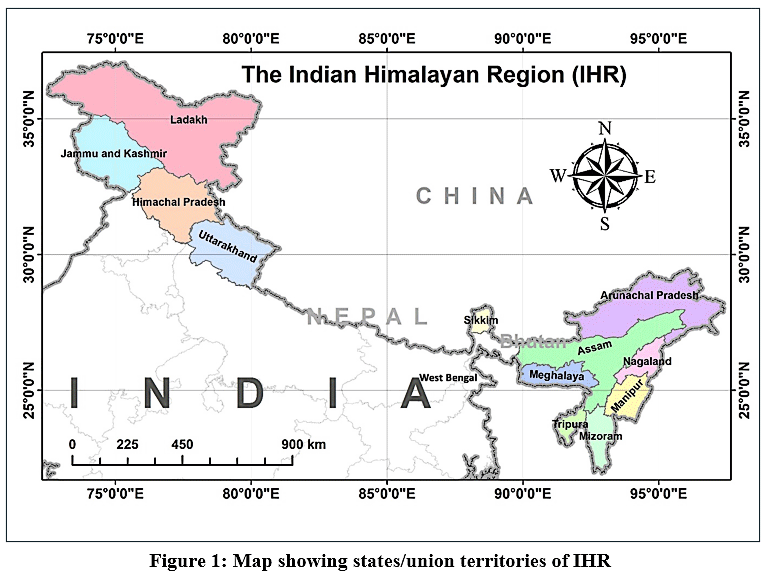 |
Figure 1: Map showing states/union territories of IHR |
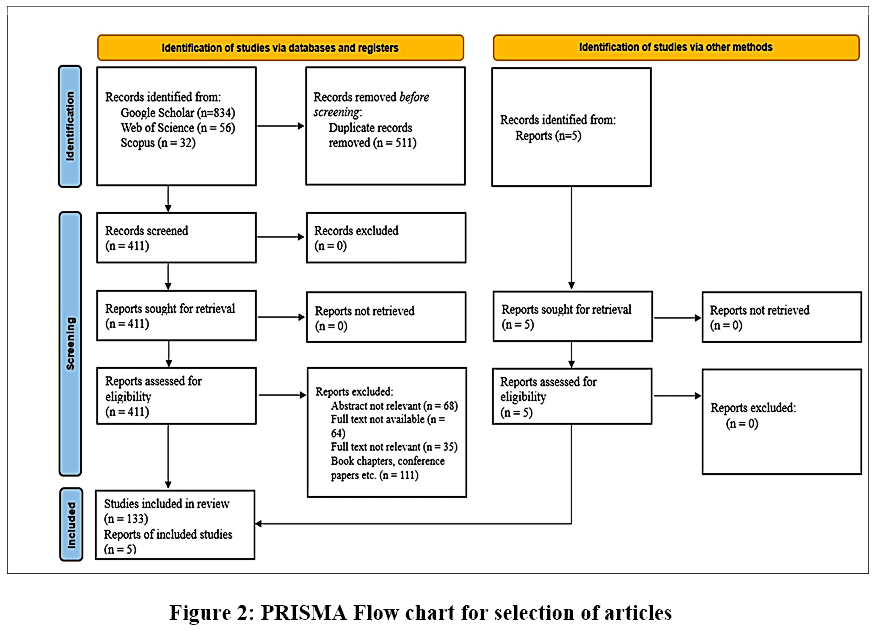 |
Figure 2: PRISMA Flow chart for selection of articles |
Agroforestry practices in the IHR
AF are of disparate types viz. silvopastoral, silvoarable, forest farming and homegardens (Figure 3) based on combination of trees, crops and livestock. AF-system and structural units vary with the altitudinal gradients, and significantly associated with mountain livelihoods benefitting SDGs 15/13 in IHR.34 In western IHR (30°20/ N, 72°52/E), AF presented different C-sequestration potential based on chosen plants, altitudinal gradient, temperature and soil depth on long term.28 AF enhances productivity, retains moisture, provides shade, enriches soil/crop physiology along with ecosystem conservation.18 Compared to plantations, Areca-AF (6.80 Mg ha-1 yr-1) and Piper-AF (5.53 Mg ha-1 yr-1) presented maximum (n = 10 plots) aboveground biomass.35 The total net primary production (NPP) was found highest in Areca-AF followed by rubber plantation, degraded forest, natural forest, piper-AF, and Areca plantation contributing 11.35, 8.58, 8.26, 8.16, 6.50 and 5.30 Mg C ha-1 yr-1 respectively. AF-NbS increases NEP and C-sink contributing to GCC (SDG13), conservation of biodiversity, provides food security and more income opportunities compared to plantations. In Eastern IHR, shifting cultivation (SC) is amongst the major livelihood options that has been practiced on the hill slopes from ancient times by the indigenous people. Farmers have been encouraged to convert SCs into AF reducing the risk of natural forest and soil degradation. Conversion of SCs into Pineapple-AF (>15 years) increased (n = 3; p < 0.001) up to 35.39 Mg C/ha-1 of SOC.5 The soil bulk density was comparatively low in Pineapple-AF (0.98-1.03 g/cm3) than conventional agriculture (1.21 g/cm3), and was maintained by indigenous Hmar community of Himalayas [(24°49/12.75//N, 93°03/17.20//E); 24°47/37.85//N, 93°02/05.41//E]. The land transition-NbS was useful for the economic benefits with low land degradation, biodiversity conservation and GCC mitigation.
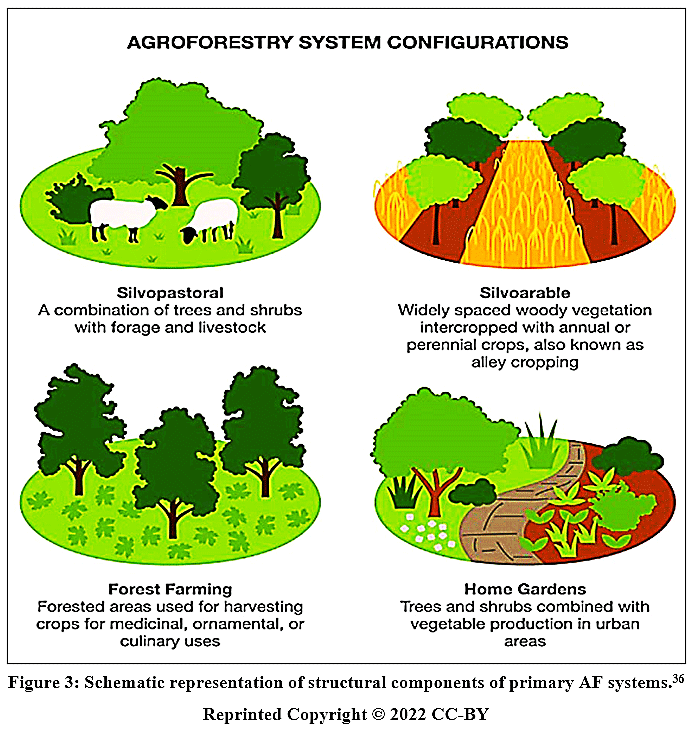 |
Figure 3: Schematic representation of structural components of primary AF systems.36 Reprinted Copyright © 2022 CC-BY |
Traditional agroforestry systems
In IHR, traditional AF is deeply integrated with IKS and cultural practices that has evolved through centuries by cultivating multipurpose trees together with crops/livestock for disparate subsistence needs. Farmers cultivate tree species that provide food, fodder, fuelwood, timber, and medicinal values creating a multifunctional landscape for sustaining rural livelihood with economic resilience.37,38 The smallholder farmers manage these traditional AF for income diversification, food security, and sustainable resources. Also, plant diversification with complementary ecological function contributes to soil productivity, biodiversity conservation together with microclimate regulation, and other diverse ESS suitable for highly variable fragile mountain ecosystem.39,40 In North-Western Himalayas, Himachal Pradesh (30°45/-30°54/45//N and 77°03/15//-77°13/35//E), maximum C-sequestration (Mg/ha) was observed in agrisilvihorticulture (14.78) followed by agrihortisilviculture (14.45), agrisilviculture (10.64), agrihorticulture (12.15), pure agriculture (8.24), silvipasture (3.36), abandoned land (1.60), pure grassland (1.23), with LSD (6.05) from an average land area of 0.69 ha (0.08-2.00) with 23 units.41 However, with variation in functional composition, significant differences in C-stock (P < 0.05) were observed in different land uses with maximum in agrohortisilviculture (29.83 Mg/ha; n = 3), and was associated with biomass production.20 Also, biomass production varied along the altitudes (<1000 to >2500 m). In a traditional AF (n =10), the net C-sequestration of Melia azedarach was affected by altitudinal gradient presenting maximum net C-sequestration (2.73 ± 0.23 Mg/ha/year) at middle elevation (1200-1600m) followed by lower elevation (1.60 ± 0.15 Mg/ha/year) and upper elevations (0.95 ± 0.21 Mg/ha/year) at 800-1200 and 1600-2000 masl respectively (34°47/N-30°55/N and 78°01/-78°09/).16 Also, seasonal effect on total C-stock was observed for wheat in agri-silviculture (566.70 g C m-2; r2 = 0.738) and agri-horticulture (450.21 g C m-2; r2 = 0.708) in central Himalayas (29°01/N, 79°52/E).42 Traditional AF integrated with modern scientific/agroecological approaches presents significant advances in agroecosystem management contributing to SDGs. These systems enhance adaptation towards GCC, conserve biodiversity, and C-sequestration in agricultural mountain landscape.43,44 AF integrated with sericulture is an innovative model for ecological and economic benefits that produces silk along with tree-based farming in India.45 In rainfed agroecosystems, integration of millets and AF benefits soil productivity, biodiversity with climate resilience.46 Farmers perceive crop growth competes with trees for physico-chemical attributes, and decreases crop yield under limited extension services, research dissemination, policy framework and land regulation.47-49
Homegardens are ancient AF that conserve biodiversity, withstand GCC, diversify income, impact on household food consumption, and alleviation of hunger (SDG 2) in Eastern IHR.50 However, food security with nutritional value could be improved by adopting improved cropping system strategies. Production in homegardens is influenced size, species, natural disasters, ethnicity etc.51 Maximum Shannon diversity was observed in Tea state-homegardens (1.98), followed by rural market (1.72), and riverine areas (1.58/1.48) of tea tribes, Assamese, and Bodo/Missing tribes respectively. The sedentary Piper betel-AF has been traditionally practiced by Khasi tribe in Eastern IHR.52 Compared to forest diversity with higher tree density, species diversity was found high in Piper-AF (>35 years) recorded up to 49 species. In the AF, tree-felling is restricted, and fast-growing trees are chosen to plant. Often, crop productivity is found to be declined in traditional AF, however it shows more C-sequestration potential compared to monoculture.16 Implementation of AF creates balance between ecology and livelihoods while considering trade-offs between environment and crop-yield, while wide implementation of AF requires active government participation.53 In India, AF-based policies were emphasized during 2010s, and national strategies were developed by integrating trees and crops in agricultural landscapes.54 The policy shift was significant, and presented C-sequestration potential of approximately 25 Mg C ha-1 for mitigation of climate change.55 The initiative aligned with India’s commitment to enhance C-sink in Paris agreement by 2030.56 Gradual decline in AF like silvoarable system, and increase in monoculture/industrialization/urbanization/reshaping of landscapes impact on traditional land-use, cultural identity and IKS.57
Modern and introduced agroforestry models
A traditional AF can be managed with modern scientific approach with technology applications for improved productivity with climate resilience. Traditional AF is an ecofriendly land use approach, requires low input and integrated with traditional knowledge to conserve biodiversity, organic farming, ecosystem productivity, with long-term ecological stability and resilience.58 Modern AF is considered as an advancement towards productivity maximization integrated with global markets by scientific approaches like high yielding varieties (trees/crops), mechanization, weather pattern, monitoring and precision farming including artificial intelligence for enhanced decision making. Modern AF provides multiple harvest, better production/monetary output, systematic labour, and high C-sequestration potential (Table 1). In Western Himalayas (34.23°N, 74.78°E), a managed strategically designed silvipastoral-AF in wasteland enhanced the socio-economic viability of 222 (n) sampled households (10%) by securing quality green fodder (~11, 848 tons), tree fodder (~3847 tons), fuel wood (308 tons), grass seed (8 tons), and small timber ~ 320 m3 per year.59 Additionally, the strategy would generate income of $66.13/household/year with generating employment of approximately 10 man-days/household/year. Alley cropping (n = 3) in density of 10m × 1m of Grewia optiva presented maximum total biomass (212.23 ± 29.98 Mg/ha) while increase in spacing (10 m× 3m) significantly (p < 0.05) enhanced yield of intercropped peas (6.04 ± 0.46 ton/ha) with economic return and soil health in North-Western Himalayas (30°51/N, 76°11/E).60 Also, tree spacing (6m × 4m) and nutrient application (RDN: 75% + FYM: 25%) markedly enhanced the growth of Curcuma longa in IHR (30°51/N, 76°11/E).61 The garlic variety UUHFG12-1 presented maximum gross (17,804$/ha) and net returns (13,276 $/ha) under peach indicating more productive agri-horticulture-AF compared to monoculture (30°18/N, 78°24/E).62 GIS-based approach improves the accuracy of land-use classification and provides comprehensive overview with significant insights for sustainable AF-system.63 It also ensures data accuracy for suitable land locations, productivity of AF, improves livelihood, and contributes to policy making. Further, integration of Analytic Hierarchy Process (AHP) improves the accuracy of suitable land selection, stability, productivity with socio-economic benefits.64 The integrated framework identified highly (22.53%), moderately (8.13%) and not suitable area (70%) for AF in North-Western Himalayas (Himachal Pradesh) with accuracy of 84% (kappa coefficient: 0.78). Traditional SC causes serious threat to the forests pertaining to its frequent change in cultivation plots. Although, alternatives like AF are suggested, many farmers don’t find it suitable for local climate in states like Arunachal Pradesh, Eastern IHR.65 Strategic approach is useful for controlling pest populations like Gyropsylla spegazziniana that increases crop yield, sustained organic matter, and more adaptive compared to monoculture in AF.66 The parsimonious AF-models contribute to inclusion of scientific knowledge in traditional practice with desired structural composition on landscape in farmers’ perspective (socio-economic) with multidimensional ecological functions.67 Biophysical modeling projects the future climate scenarios, buffering capability from extreme events, and their impact on agronomic yield in small-holder farmers perspectives.68 The amendment of chemically stable, porous aromatic biochar is capable of storing C, elevating pH, precipitating Fe3+/Al3+ oxides and stabilizing the acidic soil for a prolonged period of time.69
Table 1: Traditional and Modern AF approach contributing to ESS in IHR
|
IHR |
Traditional AF |
Modern AF-approach |
Component structure |
ESS |
References |
|
North-Western Himalayas (30°51/N, 76°11/E) |
Mulberry-AF |
Biochar; Biochar + vermicompost (or) farmyard manure (or) natural formulations (or) NPK |
Biochar (Bamboo derived) + Morus sp. |
Nutrient and soil conservation, reduce GCC, enrich soil with SOC, soil microbe, moisture retention, improve structure/resilience, micronutrient availability (Fe, Mn, Zn, Cu) |
70 |
|
Indian Sub-Himalayas (25°40/N, 91°60/E) |
Hedge-Alder AF |
Improved crop cultivars; vijay composite, M27 and Kufri jyoti of Zea mays (maize), Brassica campestris (mustard), Solanum tuberosum (potato) respectively |
Hedge/Alder + maize (Kharif)/mustard (Rabi) /potato cropping (Rabi) |
Improved SOC in acidic soil. Hedge-AF improved available N (280 Kg/ha), available P(9.5 kg/ha), available K (262 Kg/ha) at a depth of 0-30 cm. Total N (1.9 g/Kg) was maximum for both Hedge/Alder AF than control (1.7 g/Kg) at p<0.05 (n =18). |
71 |
|
Western Himalayas (30°N, 76°11/E) |
Horticulture-AF |
Strategically designed with organic amendments (vermicompost/Farmyard manures in optimized doses) + management practices (weeding/irrigation) |
Peach + medicinal, aromatic plants (Ocimum sanctum/Withania somnifera/Andrographis paniculata) |
Organic amendments/ management practices improved growth/soil properties. |
72 |
|
Western Himalayas (30°51/N, 76°11/E) |
Bamboo-AF |
Strategically designed, integrated nutrient management [fertilizer doses (Farmyard manure + PGPR), rhizome treatment, mulching] |
Dendrocalamus asper/D. hamiltonii + Ginger |
Improved yield with maximum under D. hamiltonii |
73 |
|
Western Himalayas (28°43/N-31°27/N, 77°34/E-81°02/E) |
AF-areas (Garhwal region, Uttarakhand) |
Site suitability Remote sensing/GIS |
AF- cover
|
Estimation of AF area (2.13%)-maximum at 1201-1600 masl; dominated by poor productive-traditional crops with basic livelihoods |
74 |
|
Western Himalayas (30°21/N, 70°52/E) |
Agri-horticulture-AF |
Hybrid (Mallika) Mango + Integrated nutrient management + Drip irrigation + intercropping |
Hybrid (Mallika) Mango + + intercropping (cowpea-toria; sesame-toria; pigeon pea; black gram-toria; cluster bean/okra-toria); turmeric; colocasia |
Intercropping (cowpea-toria) and turmeric enhanced mango yield |
75 |
|
North-western Himalayas (30°45/-31°44/N, 77°-78°19/) |
AF-areas (Shimla, Himachal Pradesh) |
GIS |
AF-cover |
AF cover (~29%)-assessment adds to socio-economic implications |
63 |
|
IHR (30°51/N, 76°11/E) |
Poplar-AF |
Clonal Poplar variety (G-48) + Integrated nutrient management, strategically designed |
Populus deltoides + Curcuma longa |
Tree species/nutrients significantly maximized turmeric quality and yield (p<0.05) with average net returns |
61 |
|
North-Eastern Himalayas |
Cardamom-AF |
Improved cultivars Sawney, Varlangey, Dzongu Golsey, Ramsey |
Amomum subulatum + Alnus nepalensis, Scima wallichii, Osbeckia paniculata, Melia composite, Maesa chisia, Litsaea polyantha etc. |
Food, timber, fuelwood, nutrient conservation, C-sequestration, aesthetic value |
76 |
|
Eastern Himalaya (25°41/11//-25°41/31//N, to 91°54/44// -91°55/01// E) |
Watershed-AF |
Trees + crops + conservation structures (terraces/contours/grassed waterways) |
Alnus nepalensis, Ficus hookeri, pineapple, French beans, rice |
Improves soil quality, influenced surface run-off/baseflow |
77 |
Scientific information with statistical analyses along with model diagnostics/adequacy testing has to be generated to understand the benefits with appropriate data for AF-policy formulations.78 Integration of technologies like geospatial/data science of machine learning further improves the estimation of ESS including C-stock, local economy, informed decision and monitoring of AF.79 Parsimonious models once developed should be validated in fields, and can be re-used efficiently to answer several scientific questions based on simulation objectives.80 Adequate tree/crop composition, density, species on a specific landscape are determinant factors for large scale implementation in modern AF.57 AF (Grewia optiva + peas) along with farmyard manures in scientifically designed plots enhanced soil health, C-sequestration, yield (~6 t ha-1) with substantial economic return, and contributed to SDGs (1/2/13/15) in IHR.60 Also, AF presents more C-storage potential/C-credit in less time period compared to afforestation, conserves soil for extended period while bridging gaps among policies pertaining to GCC.81 AF approaches with scientific intervention integrated with IKS improve yield with sustainable livelihoods (Table 2). Improved cultivars grow fast, high yielding, and often proven to be climate resilient. Although, productivity, scalability and market availability are ensured, often reliance on hybrid varieties, fertilizers, pesticides decrease overall local biodiversity and raises major sustainability concerns of modern AF.58,76 A silvopastoral AF is comparatively more diverse than cropland (60%), however less biodiverse supporting only a few groups of species than forests/pastures/abandoned silvopastures.82 Notably, integration of traditional and modern AF is a holistic approach that can reduce biodiversity loss, foster food security and climate adaptation.
Table 2: Criteria-based comparison of AF in IHR
|
Criteria |
Traditional AF |
Modern/Introduced-AF |
|
Origin/knowledge |
IKS with practices of local adaptation |
Research-based scientific strategies, policy formulation, external innovations |
|
System structure |
Multilayered, diverse and complex |
Structure is defined with layout and species composition |
|
Species |
Indigenous with multipurpose uses (e.g., Alnus nepalensis, Schima wallichii) |
Cultivars are high-yielding with selected adaptable fruit/trees for timbers |
|
Primary objective |
Subsistence needs with cultural attributes |
Commercial production, livelihood support, improved productivity |
|
Biodiversity |
High |
Moderate; often economically viable species are chosen |
|
ESS |
Regulating and Supporting ESS are strong |
High provisioning and regulating ESS |
|
C-sequestration |
Ranges from moderate to high determined by the complex system of tree density |
High; potential species are chosen with effective management approaches |
|
Productivity |
Maintained naturally by the structural components; low to moderate; stable |
High; extraneous input of amendments like biochar, fertilizers |
|
Livelihoods |
Supports subsistence, and risk reduction of communities |
Market opportunities with livelihood diversification |
|
Resilience to GCC |
High with significant local adaptation |
Designed for climate resilience; dependent on management practices |
|
Constraints |
Limited integration of scientific technologies with market value, policy gaps |
Complex technical skills, high initial investments, policy gaps |
|
Scalability |
Limited scaling with site specific locality based IKS |
Highly scalable with scientific interventions hybridized with IKS and standardization |
|
Policy support |
Limited support |
Highly supported by National AF and climate programs |
However, policies with adequate funds emphasizing on modern AF are yet to frame due to lack of regional data.83 Agricultural yield is more emphasized than influencing attributes like stakeholders and national strategic policies that raises uncertainties among the farmers.84,85
Aligning agroforestry benefits with SDG targets
AF system significantly contributes to attain multiple SDGs under the broad spectrum of socio-economic and environmental aspects in particular to the food security, poverty reduction, biodiversity conservation and climatic action (Figure 4).6,86 Traditional AF like multifunctional homegardens with diverse medicinal plants directly contribute to both income generation (SDG 8) and nutritional value/health benefits (SDG 3) along with food security.37 Homegardens provide fresh vegetables, fruits, and other valuable products including meat by integrating with small-scale animal husbandry (SDG 3).50 Intercropping of plants like Ocimum sanctum, Withania somnifera and Andrographis paniculata with medicinal value under fruit plants like peach presents high economic return with improved soil physico-chemical properties.72 Traditional Piper-AF is widely practiced by Pnar community, and provide multiple ESS with economic return (SDG 8).52 The critically endangered, and highly economically valued (US$ 2000) species Aquilaria malacensis in Piper AF is largely exploited based on resin quality. The AF with soil water conservation measures effectively contributes in watershed management as mulching material, enhances hydro-physical attributes, increases water holding capacity, and reduces evapotranspiration together with run-off losses.87,88 Also, AF with dense deep root system in riparian region controls flood/soil erosion, agricultural run-off to water bodies (eutrophication), and enhances surface/groundwater quality (SDG 6). Income diversification by cultivating cash crops, medicinal plants, shade-tolerant crops along with stress tolerant fruit/timber yielding trees/sericulture with technological advancements integrating with IKS contributes to inclusive livelihoods including women empowerment (SDG 8, 10). AF enhances C-sequestration by different tree components, improves agricultural microclimate, and allows local farmers to adapt with GCC contributing to SDG13 while increasing food security.55 The global partnership programs with institutional collaborations like Centre for International Forestry Research and World Agroforestry-International Centre for Research in Agroforestry (CIFOR-ICRAF) for sustainable AF in India with state specific policy formulations, and participation of other government/non-government organizations addressing issues like GCC, gender/social inequalities, rural poverty, socio-economic pressure directly contributes to SDG17. The land-use practices have direct support on SDG 2 with diversified food resources/ agricultural productivity while SDG 15 is biodiversity and ecosystem conservation.87 AF contributes to eco-intensification and resource efficiency, and significantly associated with SDG 12 and 13.88 Furthermore, AF directly targets SDG 1, 8 by reducing economic vulnerabilities and diversifying income generation with simultaneous contribution to SDG 6 through improving water quality. Also, women are empowered by involving in diverse AF-based activities.89 AF contributes to the holistic sustainable development by improving ecological resilience and socio-economic equity.90 These dynamic NbSs provide diverse ESS like C-sequestration, soil productivity, and biodiversity conservation that are directly connected with multiple SDGs.91 NbS is promising for the difficult terrains that can be accomplished by assessing magnitudes of disasters, vulnerability, demographic characteristics together with AF.92 National policies require to adapt AF policies leading to sustainable development, and improving resilience for mitigating climate change impacting on communities. Plantation of trees in multistrata along with fruit trees and flood tolerant species are NbS attributes to improved livelihoods while protecting environment. Multistrata provides many benefits with efficient land use. In addition to income generation, bamboos provide building materials and controls erosion along with dietary value during cultivation with fruit trees like banana. In AF, community participation is encouraged that leads to sustainable practices with collective engagement. Initiatives for forest and landscape restoration (FLR) is amongst the NbS that considers restorations by plantations/bamboos and AF.93 The NbS approach aligns with the SDG goals of 1/2/13/ and15. Afforestation/secondary forest reforestation, cropland AF, expansion/restocking of bamboo (highland/lowland), creating buffer area with trees around lakes/rivers/wetlands; protected areas/National parks/National Forest priority areas; roads/cities etc. restore forest and mountain ecosystem. Planting fuelwood trees benefit to women, who otherwise need to travel for a long distance. FLR contributes to SDG15, controls desertification and conserves soil together with biodiversity. NbS together with ecosystem-based disaster risk reduction (Eco-DRR) could reduce socio-ecological/economic challenges by addressing the key components of disasters.94 Eco-DRR reduces hazard exposure by controlling regulatory/provisioning/cultural services and increasing adaptive capability. AF reduces run-off, and increases infiltration that controls the flood vulnerability depending upon the size, age and spacing. NbS is useful for the formation of soil aggregation by increasing structure, microbial activity and organic carbon in semi-arid region. No tillage enhances SOC with stable soil aggregates.95 However, implementing NbS has limitations like financial, extension services and technical constraints discouraging the smallholders. In addition to AF benefitting to human well-being, NbS includes reforestation, avoidance of forest conversion, and climate adaptation.96 Reforestation together with animal pollinators provide co-benefits like improved productivity, water quality, C-sequestration and global climate (SDG13). A silvoarable-AF increase C-sequestration up to ~12% in regional level.57 C-sequestration is high in afforestation and in avoiding forest conversion than AF. However, implementation is limited as these strategies are often applicable to the rural and landscapes with sparse population. These services create negative impact to the people by increasing green water storage and decreasing runoff that would ultimately decrease water flow in river, ground water storage and water availability (seasonal/annual). NbS could be a useful strategic approach for climate adaptations and mitigation with a holistic approach for policies and plans. Integration of shrubs (perennials), trees, annual crops provide sustainable income diversification, optimization of land use, ESS and allow pollinators for flowering.97 NbS includes biogas plants, conservation agriculture, integrated/organic farming, bioremediation, watershed management, wastewater treatment, agroforestry, biodiversity conservation, restoration together with green infrastructure contributing to SDGs 1 to 17.98 The maximum economic benefits were provided by SDG 1, 2, 8, 12 (49.79%), followed by environmental benefits (SDG 11, 13. 15, 16, 17) presenting 15.58%. Social benefits were associated with SDG 3,7,10 (10.18%). Weak loading of SDG4/5/6/9 presented that NbS influenced less towards these goals pertaining to the weak intersectoral connections. The limitations pertaining to implementation of NbS could be minimized by the involvement of scientific experts together with other stakeholders. Also, NbS is required to address societal issues like food security, poverty alleviation, ecological and economic attributes. Farmers were motivated to plant trees as NbS by their intrinsic drives for security from climate risks rather than economic benefits like carbon credit.99 AF allows the farmers to gain maximum profit from a small resource with IKS for adaptation. However, maximum benefit can be achieved only when it deals with complex interaction of human and nature supported by policies. AF presents a multigoal approach towards achieving SDGs. Also, multigoal approach act differently upon each goal based on geography and social groups with individual weights.100 However, AF primarily should achieve the food security prior to achieve or least affect other goals. AF is directly associated with land use, which is a connecting attribute of all SDGs presenting trade-offs among demand, benefit distribution and compromised ESS. Efforts require to increase the compatibility among the SDGs with neutral to modest trade-offs for focused target on specific goals.101 To address interactions among goals, a 7point scale of -3 (cancelling), 0 (neutral), +3(indivisible) can be applied to AF associated with SDGs 1-3, 6,7,13,15. Demand on land increases with increased requirement of food/healthier diets (SDG2,3), clean water (SDG 6), renewable energy (SDG7), and requires an integrated landscape approach for SDGs. The little convergence of domestic policies is observed compared to international agreements to attain SDGs. Forest and SDGs present complex interplay, and AF can significantly reduce the conflicts between agriculture (SDG 2) and forests.102 For SDG15, structurally diverse AF contributes more to biodiversity compared to simple AF. Primary forest derived-AF causes forest degradation, while landscapes are improved by open-land-derived AF. Also, a shift from less profitable traditional AF to monoculture reduces biodiversity in the landscape. Hunger eradication (SDG2) without nutritional concern affect health (SDG3) and outcome of children education (SDG4) significantly.103 While Homegarden-AF can supply products to industries at a local level (SDG8,9), it requires adequate water supply (SDG 6). Although, AF supports multiple SDGs, it also presents several trade-offs associated with institutional, socio-economic, ecological and management attributes.104 Economic trade-offs involve small land holders with large initial investments for infrastructures, irrigation and management practices. Short term economic loss due to prolonged transition period for realized economic return may lead to poverty. AF intensification with few commercial plants reduces heterogeneity, and impacts on native biodiversity conservation. Introduction of non-native species impacts on native biodiversity, and increases ecological risks necessitating suitable species selection, optimized tree density, participatory governance, integrated water management practices, infrastructure development, scientific research for quantifying trade-offs in interdisciplinary approach.
Drivers and barriers to agroforestry adoption
Farmers’ initiatives to adopt AF is determined by governance, socio-economic and ecological attributes (Figure 4) that require addressing promoters and structural/knowledge related constraints.105 In AF, trees provide delayed return with large initial investments creating a barrier in economic aspect. Thus, inadequate credits/subsidies restraint the farmers who are dependent on short-term returns to choose AF as a primary livelihood option.106-108 Also, demonstrated sites are not well-distributed in the target region with limited extension services for dissemination of technical knowledge109-112. Schemes are often partially implemented in remote areas with less agricultural instructive support. Silos among governance, land use, farmers’ rights, ownership and suitable market access create uncertainties among people that require adequate policy adaptation.113 Small land-holder farmers in mountains are encouraged by addressing the barriers associated with skilled labours, management and adequate returns.114, 115 Farmers choose AF as government initiatives for environmental benefits rather than a livelihood option.88 Socio-economic aspects of AF are less documented than the environmental benefits increasing uncertainties in farmers’ decision requiring targeted approaches for scaling.89,116 In Tehri Garhwal Himalayas, major drivers were low-cost crops with diversified agricultural and forest products like wood, fodder and fruit that encouraged the farmers to adopt AF.117 Introduction of commercial species like rubber, arecanut, pineapple etc. generate more income than other ecosystems, and provided self-sufficiency to 80% households with financial security (50%) and socio-economic benefit in North-Eastern Himalayas.118 Also, other influential factors were tribe communities, source of seed procurement, plot distance, structural composition of AF, loans, and number of incomes. However, limitation of land/labour, long maturation time, low seed availability/land, skilled farmers were identified as barriers in adopting AF. Farmers plant different species, but are not skilled enough for strategic plot design and management approaches like spacing, compatibility, mulching etc. Successful AF requires seeds/seedlings, land availability, training/awareness, and market linkages. In Uttarakhand, the stakeholders were not much aware of principles, practical applications and benefits of agroecology with economic uncertainties.119 The broader interactions are also overlooked by policies limiting sharing and co-creation. Both income and rural employment (70%) are generated by market-oriented AF120. However, low women participation, small landholdings, and limited technical support hinder the wide adaptation of AF. Social (community development, food production, knowledge sharing, social networks), cultural (recreational activities, aesthetic), improved rural livelihood (food/fodder/fuel; employment) are the major attributes of AF.6 The sustainable adoption of AF can be attained by overcoming micro (individual/farm/household), meso (institutional/market/extension) and macro (policy/tenure/structure) level barriers. Also, occupation, family size/type, marital status, climate variability, and people perception influence the adaptation of AF.121
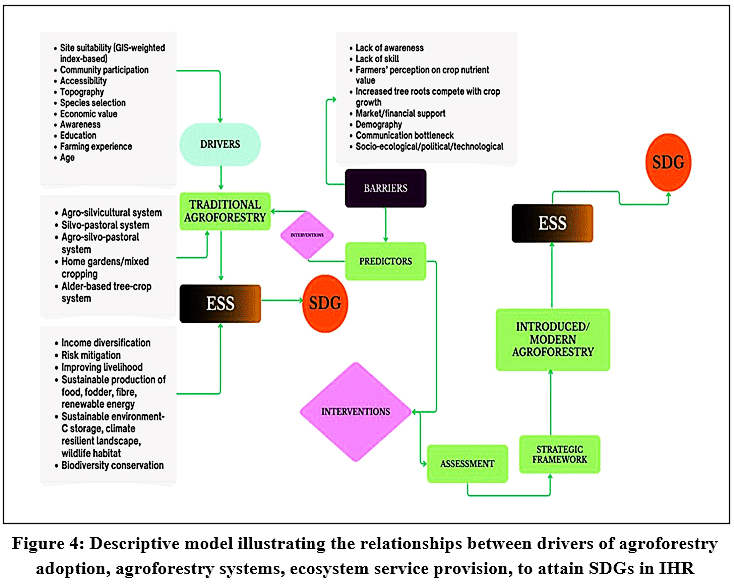 |
Figure 4: Descriptive model illustrating the relationships between drivers of agroforestry adoption, agroforestry systems, ecosystem service provision, to attain SDGs in IHR |
ESS provision from AF in IHR
AF is associated with provisioning, regulatory, supporting and cultural ESS that enhance the ecological and socio-economic sustainability with resilience reducing climate vulnerability in IHR14,122 (Table 3). Provisioning ESS offers food security together with livelihood diversification and additional income generated from homegardens/non-timber forest produces (NTFPs) from AF in remote mountain areas. Regulatory ESS enhance productivity, yield, nutrient/water cycle, C-storage in soil and biomass from the organic matter derived from litters/root decompositions. Communities practice IKS in farming from ancient time with coherence of cultural ESS. However, socio-economic barriers like quality knowledge dissemination, duration of labour, capital, technical skills, insufficient research and actor interactions are yet to be addressed with adequate policy targets, extension services involving large stakeholders.49,123,124
Table 3: AF-functional role and benefits for ESS in relevance to SDGs in IHR
|
ESS category |
AF-Functional role and benefits |
Relevant SDGs |
SDG Target Quantitative indicators
|
|
Provisioning |
Provisioning traditional direct/indirect food with high nutrients; fodder for livestock; tree-based products with multiple benefits for family subsistence and commercial aspects (timber, fibre, dye etc.) derived through local knowledge; medicinal value; application of organic method; sustainable livelihood generation (basic requirement; cash generation) through income diversification |
SDG 1, 2,3, 12 |
1.1.1: people living on <$ 1.25 a day; 1.2.1: Proportion of population living below the national poverty line, total/urban/rural (%); 2.a.1: Presently above median of country values (0.45); 2.3.1: Productivity/average income of small scale food producers; 5.a.1a: proportion of total agricultural population with ownership or secure rights over agricultural land; 5.a.1b: Women share among owners/right bearers of agricultural land; 6.4.1: water use efficiency(United States dollars per cubic meter) 6.4.2: level of water stress (17.59); 15.1.1: Forest area as a proportion of total land area. |
|
Regulating |
Regulation of ecosystem processes; soil productivity; regulation of water(flood/drought)/nutrients/wind/pollination/pest/human disease/microclimate; improved quality and yield of structural components; protects from pathogens; C-sequestration; N2-fixation; heat/water vapor transfer; moderation of climate change |
SDG 2, 3, 6,13, 15 |
|
|
Supporting |
Habitat creation; life support for wildlife/plants/animals; landscape connectivity to support biodiversity and conservation; soil productivity; food/fibre production support; nutrient cycling; water quality management; support arthropods (predatory insects)/microbial activity/pollinators; integrity of the ecosystem |
SDG 2, 5, 6, 12, 13, 15 |
|
|
Cultural |
Aesthetic; spiritual; cultural identity/heritage; traditional knowledge; social integrity; ecotourism; health benefits (emotional/cognitive); inspiration; support provisioning/regulatory services; environment protection; empower smallholders; cultural practice of fodder collection; other intangible services |
SDG 8, 11 |
Policy and governance gaps
The National Agroforestry policy provisions incentives (input subsidies/interest moratorium) during gestation period to encourage farmers while developing value chains. However, many cultivation practices like Piper-AF lacks incentives while Minimum Support Price (MSP) is restricted only to selective products in IHR.52 Under Mahatma Gandhi National Rural Employment Guarantee Act (MGNREGA), multiple varieties of fruit trees, agar, lemon are planted in plots. The trained farmers (semi-skilled/skilled) are suggested to be provided wages during growth phase for the maintenance of the plots for a tenure of 100days/year to supplement the income, fix accountability and incentivize forest maintenance.125 CAMPA funds could also be utilized for social audit, physical verification, third party verification and application of modern tools and techniques like drones/satellite mapping as a modern approach. Under National Bamboo Mission, a total of 208 product development and processing units were established in North-East India. Also, a total of 15 research and development activities were carried out during 2018-2022. In IHR, bamboo is a sustainable resource. However, significant economic disparities occur in between trained and traditional collectors requiring more trainings and market availability.126 In Himalayan states, the land tenure system varies with the tribe, and often within villages of same tribe.127 In the district of Mon and Zunheboto, Nagaland (North-Eastern Himalayas), the village chief locally hold the ownership of land with limited share of the state ownership. The village council coordinates with the villagers before each burning and planting like activities for SC. Thus, decision-making is significantly hold by the local communities. Governments have adopted technologies to decrease deforestation and improve agricultural production with high yielding varieties to encourage settled agriculture. However, significant improvement could not be achieved pertaining to the constraints related to terracing/irrigation and market opportunities in the mountain ecosystem. Farmers of remote areas are not much aware about the cash market opportunities. While farmers emphasize more on subsistence crops in SC, secured land tenure increases preference towards cash crops.128 The landscapes are gradually occupied more by the commercial crops supported by government schemes. Thus, settled systems should be approached with community led provisions encouraging the farmers for multi-cropping. In IHR, AF is significantly constrained by fragmented policies and multi-sectoral disconnectedness that creates uncertainties in regulatory operations. It limits the farmers’ ability to integrate and manage trees on their farmlands pertaining to forest regulations, complex bureaucratic, tenure and harvesting rights procedures.129,130 Thus, AF is often not recognized adequately as a conducive agricultural strategy under the existing governance framework. Policies are lacking coherence prior to implementation that creates silos in promoting AF. Also, farmers are more familiar with the conventional approaches that provide short return, and are supported by government subsidies.131 Individual consideration of AF and forestry limits its coherence inclusion in land-use policies with investments and monitoring.132,133 Also, limited regional evidence-based outcomes of AF contributing to SDGs hinder successful framing of policies. Socio-economic benefits together with trade-offs are overlooked by the quantitative data limitations, and large-scale investments are limited by the inadequate justifications.32,89,99 Also, successful AF management requires site specific selection of tree/crop species with standardized assessment methodologies for ESS under diverse climatic regions in IHR.134,135 Inadequate data availability restricts the inclusion of AF in climate report systems like Measurement, Reporting, and Verification (MRV). Governance sector is to be strengthened with financial/technical capabilities, commercial, extension and mass awareness services for the small-holder farmers with reliable information and consultatory. The multifunctionality of AF is to be realized with IKS, coordination among institutions, stakeholders and policies.84,136 Evidence-based data generated through long-term research would be useful for realizing the impact of AF in regional level and policy framework.137 Overall, AF is to be aligned with climate change, biodiversity conservation and SDGs with a holistic approach for adaptability, scalability and sustainability of IHR.
Recommendations
In IHR, to enhance farmers participation, socio-economic and ecological attributes through AF, the following inclusions are recommended:
Adoption of altitude specific policies and hybrid AF
In IHR distinct zones occur along the altitudinal gradient with bioclimatic variations affecting adoption of AF. While growing season is restricted in higher elevations, the productivity in different elevations is dependent upon the chosen structural components, microclimatic and dynamic spatiotemporal abiotic/biotic attributes. Hybrid AF is a climate-smart approach that involves cultivation of improved species integrated with IKS providing high return than the conventional approach (SDG 1, 2, 8, 13, 15, 17). Thus, the policy framework is to be formulated based on resources, drivers, bioclimatic barriers together with socioeconomic attributes affecting mountain people considering spatial heterogeneity along the elevations of IHR.
Integration of AF with ecosystem restoration and socio-economic benefits
As land availability is among the major constraints, AF adoption along the degraded lands would be a cost-effective conservation and restoration approach with direct economic benefits to the farmers (SDG 8, 13, Target 15.2, 15.3, 15.9). In IHR, intensive flood causes river bank erosion, loss of lives, crops, properties, and causes huge economic impact on states. In Eastern Himalayas, NITI Aayog has listed Bamboo-AF as the most potential system for reclamation of wasteland, however, the approach is yet to be adopted significantly. Modern AF-Watershed management with scientific approach is a cost-effective approach to flood risk reduction, soil conservation, farm resilience and economic well-being. The scientific studies on spacing, nutrient regulation, compatibility, scalability and other management practices like mulching/biochar amendments to enhance the productivity are to be adequately conducted under heterogenous microclimatic conditions of Himalayas (SDG 1, 2, 13, 15). Also, inhibitory effects are to be studied to implement the proposed modern approaches like biochar amendment in a landscape across different agroclimatic regions to aware the farmers with the principles, applications and socio-economic benefits.
Community-led approach in existing land tenure system for managing AF
The tribal land tenure system varies among the tribes in IHR. Also, the crops chosen for cultivation practices depend on individual/societal perceptions associated with land tenure security under statutory protection supported by schemes. Notably, many cultivation lands are without any clear ownership. In East Khasi, Meghalaya (North-Eastern Himalayas), individual families may hold lands (Ri-Kynti), controlled by clan council on land transfer without government revenue. However, the land right of community lands like Ri-Raid, may be shifted to individuals depending on the contribution for land improvement.138 Also, decision by farmers to adopt AF effectively is dependent upon their local farm practices and land tenure security influenced by power through policy framework. Indigenous crop diversity decreases with emphasizing on high yielding commercial crops that impacts on native crop varieties affecting on SDG 2/15. SC is still intensive in community lands of IHR. Thus, policies are required to be adaptive to systematically support local farm practices and assisting in mainstreaming the AF for improving socio-economic structure integrating traditional crop varieties/landraces in individual/community lands through knowledge sharing, sustainable finance (public/private) holistically with land rights, customary norms and cultural identity of different tribes contributing to SDG 2 (Target 2.5), SDG 3, SDG 10 (Target 10.2/10.3), SDG 15 (Target 15.2/15.5), and SDG 17 in IHR.
Conclusion
In conclusion, AF system is a NbS for ecological restoration, efficient land-use and mountain livelihoods that derives benefits from multi-strata structural units contributing to multiple ESS. AF-policies should support SDGs with community participation including landless cultivators for climate and socio-economic resilience with more sectoral connectivity pertaining to weakly emphasized SDGs like gender equality, quality education and infrastructure. Governance is required to be strengthened towards addressing the barriers of AF-policy implementations with adequate subsidies/credits/incentives for trees/crops pertaining to land tenure systems and changes in microclimates controlled by altitudinal gradients with more women participations in IHR.
Acknowledgement
The authors duly acknowledge the valuable insights provided by the Department Agriculture, Papum Pare district, Arunachal Pradesh, India.
Funding Sources
The author(s) received no financial support for the research, authorship, and/or publication of this article.
Conflict of Interest
The authors do not have any conflict of interest.
Data Availability Statement
The data for the ‘Review’ is sourced from the publicly available databases. All articles/reports and data can be accessed by cited references. The present study does not generate any new data.
Ethics Statement
The study does not involve any human participants, animal subjects, or any material requiring ethical approval.
Informed Consent Statement
This study did not involve human participants, and therefore, informed consent was not required.
Clinical Trial Registration
This research did not involve any clinical trials.
Permission to reproduce material from other sources
For Figure: Figure 3 has been adapted with permission from E. S. Ramil, J. Holland, D.E. Anagnostou et al., A review of agroforestry, precision agriculture, and precision livestock farming-The case for a data-driven agroforestry strategy, Front. Sens., Frontiers, 2022, https://doi.org/10.3389/fsens.2022.998928. Reprinted Copyright © 2022 CC-BY license.
Authors’ Contributions
- Govind Ram Sankhala: analysed, interpreted, and wrote the original draft;
- Durairaj Balasubramanian and Biswajyoti Bikomia Deori: reviewed critically for intellectual content, validated the final draft;
- Dharitri Borah: conceptualized, critically reviewed intellectual content, and validated the final draft.
References
- P. Yadav, Sustainable Agroforestry Systems for Livelihood Security and their Economic Appraisal in Indian Himalayas. Econ. Aff. 63, 633-639 (2018). https://doi.org/10.30954/0424-2513.3.2018.7.
CrossRef - J. Zomer, J. Yang, D. Spano et al., Irrecoverable carbon in mountains and the global mitigation potential of agroforestry and increased tree cover in mountain agricultural systems. Circ. Agric. Syst. 3, 1-13 (2023). https://doi.org/10.48130/cas-2023-0011.
CrossRef - Jinger, R. Kaushal, R. Kumar et al., Degraded land rehabilitation through agroforestry in India: Achievements, current understanding, and future prospectives. Front. Ecol. Evol. 11,1088796 (2023). https://doi.org/10.3389/fevo.2023.1088796.
CrossRef - Sharma, K. S. Pant, R. Bishist et al., Carbon stock potential of agroforestry systems in low hills of north-western Himalayas. Indian J. Agric. Sci. 93, 642-646 (2023). https://doi.org/10.56093/ijas.v93i6.123589.
CrossRef - Hazarika, B. Kurmi, R. Francaviglia et al., The transition from shifting cultivation to indigenous agroforestry as nature-based solution for land restoration in the Indian Eastern Himalayas. Ecol. Indic. 162, 112031 (2024). https://doi.org/10.1016/j.ecolind.2024.112031.
CrossRef - Bhandari, S. Paudel, S. Upadhaya et al., Socio-Economic and Environmental Benefits of Agroforestry and Its Multilevel Barriers to Adoption: A Systematic Review. Sustainability, 18, 5 (2026). https://doi.org/10.3390/su18010005.
CrossRef - F. Madiwalar, K. T. Parthiban, Evaluation of cultural ecosystem services of pulpwood multifunctional agroforestry: a case study from the foothills of the Nilgiris, western ghats, India. Appl. Ecol. Environ. Res. 21, 2611-2624 (2023). https://doi.org/10.15666/aeer/2103_26112624.
CrossRef - H. Rahman, H. E. Ahrends, A. Raza et al., Current approaches for modeling ecosystem services and biodiversity in agroforestry systems: Challenges and ways forward. Front. For. Glob. Change. 5, 1032442 (2023). https://doi.org/10.3389/ffgc.2022.1032442.
CrossRef - Saleem, J. A. Mugloo, N. A. Pala et al., Biomass production, carbon stock and sequestration potential of prominent agroforestry systems in north-western Himalaya, India. Front. For. Glob. Change. 6:1192382 (2023). https://doi.org/10.3389/ffgc.2023.1192382.
CrossRef - Vineeta, B. Tamang, G. Shukla et al., The urge of conserving tradition from climate change: A case study of Darjeeling Himalayan large cardamom-based traditional agroforestry farming system. Nat.-Based Solut. 3, 100064 (2023). https://doi.org/10.1016/j.nbsj.2023.100064.
CrossRef - T. Lepcha, N. B. Devi, Carbon cycling and balance in a traditional cardamom based agroforestry system of Sikkim Himalayas. Trop. Ecol. 61, 527-537 (2020). https://doi.org/10.1007/s42965-020-00110-9.
CrossRef - Yadav, J. K. Bisht, T. Mondal et al., Diversified Climate Resilient Pecan (Carya Illinoinensis (Wangenh.) K. Koch) Based Sustainable Agroforestry Improves Livelihood and Returns in Indian Himalaya. Appl. Ecol. Environ. Res. 19, 1309 (2021). https://doi.org/10.15666/aeer/1902_13091323.
CrossRef - Roy, A. Suman, S. Ray et al., Use of species distribution models to study habitat suitability for sustainable management and conservation in the Indian subcontinent: A decade’s retrospective. Front. Sustain. Resour. Manag. 1, 1031646 (2022). https://doi.org/10.3389/fsrma.2022.1031646.
CrossRef - Arshad, S. Rouf, R. N. Abbas et al., Navigating Synergies: A Comprehensive Review of Agroforestry System and Agronomy Crops. Haya Saudi J. Life Sci. 9, 97-113 (2024). https://doi.org/10.36348/sjls.2024.v09i04.003.
CrossRef - Singh, M. K. Riyal, B. Singh et al., Carbon Sequestration Potential of Agroforestry versus Adjoining Forests at Different Altitudes in the Garhwal Himalayas. Atmosphere 15, 313 (2024). https://doi.org/10.3390/atmos15030313.
CrossRef - Kumar, S. Kumar, V. P. Khanduri et al., Tree diversity, carbon sequestration and production potential of Oryza sativa L. in traditional agroforestry systems of Garhwal Himalaya, India. Carbon Res. 4: 6 (2025). https://doi.org/10.1007/s44246-024-00158-5.
CrossRef - Sharma, J. Xu, G. Sharma, Traditional agroforestry in the eastern Himalayan region: Land management system supporting ecosystem services. Trop. Ecol. 48, 1-12 (2007).
- Rangappa, N. R. Singh, J. R. Janyanaik et al., Tree crop interactions, productivity and physiological efficiency of understorey crops in Alnus nepalensis and Gmelina arborea based agroforestry systems in Eastern Himalayas. Front. Sustain. Food Syst. 9, 1494371 (2025). https://doi.org/10.3389/fsufs.2025.1494371.
CrossRef - Pangging, Documentation and valuation of tree species used in traditional agroforestry systems by Nyishi tribe of Arunachal Pradesh, eastern Himalaya. IJRASET 5, 1489-1497 (2017). https://doi.org/10.22214/ijraset.2017.9216.
CrossRef - Sharma, K.S. Pant, R. Bishist et al., Estimation of biomass and carbon storage potential in agroforestry systems of north western Himalayas, India. Catena 225, 107009 (2023). https://doi.org/10.1016/j.catena.2023.107009.
CrossRef - B. Chavan, R. S. Dhillon, C. Sirohi et al., Optimizing planting geometries in eucalyptus-based food production systems for enhanced yield and carbon sequestration. Front. Sustain. Food Syst. 8, 1386035 (2024). https://doi.org/10.3389/fsufs.2024.1386035.
CrossRef - Raihan, A review of agroforestry as a sustainable and resilient agriculture. J. Agric. Sustain. Environ. 2, 49-72 (2023). https://doi.org/10.56556/jase.v2i1.799.
CrossRef - Shi, W. Feng, J. Xu et al., Agroforestry systems: Meta-analysis of soil carbon stocks, sequestration processes, and future potentials. Land Degrad. Dev. 29, 3886–3897 (2018). https://doi.org/10.1002/ldr.3136.
CrossRef - Chisanga, D. R. Bhardwaj, N. A. Pala et al., Biomass production and carbon stock inventory of high-altitude dry temperate land use systems in North Western Himalaya. Ecol. Process. 7, 22 (2018). https://doi.org/10.1186/s13717-018-0134-8.
CrossRef - A. Abbas, S. Asad, J. Zhang et al., Agroforestry as a Climate-Smart Economic Strategy: Carbon Benefits, Adaptation Pathways, and Global Evidence from Smallholder Systems. Forests 17, 159 (2026). https://doi.org/10.3390/f17020159.
CrossRef - Sharma, M. Dhote, Cultural-ecological synergies: Traditional practices and biophysical systems in India’s agro-climatic regions. Int. J. Sci. Res. Arch. 15, 361-372 (2025). https://doi.org/10.30574/ijsra.2025.15.1.0947.
CrossRef - Suresh, Policy and Practices in Soil Conservation: A Comparative Review across Agro-Ecological Zones. IJRASET 13, 1140-1148 (2025). https://doi.org/10.22214/ijraset.2025.73136.
CrossRef - Barman, R. Bhattacharyya, C. Singh et al., Long-term agroforestry enhances soil organic carbon pools and deep soil carbon sequestration in the Indian Himalayas. Front. Environ. Sci. 13, 1568564 (2025). https://doi.org/10.3389/fenvs. 2025.1568564.
CrossRef - K. Das, Stability of organic carbon pools and sequestration potential as affected under different agroforestry systems. Crop Health 1, 14 (2023). https://doi.org/10.1007/s44297-023-00016-7.
CrossRef - Worku, The Role of Agroforestry in Ecosystem Services and Mitigation of Climate Change. Vegetable crops of Russia. 4, 111-119 (2024). https://doi.org/10.18619/2072-9146-2024-4-111-119.
CrossRef - J. Scherr, S. Shames, R. Friedman, From climate-smart agriculture to climate-smart landscapes. Agric. & Food Secur. 1: 12 (2012). https://doi.org/10.1186/2048-7010-1-12.
CrossRef - Goparaju, F. Ahmad, M. Uddin et al., Agroforestry: An effective multi-dimensional mechanism for achieving Sustainable Development Goals. Ecol. Quest. 31, 63-71 (2020). https://doi.org/10.12775/eq.2020.023.
CrossRef - C. Teo, A. Lamba, S. J. W. Ng et al., Reduction of deforestation by agroforestry in high carbon stock forests of Southeast Asia. Nat. Sustain. 8, 358–362 (2025). https://doi.org/10.1038/s41893-025-01532-w.
CrossRef - Kapoor, B. Gupta, S. R. Mohapatra et al., Traditional Agroforestry Practices as Sustainable Livelihood Option in High-Hill Wet Temperate Areas of North-Western Indian Himalaya. Sustain. For. 44, 1074-1094 (2025). https://doi.org/10.1080/ 10549811.2025.2568225.
CrossRef - Kurmi, A. J. Nath, G. W. Sileshi, Land use change affects net ecosystem production in the Eastern Indian Himalayan region. Environ. Sustain. Indic. 26, 100670 (2025). https://doi.org/10.1016/j.indic.2025.100670.
CrossRef - E. S. Ramil, J. Holland, D. E. Anagnostou et al., A review of agroforestry, precision agriculture, and precision livestock farming—The case for a data-driven agroforestry strategy. Front. Sens. 3, 998928 (2022). https://doi.org/10.3389/ fsens. 2022.998928.
CrossRef - P. Dahal, S. Kafle, K. Khanal et al., Agroforestry and traditional knowledge: Lessons from indigenous practices in South Asian Countries: A review. Arch. Agric. Environ. Sci. 10, 189–196 (2025). https://doi.org/10.26832/24566632.2025. 1001027.
CrossRef - Waheed, F. Arshad, K. Fatima et al., Optimizing agroforestry systems through traditional ecological knowledge: a sustainable model for tree species selection in semi-arid lowland region. Agroforest. Syst. 99, 176 (2025). https://doi.org/10.1007/s10457-025-01277-7.
CrossRef - Singh, G. S. Singh, Traditional agriculture: a climate-smart approach for sustainable food production. Energ. Ecol. Environ. 2, 296–316 (2017). https://doi.org/10.1007/s40974-017-0074-7.
CrossRef - de B. Q. Gonçalves, M. M. Schlindwein, G. do C. Martinelli, Agroforestry Systems: A Systematic Review Focusing on Traditional Indigenous Practices, Food and Nutrition Security, Economic Viability, and the Role of Women. Sustainability 13, 11397 (2021). https://doi.org/10.3390/su132011397.
CrossRef - Goswami, K.S. Verma, R. Kaushal, Biomass and carbon sequestration in different agroforestry systems of a Western Himalayan watershed. Biol. Agric. Hortic. 30, 88-96 (2014). https://doi.org/10.1080/01448765.2013.855990.
CrossRef - Adhikari, N. Lodhiyal, L.S. Lodhiyal, Assessment of crop yield, productivity and carbon sequestration in agroforestry systems in Central Himalaya, India. Agroforest. Syst. 94, 281–296 (2020). https://doi.org/10.1007/s10457-019-00388-2.
CrossRef - Saravanan, N. Berry, Agroforestry Practices in Tamil Nadu, India – A Boon for Farmers for Livelihood Security. Curr. Sci. 120, 644-653 (2021). https://doi.org/10.18520/cs/v120/i4/644-653.
CrossRef - T. Hang, G. Bonari, M. Sauerwein et al., Traditional agroforestry systems in Europe revisited: a systematic review. Agroforest. Syst. 99, 236 (2025). https://doi.org/10.1007/s10457-025-01335-0.
CrossRef - Chakraborty, T. Mondal, R. Dhar et al., Sericulture-based agroforestry systems in India: Farming models for Economic and environmental sustainability. Int. J. Agric. Extension Social Dev. 8, 6-10 (2025). https://doi.org/10.33545/26180723.2025. v8.i11a.2613.
CrossRef - Das, U. Sharma, N. Sankhyan et al., Integrating millets into agroforestry systems: A climate-smart strategy for sustainable land use and livelihood improvement with special emphasis on India. Trees For. People 22, 101087 (2025). https://doi.org/10.1016/j.tfp.2025.101087.
CrossRef - Kumar, T. K. Thakur, A. Bijalwan et al., Agroforestry: Viable and Futuristic Option for Food Security and Sustainability in India. Int. J. Curr. Microbiol. App. Sci. 6, 210-222 (2017). https://doi.org/10.20546/ijcmas.2017.607.025.
CrossRef - Bijalwan, P. Verma, M. Dobriyal et al., Trends and Insights of Agroforestry Practices in Madhya Pradesh, India. Curr. Sci. 117, 597 (2019). https://doi.org/10.18520/cs/v117/i4/597-605.
CrossRef - Tranchina, B, Reubens, M. Frey et al., What challenges impede the adoption of agroforestry practices? A global perspective through a systematic literature review. Agroforest. Syst. 98, 1817–1837 (2024). https://doi.org/10.1007/s10457-024-00993-w
CrossRef - Sharma, U. Mina, A. Devi et al., Role of agrobiodiversity in indigenous homegarden agroforestry systems of the eastern himalayas in enhancing food security. Agroforest. Syst. 100, 45 (2026). https://doi.org/10.1007/s10457-025-01429-9.
CrossRef - Dutta, P. Deb, A. K. Das. Factors shaping plant diversity in traditional agroforestry system of dominant ethnic communities of upper Brahmaputra valley regions of Northeast India. Agroforest. Syst. 97, 727–738 (2023). https://doi.org/10.1007/s10457-023-00823-5.
CrossRef - Reang, A. Hazarika, G. W. Sileshi et al., Piper agroforestry in the Indian Himalayas: indigenous peoples’ practices, policies and incentives. CABI Agric. Biosci. 5, 9 (2024). https://doi.org/10.1186/s43170-024-00214-5.
CrossRef - S. Bawa, R. Seidler, Sustainable pathways toward reimagining India’s agricultural systems. Commun. Earth Environ. 4: 262 (2023). https://doi.org/10.1038/s43247-023-00902-6.
CrossRef - Krishan, Y. Baghe, A. Dixit et al., Empowering women through agroforestry: Opportunities and barriers in India. Int. J. Agric. Extension Social Dev. 8, 438-447 (2025). https://doi.org/10.33545/26180723.2025.v8.i10g.2566.
CrossRef - S. Rathore, S. Babu, A. H. El‐Sappah et al., Integrated agroforestry systems improve soil carbon storage, water productivity, and economic returns in the marginal land of the semi-arid region. Saudi J. Biol. Sci. 29, 103427 (2022). https://doi.org/10.1016/j.sjbs.2022.103427.
CrossRef - Verma, P. Sharma, D. R. Bhardwaj et al., Cultivating debate: the dichotomy of trees in agroecosystems. Front. For. Glob. Change. 7, 1371082 (2024). https://doi.org/10.3389/ffgc.2024.1371082.
CrossRef - Brandolini, A. Gurgel, A. Zerboni, Data-driven scenario analysis supports the revival of historic silvoarable systems for carbon smart rural landscapes. Sci. Rep. 15, 34963 (2025). https://doi.org/10.1038/s41598-025-18950-7.
CrossRef - Priya, Harsh, V. Johar, Exploring the Evolution of Agroforestry: Comparing Traditional and Modern Practices for Sustainable Agriculture. AATPS 8, 180164 (2025). https://doi.org/10.63235/AATPS.180164.
CrossRef - A. Islam, J. A. Mugloo, A. Raj et al., Agroforestry Strategy for Revitalizing Fodder Security in Kashmir Himalaya, India. Agric. Res. 11, 528–538 (2022). https://doi.org/10.1007/s40003-021-00592-6.
CrossRef - Keprate, D. R. Bhardwaj, P. Sharma et al., Biomass Partitioning, Carbon Storage, and Pea (Pisum sativum L.) Crop Production under a Grewia optiva-Based Agroforestry System in the Mid-Hills of the Northwestern Himalayas. Sustainability 16, 7438 (2024). https://doi.org/10.3390/su16177438.
CrossRef - Dash, B. Gupta, D. R. Bhardwaj et al., Tree spacings and nutrient sources effect on turmeric yield, quality, bio-economics and soil fertility in a poplar-based agroforestry system in Indian Himalayas. Agroforest. Syst. 98, 911–931 (2024). https://doi.org/10.1007/s10457-024-00962-3.
CrossRef - P. Singh, A. Bijalwan, T. S. Bisht et al., Evaluation of growth, yield, economics and soilproperties of agri-horticulture systems in mid-hill situations of Himalayas. Agroforest. Syst. 97, 1113–1130 (2023). https://doi.org/10.1007/s10457-023-00851-1.
CrossRef - Saakshi, D. R. Bhardwaj, A. K. Bhatia, Land use and land cover analysis in agroforestry and other land use categories in Shimla district of Himachal Pradesh: a GIS-based analysis in North Western Himalayas. For. 1:33 (2025). https://doi.org/10.1007/s44415-025-00038-9.
CrossRef - Saakshi, D. R. Bhardwaj, P. P. Sharma et al., Suitability analysis of agroforestry in Himachal Pradesh by using a multi-criteria GIS–AHP approach. Syst. 100, 163 (2026). https://doi.org/10.1007/s10457-026-01538-z.
CrossRef - Arunachalam, M. L. Khan, K. Arunachalam, Balancing traditional jhum cultivation with modern agroforestry in eastern Himalaya – A biodiversity hot spot. Curr. Sci. 83, 117-118 (2002).
- R. Comolli, E. Schegg, C. Infuleski et al., A sustainable integrated agroforestry system. Front. Plant Sci. 16, 1635422 (2025). https://doi.org/10.3389/fpls.2025.1635422.
CrossRef - Reith, Gosling E, Knoke T et al., Exploring trade-offs in agro-ecological landscapes: Using a multi-objective land-use allocation model to support agroforestry research. Basic Appl. Ecol. 64, 103-119 (2022). https://doi.org/10.1016/j.baae. 2022.08.002.
CrossRef - Quandt, H. Neufeldt, K. Gorman, Climate change adaptation through agroforestry: opportunities and gaps. Curr. Opin. Environ. Sustain. 60, 101244 (2023). https://doi.org/10.1016/j.cosust.2022.101244.
CrossRef - M. K. Ashraf, S. K. Ripta, M. T. Rana et al., Biochar enhanced agroforestry systems for carbon sequestration, soil health and climate resilience. Discov. For. 1, 53 (2025). https://doi.org/10.1007/s44415-025-00057-6.
CrossRef - Kapoor, R. Bishist, P. Sharma et al., Integrating bamboo-derived biochar into Morus-based agroforestry for improved soil fertility, crop productivity and environmental sustainability in the North-Western Himalayas. Biomass and Bioenergy 212, 2026, 109295. https://doi.org/10.1016/j.biombioe.2026.109295.
CrossRef - Parmar, A. Vishwakarma, R. Padbhushan et al. Hedge and Alder-Based Agroforestry Systems: Potential Interventions to Carbon Sequestration and Better Crop Productivity in Indian Sub-Himalayas. Front. Environ. Sci. 10, 858948 (2022). https://doi.org/10.3389/fenvs.2022.858948.
CrossRef - Tripathi, Kashyap, S. Shah, Effect of organic amendments on growth and yield attributes of medicinal and aromatic plants under peach-based agroforestry system in the mid-hills of the Western Himalayas. For. Trees Livelihoods 29, 222–237 (2020). https://doi.org/10.1080/14728028.2020.1812444.
CrossRef - Garima, D. R. Bhardwaj, R. Kaushal et al., Performance of ginger crop in response to integrated nutrient management under bamboo-based agroforestry system in mid-hill sub-humid conditions of Himachal Pradesh. J. Farm Sci. 6, 24-29 (2016).
- Mahato, S. Dasgupta, N. P. Todaria et al., Agroforestry mapping and characterization in four districts of Garhwal Himalaya. Energ. Ecol. Environ. 1, 86–97 (2016). https://doi.org/10.1007/s40974-016-0020-0.
CrossRef - C. Rathore, P. L. Saroj, H. Lal et al., Performance of mango based agri-horticultural models under rainfed situation of Western Himalaya, India. Agroforest. Syst. 87, 1389–1404 (2013). https://doi.org/10.1007/s10457-013-9646-5.
CrossRef - Vineeta, B. Tamang, S. Saril et al., Ecosystem Services of Traditional Large Cardamom Based Agroforestry Systems of Darjeeling and Sikkim Himalayas. Tree Sci. 40, 78 – 91 (2021). http://dx.doi.org/10.5958/2455-7129.2021.00006.6.
CrossRef - U. Choudhury, G. Nengzouzam, S. Mandal, Long-term effect of integrated farming systems on soil erosion in hilly micro-watersheds (Indian Eastern Himalayas). Land Degrad Dev. 33, 2554–2566 (2022). https://doi.org/10.1002/ldr.4332.
CrossRef - Montes-Escobar, J. D. la Hoz-M, M. D. Barreiro-Linzán et al., Trends in Agroforestry Research from 1993 to 2022: A Topic Model Using Latent Dirichlet Allocation and HJ-Biplot. Mathematics 11, 2250 (2023). https://doi.org/10.3390/ math1110 2250.
CrossRef - K. Singh, C. M. Biradar, M. D. Behera et al., Optimising carbon fixation through agroforestry: Estimation of aboveground biomass using multi-sensor data synergy and machine learning. Ecol. Inform. 79, 102408 (2024). https://doi.org/10.1016/j. ecoinf.2023.102408.
CrossRef - Barbault, C. Dupraz, P. E. Lauri, Insights into fruit tree models relevant to simulate fruit tree‑based agroforestry systems. Agroforest. Syst. 98, 817–835 (2024). https://doi.org/10.1007/s10457-024-00953-4.
CrossRef - S. Meena, G. Pradhan, K. Singh et al., Agriculture models for restoring degraded land to enhance CO2 biosequestration and carbon credits in the Vindhyan region of India. Sci. Total Environ. 929, 172661 (2024). https://doi.org/10.1016/ j.scitotenv. 2024.172661.
CrossRef - C. Mupepele, M. Keller, C.F. Dormann, European agroforestry has no unequivocal effect on biodiversity: a time-cumulative meta-analysis. BMC Ecol. Evo. 21, 193 (2021). https://doi.org/10.1186/s12862-021-01911-9.
CrossRef - Mukhlis, M. S. Rizaludin, I. Hidayah, Understanding Socio-Economic and Environmental Impacts of Agroforestry on Rural Communities. Forests 13, 556 (2022). https://doi.org/10.3390/f13040556.
CrossRef - Datta, B. Behera, D. B. Rahut, India’s approach to agroforestry as an effective strategy in the context of climate change: An evaluation of 28 state climate change action plans. Agric. Syst. 214, 103840 (2023). https://doi.org/10.1016/j.agsy.2023. 103840.
CrossRef - Venn, F. E. Montero-de-Oliveira, J. Buratti-Donham et al., Policies for agroforestry, a narrative review of four ‘continental’ regions: EU, India, Brazil, and the United States. Front. Sustain. Food Syst. 8, 1417740 (2024). https://doi.org/10.3389/ fsufs.2024.1417740.
CrossRef - G. Abebe, Z. Y. Amare, P. Dietrich et al., The Contributions of Agroforestry to Achieve Food and Livelihood Security in Ethiopian Agricultural Community: A Comprehensive Review. Small-Scale For. 24, 35 (2025). https://doi.org/10.1007/s11842-025-09588-4.
CrossRef - Paudel, S. Bhandari, S. Upadhaya, Agroforestry for pollinator support and food security: a review. Front. Sustain. Food Syst. 9, 1703823 (2025). https://doi.org/10.3389/fsufs.2025.1703823.
CrossRef - Mondal, P. B. Angon, A. R. Roy, Ecological Advancements and Developments of Agroforestry. Turk. J. Agric. – Food Sci. Technol. 11, 2476–2480 (2023). https://doi.org/10.24925/turjaf.v11i12.2476-2480.6172.
CrossRef - C. Miller, P. J. Ordóñez, S. E. Brown et al., The impacts of agroforestry on agricultural productivity, ecosystem services, and human well‐being in low‐and middle‐income countries: An evidence and gap map. Campbell Syst. Rev. 16, e1066 (2019). https://doi.org/10.1002/cl2.1066.
CrossRef - Ahmad, M. M. Uddin, L. Goparaju et al., Quantification of the Land Potential for Scaling Agroforestry in South Asia. KN-J. Cartogr. Geogr. Inf. 70, 71-89 (2020). https://doi.org/10.1007/s42489-020-00045-0.
CrossRef - Jose, Agroforestry for ecosystem services and environmental benefits: an overview. Agroforest. Syst. 76, 1-102009. https://doi.org/10.1007/s10457-009-9229-7.
CrossRef - M. Ali, B. Ahmad, M. S. Bari et al., An assessment of agroforestry as a climate‐smart practice: Evidences from farmers of northwestern region of Bangladesh. Agrosyst. Geosci. Environ. 7, e20501 (2024). https://doi.org/10.1002/agg2.20501.
CrossRef - S. Desta, A. Abebe, T. Woldemariam et al., Weaving the green thread: Forest and landscape restoration and nature-based-solutions for achieving the SDGs in Oromia and former SNNP regions of Ethiopia. Nat.-Based Solut. 8, 100270 (2025). https://doi.org/10.1016/j.nbsj.2025.100270.
CrossRef - Janzen, J. Balzer, F. Merk et al., Moving towards a comprehensive evaluation of ecosystem-based disaster risk reduction: The example of agroforestry for flood risk reduction. Nat.-Based Solut. 5, 100104 (2024). https://doi.org/10.1016/j.nbsj.2023.100104.
CrossRef - B. M. de Lima, M. Cavalcante, Santos d. et al., Soil aggregate stability influenced by different integrated livestock-forest systems, pastures, and tillage in the Brazilian semi-arid areas. J. Arid Land 18, 477–500 (2026). https://doi.org/10.1016/j.jaridl.2026.03.007.
CrossRef - I. McDonald, R. Chaplin-Kramer, M. Mulligan et al., Win-wins or trade-offs? Site and strategy determine carbon and local ecosystem service benefits for protection, restoration, and agroforestry. Front. Environ. Sci. 12, 1432654 (2024). https://doi.org/10.3389/fenvs.2024.1432654.
CrossRef - Paudel, S. Upadhaya, S. Bhandari et al., Performance of an Elderberry–Bell Pepper Agroforestry System in the Southeastern US and Insights for Farm Decision‐Making. J. Sustain. Agric. Environ. 5, e70143 (2026). https://doi.org/10.1002/ sae2. 70143.
CrossRef - Sharma, J. Ashraf, R. Pandey, Evaluation of nature-based solutions’ contributions to the sustainable development goals. Ecol. Indic. 180, 114378 (2025). https://doi.org/10.1016/j.ecolind.2025.114378.
CrossRef - Telwala, Unlocking the potential of agroforestry as a nature-based solution for localizing sustainable development goals: A case study from a drought-prone region in rural India. Nat.-Based Solut. 3, 100045 (2023). https://doi.org/10.1016/ j.nbsj.2022.100045.
CrossRef - Waldron, D. Garrity, Y. Malhi et al., Agroforestry Can Enhance Food Security While Meeting Other Sustainable Development Goals. Trop. Conserv. Sci. 10, 1-6 (2017). https://doi.org/10.1177/1940082917720667.
CrossRef - van Noordwijk, L. A. Duguma, S. Dewi et al., SDG synergy between agriculture and forestry in the food, energy, water and income nexus: reinventing agroforestry? Curr. Opin. Environ. Sustain. 34, 33–42 (2018). https://doi.org/10.1016/j. cosust. 2018. 09.003.
CrossRef - Ahrens, S. Benedikter, L. Giessen, Rethinking Synergies and Trade-Offs at the Forest-Sustainable Development Goals (SDGs) Nexus—A Systematic Review. Sustainable Development 33, 5069–5090 (2025). https://doi.org/10.1002/sd.3372.
CrossRef - Sharma, U. Mina, B. M. Kumar, Homegarden agroforestry systems in achievement of Sustainable Development Goals. A review. Agron. Sustain. Dev. 42, 44 (2022). https://doi.org/10.1007/s13593-022-00781-9.
CrossRef - Salma, L. Singh, S. B. Chavan, et al., Agroforestry for livelihood security, environmental sustainability, and Sustainable Development Goals: a comprehensive review. Ecol. 67, 171–196 (2026). https://doi.org/10.1007/s42965-026-00429-9.
CrossRef - Mbow, M. Noordwijk, E. Luedeling et al., Agroforestry solutions to address food security and climate change challenges in Africa. Curr. Opin. Environ. Sustain. 6, 61-67 (2013). https://doi.org/10.1016/j.cosust.2013.10.014.
CrossRef - ernández‐Morcillo, P. Burgess, J. Mirck et al. Scanning agroforestry-based solutions for climate change mitigation and adaptation in Europe. Environ. Sci. Policy 80, 44-52 (2018). https://doi.org/10.1016/j.envsci.2017.11.013.
CrossRef - Degefa, M. Markos, Tree Diversity, Carbon Stock, and Factors Influencing the Adoption of Agroforestry Systems in Dugda District, Ethiopia. Journal Agrofor. Environ. 15, 26-37 (2022). https://doi.org/10.55706/jae1515.
CrossRef - O. Manono, B. Mwami, Agroforestry and Soil Health: A Review of Impacts and Potential for Sustainable Agriculture. Earth 7, 31 (2026). https://doi.org/10.3390/earth7010031.
CrossRef - O. Orji, E. U. Mbah, A. U. Akpan, Agroforestry: A review of its importance, problems and prospects in crop production. Ratar. Povrt. 59, 64-75 (2022) https://doi.org/10.5937/ratpov59-39353.
CrossRef - M. N. S. Dissanayaka, D. K. R. P. L. Dissanayake, S. S. Udumann et al., Agroforestry—a key tool in the climate-smart agriculture context: a review on coconut cultivation in Sri Lanka. Front. Agron. 5, 1162750 (2023). https://doi.org/10.3389/fagro.2023.1162750.
CrossRef - Do, C. Whitney, N. La et al., Adapting agroforestry to upland farming systems: narratives from smallholder farmers in Northwest Vietnam. Agron Sustain. Dev. 44, 17 (2024). https://doi.org/10.1007/s13593-024-00954-8.
CrossRef - Asefa, M. Haile, M. Berhe et al., Climate smart land management practices for livelihood resilience in Ethiopia: A systematic review. Heliyon 11, e42950 (2025). https://doi.org/10.1016/j.heliyon.2025.e42950.
CrossRef - Taillandier, R. Cörvers, L. C. Stringer, Growing resilient futures: agroforestry as a pathway towards climate resilient development for smallholder farmers. Front. Sustain. Food Syst. 7, 1260291(2023). https://doi.org/10.3389/fsufs. 2023. 1260291.
CrossRef - S. P. Assèdé, S. S. H. Biaoua, P. W. Chirwa et al., Low-cost agroforestry technologies for climate change mitigation and adaptation in Sub-Saharan Africa: A review. Bois et Forêts des Tropiques 356, 29-42 (2023). https://doi.org/10.19182/ bft2023.356.a36908.
CrossRef - P. d. Quadro, A. G. d. C. d. Souza, D. B. Nogueira et al., Implementation and Costs of an Agroforestry System in a Degraded Area of the Brazilian Semi-Arid Region. Conservation 5, 20 (2025). https://doi.org/10.3390/conservation5020020.
CrossRef - Tindale, L. J. Frewer, N. Sari et al., Connections to trees in the countryside: exploring public perceptions of agroforestry as a future land management system in England. Agroforest. Syst. 99, 180 (2025). https://doi.org/10.1007/s10457-025-01284-8.
CrossRef - Pandey, R. Aretano, A. K. Gupta et al. Agroecology as a Climate Change Adaptation Strategy for Smallholders of Tehri-Garhwal in the Indian Himalayan Region. Small-scale For. 16, 53–63 (2017). https://doi.org/10.1007/s11842-016-9342-1.
CrossRef - Mathur, P. Bhattacharya, Perception of agroforestry practices and factors influencing adoption among shifting cultivators in Tripura, India. For. Trees and Livelihoods 33, 23–41 (2024). https://doi.org/10.1080/14728028.2023.2286022.
CrossRef - S. Bisht, Lack of stakeholder awareness as barriers in the transition to agroecological food systems: an analytical case study of mountain farming in Uttarakhand, India. Agroecol. Sustain. Food Syst. 1–32 (2026). https://doi.org/10.1080/21683565. 2026.2702610.
CrossRef - Tyagi, Deepika, A.K. Haritash, Potential of agroforestry for environmental and socio-economic sustainability in India. Mitig. Adapt. Strateg. Glob. Change 31, 41 (2026). https://doi.org/10.1007/s11027-026-10309-1.
CrossRef - Kumar, Y. Pal, A. Latta, Bridging tradition and modernity: socio-climatic determinants and farmers’ perceptions of agroforestry adoption in the hilly regions of Himachal Pradesh. Agroforest. Syst. 100, 156 (2026). https://doi.org/10.1007/s10457-026-01535-2.
CrossRef - V. Martinelli, J.M.F. Kramer, L. Meister et al., The landscape of agroforestry in Brazil: a synthesis of research trends, implementation patterns, and policy implications. Agroforest. Syst. 100, 81 (2026). https://doi.org/10.1007/s10457-026-01448-0.
CrossRef - Eshetu, E.M. Yeshiwas, T. G. Feleke, A Systematic Review on the Role of Agroforestry Practices in Climate Change Mitigation and Adaptation. Clim. Resil. Sustain. 4, e70018 (2025). https://doi.org/10.1002/cli2.70018.
CrossRef - Irwin, I. Short, A. N. Dhubháin, Understanding the barriers and enablers to agroforestry adoption in Ireland through an innovation systems approach. J. Rural Stud. 117, 103641 (2025). https://doi.org/10.1016/j.jrurstud.2025.103641.
CrossRef - Yadav, A. V. Yadav, Creating economic incentives for agroforestry in Assam. For. Policy Econ. 149, 102928 (2023). https://doi.org/10.1016/j.forpol.2023.102928.
CrossRef - Baduni, P.C. Phondani, G.C. Bhatt et al., Exploring bamboo resources as a viable option for sustainable livelihoods of mountain communities in the Himalayan region. Discov. Agric. 3, 239 (2025). https://doi.org/10.1007/s44279-025-00404-3.
CrossRef - D. Faminow, K. K Klein, On-farm testing and dissemination of agroforestry among slash-and-burn farmers in Nagaland, India. Dev. Pract. 11, 471-486 (2001). https://doi.org/10.1080/09614520120066756.
CrossRef - R. Lyngkhoi, S. B. Singh, R. Singh et al., Shifting Cultivation to Settled Agriculture: Land Ownership Rights and Cropping Pattern in Meghalaya, Northeast India. IRJEE 1-5 (2022).
- Noordwijk, R. Coe, F. Sinclair, Central hypotheses for the third agroforestry paradigm within a common definition. Working paper 233, Bogor, Indonesia: World Agroforestry Centre (ICRAF) Southeast Asia Regional Program. (2016).
- McGunnigle, D. Bardsley, I. Nuberg et al., The Succession of Farmers’ Perceptions of Transitioning Landscapes – A Case Study of Agroforestry in the Middle Hills of Nepal. Hum. Ecol. 51, 699–717 (2023). https://doi.org/10.1007/s10745-023-00423-y.
CrossRef - Jamnadass, F. Place, E. Torquebiau et al. Agroforestry, food and nutritional security. ICRAF Working Paper No. 170. 2013; Nairobi, World Agroforestry Centre.
- K. Dawson, S. Attwood, S. E. Park et al., Contributions of biodiversity to the sustainable intensification of food production: Thematic study for The State of the World’s Biodiversity for Food and Agriculture. FAO, Rome. 2019; 38 pp.
CrossRef - S. Rosenstock, A Wilkes, C. Jallo et al., Making trees count: Measurement, reporting and verification of agroforestry under the UNFCCC national communications of non-Annex I countries. Agric. Ecosyst. Environ. 284, 106569 (2019). https://doi.org/10.1016/j.agee.2019.106569.
CrossRef - H. Hoang, M. Noordwijk, J. Fox et al., Are trees buffering ecosystems and livelihoods in agricultural landscapes of the Lower Mekong Basin? Consequences for climate-change adaptation. Working Paper 177. 2014. Bogor, Indonesia: World Agroforestry Centre (ICRAF) Southeast Asia Regional Program.
CrossRef - R. Mosquera-Losada, M. G. S. Santos, B. Gonçalves et al., Policy challenges for agroforestry implementation in Europe. Front. For. Glob. Change. 6, 1127601 (2023). https://doi.org/10.3389/ffgc.2023.1127601.
CrossRef - Kumar, M. S. Malik, S. Shabnam et al., Carbon sequestration and credit potential of gamhar (Gmelina arborea Roxb.) based agroforestry system for zero carbon emission of India. Sci. Rep. 14, 4828 (2024). https://doi.org/10.1038/s41598-024-53162-5.
CrossRef - Alali, V. Vaglia, S. Bocchi et al., Using ecosystem services estimation to design sustainable agroforestry systems: insights from Northern Italy. Agrofor. Syst. 99, 257 (2025). https://doi.org/10.1007/s10457-025-01351-0.
CrossRef - Goyal, Customary Land-Tenure and the Poor: A Study of Jharkhand and Meghalaya. Soc. Change 50, 430-446 (2020). https://doi.org/10.1177/0049085720951178.
CrossRef
Abbreviations
|
AF |
Agroforestry |
|
CAMPA |
Compensatory Afforestation Fund Management and Planning Authority |
|
Eco-DRR |
Ecosystem-based disaster risk reduction |
|
ESS |
Ecosystem services |
|
FLR |
Forest and landscape restoration |
|
GCC |
Global climate change |
|
IHR |
Indian Himalayan region |
|
IKS |
Indigenous knowledge system |
|
MGNREGA |
Mahatma Gandhi National Rural Employment Guarantee Scheme |
|
NbS |
Nature-based solution |
|
NEP |
Net Ecosystem Production |
|
PGPR |
Plant Growth Promoting Rhizobacteria |
|
SDGs |
Sustainable Development Goals |
|
SOC |
Soil organic carbon |
|
TEK |
Traditional ecological knowledge |