


Introduction
More than 850 species are recognized within the genus Allium L. (family Amaryllidaceae), which includes widely cultivated food crops such as onion (A. cepa L.) and garlic (A. sativum L.).1,2 In addition to these widely cultivated species, several lesser-known Himalayan taxa, including Allium stracheyi Baker, A. humile Kunth, A. wallichii Kunth, A. roylei Stern, and A. przewaliskianum Regel. possess significant medicinal and culinary value. These species are traditionally used in the Indian Himalayan region as spices, condiments and therapeutic agents.3,4 Among them, A. stracheyi is extensively recognized for its high socio-economic value, traditional significance and increasing market demand.5,6
A. stracheyi is naturally distributed at an elevation of 2500-4000 m asl, typically growing near water streams, open slopes, and rocky habitat boulders.7,8 Despite its importance, research on this species remains limited, with most studies focusing on morphology and traditional value. Molecular-level investigations, particularly genetic diversity assessments, are still lacking. Generally, molecular markers are used for the genetic improvement process, especially for the assessment of genetic diversity of accessions, the selection of progeny, and the selection of parents. Although several DNA extraction protocols have been developed, many are not effective for species rich in secondary metabolites.
In high-altitude Himalayan plants, environmental stress and associated accumulation of secondary metabolites, phenolic compounds and polysaccharides can complicate genomic DNA isolation by promoting co-purification of inhibitory compounds with nucleic acids. Therefore, species-specific optimization of DNA extraction procedures is often necessary to obtain DNA of sufficient purity and integrity for downstream molecular applications. Accordingly, the present study aimed to standardize a modified CTAB-based protocol for extracting high-quality DNA and to validate the suitability of extracted DNA, which was subsequently examined by PCR using Inter Simple Sequence Repeat (ISSR) and chloroplast Simple Sequence Repeat (SSR) markers. To the best of our knowledge, a species-specific protocol optimized for the efficient recovery of PCR-compatible genomic DNA from A. stracheyi has not been previously reported.
Materials and Methods
Plant Materials
The fresh leaf samples of A. stracheyi were collected from ten individual plants maintained at the experimental site Tolma, Joshimath (2610 m above sea level), Uttarakhand, India. The original germplasm was sourced from the Nanda Devi Biosphere Reserve (3815 m asl) of Uttarakhand. The collected leaf samples were immediately processed or stored at 4ºC unit DBA extraction.
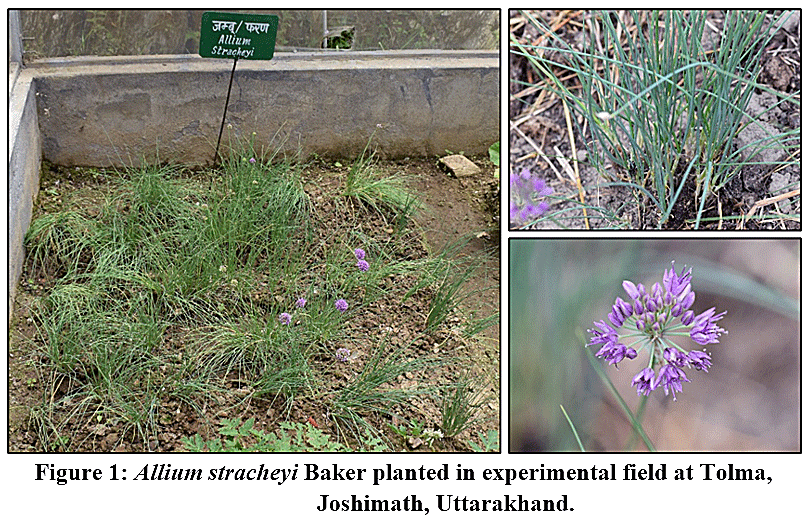 |
Figure 1: Allium stracheyi Baker planted in experimental field at Tolma, Joshimath, Uttarakhand. |
Reagents and Solution
Analytical-grade reagents were used throughout the extraction procedure. The following reagents were used: cetyltrimethylammonium bromide (CTAB), Tris-hydrochloride (Tris-HCl), disodium ethylenediaminetetraacetate (EDTA), Polyvinylpyrrolidone (PVP), and β-mercaptoethanol (β-ME) (HiMedia, India).
The extraction medium was prepared by adapting the CTAB method described previously.9 The optimized buffer consisted of 2x CTAB, 1 M Tris-HCl (pH 8.0), 0.5 M EDTA (pH 8.0), 5 M NaCl, 15% PVP and 2-4% (v/v) β-ME. Chloroform: isoamyl alcohol (24:1, v/v) was used for phase separation, whereas 80% ethanol and TE buffer were used during pellet washing and DNA resuspension
Genomic DNA isolation protocol
Fresh leaf material (200 mg) was pulverized under liquid nitrogen using a precooled mortar and pestle. The resulting tissue powder was transferred without delay into a 2 mL microcentrifuge tube containing 1.5 mL of pre-warmed CTAB extraction buffer and mixed thoroughly. The homogenate was maintained at 65º C for 60 min and gently mixed every 10 min during incubation. It was then allowed to reach room temperature before centrifugation at 12000 rpm for 10 min. Following centrifugation, the recovered aqueous supernatant was placed in a clean tube and combined with an equivalent volume of chloroform: isoamyl alcohol (24:1, v/v). After gentle inversion for 5 min, phase separation was achieved by centrifuging the mixture at 12000 rpm for 10 min. Two additional chloroform: isoamyl alcohol extractions were performed, giving three extractions in total. After the final phase separation, the upper aqueous fraction was collected. DNA precipitation was initiated by adding 0.2 volume of 5 M NaCl followed by an equal volume of ice-cold absolute isopropanol. The preparation was mixed carefully by inversion and kept at -20º C for a minimum of 1 h; samples could also be left overnight to maximize DNA recovery. The precipitated DNA was recovered by centrifuging the samples at 14000 rpm for 10 min at 4ºC. After removal of the supernatant, the resulting DNA pellet was rinsed twice with chilled 80% ethanol. Following air drying, the pellet was resuspended in 100 µL TE buffer and maintained at -20 ºC until subsequent analysis.
Protocol optimization was performed as a stepwise standardization procedure. The effects of increasing PVP concentrations and β-mercaptoethanol on DNA recovery and purity were assessed initially to reduce interference from phenolic compounds and other secondary metabolites. Subsequent optimization involved the incorporation of NaCl-assisted precipitation to improve the removal of polysaccharides and other co-precipitating contaminants. The optimized protocol was selected on the basis of DNA recovery, spectrophotometric purity, agarose-gel integrity and successful amplification with PCR-based molecular markers.
Table 1: Optimisation of PVP and β-ME concentration during modified CTAB-based DNA extraction from Allium stracheyi
|
Chemicals |
Concentration |
Concentration |
Concentration |
Concentration |
|
Tris HCl |
1 M |
1 M |
1 M |
1 M |
|
EDTA |
0.5 M |
0.5 M |
0.5 M |
0.5 M |
|
Ascorbic acid |
40 mM |
40 mM |
40 mM |
40 mM |
|
CTAB |
2% |
2% |
2% |
2% |
|
PVP |
5% |
10% |
15% |
20% |
|
β-ME |
1-4% |
1-4% |
1-4% |
1-4% |
Determination of DNA quantity and purity
DNA yield and purity were determined spectrophotometrically using a Biospectrophotometer (Eppendorf, Germany), with absorbance recorded at 260 and 280 nm. The A260/A280 ratio was used to evaluate DNA purity, with values around 1.80 indicating high-quality DNA, and a value above 2.0 indicates the presence of RNA contamination, while a lower value denotes contamination by proteins and polysaccharides.10,11 The structural integrity of the recovered DNA was additionally examined on a 1% agarose gel.
PCR amplification and marker analysis
PCR amplification was used to determine whether the extracted DNA was suitable for marker analysis. Ten A. stracheyi genotypes were tested with ISSR and chloroplast SSR primers using a Bio-Rad T-gradient thermocycler (Germany).
ISSR amplification
Two ISSR primers, UCB810 (5’-AGAGAGAGAGAGAGAGT-3’) and UCB813 (5’-CTCTCTCTCTCTCTCTT-3’), were selected for amplification. Each PCR was prepared to a final volume of 20 µL. The reaction mixture comprised 50 ng µL-1 template DNA, 2.5 µL 10x PCR buffer (100 mM Tris-HCl, pH 8.0; 500 mM KCl), 2.5 µL MgCl2 (25 mM), 0.2 µM dNTPs, 0.2 µM primer and 1 U Taq DNA polymerase (HiMedia, India). Nuclease-free water was added to reach the required final volume. Amplification was initiated with 95 ºC for 5 min denaturation, followed by 35 cycles of denaturation at 95ºC for 1 min, annealing at 45 ºC for 1 min and extension at 72 ºC for 2 min, followed by final extension at 72 ºC for 7-min completed the programme. Amplified fragments were separated on 1.8% agarose at 80 V for 3 h and visualised using an IGENE Labserva gel documentation system (India).
SSR amplification
The cpSSR analysis employed Apr_cpSSR3 [F: 5’-CAATGGACTTGAGTCAGTGAT-3’, R: 5’-GGGCCTATTTATACGCTATCT-3’] and Apr_cpSSR9 [F: 5’-CCCTCTATTTTTGTCCCTTT-3’, R: 5’-TATCCGCATGCATAACAGT-3’]. The reaction mixture was prepared similarly to the ISSR marker. For cpSSR amplification, samples were first denatured at 94 ºC for 4 min. Thirty-five amplification cycles were then carried out at 94 ºC for 1 min, 55 ºC for 1 min and 72 ºC for 1 min, followed by a final 2- min extension at 72 ºC. PCR products were examined on a 3% agarose gel.
Results
Several sequential modifications of the CTAB-based extraction procedure were evaluated to improve DNA yield, purity, integrity, and suitability for downstream PCR amplification. However, to date, several methods for the extraction of DNA and numerous protocols for a variety of plant species have been extensively standardised.12 DNA isolation from high-altitude plant tissues is frequently complicated by the accumulation of phenolic compounds, complex carbohydrates, and other specialised metabolites, which may co-purify with nucleic acids and interfere with subsequent molecular assays.13,14 The standard CTAB method 9 failed to produce usable DNA, as evidenced by the absence of clear bands and the presence of smearing on agarose gel (Fig. 2a). Similarly, the use of a commercial DNA isolation kit did not yield satisfactory results, indicating that conventional methods are inadequate for this species (Fig. 2b). To address these challenges, several modifications to the CTAB protocol were evaluated. The inclusion of phenol-binding reagent polyvinylpyrrolidone (PVP) and β-ME at varying concentrations significantly improved DNA quality.15 Among the tested combinations, 15% PVP and 2% β-ME resulted in visible DNA bands; however, contamination from polysaccharides and phenolic compounds was still observed (Fig. 2c). Phenolic constituents can undergo oxidation during extraction and may subsequently associate with nucleic acids, thereby compromising DNA integrity and purity.16,17 The addition of ascorbic acid provided limited improvement, suggesting that further optimisation was required to effectively eliminate contamination.
A marked improvement in DNA quality was observed after incorporating 5 M NaCl during the precipitation step. The addition of 2/10 volume of 5 M NaCl followed by precipitation with chilled isopropanol effectively removed polysaccharides and enhanced DNA purity. Washing the DNA pellet twice with 80% ethanol further reduced residual contamination and improved pellet transparency. The optimised protocol consistently yielded high-quality, intact genomic DNA with clear and distinct bands on agarose gel (Fig. 2d). Spectrophotometric analysis showed that the optimised method produced an average DNA yield of 554.1 µg g⁻¹ of leaf tissue, with an A260/A280 ratio of 1.84. The improved performance of the protocol can be attributed to the effective removal of inhibitory compounds. PVP acts as a phenol -binding agent, while β-ME prevents oxidation of polyphenols.15
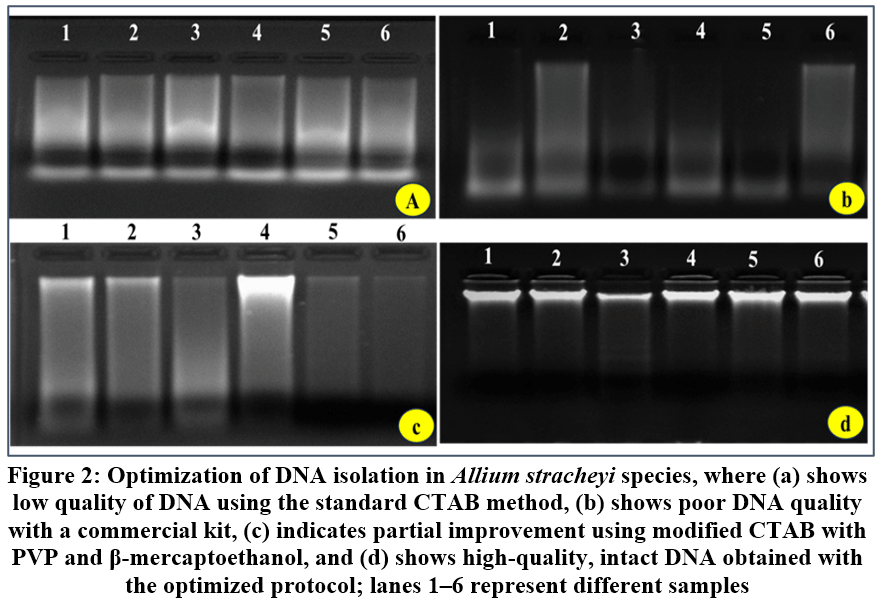 |
Figure 2: Optimization of DNA isolation in Allium stracheyi species, where (a) shows low quality of DNA using the standard CTAB method, (b) shows poor DNA quality with a commercial kit, (c) indicates partial improvement using modified CTAB with PVP and β-mercaptoethanol, |
Discussion
The optimised procedure performed more effectively on A. stracheyi tissue than the conventional extraction approaches evaluated in the present study. Although the CTAB method of 9 is widely applied for plant DNA isolation, it did not provide DNA of sufficient quality from this species because substantial contamination remained in the extract. The widely used CTAB protocol was ineffective for A. stracheyi due to severe contamination issues. Previous work demonstrated the usefulness of PVP for limiting phenolic interference during CTAB extraction; however, additional purification may still be necessary when tissues contain substantial quantities of interfering compounds. The rapid extraction procedure reported by 19 was developed for particular plant materials and may provide reduced performance when polysaccharide contamination is pronounced. In the present study, combining PVP (15%) and β-ME (2%), with the 5 M NaCl precipitation step, efficiently removed both polyphenols and polysaccharides, resulting in high-quality DNA suitable for molecular applications. Optimisation of critical parameters, including the tissue-to-buffer ratio, incubation time, and the number of chloroform: isoamyl alcohol extractions, also contributed to improved DNA yield and quality. A ratio of 200 mg leaf tissue to 1.5 ml extraction buffer and repeated chloroform extraction (three times) was found to be optimal. The favourable effect of PVP observed here agrees with earlier reports in which this polymer was used during DNA isolation from chemically complex plant tissue.18,19,20
The suitability of the extracted DNA was confirmed through PCR amplification with both ISSR and chloroplast SSR primers, demonstrating that the optimised extraction produced DNA compatible with PCR. Distinct and repeatable profiles were obtained for the tested samples (Fig. 3 and Fig. 4), indicating the inhibitory contaminants had been sufficiently reduced. Previous studies have likewise employed ISSR and cp-SSR-based approaches to characterise genetic variation within Allium taxa.21,22 Overall, the modified CTAB protocol developed in this study provides a simple and cost-effective approach for obtaining high-quality, PCR-compatible genomic DNA from A. stracheyi. The protocol was developed specifically to address the interference associated with phenolic compounds, polysaccharides and other secondary metabolites present in the plant tissue. Successful amplification with ISSR and chloroplast SSR markers further demonstrated the suitability of the extracted DNA for PCR-based molecular analyses. Furthermore, it holds potential for application in other medicinal plant species with high levels of secondary metabolites.
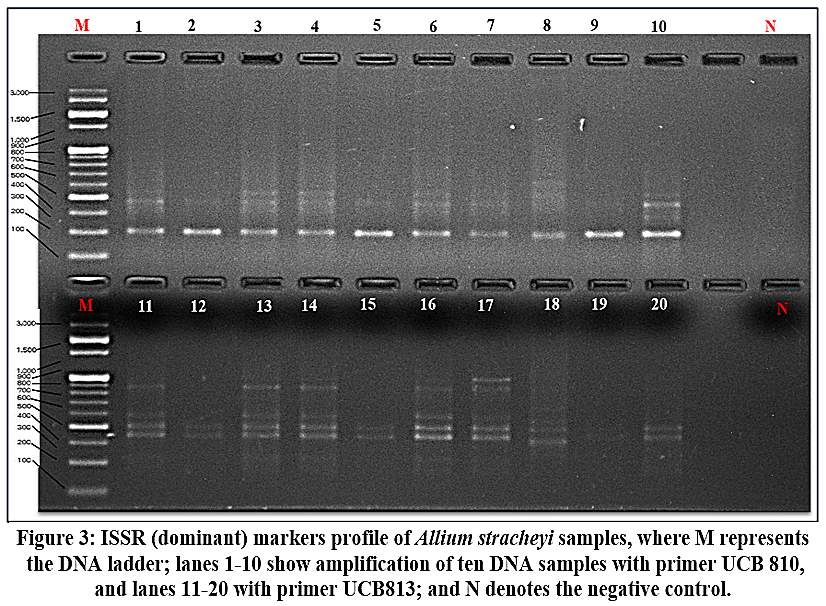 |
Figure 3: ISSR (dominant) markers profile of Allium stracheyi samples, where M represents the DNA ladder; lanes 1-10 show amplification of ten DNA samples with primer UCB 810, and lanes 11-20 with primer UCB813; and N denotes the negative control. |
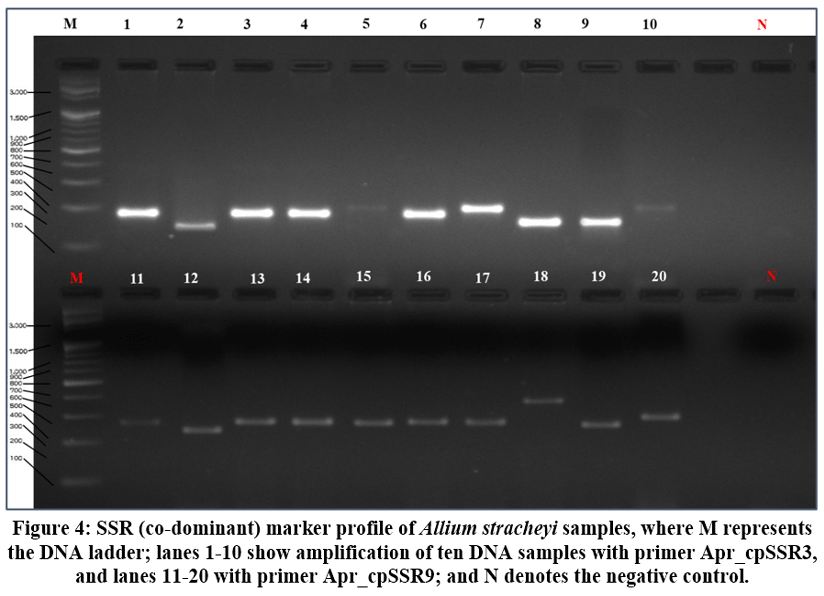 |
Figure 4: SSR (co-dominant) marker profile of Allium stracheyi samples, where M represents the DNA ladder; lanes 1-10 show amplification of ten DNA samples with primer Apr_cpSSR3, and lanes 11-20 with primer Apr_cpSSR9; and N denotes the negative control. |
Limitation of the Study
The present study successfully optimised a modified CTAB-based protocol for isolating high-quality genomic DNA from A. stracheyi. However, the study focused primarily on DNA extraction efficiency, purity, integrity, and validation through PCR amplification using ISSR and CpSSR. Although the protocol performed satisfactorily, its applicability to a wider range of molecular techniques, including next-generation sequencing, cloning, and transgenic applications, was not evaluated. Furthermore, the protocol was optimized using leaf tissue, and its effectiveness for other plant tissue, such as roots, stems, and reproductive organs, remains to be investigated. The influence of variations in tissue maturity, storage duration, and sample processing conditions on DNA quality and yield was also not systematically assessed. Further studies involving additional tissue types, broader molecular applications and systematic quantitative comparisons could further establish the robustness and versatility of the protocol.
Conclusion
The present study provides a simple and cost-effective modified CTAB-based protocol for obtaining high-quality genomic DNA from A. stracheyi, a high-altitude Himalayan medicinal plant with substantial secondary metabolites and other phytoconstituents. The optimized procedure improved DNA purity and integrity and produced DNA suitable for PCR-based molecular marker analysis, as demonstrated using ISSR and chloroplast SSR markers. The protocol may therefore facilitate genetic diversity and conservation-related molecular studies of A. stracheyi and potentially other medicinal plants with similar biochemical characteristics. The high-quality genomic DNA obtained through this protocol may also provide a useful starting material for future molecular applications, including studies involving cloning, transgenics, and DNA marker-assisted selection, where suitable DNA quality is essential.
Acknowledgement
The authors are thankful to the Director, G.B. Pant National Institute of Himalayan Environment, Kosi-Katarmal, Almora, for infrastructure and support.
Funding Sources
The research was supported by G. B. Pant National Institute of Himalayan Environment under In-house Project No. 04.
Conflict of Interest
The authors do not have any conflict of interest.
Data Availability Statement
The manuscript incorporates all datasets produced or examined throughout this research study.
Ethic statement
This research did not involve human participants, animal subjects, or any material that required ethical approval.
Informed Consent Statement
This study did not involve human participants, and therefore, informed consent was not required.
Clinical Trial Registration
This research does not involve any clinical trials.
Permission to Reproduce Material from Other Sources
Not Applicable.
Author contributions
- Ashish Kumar: Methodology, Investigation, Data Curation, Formal Analysis, Writing – Original Draft.
- Yogita Bisht: Investigation, Validation, Writing – Review & Editing.
- Arun Kumar Jugran: Conceptualization, Methodology, Supervision, Validation, Writing – Review & Editing.
- Surendra Singh Bargali: Supervision, Validation, Writing – Review & Editing, Final Approval.
References
- Neshati F, Fritsch RM. Seed characters and testa sculptures of some Iranian Allium L. species (Alliaceae). Feddes Repertorium, 2009;120:322–332.
CrossRef - Kumar A, Jugran AK, Joshi K, Bhatt ID, Bargali SS. Deciphering the morphological, phytochemical, genetic diversity, and niche distribution of Allium stracheyi Baker (Amaryllidaceae): An economically important culinary herb of Western Himalaya, India. South African Journal of Botany. 2024;171:634-647.
CrossRef - Pandey A, Malav PK, Rai MK, Ahlawat SP. Neodomesticates of the Himalayan Allium spices (Allium species) in Uttarakhand, India and studies on eco-geography and morphology. Genetic Resources and Crop Evolution, 2021;68:2167-2179.
CrossRef - Kumar A, Jugran AK, Bhatt ID, Bargali SS. Ethno-medicinal uses, ecology, phytochemistry, biological activities, and conservation approaches for Himalayan Rhubarb species. Natural Product Research. 2025;40(12):3693–3706.
CrossRef - Nautiyal S, Rao KS, Maikhuri RK, Semwal RL, Saxena KG. Traditional knowledge related to medicinal and aromatic plants in tribal societies in a part of Himalaya. Journal of Medicinal and Aromatic Plant Sciences. 2000;528-541.
- Bisht IS, Mehta PS, Negi KS, Rawat R, Singh R. Wild plant food resources in agricultural systems of Uttarakhand hills in India and its potential role in combating malnutrition and enhancing human health. Journal Food Science and Toxicology. 2017; 2:3.
- Tiwari UK, Adams SJ, Begum SN, Krishnamurthy KV, Ravikumar K, Padma V. Pharmacognostic studies on two Himalayan species of traditional medicinal value: Allium wallichii and Allium stracheyi. Notulae Scientia Biologicae. 2014;6:149-154.
CrossRef - Kumar A, Thapliyal N, Jugran AK, Bargali SS, Bhatt ID. Ecological vulnerability and phytochemical richness of Rheum australe in the Indian Himalayan Region: insights for conservation. Plant Biosystem. 2026;160:114.
CrossRef - Doyle JJ, Doyle JL. A rapid isolation procedure for small quantities of fresh leaf tissue. Phytochemistry Bulletin. 1987;19:11-15.
- Puchooa D., Khoyratty SS. Genomic DNA extraction from Victoria amazonica. Plant Molecular Biology Reporter. 2004;22:195a.
CrossRef - Aleksić JM, Stojanović D, Banović B, Jančić R. A simple and efficient DNA isolation method for Salvia officinalis. Biochemical Genetics. 2012;50:881-892.
CrossRef - Sarwat M, Negi MS, Lakshmikumaran M, Tyagi AK, Das S, Srivastava PS. A standardized protocol for genomic DNA isolation from Terminalia arjuna for genetic diversity analysis. Electronic Journal of Biotechnology. 2006;9:86-91.
CrossRef - Varma A, Padh H, Shrivastava N. 2007. Plant genomic DNA isolation: an art or a science. Biotechnology Journal: Healthcare Nutrition Technology. 2007;2:386-392.
CrossRef - Kumar A, Bisht Y, Rautela K, Jugran AK, Bhatt ID, Bargali SS. Morphological and genetic diversity assessment of Rheum australe D. Don– A high-value medicinal herb from the Himalaya, and implications for conservation strategies. South African Journal of Botany. 2023;163:620-629.
CrossRef - Ali Q, Salisu IB, Raza A, Shahid AA, Rao AQ, Husnain T. A modified protocol for rapid DNA isolation from cotton (Gossypium spp.). MethodsX. 2019;6:259-264.
CrossRef - Katterman FH, Shattuck VI. An effective method of DNA isolation from the mature leaves of Gossypium species that contain large amounts of phenolics, terpenoids and tannins. Preparative Biochemistry. 1983;13:347-359.
CrossRef - Peterson DG, Boehm KS, Stack SM. Isolation of milligram quantities of nuclear DNA from tomato (Lycopersicon esculentum), a plant containing high levels of polyphenolic compounds. Plant Molecular Biology Reporter. 1997;15:148-153.
CrossRef - Porebski S, Bailey GL, Baum BR. Modification of a CTAB DNA extraction protocol for plants containing high polysaccharide and polyphenol components. Plant Molecular Biology Reporter. 1997;15:8-15.
CrossRef - Zhang J, Stewart J. 2000. Economical and rapid method for extracting cotton genomic DNA. Journal of Cotton Science. 2000;4:193-201.
CrossRef - Stewart CN, Via LE. A rapid CTAB DNA isolation technique useful for RAPD fingerprinting and other PCR applications. Biotechniques. 1993;14:748-758.
- Mukherjee A, Sikdar B, Ghosh B, Banerjee A, Ghosh E, Bhattacharya M, Roy SC. RAPD and ISSR analysis of some economically important species, varieties and cultivars of the genus Allium (Alliaceae). Turkish Journal of Botany. 2013;37:605-618.
CrossRef - Lee GA, Kwon SJ, Park YJ, Lee MC, Kim HH, Lee JS, Lee SY, Gwag JG, Kim CK, Ma KH. Cross-amplification of SSR markers developed from Allium sativum to other Alliumspecies. Scientia Horticulturae. 2011;128:401-407.
CrossRef